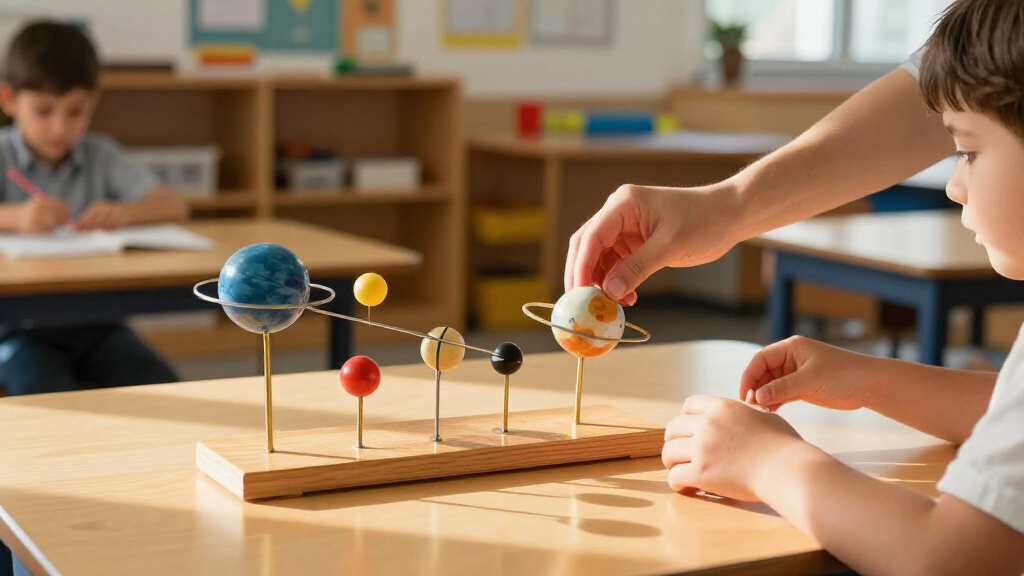
Educational solar system models vary from simple planet puzzles to working orbital demonstrations, and my best overall pick is the National Geographic Glow-in-the-Dark Solar System Model Kit for its blend of hands-on building and visual learning. The Science Can Solar System Projector and Talking Astronomy Model Kit stands out for guided, multimedia exploration, while the Cosmos Museum Premium Brass Mechanical Orrery suits buyers who want a durable display that demonstrates motion. The main tradeoff is between a model that teaches orbital relationships and one that makes planets memorable through assembly, light, sound, or play. Age, adult help, storage, and how much scientific detail a child can use also shape the choice. Read on for the full breakdown of all 14 models and how I’d match them to different learners.

Prime made for students and young adults
- Fast, free delivery for dorm and study essentials
- Prime Video and Amazon Music included
- Member-only deals
Key Takeaways
- Hands-on motion is the clearest separator: orbital models and the brass orrery show relationships between celestial bodies, while puzzles and planet toys focus more on recognition and handling.
- Glow features add visual appeal, not a full astronomy lesson: the two 4M planetarium kits and National Geographic kit can make planet names and positions engaging, but buyers should pair them with discussion of scale and orbit.
- Interactive electronics serve a different learning style: Science Can’s projector-and-talking kit offers more guided presentation, while its talking model emphasizes audio interaction without the same stated projection role.
- Simple formats can be the better fit for younger learners: the wooden puzzle, stress balls with flashcards, and COOLDUCK wooden kit favor tactile play over complex assembly or detailed mechanics.
- Premium construction does not automatically mean broader teaching value: the brass orrery is the standout display-oriented choice, while DIY kits may offer more active building and experimentation for children.
| 64-Piece Solar System Model Kit for Kids |  | Best for Creative Classroom Projects | Brand: wookidel | Model number: WK0017 | Piece count: 64 | VIEW LATEST PRICE | See Our Full Breakdown |
| 4M Solar System Planetarium DIY Glow-in-the-Dark Model Kit |  | Best for Bedroom Display and Planet Facts | Brand: 4M | Model: 3427 | Recommended age: 8 years and up | VIEW LATEST PRICE | See Our Full Breakdown |
| 4M Solar System Planetarium Glow-in-the-Dark Model Kit |  | Best for Demonstrating Planetary Layout | Brand: 4M | Model number: 00-03257 | Age range: 8–14 years | VIEW LATEST PRICE | See Our Full Breakdown |
| Sun, Earth, and Moon Orbital Model with Light |  | Best for Earth-Moon Concepts | Brand: UZPDWK | Theme: Astronomy | Size: Medium | VIEW LATEST PRICE | See Our Full Breakdown |
| National Geographic Glow-in-the-Dark Solar System Model Kit |  | Best for a Customizable Planet Display | Brand: Blue Marble | Model number: NGSOLARSYS | Age range: 8 years and up | VIEW LATEST PRICE | See Our Full Breakdown |
| Science Can Solar System Projector and Talking Astronomy Model Kit for Kids |  | Best for Bilingual Projection Learning | Brand: Science Can | Model number: 1204732021es0001 | Age range: 36 months to 12 years | VIEW LATEST PRICE | See Our Full Breakdown |
| Science Can Interactive Talking Solar System Model for Kids |  | Best for Quiz-Based Learning | Brand: Science Can | Age range: 6–12 years | Languages: English and French | VIEW LATEST PRICE | See Our Full Breakdown |
| COOLDUCK 30-Piece Wooden Solar System Model Toy Kit for Kids |  | Best for Tactile Early Learning | Brand: COOLDUCK | Material: Beech wood and plastic | Number of items: 30 | VIEW LATEST PRICE | See Our Full Breakdown |
| Solar System Stress Balls for Kids with Educational Flashcards |  | Best for Fidget-Friendly Space Learning | Brand: EH.DT | Material: Foam | Number of items: 23 | VIEW LATEST PRICE | See Our Full Breakdown |
| Cosmos Museum Solar System Model – Premium Brass Mechanical Orrery (8″ Earth & Moon) |  | Best for Mechanical Demonstration and Display | Brand: Cosmos Museum | Model number: ORD(NB)P1 | Age range: Adult; 10 years and up | VIEW LATEST PRICE | See Our Full Breakdown |
| Educational Insights GeoSafari Orbiting Solar System & Projector |  | Best for Visual Learning | Brand: Educational Insights | Model: EI-5297 | Recommended age: 5 years and up | VIEW LATEST PRICE | See Our Full Breakdown |
| Sun, Earth, and Moon Orbital Model Kit | 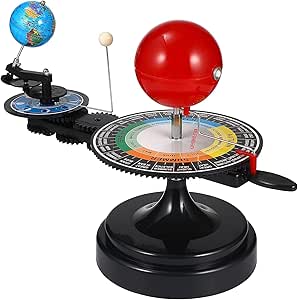 | Best for Sun-Earth-Moon Concepts | Brand: HAOXIN | Model: Solarball | Material: Plastic | VIEW LATEST PRICE | See Our Full Breakdown |
| Wooden Solar System Puzzle for Kids – Montessori 3D Planet Models |  | Best for Preschool Planet Recognition | Brand: Xylolin | Age range: 36 months–7 years | Material: Wood | VIEW LATEST PRICE | See Our Full Breakdown |
| Smartivity DIY Solar System Kit for Kids Ages 8–14 |  | Best for Building and Mechanical Learning | Brand: Smartivity | Age range: 8 years and up | Educational objective: STEM | VIEW LATEST PRICE | See Our Full Breakdown |
| educational solar system model | Brand | Age range | Material | Model number |
|---|---|---|---|---|
| 64-Piece Solar System Model Ki | wookidel | — | Foam | WK0017 |
| 4M Solar System Planetarium DI | 4M | — | — | — |
| 4M Solar System Planetarium Gl | 4M | 8–14 years | — | 00-03257 |
| Sun | UZPDWK | — | — | — |
| National Geographic Glow-in-th | Blue Marble | 8 years and up | Plastic | NGSOLARSYS |
| Science Can Solar System Proje | Science Can | 36 months to 12 years | — | 1204732021es0001 |
| Science Can Interactive Talkin | Science Can | 6–12 years | — | — |
| COOLDUCK 30-Piece Wooden Solar | COOLDUCK | — | Beech wood and plastic | — |
| Solar System Stress Balls for | EH.DT | 3 years and up | Foam | Stress Ball + Flashcards |
| Cosmos Museum Solar System Mod | Cosmos Museum | Adult; 10 years and up | Brass | ORD(NB)P1 |
| Educational Insights GeoSafari | Educational Insights | — | — | — |
| Sun | HAOXIN | 6 years and up | Plastic | — |
| Wooden Solar System Puzzle for | Xylolin | 36 months–7 years | Wood | — |
| Smartivity DIY Solar System Ki | Smartivity | 8 years and up | MDF | SMRT1313 |
More Details on Our Top Picks
64-Piece Solar System Model Kit for Kids
The 64-piece set makes the solar system a craft project as well as a lesson: children assemble foam planets and other pieces, then paint them with the included colors. That open-ended work can help younger learners practice coordination and focus while making a model they can explain or display. Compared with the 4M Solar System Planetarium Glow-in-the-Dark Model Kit, this kit puts less emphasis on a rotating mechanism and more on painting and customization. Its foam parts and broad assortment of supplies also suit group activities where each child can take part in a stage of the project. The tradeoff is time and adult support: assembly and painting are part of the activity, not a shortcut to a finished model, and the listed educational objective is hand-eye coordination rather than a detailed astronomy feature set.
Pros:- Includes foam pieces, paints, brushes, and instructions for a complete build-and-paint activity
- Age range of 6–12 makes it a fit for younger school-age learners
- Can be used for classroom projects or family activities
- Large piece assortment supports hands-on participation
Cons:- Children must assemble and paint the model before it is ready to display
- Foam craft construction is less suited to demonstrating planetary motion than the rotating 4M model
- The stated educational objective centers on hand-eye coordination, with fewer specified astronomy learning aids
Best for: Teachers and families with children ages 6–12 who want a collaborative craft activity that combines planet learning with painting.
Not ideal for: Buyers seeking a ready-to-display model or a mechanism for demonstrating planetary motion; this kit requires assembly and painting and has no stated moving-orbit feature.
- Brand:wookidel
- Model number:WK0017
- Piece count:64
- Material:Foam
- Recommended age:6–12 years
- Included items:Foam discs and balls, Sun, foam stars, bamboo sticks, toothpick flags, 12 acrylic paints, 2 brushes, palette, and instructions
- Dimensions:10.24 x 8.66 x 3.62 inches
- Educational objective:Hand-eye coordination
Our verdict“Choose this kit for a paint-focused classroom or family project, but pick a rotating model if demonstrating motion is the priority.”
4M Solar System Planetarium DIY Glow-in-the-Dark Model Kit
This glow-in-the-dark mobile gives learners a build, paint, and display activity, with rods and string arranging the planets around a room-sized hanging model. The included wall chart and quiz questions add a study component that the foam 64-Piece Solar System Model Kit does not list, making this a stronger fit for children who enjoy both crafting and short fact-based prompts. It covers eight planets and needs no batteries, so the glowing effect comes from the supplied paint rather than a powered feature. The tradeoff is that this is a mobile, not a mechanism for accurately showing orbital movement; its 16.5-inch assembled size also calls for hanging space. Pluto is not included, and building and painting take more effort than choosing a ready-made display.
Pros:- Combines assembly and painting with glow-in-the-dark display details
- Wall chart and quiz questions add structured learning beyond the craft
- No batteries are required
- 16.5-inch assembled size creates a prominent hanging display
Cons:- The mobile does not provide a stated mechanism for demonstrating planetary orbits
- Requires space and a suitable place to hang the finished model
- Pluto is not included
Best for: Families with children aged 8 and up who want a hanging astronomy craft with added planet facts and quiz prompts.
Not ideal for: Buyers who need a tabletop rotating demonstration or want Pluto represented; this kit is a hanging mobile and includes eight planets without Pluto.
- Brand:4M
- Model:3427
- Recommended age:8 years and up
- Planets included:8; Pluto not included
- Assembled size:16.5 x 16.5 inches
- Power:No batteries required
- Included components:Planets, stencils, glow paint pen, rods, string, wall chart, quiz questions, and instructions
- Warranty:1-year replacement
Our verdict“Pick this for a fact-supported hanging craft, rather than for a tabletop model that demonstrates motion.”
4M Solar System Planetarium Glow-in-the-Dark Model Kit
Of these craft-oriented picks, this 4M model has the clearest moving display: its 11.8-inch stand and rotating arms give children a way to arrange planets around a central Sun. Snap-together planets need no glue, reducing one common assembly hurdle, while the included wall chart and fun facts connect construction with astronomy reading. Compared with the 4M DIY Glow-in-the-Dark Mobile, this version is more suited to a desk or shelf and less dependent on hanging space. Its scale and rotating arms can help prompt discussion of planetary order, but the product data does not claim accurate distances or orbital timing. Children must paint the planets to create the glow effect, so it is not a finished display straight out of the box.
Pros:- Rotating arms allow the planet arrangement to be repositioned
- Snap-together assembly requires no glue
- Wall chart and fun facts support learning beyond the build
- Includes glow paint for a customized display effect
Cons:- Planet painting is needed to create the glow effect
- The 11.8-inch model is smaller than the 16.5-inch 4M hanging mobile
- No claim of accurate orbital scale or timing is provided
Best for: Children ages 8–14 who want a tabletop build that can be repositioned while discussing planetary order and basic solar system concepts.
Not ideal for: Buyers wanting a ready-made or scientifically scaled orbital simulator; this model requires painting and does not specify accurate distances or orbital timing.
- Brand:4M
- Model number:00-03257
- Age range:8–14 years
- Model size:11.8 inches
- Assembly:Snap-together planets; no glue needed
- Included components:Plastic planets, stand and rotating arms, 9 steel bars, paint pot, glow paint, brush, sandpaper, Saturn ring template, instructions, wall chart, and fun facts
- Educational objectives:Concept development, observation skills, and STEM
Our verdict“Choose this 4M kit for a compact, movable tabletop layout, while treating it as a learning aid rather than a scale-accurate simulator.”
Sun, Earth, and Moon Orbital Model with Light
Unlike the full-system kits in this roundup, this model narrows the lesson to Earth, the Moon, and the Sun. That focus makes it better suited to explaining Earth’s rotation, the Moon’s orbit, seasons, phases, and eclipses than the planet-arranging 4M tabletop model, which covers a broader solar-system layout. Pressing the button lights the Sun, adding a visual cue to lessons about these relationships. Its recommended age range is 14–17, so it is aimed at older learners rather than younger children using a craft kit. The description also cautions that it is not for rigorous scientific research; buyers should treat it as a classroom-style teaching aid, not a precision instrument. The supplied details do not specify assembly requirements or orbital scale, which limits how much buyers can infer about its construction and accuracy.
Pros:- Directly addresses Earth’s rotation, its orbit, and the Moon’s orbit
- Supports lessons on seasons, moon phases, and eclipses
- Illuminated Sun adds a visual element to demonstrations
- English instructions are included
Cons:- Covers the Sun, Earth, and Moon rather than the full set of planets
- Recommended age range of 14–17 limits its fit for younger learners
- Not designed for rigorous scientific research, with no stated orbital scale
Best for: Teachers, tutors, and older students ages 14–17 focusing on seasons, lunar phases, eclipses, and the Earth-Moon-Sun relationship.
Not ideal for: Families seeking an all-eight-planets craft for younger children or a precision research model; its focus is limited to three bodies and it is not intended for rigorous research.
- Brand:UZPDWK
- Theme:Astronomy
- Size:Medium
- Item weight:1.02 kg
- Items included:1
- Educational objective:Science
- Recommended age:14–17 years
- Language:English
Our verdict“Choose this model for focused Earth-Moon-Sun lessons with older students, not for a complete planetary display or precision study.”
National Geographic Glow-in-the-Dark Solar System Model Kit
This National Geographic kit pairs a Sun-and-eight-planets display with movable arms, letting children change the arrangement after assembly rather than leaving the planets fixed in one layout. Paints, decals, a facts poster, and kid-friendly instructions make it a more guided craft than the 64-Piece foam kit, while its glow accents add a display feature without requiring batteries. It is a good middle ground for children who want both a finished model and some control over how it looks. Compared with the rotating 4M tabletop model, it also includes decals and a facts poster, but the supplied details do not describe its arm movement as a demonstration of orbital timing or scale. Painting and assembly remain part of the work, and the listed dimensions suggest a slim display footprint rather than a large classroom model.
Pros:- Includes the Sun and all eight planets
- Movable arms let children reposition the display
- Paints, decals, and instructions support a guided build-and-decorate activity
- Facts poster and glow-in-the-dark accents add learning and display value
Cons:- Requires assembly and painting before display
- The slim listed dimensions may offer less visual scale than the 4M hanging mobile
- Movable arms are not described as demonstrating orbital timing or scale
Best for: Children ages 8 and up who want a guided painting project that becomes a repositionable, glow-accented solar system display.
Not ideal for: Buyers seeking a ready-to-use model, a large hanging mobile, or a clearly specified orbital-motion lesson; assembly and painting are required, and no orbital scale or timing is stated.
- Brand:Blue Marble
- Model number:NGSOLARSYS
- Age range:8 years and up
- Planets included:8 planets and the Sun
- Features:Glow-in-the-dark accents and movable arms
- Included components:6 paint colors, glow-in-the-dark accent paint, brush, palette, decals, facts poster, and instructions
- Material:Plastic
- Dimensions:7.09 x 2.36 x 12.01 inches
- Weight:0.3 kg
Our verdict“Pick this kit for a guided, customizable display with all eight planets, but look elsewhere for a motion-focused orbital lesson.”
Science Can Solar System Projector and Talking Astronomy Model Kit for Kids
I’d choose this kit for children who learn better when space facts are paired with images they can project onto a wall or ceiling. Its eight-planet setup and three slides with 24 images add a visual activity that a hands-on set such as the COOLDUCK 30-Piece Wooden Solar System Model Toy Kit does not offer. English and Spanish astronomy facts also make it a useful fit for bilingual learning at home. The dome’s night-light and flashlight functions give it a role beyond a tabletop lesson, though they do not replace a more detailed working orbital model. The tradeoff is battery dependence: it needs three AA batteries, and they are not included. Choose it for projected visuals and spoken facts; skip it if you want a model focused on manipulating planets or demonstrating their motion.
Pros:- Projects 24 space images onto walls or ceilings for a visual learning activity
- Includes astronomy facts in English and Spanish
- The dome can also work as a night light or flashlight
- Includes eight planet axes and stickers for hands-on interaction
Cons:- Requires three AA batteries, which are not included
- Projection and spoken facts offer less hands-on planetary modeling than the COOLDUCK wooden kit
- The supplied description does not specify a quiz or extensive written learning materials
Best for: Families seeking a bilingual English-and-Spanish space activity with projected visuals for children ages 3 to 12.
Not ideal for: Buyers who want children to physically move planets around a model or who prefer a battery-free learning activity.
- Brand:Science Can
- Model number:1204732021es0001
- Age range:36 months to 12 years
- Planets:8
- Projection slides:3 slides with 24 images
- Languages:English and Spanish
- Power:3 AA batteries, not included
- Included components:Manual, 8 planet axes, planet stickers, projector, and 3 slides
Our verdict“Choose this for bilingual facts and space projections, but pick a manipulable model if planet movement is the priority.”
Science Can Interactive Talking Solar System Model for Kids
This is the most lesson-like option in this group: 48 facts and 53 quiz questions give children more structure than the projection-and-facts format of the Science Can Solar System Projector and Talking Astronomy Model Kit. Its three knowledge cards pair with English and French content, while three disks project 24 color images. The illuminated Sun adds a simple way to discuss how sunlight reaches the planets, although this is not a full orbital-motion demonstration. I’d favor it for school-age children who enjoy answering questions and revisiting facts; younger preschoolers may get more out of the graspable pieces in the COOLDUCK wooden kit. No assembly is required, which makes setup easy, but the plastic model needs three AA batteries that are not included.
Pros:- Combines 48 space facts with 53 quiz questions for guided practice
- Projects 24 full-color images using three disks
- Offers learning content in English and French
- Needs no assembly
Cons:- Requires three AA batteries, which are not included
- Plastic construction provides less tactile appeal than the COOLDUCK beech-wood set
- The light demonstration does not show planets orbiting the Sun
Best for: Families or educators looking for a ready-to-use English-and-French astronomy activity with facts and quizzes for ages 6 to 12.
Not ideal for: Buyers seeking a wooden manipulative model, a detailed orbital mechanism, or a battery-free activity.
- Brand:Science Can
- Age range:6–12 years
- Languages:English and French
- Knowledge cards:3
- Space facts:48
- Quiz questions:53
- Projection:3 disks with 24 full-color images
- Power and assembly:3 AA batteries, not included; no assembly required
- Dimensions:12.28 × 4.37 × 9.72 inches
Our verdict“Pick this for children who learn through quizzes and projected images, rather than through building or moving a detailed model.”
COOLDUCK 30-Piece Wooden Solar System Model Toy Kit for Kids
For a young child who needs to touch, sort, and place pieces to make sense of the planets, I’d put this ahead of the projector-based Science Can models. The eight planets, three model boards, and 17 flash cards give caregivers several ways to introduce the same topic, while the astronaut figure can help turn a lesson into pretend play. Beech wood gives the set a more tactile feel than the plastic-heavy interactive options, though the materials are a mix of wood and plastic rather than all wood. It is designed for ages 3 and up and is a stronger choice for early hands-on learning than the Cosmos Museum brass orrery, which suits older learners and display use. Its large footprint and physical pieces mean it is less suited to compact storage or projection-based lessons.
Pros:- Combines eight planets with three model boards and 17 flash cards
- Large planet pieces are designed for easy grasping
- Beech wood offers a tactile alternative to the projector models’ plastic construction
- Includes an astronaut figure and storage bag for play and storage
Cons:- Includes plastic as well as beech wood
- Physical boards and pieces do not project images or demonstrate actual orbital motion
- The stated age recommendation starts at 3 years, so it is not intended for younger children
Best for: Caregivers and preschool educators seeking a hands-on planetary activity for children ages 3 and up, with cards for guided learning.
Not ideal for: Buyers who want projected astronomy content, a mechanical orbit demonstration, or a compact set with minimal loose pieces.
- Brand:COOLDUCK
- Material:Beech wood and plastic
- Number of items:30
- Included components:1 astronaut figure, 1 storage bag, 17 flash cards, 3 model boards, and 8 planets
- Recommended age:3 years and up
- Dimensions:17.7 × 8.8 × 3.2 inches
- Educational focus:Montessori, STEM, and planetary cognition
- Safety testing:ASTM and CPSIA tests passed
Our verdict“Choose this for preschool-age hands-on sorting and planet recognition, not for projected visuals or mechanical astronomy demonstrations.”
Solar System Stress Balls for Kids with Educational Flashcards
This set puts play and sensory use ahead of precise planetary modeling. Its 11 foam space objects include the Sun, eight planets, Pluto, and the Moon, while 12 flashcards supply a learning prompt alongside the squeezing activity. That makes it more portable and informal than the COOLDUCK wooden kit, whose boards and planet pieces are better suited to arranging a solar-system layout. The stress balls can also appeal to adults, but their soft, squeezable format is not a substitute for showing orbital paths, relative scale, or planetary motion. The product description warns that heavy squeezing may shorten durability, and small parts call for supervision around very young children. I’d select it when fidget play helps a child engage with space facts, not as the main model for a structured astronomy lesson.
Pros:- Includes 11 foam objects, including Pluto and the Moon, alongside the eight planets and Sun
- Supplies 12 flashcards for pairing play with space facts
- Can serve as a fidget toy for children and adults
- Gift box provides a place to store the set
Cons:- May not withstand heavy or repeated squeezing
- Small parts may pose a choking hazard for very young children
- Soft balls do not show planetary positions or orbital mechanics as clearly as the COOLDUCK model boards
Best for: Families seeking a soft fidget toy that can introduce solar-system names and facts to children ages 3 and up.
Not ideal for: Teachers or buyers who need a sturdy, layout-based model that illustrates planetary order, scale, or orbit mechanics.
- Brand:EH.DT
- Material:Foam
- Number of items:23
- Included pieces:11 solar-system stress balls and 12 educational flashcards
- Age range:3 years and up
- Item dimensions:10.83 × 7.68 × 3.15 inches
- Educational objective:Space science, solar-system knowledge, model building, educational play, and stress relief
- Model number:Stress Ball + Flashcards
Our verdict“Choose this for low-key fidget play with space facts, but use a board or mechanical model for teaching planetary layout and motion.”
Cosmos Museum Solar System Model – Premium Brass Mechanical Orrery (8″ Earth & Moon)
Among these five, this orrery is the clearest choice for someone who wants a substantial object that can demonstrate planetary motion by hand. Its solid brass construction and manual movement give it a more mechanical, display-focused role than the plastic Science Can projectors or the child-friendly COOLDUCK board set. Rotating it can help an older learner discuss how celestial bodies move, while the antique finish makes it suitable for a desk or bookshelf between lessons. The tradeoffs are practical and educational: it is heavy, requires manual effort, and has no motorized movement, so it lacks the guided facts and quizzes of the Science Can Interactive Talking Solar System Model. Its 8-inch Earth-and-Moon size also limits detail. I’d pick it for an adult or older student who values a durable mechanical teaching piece, not for a young child’s first space toy.
Pros:- Solid brass construction with an antique finish
- Manual rotation offers a physical way to discuss planetary motion
- Combines an educational function with a display-ready design
- Brass is described as developing a natural patina over time
Cons:- Heavy construction can make it difficult to move
- Manual operation requires effort and there is no motorized movement
- The 8-inch Earth-and-Moon format limits display detail and lacks the interactive facts found in the Science Can talking model
Best for: Adult astronomy enthusiasts, older students, or educators seeking a manually operated brass display model for discussing planetary mechanics.
Not ideal for: Families wanting a lightweight, child-oriented set with quizzes, projected images, or easy battery-powered interaction.
- Brand:Cosmos Museum
- Model number:ORD(NB)P1
- Age range:Adult; 10 years and up
- Material:Brass
- Size:8-inch Earth & Moon
- Item dimensions:7 × 7 × 7.5 inches
- Number of items:1
- Operation:Manual rotation
Our verdict“Choose this for a durable, manually operated astronomy display for older learners, not for a lightweight or quiz-led children’s model.”
Educational Insights GeoSafari Orbiting Solar System & Projector
The GeoSafari pairs a moving planet model with a projector, giving children two ways to explore space in one activity. Its eight planets orbit at different speeds, and a switch lets learners pause the motion in a stationary display. That makes it more useful for demonstrating orbital movement than the Wooden Solar System Puzzle, which focuses on identifying planets and assembling a simple scene. The Sun-shaped projector adds 32 images across four discs, including NASA photos, while the guide supplies facts about planets and constellations. The tradeoff is that its lessons depend partly on projection rather than physical construction, so children looking for a build-it-yourself project may prefer the Smartivity DIY Solar System Kit. It also needs three AA batteries, which are not included.
Pros:- Moving planets show orbital motion at different speeds.
- Switchable orbiting and stationary modes support both motion demonstrations and planet-by-planet discussion.
- Projector includes 32 images on four discs, including NASA photos.
- Guide adds facts about planets and constellations.
Cons:- Requires three AA batteries, which are not included.
- The projector and orbiting display provide less hands-on building than the Smartivity DIY Solar System Kit.
- Its eight-planet layout does not focus on specific Sun-Earth-Moon events such as eclipses or moon phases.
Best for: Families with children ages 5 and up who want a tabletop orbit demonstration paired with projected space images and guided facts.
Not ideal for: Buyers seeking a construction-focused kit, a detailed Sun-Earth-Moon teaching model, or a battery-free activity.
- Brand:Educational Insights
- Model:EI-5297
- Recommended age:5 years and up
- Planets included:8
- Projector images:32 images on 4 discs
- Power:3 AA batteries (not included)
- Modes:Orbiting and stationary
- UPC:086002052971
Our verdict“Choose the GeoSafari for young learners who benefit from seeing planets move and viewing space images, but choose Smartivity if building is the main goal.”
Sun, Earth, and Moon Orbital Model Kit
Where the GeoSafari presents all eight planets moving around the Sun, this kit concentrates on the relationships among the Sun, Earth, and Moon. Its gear-driven mechanism is designed to demonstrate seasons, day and night, eclipses, and moon phases, making it the more focused classroom aid for explaining why those events happen. The seasonal base adds months, four seasons, and 24 traditional Chinese solar terms, giving teachers a distinctive calendar connection that the Smartivity DIY Solar System Kit does not list. That specificity comes with a setup cost: the plastic parts require assembly, and the gears need careful fitting to rotate freely. It is also a relatively large model at 38 × 20 × 28 cm, so it suits a lesson table better than a compact activity shelf.
Pros:- Covers seasons, day and night, eclipses, and moon phases in one model.
- Gear-driven movement connects the parts to observable astronomical events.
- Seasonal base includes months, four seasons, and 24 traditional Chinese solar terms.
- Offers a focused teaching activity for school projects and guided lessons.
Cons:- Requires assembly before use.
- Gears must be fitted carefully to rotate freely.
- Its three-body focus offers less coverage of the full solar system than the GeoSafari.
Best for: Parents and educators teaching children ages 6 and up about seasons, eclipses, moon phases, and the day-night cycle.
Not ideal for: Buyers who want a ready-to-use, all-planets display, minimal assembly, or a small model for limited storage space.
- Brand:HAOXIN
- Model:Solarball
- Material:Plastic
- Dimensions:38 × 20 × 28 cm (15.20 × 7.87 × 11.02 in)
- Age range:6 years and up
- Items included:1 kit
- Calendar features:Months, four seasons, and 24 traditional Chinese solar terms
- Assembly:Required
Our verdict“Pick this kit for guided lessons on Sun-Earth-Moon cycles, but choose the GeoSafari for a broader moving display of all eight planets.”
Wooden Solar System Puzzle for Kids – Montessori 3D Planet Models
This wooden set prioritizes early planet recognition and tactile play over demonstrating how the solar system moves. Children can handle eight painted planet spheres, match them with fact cards, and assemble three interlocking pieces into a simple 3D scene. Compared with the GeoSafari, it has no moving orbits or projector; compared with the Smartivity kit, it asks for puzzle assembly rather than a gear-driven build. That simpler format makes it a better fit for younger children developing spatial awareness and basic astronomy vocabulary. The tradeoff is limited scientific depth: older children who want to study orbital motion or more detailed mechanics may outgrow it quickly. The 19 separate pieces also create a real storage challenge, since small components can go missing.
Pros:- Eight hand-painted wooden planet spheres offer tactile planet identification.
- Eight flashcards add basic planetary facts to the puzzle activity.
- Three interlocking pieces form a 3D solar system scene.
- Wooden construction supports repeated handling and hands-on play.
Cons:- Small pieces can be misplaced during play or storage.
- Static puzzle format does not demonstrate orbits or planetary movement.
- Limited detail may not hold the interest of older children seeking more advanced astronomy.
Best for: Caregivers and preschool educators looking for a hands-on planet-matching activity for children ages 3 to 7.
Not ideal for: Older children seeking moving planetary mechanisms, detailed astronomy lessons, or a model with fewer loose pieces.
- Brand:Xylolin
- Age range:36 months–7 years
- Material:Wood
- Item weight:0.8 kg
- Dimensions:9.25 × 9.25 × 0.04 in
- Number of pieces:19
- Included components:8 wooden planet balls, 8 flashcards, 3 puzzle pieces
- Puzzle type:Jigsaw
Our verdict“Choose this puzzle for young children learning planet names through touch and matching, not for lessons on orbital mechanics.”
Smartivity DIY Solar System Kit for Kids Ages 8–14
The Smartivity makes construction part of the astronomy lesson: children build a gear-driven model with rotating planets, connecting the act of assembly to the idea of orbits. It is aimed at ages 8 and up, so it suits learners ready for a more involved project than the Wooden Solar System Puzzle, which offers a simpler tactile introduction for preschoolers. Compared with the Sun, Earth, and Moon Orbital Model Kit, Smartivity presents the solar system rather than emphasizing seasonal changes, eclipses, and moon phases. Its MDF construction and compact footprint—about 12.91 × 11.61 × 1.97 inches—make it a manageable project model, but the product details do not specify included planets, a fact guide, or a particular mechanism lesson beyond basic astronomy. Younger children may need help with the build.
Pros:- Building the model combines construction with basic astronomy learning.
- Gear-driven design rotates the planets to illustrate orbital movement.
- Designed for children ages 8 and up, matching a more advanced project audience than the wooden puzzle.
- MDF construction and compact listed dimensions suit a tabletop activity.
Cons:- Younger children may need assistance with the build.
- Product details do not specify a fact guide or detailed lesson materials.
- Focuses on basic planets and orbits rather than the seasons, eclipses, and moon phases covered by the HAOXIN kit.
Best for: Children ages 8 and up who enjoy assembling mechanical projects and want a rotating model to introduce planets and orbits.
Not ideal for: Families with preschoolers, buyers seeking a detailed Sun-Earth-Moon demonstration, or shoppers who want specified teaching materials such as a fact guide.
- Brand:Smartivity
- Age range:8 years and up
- Educational objective:STEM
- Material:MDF
- Dimensions:12.91 × 11.61 × 1.97 in
- Weight:650 g
- Model number:SMRT1313
- Manufacturer part number:SMRT1303
- Included components:Box
Our verdict“Choose Smartivity for an older child who wants to build a rotating solar system model, and choose the HAOXIN kit for focused Sun-Earth-Moon lessons.”
How We Picked
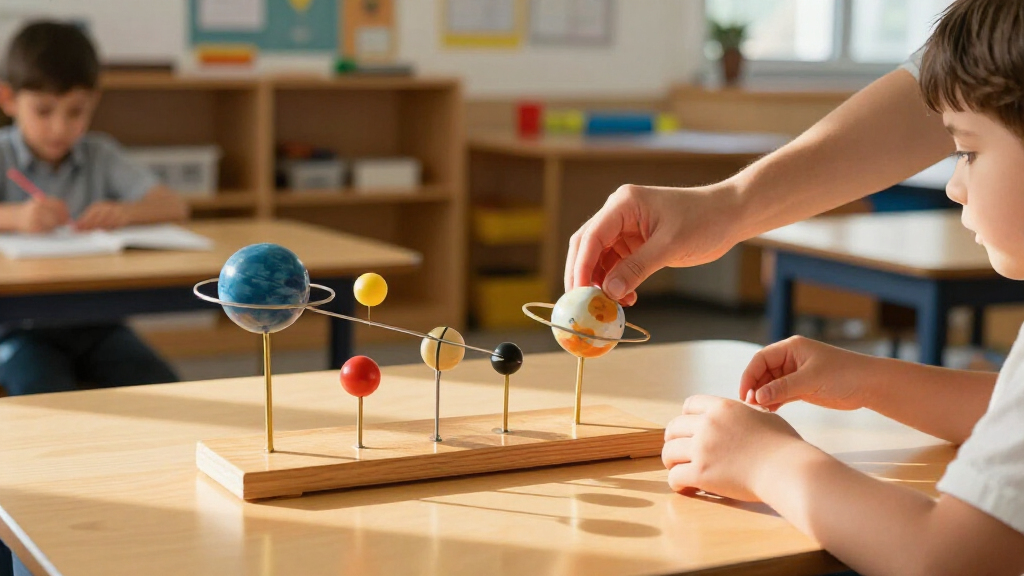
I compared these 14 educational solar system models by the learning activity each one supports: building, observing motion, identifying planets, using light or projection, listening to explanations, or handling tactile pieces. I also weighed age fit, likely adult assistance, clarity of the model’s teaching purpose, durability cues such as wood or metal construction, and practical factors like setup, storage, and whether the activity invites repeat use.
The ranking favors products that connect a visible feature to a useful learning outcome, rather than relying on novelty alone. Models that demonstrate orbital relationships or combine several teaching modes rank ahead of products centered on a single play feature, while simpler options remain strong choices for specific ages and needs. Since product names alone do not establish every specification or included activity, I avoid treating unconfirmed capabilities as facts; buyers should check the current listing for exact contents, dimensions, and age guidance.
| educational solar system model | Material |
|---|---|
| 64-Piece Solar System Model Ki | Foam |
| 4M Solar System Planetarium DI | — |
| 4M Solar System Planetarium Gl | — |
| Sun | — |
| National Geographic Glow-in-th | Plastic |
| Science Can Solar System Proje | — |
| Science Can Interactive Talkin | — |
| COOLDUCK 30-Piece Wooden Solar | Beech wood and plastic |
| Solar System Stress Balls for | Foam |
| Cosmos Museum Solar System Mod | Brass |
| Educational Insights GeoSafari | — |
| Sun | Plastic |
| Wooden Solar System Puzzle for | Wood |
| Smartivity DIY Solar System Ki | MDF |
Factors to Consider When Choosing Educational Solar System Models
Before choosing, decide what you want the model to teach and how the learner will use it. A model that is excellent for a short introduction may not help explain relative motion, and a detailed build may sit unused if the child mainly wants to play.
Choose the Learning Goal Before the Format
Start with one question: should the learner name the planets, understand how bodies move, or build a model from parts? Planet recognition can be served by puzzles, flashcards, and tactile toys, while an orbital model is a better match for demonstrating how the Sun, Earth, and Moon relate in motion. A projector or talking feature can support explanation, but it does not replace a physical demonstration when the goal is movement. A common mistake is buying the most elaborate format without deciding what concept it should teach. For a first introduction, choose one clear learning goal and add complexity only when the learner asks for it.
Match Assembly and Adult Help to the Learner
DIY models can turn astronomy into a memorable project, but the build itself may demand patience, fine-motor control, and help from an adult. Check the stated age range and look for clues about assembly complexity rather than assuming every kit is ready to use. Younger children may get more from large, easy-to-handle pieces or a puzzle than from a model with small components. For a family activity, adult-supported construction can be a benefit; for independent play, it can become a source of frustration. Choose a project whose most demanding step feels manageable, not merely impressive.
Treat Glow, Sound, and Projection as Teaching Tools With Limits
Light, glow, sound, and projection can draw attention and encourage repeat use, but each feature works best when tied to a question. A glow effect may help a child remember planet positions, yet it does not explain why planets orbit or how far apart they are. Audio can make information accessible to early readers, though caregivers should check whether the content is clear and suited to the child’s age. Projection adds a presentation element, but buyers should verify what images or materials are included and how the feature operates. Avoid paying for several effects if the learner is likely to use only one.
Look for What the Model Simplifies
Every tabletop solar system model compresses huge distances and often changes planet sizes so the objects can fit together. That makes models useful for seeing relationships, but it can also create misconceptions if the simplifications go unexplained. Use a model as a starting point and tell the learner that planet spacing and scale are not necessarily accurate. Models that show motion can teach sequence and relative position, but they still cannot reproduce the full scale of the solar system in a room. A brief conversation about what the model leaves out can make a simple toy more educational than a more elaborate one used without context.
Balance Durability, Storage, and Repeat Use
A model assembled once and displayed has different needs from one handled during daily play. Wood and metal can suit repeated handling or display, while loose pieces and project components call for a plan to keep parts together. Check dimensions, assembly requirements, and whether the model can be stored without taking apart the work. Electronic or light-up features also add questions about power and care, so confirm those details in the listing. The best practical choice is the one that fits the household’s available space and habits, not simply the one with the longest feature list.
Pay More for a Clear Upgrade, Not Just More Parts
A higher-cost model makes sense when it adds a meaningful advantage: stronger construction, a useful mechanical demonstration, or a format that will remain engaging as the learner grows. More pieces do not automatically create deeper understanding, and extra effects can distract from the core lesson. For a beginner, a straightforward model paired with conversation may teach more than a complex kit that needs frequent adult intervention. For a classroom or shared family setting, durability and repeatable demonstrations may justify choosing a sturdier format. Compare the learning activity and likely lifespan, not the apparent size of the kit.
Frequently Asked Questions
Which type of solar system model is best for teaching how Earth and the Moon move?
Choose a model built around orbital motion rather than one focused mainly on planet recognition or decoration. The Sun, Earth, and Moon orbital models are designed around that relationship, so they suit a focused lesson on movement and relative position. A broader solar system kit may introduce more planets but offer less attention to this specific interaction. Explain that a tabletop model simplifies actual distances and speeds, since its motion is a teaching aid rather than a scale simulation. If the learner is very young, prioritize a mechanism they can operate without frustration.
Are glow-in-the-dark solar system kits enough for a child’s first astronomy lesson?
They can work well as an engaging introduction to planet names and the visual arrangement of the solar system. Glow is a memorable feature, but it does not by itself teach orbital motion, scale, or why planets appear in particular positions. Use the kit to prompt questions, then add a simple explanation or book suited to the child’s age. If the main learning goal is movement, choose an orbital model instead or use one alongside the glow kit. Check the product instructions for setup and any requirements before buying.
Should I choose a talking model or a DIY kit?
Choose a talking model if the learner responds well to audio-led information or benefits from a guided presentation. A DIY kit is a stronger fit when building, following steps, and handling components are part of the learning goal. Neither format is automatically more educational: audio can encourage listening, while assembly can support active engagement, but each depends on the child’s interests and patience. Check whether adult help is expected and what content or materials are included. If you are unsure, favor the activity the child is most likely to repeat.
A mechanical orrery can offer a durable, display-friendly way to show celestial motion, but a higher-end construction does not guarantee a broader lesson. A children’s kit may provide more direct participation through building, glow effects, or guided interaction. The orrery is a better match for a buyer who values mechanical movement and a lasting display; a hands-on kit may suit a child who wants to assemble and handle the model. Check what the mechanism demonstrates and how much explanation accompanies it. Choose based on the learner’s activity, not the material alone.
What should I check before buying a solar system model for a younger child?
Review the recommended age, piece size, assembly demands, and any adult-supervision guidance on the current product listing. A puzzle or easy-to-handle tactile set may be a better starting point than a project with many steps or small parts. Also check whether the model stays together during play and whether pieces can be stored safely between sessions. Consider the child’s interest: a learner who likes listening may prefer an audio-led format, while one who likes building may enjoy a DIY kit. If the goal is a first lesson, keep the concept simple and explain that models do not show true solar system scale.
Conclusion
For the broadest mix of hands-on assembly and visual learning, I’d start with the National Geographic Glow-in-the-Dark Solar System Model Kit as my best overall pick, subject to checking the listing for its exact contents and age guidance. For a value-focused choice, compare the 64-Piece Solar System Model Kit for Kids with the wooden and puzzle options based on the learner’s age and appetite for assembly; the best value is the one whose pieces will actually get used. Beginners may be better served by the Wooden Solar System Puzzle or a simple tactile set than by a project-heavy kit. For a premium display and mechanical-motion emphasis, choose the Cosmos Museum Brass Mechanical Orrery; for guided multimedia learning, consider the Science Can Projector and Talking Astronomy Model. If the specific goal is understanding Earth–Moon motion, choose one of the orbital models rather than a general planet kit.