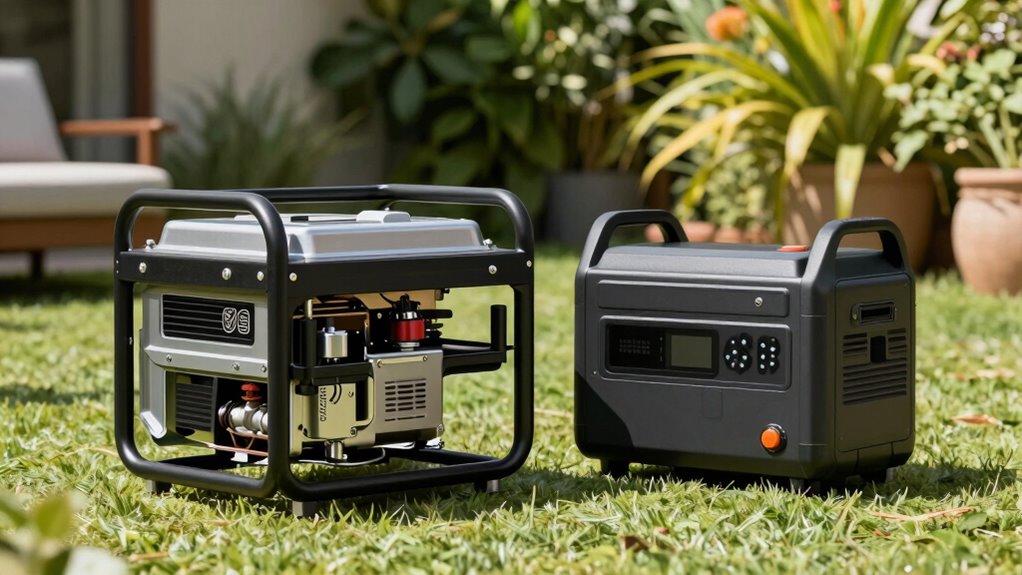

If you need flexible fuel options and higher power for large appliances, a dual fuel generator might suit you best, especially during fuel shortages. It’s great for long backup times but tends to be bulkier and noisier. If you want lightweight, portable power with clean, stable output for sensitive electronics, an inverter generator is ideal. Both serve different needs—continue exploring to find which model aligns perfectly with your backup plan and lifestyle.

Get school and study supplies delivered free — and shop member deals
- Fast, free delivery on millions of items
- Access to Prime Big Deal Days deals on October 6–7
- Prime Video, Amazon Music and more included
Key Takeaways
- Choose dual fuel generators for higher wattage needs and fuel flexibility during shortages or extended outages.
- Opt for inverter generators for lightweight, quiet operation ideal for sensitive electronics and outdoor activities.
- Dual fuel units are bulkier but better for long-term, high-capacity backup; inverter models prioritize portability and efficiency.
- Inverter generators produce cleaner power, making them suitable for electronics and medical devices.
- Match generator type to your backup plan: high capacity and fuel flexibility vs. portability and clean power.
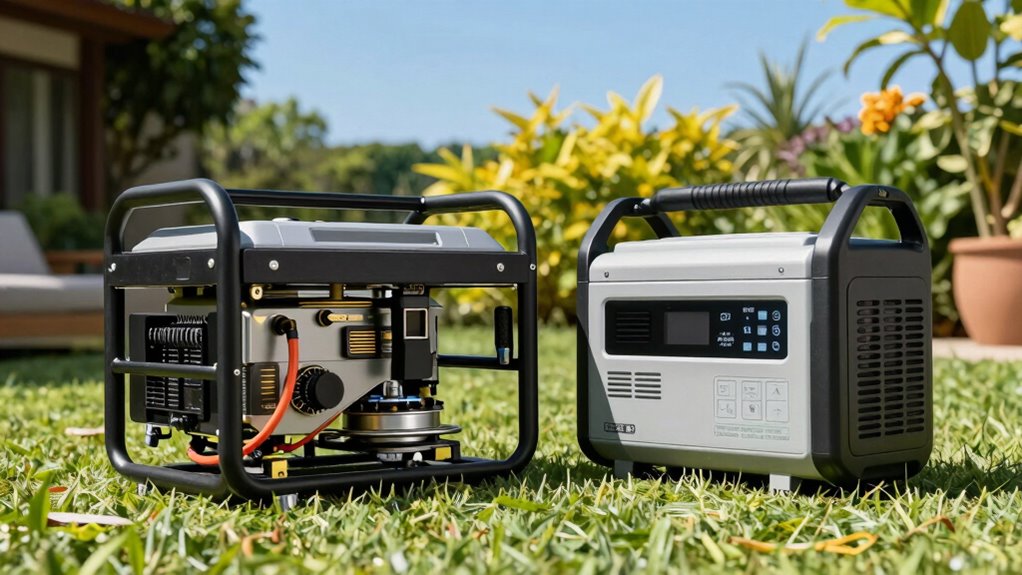
When choosing a portable generator, understanding the differences between dual fuel and inverter models can help you make an informed decision. Both options provide portable power, but they serve different backup plans depending on your needs. If you’re someone who values versatility and fuel efficiency, a dual fuel generator might be your best fit. These models can run on two types of fuel, typically gasoline and propane, giving you more flexibility when it comes to fuel availability and storage. During an outage or outdoor activity, you won’t have to worry about running out of one particular fuel source. Plus, dual fuel generators often deliver higher wattage, making them suitable for powering larger appliances or multiple devices at once. Their ability to switch between fuels can extend run times, which is ideal if you’re relying on backup power for longer periods. Additionally, fuel flexibility is a key advantage that can help you adapt to different emergency scenarios. However, keep in mind that dual fuel models tend to be bulkier and more complex, which may reduce portability if you need lightweight equipment for hiking or camping.
On the other hand, inverter generators focus on providing clean, stable power, making them perfect for sensitive electronics like laptops, smartphones, or medical devices. They use advanced technology to produce a consistent current, so your devices operate smoothly without risk of damage. They also incorporate power conditioning that further enhances the quality of the output, making them especially suitable for delicate electronics. Inverter generators are generally more fuel-efficient than traditional portable models, meaning you get longer run times on less fuel, saving you money and reducing the need for frequent refueling. Their compact size and quieter operation make them highly portable, which is especially appealing if you’re heading to outdoor events, camping trips, or need emergency backup without creating a lot of noise. Additionally, emerging inverter technology has improved their durability and overall performance, which benefits users in the long run. This advancement in technology provides reliability and efficiency, making them a smart choice for many users. The trade-off is that inverter generators usually have lower wattage outputs, so they might not power larger appliances simultaneously. They’re optimized for small to medium loads, which makes them a great choice for lightweight backup plans or outdoor adventures. Additionally, many inverter models incorporate smart technology that helps optimize fuel consumption and performance.
Ultimately, your decision hinges on what you need from your portable power source. If you require high wattage, fuel versatility, and longer run times for home backup, a dual fuel generator fits well. If your priority is portability, quiet operation, and powering sensitive electronics with efficient fuel use, an inverter generator is more suitable. Consider your specific backup plan, how much power you’ll need, and the environments you’ll be using the generator in. Both types have their strengths, so aligning their features with your priorities ensures you pick the right model for your situation.
As an affiliate, we earn on qualifying purchases.
Frequently Asked Questions
Which Generator Type Is More Cost-Effective Long-Term?
A dual fuel generator is generally more cost-effective long-term because it offers better fuel efficiency and flexibility with fuel sources, helping you save on fuel costs. Although inverter generators might have higher initial prices, they tend to have lower maintenance costs due to their simpler design. If you prioritize long-term savings and versatility, a dual fuel generator is the smarter choice for your backup plan.
How Loud Are Inverter Generators Compared to Dual Fuel Ones?
Inverter generators are generally quieter than dual fuel ones, with noise levels often between 50-60 decibels, comparable to normal conversation. Dual fuel generators tend to be louder, reaching up to 70 decibels or more, which can be disruptive, especially in quiet environments. The sound comparison shows inverter models prioritize noise reduction, making them ideal for camping or residential backup, while dual fuel units suit more robust, outdoor applications.
Can Dual Fuel Generators Run on Alternative Fuels?
Yes, dual fuel generators can run on alternative fuel options like propane or natural gas. They’re designed for generator compatibility with multiple fuel types, giving you flexibility during power outages or emergencies. This means you can easily switch fuels depending on availability or preference. Always check your generator’s specifications to guarantee it’s compatible with your chosen alternative fuel, and follow safety guidelines when switching fuels.
Are Inverter Generators Suitable for Heavy Power Tools?
Inverter generators generally aren’t ideal for heavy power tools because their power output is limited, especially with high-demand equipment. However, their portability makes them great for lightweight tools and outdoor activities. If you need to run heavy power tools regularly, opt for a generator with higher wattage capacity. For lighter tasks, inverter generators provide clean, stable power and are easy to transport, making them a versatile backup option.
What Is the Typical Lifespan of Each Generator Type?
You’ll find that inverter generators typically last around 10,000 to 20,000 hours, while dual fuel units can often reach 1,000 to 2,000 hours with proper care. Inverter generators tend to have lower maintenance requirements and better fuel efficiency, extending their lifespan. Dual fuel models, however, require more maintenance due to their complex fuel systems. Regular upkeep and correct operation are key to maximizing the lifespan of either type.
inverter quiet generator for camping
As an affiliate, we earn on qualifying purchases.
As an affiliate, we earn on qualifying purchases.
Conclusion
Choosing between a dual fuel and an inverter generator is like picking the right tool for a job—you need the right fit for your backup plan. Dual fuel generators give you flexibility, like a Swiss Army knife, ready for any fuel source. Inverter generators, on the other hand, are your precision instrument, quiet and efficient. Assess your needs, and you’ll find the perfect match to keep your power flowing smoothly, no matter the storm.
As an affiliate, we earn on qualifying purchases.
As an affiliate, we earn on qualifying purchases.
Halloween Picks
halloween
As an affiliate, we earn on qualifying purchases.