
Dolby Atmos adds a vertical dimension to sound, creating a three-dimensional audio experience that surrounds you from all angles, including above. This technology uses height speakers or headphones with object-based audio to place sounds precisely in space—like overhead aircraft or raindrops—making your environment feel more realistic and immersive. The “height sound” means you can hear sounds coming from above, enhancing depth and presence. If you’re curious, there’s more to discover about how Atmos transforms your listening experience.
Key Takeaways
- Height sound in Dolby Atmos adds a vertical dimension, making sounds appear above or below the listener for a more immersive experience.
- Dolby Atmos uses object-based audio to precisely position sounds in a 3D space, including above the listener.
- Height channels enable sounds like rain or aircraft to be perceived overhead, enhancing realism.
- This technology creates a natural, visceral sound environment by filling the space around and above the listener.
- Height sound transforms traditional surround sound into a multi-dimensional experience, increasing depth and spatial accuracy.

Have you ever wondered how some movies and music create such an immersive, three-dimensional sound experience? It’s all thanks to advances in audio technology that deliver immersive audio, making you feel like you’re right there in the middle of the action. Traditional surround sound systems, like 5.1 or 7.1 setups, place speakers around you to create a sense of space and directionality. But Dolby Atmos takes this a step further by adding a vertical dimension, allowing sounds to come from above as well as around you. This height sound capability transforms your listening experience, making it more realistic and engaging. Instead of simply hearing a helicopter fly around your head, you can now perceive it soaring overhead, heightening the sense of presence and depth.
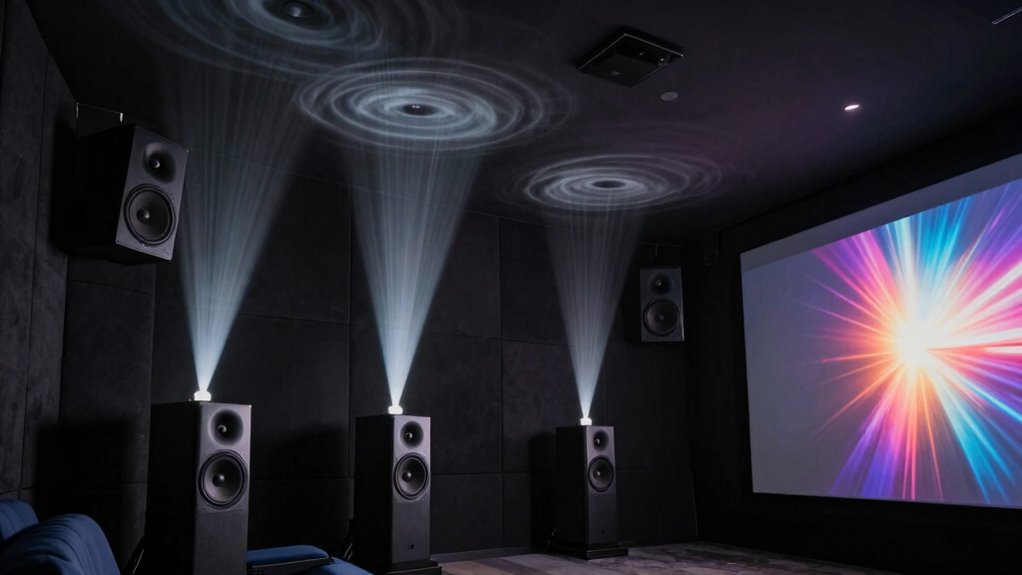
Experience immersive sound with Dolby Atmos, adding height for a more realistic, three-dimensional audio experience.
When you experience Dolby Atmos, you’re not just listening to a mix of sounds; you’re immersed in a carefully crafted soundscape that employs a network of speakers or headphones to produce a truly three-dimensional environment. This isn’t just about loudness or bass—it’s about spatial clarity and positioning. The system uses multiple channels and specialized speakers to assign specific sounds to precise locations in the soundfield, including those above you. This means that sounds like rain falling from above or a plane flying overhead aren’t just added as background effects—they’re integrated into the scene with spatial accuracy, making the experience more natural and visceral.
The magic behind Dolby Atmos is its object-based audio technology. Instead of mixing sounds into channels, sound engineers create individual “objects” that can be placed anywhere in a three-dimensional space. This allows for dynamic movement of sounds, giving you a more fluid and lifelike experience. Whether it’s footsteps approaching from behind, a whisper from above, or a car passing by on your side, Atmos ensures each element is precisely positioned, creating a seamless surround sound experience. This is especially effective with home theater systems or high-end headphones, where Dolby Atmos content provides a sense of depth and height that standard surround sound can’t match. Additionally, the spatial accuracy of Dolby Atmos enhances the realism and immersion, making every sound feel more natural and appropriately placed.
In essence, Dolby Atmos elevates your audio experience by adding height sound, filling the space around you in a way that’s both immersive and natural. It’s a leap forward in surround sound technology, transforming how you perceive audio from movies, music, and games. Instead of feeling like the sound is coming from just around you, you’re transported into a multi-dimensional world where every whisper, explosion, or note feels incredibly real and vividly placed in three-dimensional space.
Frequently Asked Questions
Can I Experience Dolby Atmos Without a Dedicated Home Theater System?
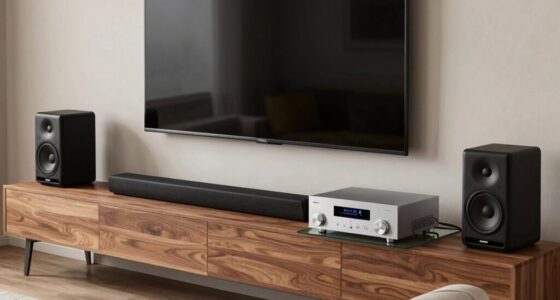
Yes, you can experience Dolby Atmos without a dedicated home theater system. To do so, focus on optimizing your room acoustics and speaker placement. Use compatible soundbars or upward-firing speakers that simulate height sound. Properly positioning these speakers and adjusting your room setup enhances the Atmos effect, even without expensive equipment, allowing you to enjoy immersive sound right in your living space.
Does Dolby Atmos Require Special Headphones for True Sound Experience?
You don’t need special headphones to enjoy Dolby Atmos, but proper headphone calibration matters. While true Atmos sound is more immersive with compatible soundbars or home theater setups, some headphones can simulate height sound effectively. Look for ones with built-in spatial audio features or that work well with soundbar compatibility apps. Think of it as tuning your personal soundscape to mirror the grandeur of a concert hall, even in your ears.
How Does Dolby Atmos Differ From Traditional Surround Sound Formats?
Dolby Atmos differs from traditional surround sound by creating immersive spatial audio with precise sound layering. Instead of just surrounding you with channels, it places sounds in 3D space, including overhead, giving a more realistic experience. You notice this with sounds moving smoothly above and around you, elevating your listening or viewing experience. This advanced sound design makes Dolby Atmos stand out, making you feel truly enveloped in the audio environment.
Is Dolby Atmos Compatible With All Streaming Platforms?
Like a finely tuned orchestra, Dolby Atmos isn’t compatible with all streaming platforms. You need compatible hardware and content that includes specific audio metadata, which guarantees the height sound is properly delivered. However, content licensing can limit availability, so check if your platform supports Atmos and if the streaming service has the necessary licenses. Not all platforms offer Atmos, so compatibility varies widely.
What Are the Best Devices to Enjoy Dolby Atmos Content?
To enjoy Dolby Atmos content, you should consider soundbar options like the Sonos Arc or Samsung HW-Q950A, which deliver immersive height sound. If you prefer headphones, look for models with Dolby Atmos compatibility, such as the Sony WH-1000XM5 or Apple AirPods Pro (2nd generation). These devices provide a rich, three-dimensional audio experience, making your movies and games feel more lifelike and engaging.
Conclusion
Now that you understand Dolby Atmos, it’s like revealing a new dimension of sound that surrounds you from all angles, making your listening experience feel as if you’re inside the action. With its height channels adding an extra layer of realism, you’ll notice sounds coming from above and around you, creating a more immersive world. Once you experience Atmos, it’s hard to go back—like stepping into a vivid, three-dimensional painting that pulls you right in.