
Bread goes stale mainly because moisture moves away from the crumb and starch molecules reassemble, causing dryness, crumbliness, and loss of flavor. High temperatures speed up these processes, while proper storage can slow them down. To keep bread fresh longer, store it in airtight containers or wrap it tightly, and avoid warm, humid places. If you want to learn more about extending your bread’s shelf life, keep exploring these tips.
Key Takeaways
- Bread stales due to moisture redistribution, starch retrogradation, and enzymatic activity that cause dryness and firming.
- Higher temperatures accelerate staling by increasing moisture loss and starch recrystallization.
- Proper storage in airtight containers and cool environments slows moisture loss and starch reorganization.
- Refrigeration speeds up staling by promoting starch crystallization, while room temperature storage preserves freshness longer.
- Wrapping bread tightly and using breathable containers help maintain moisture and delay staling.
airtight bread storage container
As an affiliate, we earn on qualifying purchases.
As an affiliate, we earn on qualifying purchases.
Why Does Bread Go Stale, and How Can You Keep It Fresh?
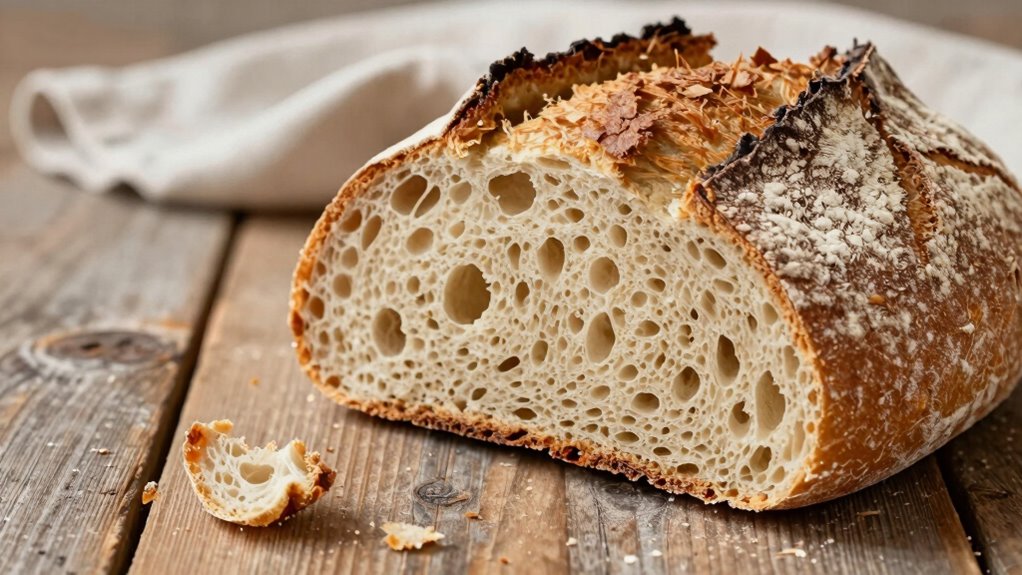
Have you ever wondered why bread becomes stale even before you finish the loaf? It all comes down to bread preservation and moisture loss. When bread sits out, the moisture inside evaporates, causing it to become hard and dry. To slow this process, store bread in a cool, airtight container or a bread box, which helps maintain the right humidity. Proper storage also aids in mold prevention, as mold thrives in warm, moist environments. Avoiding exposure to air and humidity slows mold growth and keeps your bread fresher longer. If you want to extend freshness, consider freezing bread and toasting slices as needed. These simple steps help preserve your bread’s texture and flavor, preventing early staleness and mold development. Additionally, understanding how moisture migration affects bread can help you choose better storage methods to keep your bread soft and fresh for longer. Using airtight containers can further reduce moisture loss and improve longevity. Incorporating ingredients like clove oil in baked goods can also help inhibit mold growth naturally, extending shelf life. Implementing proper storage techniques can make a significant difference in maintaining bread quality over time.
As an affiliate, we earn on qualifying purchases.
What Causes Bread to Stale? The Science Made Simple
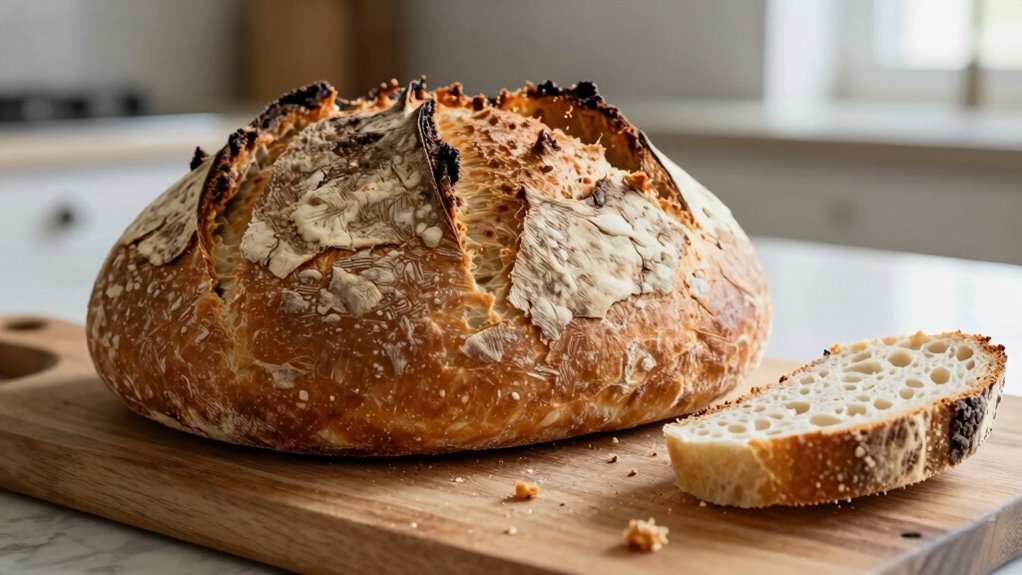
When bread goes stale, it’s primarily due to changes in its internal structure caused by moisture redistribution. Enzymatic activity continues after baking, breaking down starches and proteins, which weakens the bread’s texture over time. As moisture moves away from the crumb, the bread becomes dry and crumbly. Crust formation also plays a role; as the crust cools, it hardens and loses moisture, creating a barrier that traps remaining moisture inside. This process accelerates staling because the moisture imbalance causes the bread to become firmer and less flexible. These combined factors—enzymatic activity softening internal components and crust formation altering moisture dynamics—are key to understanding why bread loses freshness and becomes stale.
As an affiliate, we earn on qualifying purchases.
How Starch Retrogradation Turns Fresh Bread Into Dry, Crumbly Loaves
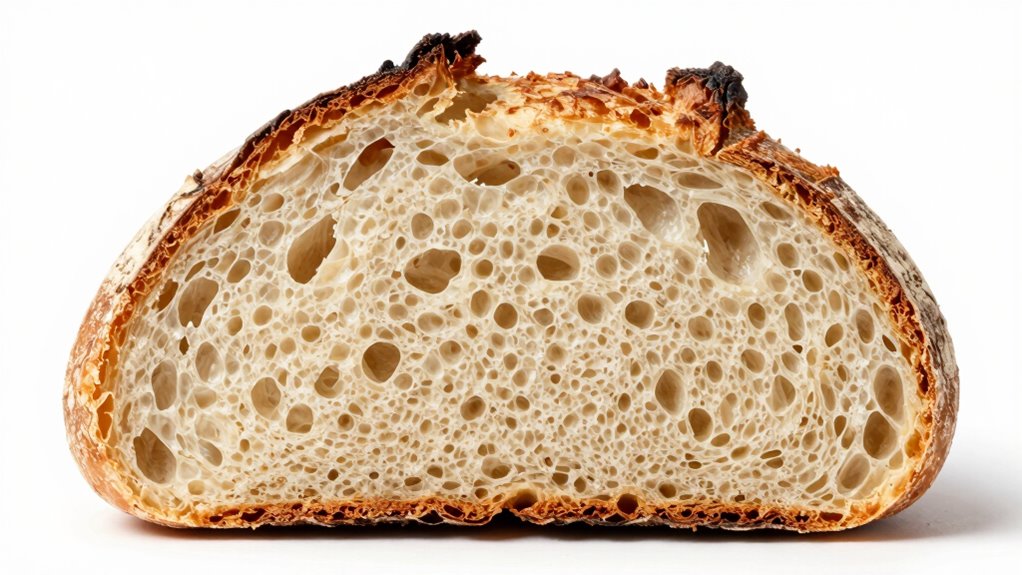
When starch molecules reassemble after baking, bread starts to lose its moisture and becomes dry. Temperature speeds up this retrogradation process, making bread crumblier faster if stored improperly. How you store your bread influences how quickly it turns stale and crumbly over time. Proper storage methods, such as keeping bread in a cool, airtight container, can slow down starch retrogradation and help maintain freshness longer.
Starch Molecules Reassemble
Ever wonder what causes fresh bread to turn dry and crumbly over time? It all comes down to starch molecules. When bread cools after baking, the starch molecules begin to undergo molecular reassembly, a process called retrogradation. During this process, the starch chains, which were once well-separated and gel-like when hot, start to realign and crystallize as they cool. This reorganization pushes water out of the starch matrix, making the bread drier and crumbly. As starch molecules reassemble, the bread loses its soft, moist texture, turning stale. Understanding this molecular reassembly helps explain why bread’s freshness diminishes over time, even if stored properly. It’s a natural, inevitable process, but knowing how it works can help you find ways to slow it down.
Temperature Accelerates Retrogradation
Temperature plays a crucial role in speeding up the process of starch retrogradation. When bread is stored at higher temperatures, the starch molecules reassemble more quickly, causing the bread to become dry and crumbly. Elevated temperatures also increase evaporation, which removes moisture and accelerates staling. As moisture escapes, the bread’s texture becomes firmer and less appealing. Additionally, warmth fosters mold growth, which can further degrade bread quality and hasten staling. Keeping bread at warmer temperatures creates an environment where retrogradation occurs faster, turning fresh, soft bread into a stale, dry loaf in less time. To slow this process, controlling temperature and minimizing evaporation are key, as lower temperatures reduce the rate of starch reorganization and moisture loss, helping your bread stay fresh longer.
Storage Affects Crumbliness
As bread cools and is stored over time, starch molecules begin to realign and form crystalline structures through retrogradation. This process causes the bread to lose moisture, making it dry and crumbly. To preserve crumb quality and moisture retention, consider these tips:
- Store bread in an airtight container or bag to slow moisture loss.
- Keep bread at room temperature rather than in the fridge, which accelerates retrogradation.
- Reheat or microwave bread before eating to temporarily soften the crumb.
- Be mindful of free floating conditions that can exacerbate moisture loss and crumb deterioration.
- Understanding Gold IRA Markets can help you choose the best storage methods for long-term preservation.
- Utilizing energy-efficient cloud servers can support sustainable storage solutions for food safety data and inventory management.
Proper storage minimizes starch retrogradation, helping you maintain the bread’s freshness longer. Understanding how storage affects crumbliness allows you to make smarter choices, keeping your bread moist and enjoyable for as long as possible.
As an affiliate, we earn on qualifying purchases.
Why Moisture Loss Makes Bread Go Dry and Hard
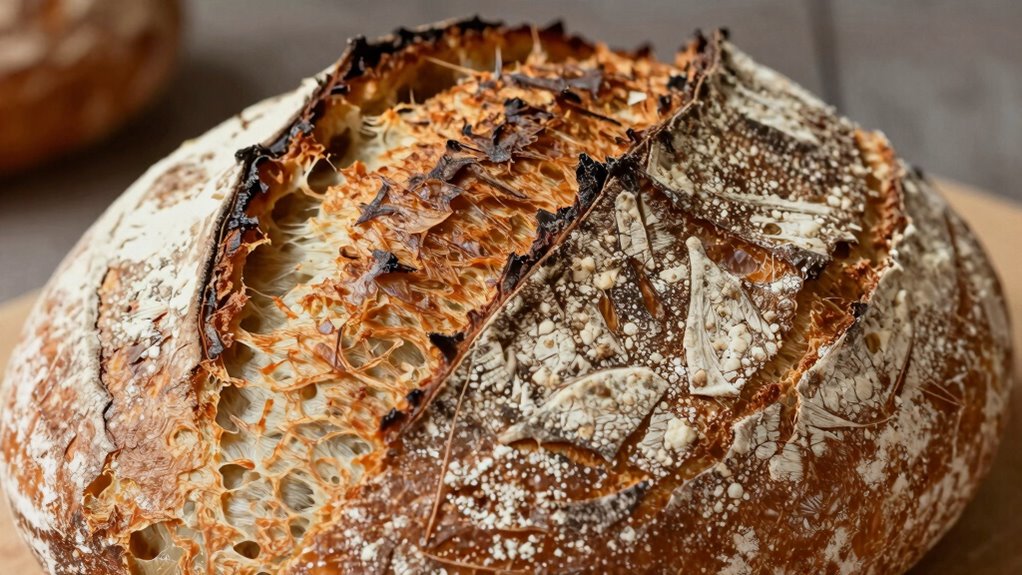
Have you noticed how bread becomes dry and hard after a few days? That’s because moisture migration causes crumb moisture to escape, leaving the bread dry. As moisture moves from the interior to the surface, the crumb loses its softness and becomes tough. When the moisture content drops, the starch molecules recrystallize, contributing to a firmer, stale texture. This process happens naturally as water evaporates, especially if bread isn’t stored properly. The loss of crumb moisture not only affects texture but also accelerates staling, making bread less enjoyable. To slow this down, keeping bread in airtight containers helps retain moisture, limiting migration and preserving softness longer. Proper storage techniques are essential for maintaining freshness. Controlling moisture loss is key to maintaining fresh, tender bread for a longer time, especially since staling is influenced by the recrystallization of starch molecules. Additionally, understanding moisture migration can help you choose the best storage methods to keep bread fresher longer. Maintaining optimal storage conditions can also mitigate the effects of moisture loss on bread quality.
How Temperature Affects Bread Staling and Shelf Life
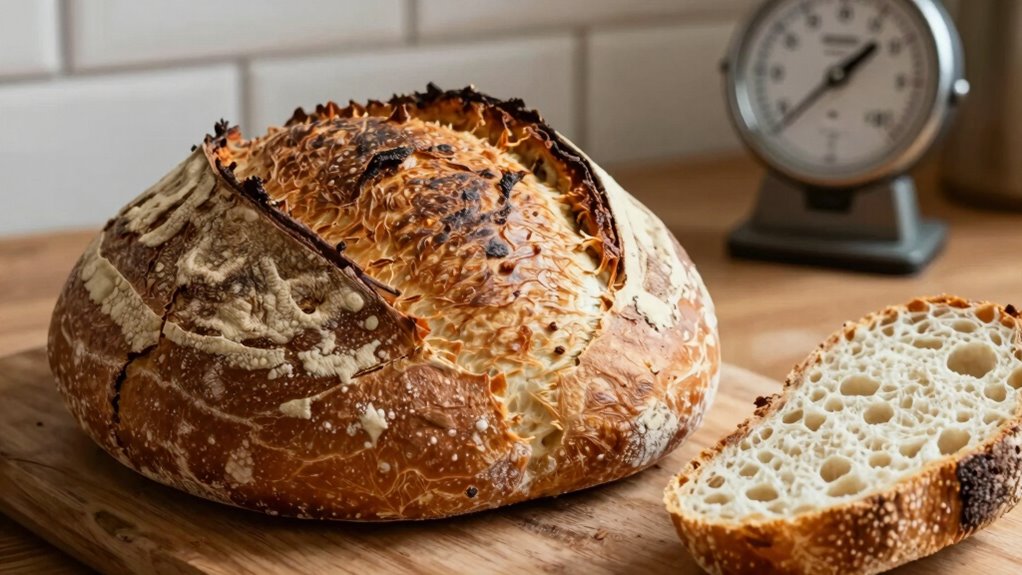
You’ll notice that storing bread in a cold place slows down the staling process, helping it stay fresh longer. Conversely, warm environments speed up spoilage and make bread go bad more quickly. Understanding how temperature impacts bread can help you choose the best storage method to extend its shelf life. Using proper storage techniques can further enhance freshness and prevent premature staling. Additionally, maintaining the right storage temperature is crucial for preserving bread’s quality over time. Incorporating temperature control strategies, such as using a bread box or refrigeration when appropriate, can optimize freshness and reduce waste. Proper temperature regulation is essential for preventing mold growth and maintaining bread’s texture and flavor.
Cold Temperatures Slow Staling
Cold temperatures considerably slow down the process of bread staling by inhibiting the molecular changes that cause freshness to fade. When you store bread in a cool environment, you extend its shelf life naturally. Here are three key points to contemplate:
- Slows Starch Retrogradation: Cold temps reduce the rate at which starch molecules recrystallize, keeping bread moist longer. Proper storage techniques are essential to maximize this benefit and prevent moisture loss. Additionally, understanding bread preservation methods can further optimize freshness. Employing appropriate storage containers helps maintain optimal humidity levels to support this process.
- Enhances Shelf Life: Refrigeration can help preserve bread, but only if combined with proper bread preservatives and packaging.
- Prevents Mold Growth: Lower temperatures also inhibit mold development, maintaining bread quality longer.
- Proper storage conditions are crucial for maintaining bread’s freshness and texture, ensuring you enjoy it over a longer period. Using suitable bread packaging helps retain moisture and flavor, and thinking about refrigeration as a way to slow staling without sacrificing texture or flavor.
Warm Environments Accelerate Spoilage
Warm environments speed up the process of bread spoilage by accelerating the chemical and microbial activities that cause staling and mold growth. Higher temperatures increase yeast activity, which can lead to faster fermentation and spoilage. Additionally, warmth encourages bread mold development, making it more likely for mold spores to thrive and spread quickly. When bread is stored in a warm place, the rapid yeast activity can cause uneven staling and souring, while mold spores settle and grow faster. This shortens your bread’s shelf life and increases waste. To keep bread fresh longer, avoid warm environments and opt for cooler storage options. Proper cooling slows down yeast activity and mold growth, helping your bread stay fresh and safe to eat for a longer period. Understanding microbial activity can further help in choosing optimal storage conditions to extend bread freshness. Managing storage temperature effectively is key to slowing down microbial processes and maintaining bread quality. Maintaining an appropriate temperature range can significantly influence the rate of microbial activity and thus the shelf life of bread. Using proper storage methods can also help prevent moisture buildup that encourages mold growth.
Easy Tips to Keep Your Bread Fresher Longer
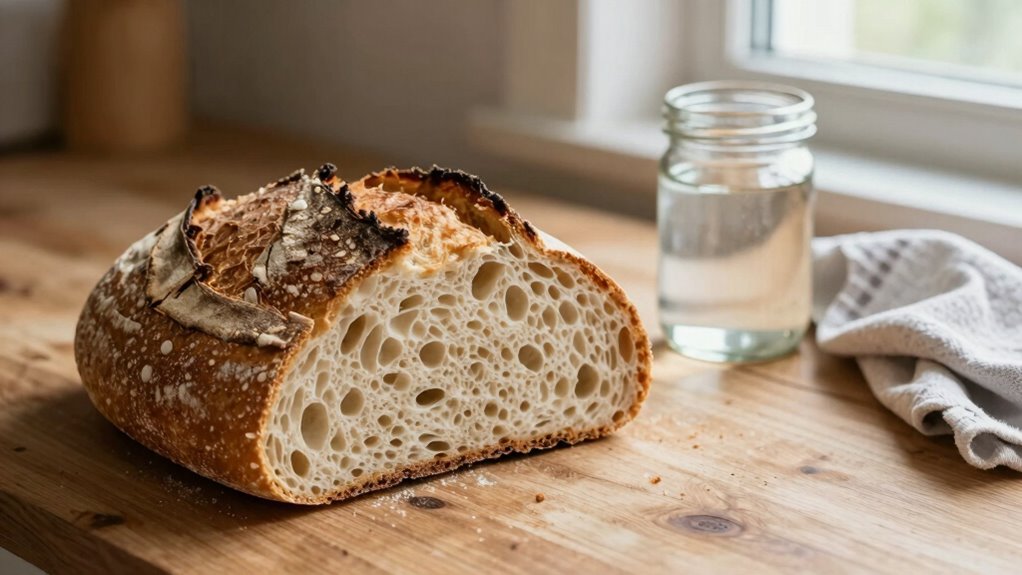
Want to keep your bread fresh for as long as possible? Here are three easy tips to slow down staling and extend its freshness.
- Use bread preservatives carefully: Look for store-bought options with natural preservatives or add a small amount of vinegar or lemon juice to homemade bread to inhibit mold growth.
- Employ artisan techniques: Baking bread with a sourdough starter creates natural acidity that helps preserve freshness longer compared to commercial methods.
- Proper storage: Keep your bread in a paper bag or a cloth bread box to allow airflow, which prevents moisture buildup that accelerates staling. Avoid plastic unless freezing. These simple steps help maintain bread’s texture and flavor longer, making your loaf last.
Best Ways to Store and Freeze Bread to Prevent Staling
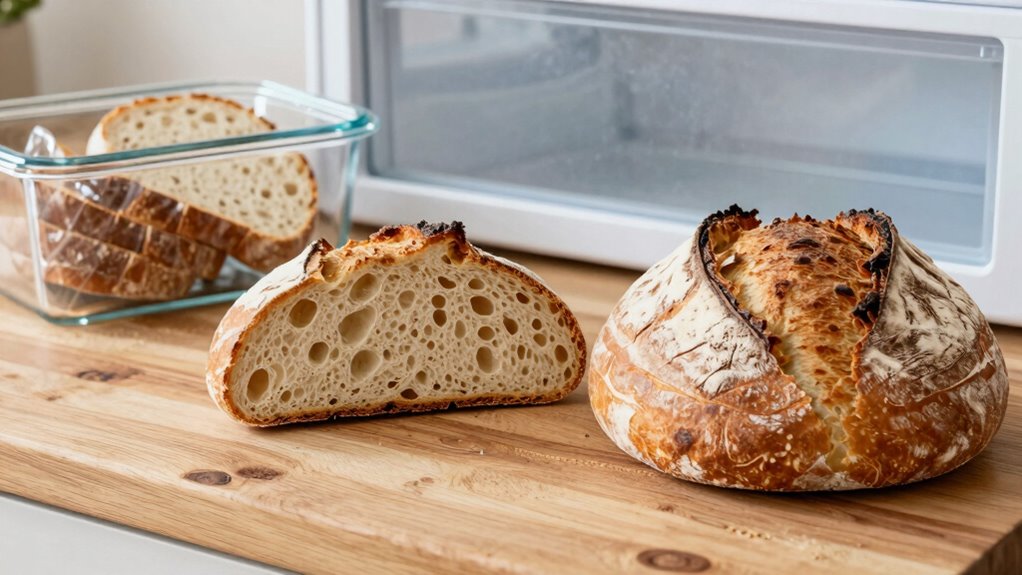
To prevent bread from going stale quickly, storing and freezing it properly is essential. Effective bread preservation starts with choosing the right storage techniques. Keep bread in a breathable bag, like paper or a cloth bread box, to prevent moisture buildup that accelerates staling. For longer-term preservation, freezing is your best option. Wrap the bread tightly in plastic wrap or aluminum foil, then place it in an airtight container or freezer bag to prevent freezer burn. Label the package with the date to track freshness. When you’re ready to enjoy it, thaw the bread at room temperature or gently reheat it in the oven. Proper storage techniques help maintain freshness and extend the bread’s shelf life, reducing waste and keeping your bread tasting its best.
Common Mistakes That Speed Up Bread Staling (and How to Avoid Them)
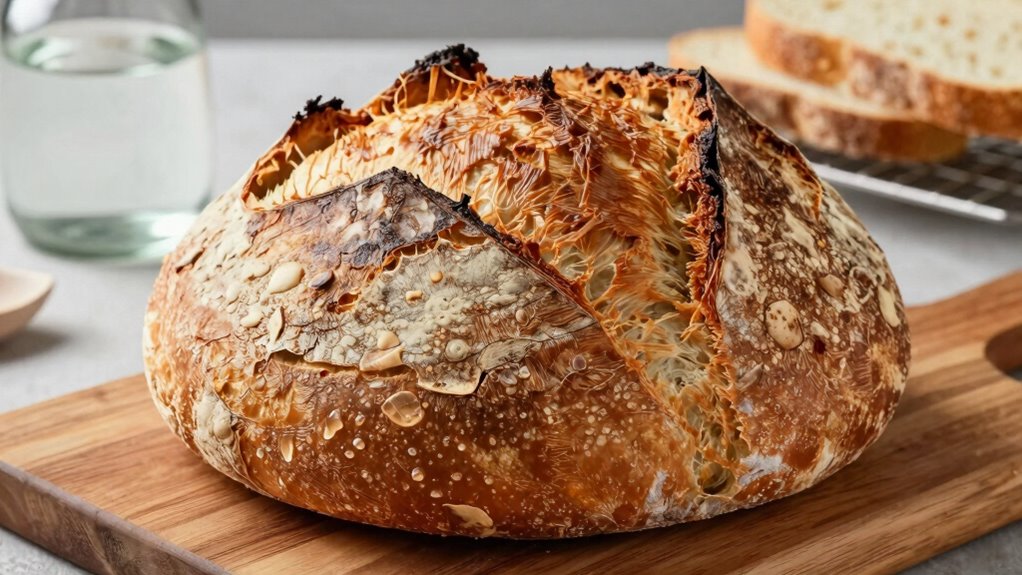
Many common mistakes in storing bread can cause it to go stale more quickly, even if you’ve taken steps to preserve its freshness. One major error is exposing bread to too much moisture, which encourages bread mold growth and accelerates staling. Second, storing bread in the fridge speeds up yeast activity initially but leads to faster staling due to starch retrogradation. Third, wrapping bread tightly in plastic without proper ventilation traps humidity, promoting mold and dryness. Additionally, handling bread excessively or slicing it prematurely exposes it to air, drying it out and speeding up staling. To avoid these pitfalls, store bread in a paper bag or loosely in a bread box at room temperature, and only refrigerate if necessary—just be aware it may still stale faster.
Frequently Asked Questions
Can Adding Preservatives Prevent Bread From Going Stale?
Adding preservatives can prevent bread from going stale temporarily by enhancing preservative effectiveness and slowing moisture loss. These chemicals help extend the shelf life, keeping bread softer longer. However, they don’t stop staling entirely, as moisture migration and starch retrogradation still occur over time. If you want longer-lasting bread, preservatives can help, but storing bread properly—like in a cool, airtight container—also plays a crucial role in shelf life extension.
Does Slicing Bread Early Affect Its Staling Process?
If you slice bread early, it can speed up staling because exposed surfaces lose moisture faster. To slow the process, wait to slice until you’re ready to eat, and store bread properly in a sealed bag or container to maintain freshness. Proper slicing timing and storage methods help keep bread soft longer, so resist the urge to pre-slice and preserve its texture for as long as possible.
How Does Humidity Influence Bread Staling?
Humidity plays a vital role in bread staling by influencing moisture migration. In high humidity, your bread absorbs excess moisture, making it mold more quickly and potentially accelerating staling. Conversely, low humidity causes moisture to escape, leading to dryness and firmness. To slow staling, store bread in a cool, dry place to control humidity, which helps reduce mold development and keeps your bread fresher longer.
Are There Specific Bread Types That Stale Faster Than Others?
Some bread varieties, like baguettes and artisan loaves, stale faster than dense, preservative-filled bread. You’ll notice that crusty, airy types lose freshness quickly. To slow this down, store different types properly—fresh bread benefits from airtight containers, while crusty varieties stay better in paper or linen. Proper storage methods help maintain moisture and texture, preventing faster staling and extending your bread’s freshness.
Can Reheating Bread Reverse Staling or Improve Freshness?
They say, “You can’t turn back the clock,” but reheating bread can help restore some freshness. Reheating improves moisture retention and softens the crumb, making it more enjoyable. Use freezing techniques to keep bread fresh longer, and when reheating, do so gently to avoid drying it out. Remember, while it won’t fully reverse staling, it definitely refreshes bread enough for a tasty snack.
Conclusion
Now that you know what causes bread to go stale and how to prevent it, aren’t you ready to keep your loaves fresher longer? By storing bread properly, controlling temperature, and avoiding common mistakes, you can enjoy soft, tasty bread for days. Why settle for dry, crumbly slices when a little knowledge can make all the difference? Start applying these tips today and savor every bite!