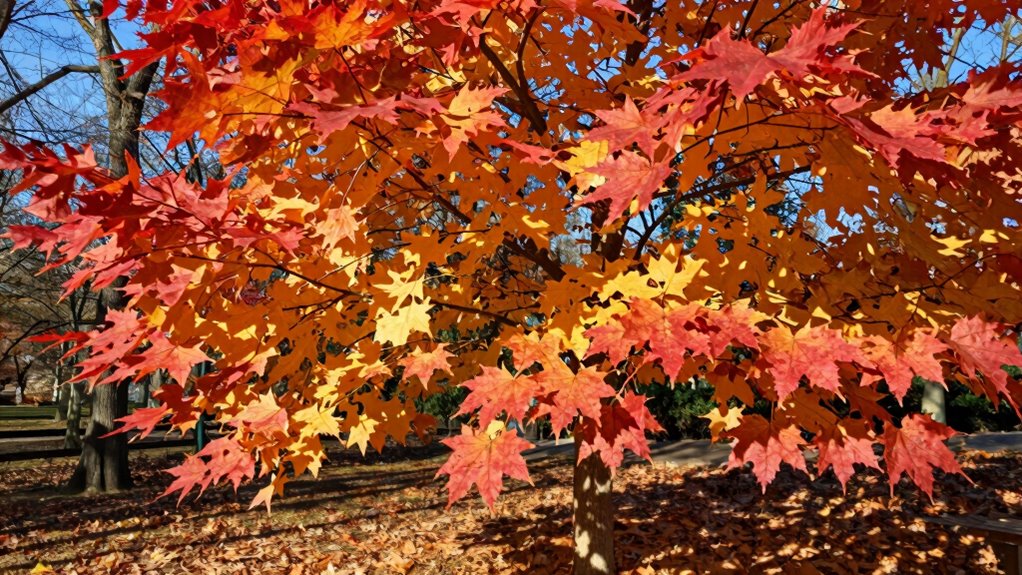

Leaves change color in fall because trees break down chlorophyll, revealing bright pigments like carotenoids and anthocyanins. The timing depends on environmental cues such as cooler temperatures, shorter days, and sunlight levels, which trigger this process. Warmer weather or late frosts can delay or shorten the colorful display. If you look closer, you’ll discover how different conditions and tree types influence the stunning fall scenery.
Key Takeaways
- Leaf color change results from chlorophyll breakdown, revealing carotenoids and anthocyanins responsible for fall hues.
- Shorter days and cooler temperatures trigger chlorophyll degradation, signaling the onset of color change.
- Environmental factors like sunlight, temperature, and soil moisture influence the timing and intensity of vibrant colors.
- Species differences and regional climate conditions cause variation in when and how leaves change color.
- Stable soil moisture and optimal weather conditions prolong the duration and brightness of fall foliage.
Why Do Leaves Change Color in Fall?
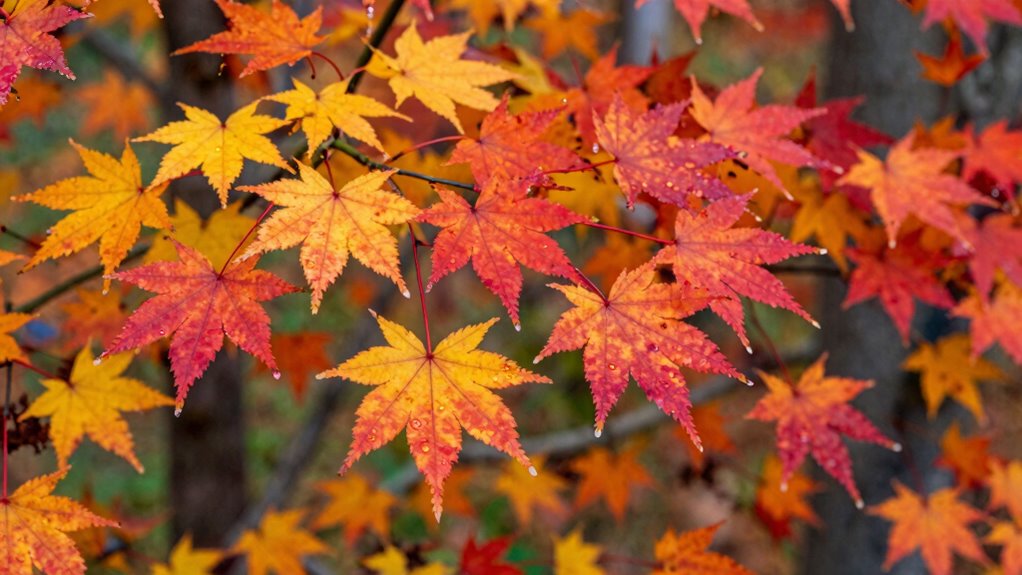
As fall approaches, you might notice leaves turning vibrant shades of red, orange, and yellow. This change happens because of leaf senescence, the process where leaves prepare to fall. During this time, chlorophyll degradation occurs, breaking down the green pigment that masks other colors. As chlorophyll disappears, underlying pigments like carotenoids and anthocyanins become visible, revealing the bright fall hues. The degradation process is triggered by shorter daylight hours and cooler temperatures, signaling trees to conserve resources for winter. As chlorophyll breaks down, the leaf’s green fades, and the vibrant colors emerge. This natural cycle not only creates stunning scenery but also helps the tree reabsorb valuable nutrients before shedding its leaves for the winter months. Additionally, understanding free floating leaves can provide insights into how trees adapt to environmental changes during this seasonal transition. Environmental cues, such as temperature and sunlight, play a crucial role in regulating the timing of these color changes. Furthermore, research into leaf chemistry reveals how different species respond uniquely to these cues, influencing the diversity of fall foliage.
How Do Pigments Give Leaves Their Colors?

Have you ever wondered what gives leaves their brilliant fall colors? It all comes down to pigments in the leaves. During the growing season, chlorophyll dominates, giving leaves their lush green hue. As days shorten and temperatures fall, chlorophyll begins breaking down—this is chlorophyll breakdown—revealing other pigments hidden in the leaf. Carotenoids, responsible for yellows and oranges, become more visible once green chlorophyll fades. These pigments are always present but masked by chlorophyll during summer. The breakdown process unearths these colors, creating the vibrant fall foliage you enjoy. Additionally, anthocyanins may form in some leaves, adding reds and purples. The contrast ratio of leaf colors can vary based on environmental factors, influencing the vibrancy of fall foliage. So, the brilliant colors are a result of the interplay between chlorophyll breakdown and the visibility of carotenoids and other pigments. Proper plant pigment preservation can influence how vivid these colors remain in fall.
What Environmental Factors Influence When Leaves Turn?
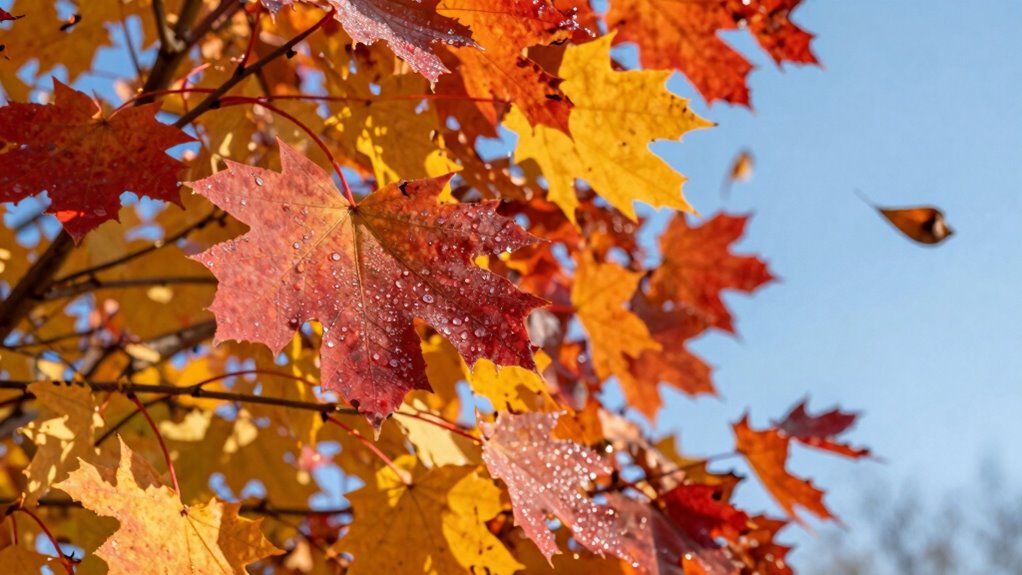
You’ll notice that temperature drops and fluctuations often signal when leaves start changing color. Shorter days and less sunlight also play a key role in triggering this transformation. Together, these environmental factors determine the precise timing of autumn’s vibrant display. Additionally, light exposure influences the rate at which chlorophyll breaks down, further impacting leaf color changes. Changes in climate patterns can also cause shifts in the timing and intensity of leaf color changes each year. Moreover, seasonal variations can alter how quickly these environmental cues affect leaf coloration. Variations in local weather can also accelerate or delay the onset of color change depending on specific conditions. Recognizing how environmental cues interact helps us understand the dynamic nature of seasonal changes in foliage.
Temperature Fluctuations Impact Timing
Temperature fluctuations play a crucial role in determining when leaves change color. You’ll notice that sudden drops or gradual cooling act as temperature cues, signaling trees to prepare for fall. These seasonal shifts influence the breakdown of chlorophyll, revealing vibrant pigments beneath. If temperatures stay warm longer, leaves may stay green or change color later, delaying the spectacle. Conversely, early frosts or sharp temperature drops can accelerate the process, causing leaves to turn and fall sooner. It’s not just the overall temperature but the pattern of fluctuations that matters—rapid cooling triggers quicker color change. Your environment’s temperature cues essentially tell trees when to shift gears, ensuring the timing aligns with seasonal shifts, so you get to enjoy the colorful display at just the right moment.
Day Length and Sunlight
As days grow shorter and sunlight diminishes, trees detect these changes through the amount of light they receive each day. They rely on photoperiod cues—signals from the length of daylight—to trigger the start of leaf color change. When sunlight intensity drops and days become shorter, chemical processes in the tree respond by breaking down chlorophyll, revealing other pigments. This process is finely tuned to environmental signals, ensuring leaves turn at the right time. Longer nights and decreased sunlight serve as critical indicators that winter is approaching. Your trees “read” these cues, adjusting their physiology accordingly. So, it’s not just temperature but also the changing day length and sunlight intensity that primarily influence when leaves *shift* into their vibrant autumn hues.
Why Do Some Trees Change Color Earlier or Later?
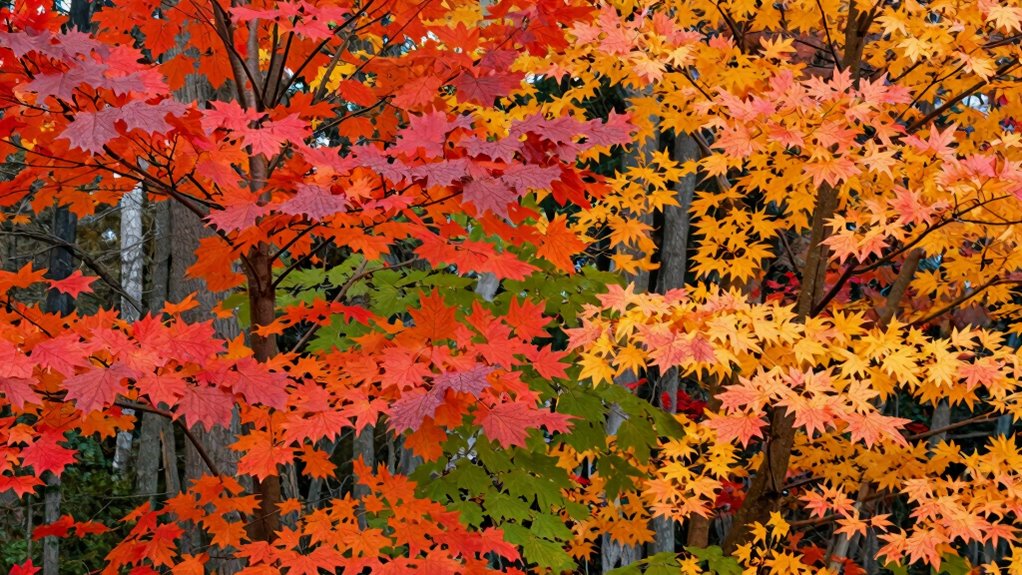
Different trees change color at different times because of variations in their species, local climate, and environmental conditions. Climate variation influences how quickly leaves prepare for fall, with warmer areas often delaying color change. Soil composition also plays a role, affecting nutrient availability and tree health, which can impact leaf pigmentation timing. For example, trees with access to rich, well-drained soil may change color earlier. Additionally, genetic factors determine each species’ response to environmental cues. Here are four key influences:
- Temperature fluctuations
- Soil nutrients and moisture
- Local climate patterns
- Tree species’ genetic traits. Environmental factors can also influence the timing of leaf color change, as they affect the overall health and stress levels of the trees. Understanding these factors helps explain why some trees brighten earlier or later, making the fall landscape uniquely dynamic. Recognizing how glycolic acid can influence skin appearance and health offers creative ways to enhance seasonal displays. Additionally, climate variability plays a significant role in shifting the timing of leaf color changes from year to year, and even soil composition can impact how vibrant the colors appear.
How Does Weather Affect Foliage Brightness and Duration?

Weather plays a vital role in shaping how vibrant your fall foliage appears and how long it lasts. Consistent soil moisture keeps leaves healthy and enhances color brightness, while droughts can cause leaves to fall early and dull the display. Wind patterns also influence foliage duration; strong winds can strip leaves prematurely, shortening the colorful season. Gentle breezes, on the other hand, help dry out excess moisture, preventing fungal issues that might weaken trees. Cold snaps and clear, sunny days boost pigment development, making reds and oranges more vivid. Conversely, prolonged cloud cover can dull colors. Weather conditions such as temperature fluctuations and humidity levels are also significant factors affecting foliage coloration. Overall, stable soil moisture and moderate wind patterns contribute to brighter, longer-lasting foliage, creating a more spectacular fall display for you to enjoy. Additionally, festival logistics like infrastructure and event planning can impact the timing and quality of outdoor experiences during seasonal events. Proper environmental conditions are essential for maintaining optimal foliage health and color vibrancy throughout the season. Maintaining consistent soil moisture levels is also crucial, as fluctuations can cause stress to trees and reduce color intensity. Moreover, climate variability can influence the overall timing and intensity of leaf coloration each year.
When Is the Best Time to See Fall Foliage?

The timing of peak fall foliage varies depending on your location and local climate conditions. Typically, you’ll want to plan your visit during mid to late October for the best peak viewing. To maximize your experience, consider these factors:
- Check regional fall foliage forecasts for current peak dates.
- Visit popular scenic drives known for vibrant colors.
- Aim for weekdays to avoid crowds and enjoy unobstructed views.
- Be flexible with your schedule, as weather shifts can alter peak timing.
Frequently Asked Questions
How Do Different Tree Species Vary in Leaf Color Change?
You’ll notice that different tree species vary in leaf color change due to species variation and genetic factors. Some trees, like maples, turn vibrant reds and oranges, while oaks shift to browns. These differences stem from each species’ unique genetic makeup, which influences how pigments like anthocyanins and carotenoids develop during fall. So, your observation of diverse colors is driven by the genetic factors inherent in each tree species.
What Role Do Soil Nutrients Play in Leaf Coloration Timing?
Soil nutrients and composition directly influence when your leaves change color. If the soil has abundant nutrients and good composition, the process may happen later, as the tree stays healthy longer. Conversely, limited nutrient availability can accelerate leaf color change, signaling stress. You can observe these effects by noticing how soil quality impacts the timing of autumn foliage, with nutrient-rich soils often delaying the vibrant display.
Can Climate Change Alter Traditional Fall Foliage Patterns?
Climate change can definitely alter traditional fall foliage patterns by affecting tree adaptation and seasonal cues. Warmer temperatures and unpredictable weather disrupt the signals trees rely on, like cooling temperatures and daylight hours, causing leaves to change color later or less vividly. You might notice shorter or irregular foliage displays, as trees struggle to interpret these altered cues. This shift impacts ecosystems and your seasonal experiences, highlighting nature’s sensitivity to climate variations.
How Do Urban Environments Impact Leaf Color Development?
Urban environments impact leaf color development by accelerating the process and dulling the vibrancy. You’ll notice earlier color changes, driven by urban heat that speeds up leaf senescence. Pollution effects, like smog and toxins, can dull colors and shorten the fall display. The combination of heat and pollution creates a less vivid, more hurried shift, making urban fall foliage different from the natural, untouched landscape.
Are There Health Benefits Associated With Viewing Fall Foliage?
Viewing fall foliage offers notable health benefits, including mental relaxation and stress relief. As you take in vibrant colors, your mood improves, and anxiety decreases. The natural beauty of autumn scenery encourages you to spend time outdoors, promoting physical activity and connection with nature. These experiences boost your overall well-being, making fall a perfect season to enjoy the calming effects of colorful leaves and improve your mental health.
Conclusion
As you observe the vibrant fall colors, remember they’re influenced by a mix of pigments and environmental cues. Imagine the trees as artists, changing their palette based on temperature and daylight. If you notice early color changes, it’s like nature’s way of signaling the upcoming winter. So, plan your visits during peak season to witness this stunning display—it’s a beautiful reminder of how weather and biology work together to create nature’s masterpiece.