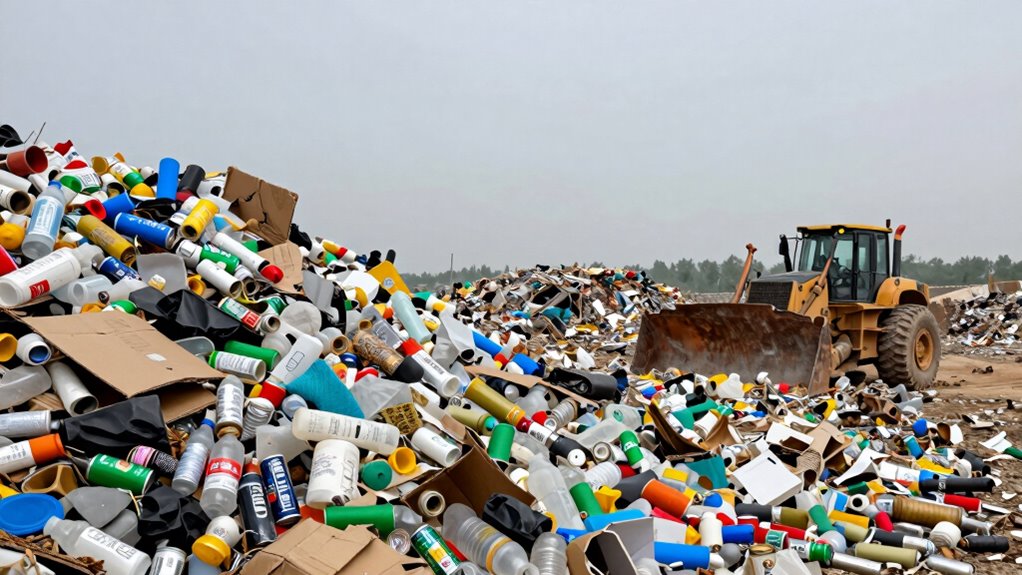

After trash leaves your home, it’s collected and transported to sorting facilities or landfills. Recyclables are separated, cleaned, and processed into raw materials for manufacturers. Non-recyclable waste often goes to modern landfills or is burned in waste-to-energy plants that generate power. Organic waste gets composted to create nutrient-rich soil. If you want to understand how these processes work together to protect the environment, keep exploring the next steps.
Key Takeaways
- Waste is collected by trucks and transported to transfer stations or disposal sites like landfills or recycling centers.
- Recyclables are sorted, cleaned, and processed into raw materials for manufacturing new products.
- Non-recyclable waste is sent to landfills, designed with liners and systems to prevent environmental contamination.
- Hazardous waste receives special handling and disposal to prevent health and environmental risks.
- Modern landfills capture methane gases for energy generation and employ leachate systems to manage liquid runoff.
Understanding the Lifecycle of Your Trash
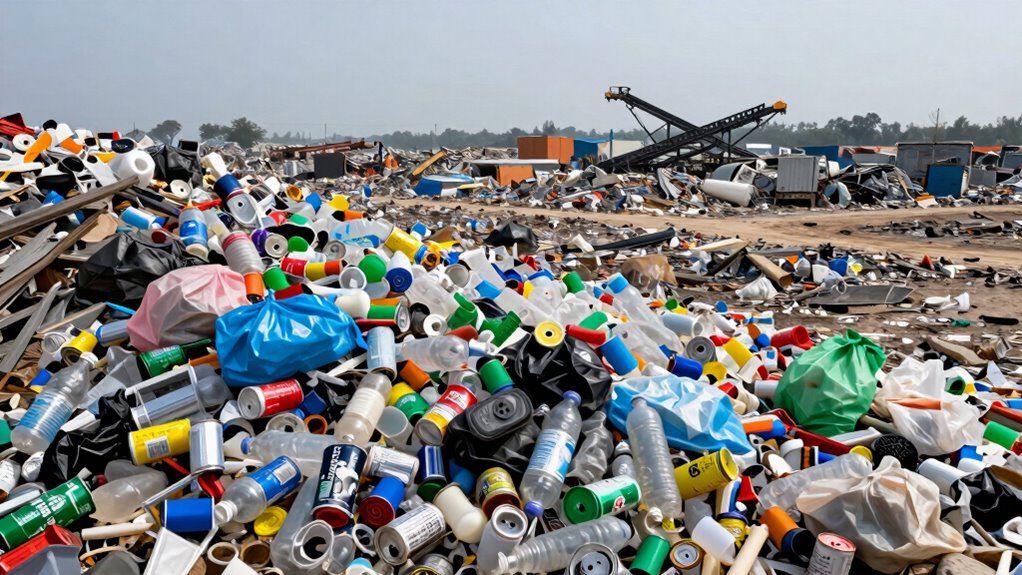
Have you ever wondered what happens to your trash after you throw it away? When your waste leaves your home, it often includes hazardous waste like batteries or chemicals that need special handling. Proper disposal is vital because improper management can harm the environment and public health. Electronic recycling plays a key role in this process, as it guarantees devices like old computers and phones are safely broken down and valuable materials are recovered. Recycling electronics prevents hazardous waste from ending up in landfills, where it could leach toxins into the soil and water. Once collected, waste is transported to facilities that sort, process, and safely dispose of or recycle materials. Understanding this lifecycle helps you see the importance of responsible waste disposal and the role of electronic recycling in protecting the environment. Recycling processes ensure that materials are recovered efficiently and sustainably, reducing environmental impact. Additionally, proper waste management involves adhering to regulations that prevent environmental contamination and promote public safety. Recognizing the significance of sustainable waste management practices encourages more responsible disposal habits and supports eco-friendly initiatives. Advances in sorting technologies further improve the efficiency of recycling facilities, helping to maximize material recovery and reduce waste.
How Is Waste Collected and Transported?
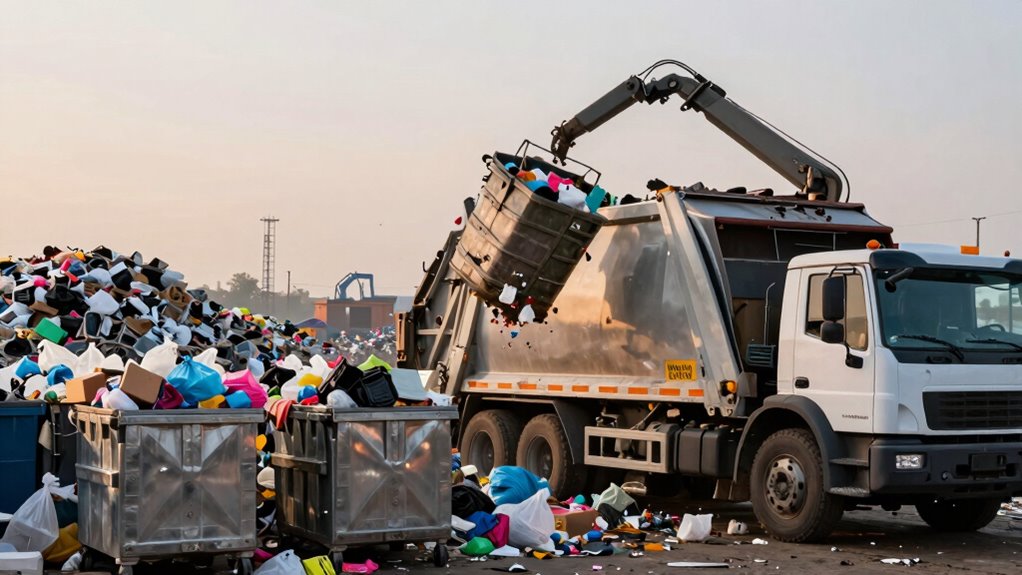
You might notice different collection methods and schedules in your area, depending on local rules and infrastructure. Once your waste is picked up, it’s transported to treatment or disposal facilities through organized routes. Understanding these processes helps you see what happens to your trash after it leaves your home, including how waste management systems are designed to reduce environmental impact. Moreover, many facilities utilize advanced recycling technologies that help recover valuable materials and minimize landfill use. Additionally, many festivals like Burning Sands Festival incorporate sustainability practices into their operations to minimize environmental impact.
Collection Methods and Schedules
Waste collection typically occurs on a regular schedule, ensuring trash doesn’t pile up in your home or community. Service schedules vary depending on your location and waste type, like recyclables or yard waste. Collection methods include curbside pick-up, drop-off centers, and specialized containers. Knowing your schedule helps you manage waste efficiently. For those interested in sustainable practices, some communities are beginning to incorporate electric waste collection vehicles to reduce emissions. Additionally, many municipalities are exploring advanced collection technologies to improve efficiency and minimize environmental impact. Implementing these innovations supports the goal of sustainable waste management for a healthier environment, and adopting smart routing systems can further optimize collection operations. Incorporating real-time monitoring systems also allows for better tracking of waste collection processes and resource allocation.
Transportation and Disposal Processes
Once collection methods are scheduled, the focus shifts to how the waste is actually gathered and transported to disposal sites. Trash trucks pick up your waste and haul it to processing facilities or landfills. Hazardous waste, however, requires special handling to prevent environmental harm. Trained crews and secure containers are used to safely transport these materials, ensuring they don’t leak or cause contamination. Unfortunately, some people resort to illegal dumping, abandoning trash in unauthorized areas, which complicates waste management efforts. Waste is often sorted at transfer stations before final disposal, where recyclable materials are separated from trash for recycling or composting. These transfer stations play a crucial role in waste sorting and improving overall efficiency. Proper transportation and disposal are vital to keep communities clean and protect the environment from pollution caused by improper waste handling. Additionally, employing Suprem fabrics in waste management equipment can improve durability and sustainability in the materials used for uniforms and gear, contributing to more eco-friendly practices. Enhancing waste transportation methods can further reduce environmental impact by optimizing fuel efficiency and vehicle emissions.
How Does Recycling Work?

When you recycle, your materials are first sorted and collected to separate them by type. These items then go to a processing center where they’re cleaned, broken down, and prepared for reuse. From there, they become raw materials for manufacturing new products, closing the recycling loop. Additionally, understanding the reliability of recycling methods can help ensure that the process remains effective and environmentally sustainable. Implementing passive voice detection tools can further improve the clarity and precision of recycling instructions and educational materials. Ensuring proper sorting at the source is crucial for maintaining the quality of recycled materials, which directly impacts the overall recycling process efficiency. Proper sorting techniques and material quality assurance are essential to maximize the beneficial reuse of recycled materials.
Sorting and Collection
After you place your recyclables in the bin, they are collected by local haulers who transport them to sorting facilities. There, workers or machines separate materials like paper, plastic, and metals. During this process, hazardous waste must be handled carefully to prevent contamination, so items like batteries or chemicals are diverted for special disposal. Electronic recycling is also part of this stage; electronics are separated for proper dismantling and recycling to recover valuable components. This sorting guarantees that only clean, correctly sorted materials move forward, increasing the efficiency of recycling. Proper collection and sorting are essential to prevent contamination and reduce waste going to landfills, helping conserve resources and protect the environment. Implementing effective sorting systems ensures that recycling efforts are maximized and environmental impact minimized. Additionally, integrating smart home automation technologies can improve the accuracy and efficiency of waste management processes at the community level. Moreover, advancements in automated sorting technologies can further enhance the speed and precision of separating recyclables, leading to better resource recovery and less landfill waste.
Processing and Reuse
Processing and reuse transform your sorted recyclables into new products through specialized techniques. This process involves breaking down materials and turning them into raw materials for manufacturing. During electronic recycling, hazardous waste like batteries and circuit boards are carefully handled to prevent environmental harm. Here are key steps:
- Sorting materials to separate plastics, metals, and glass.
- Cleaning and shredding recyclables for easier processing.
- Melting or pulping materials to create usable raw inputs.
- Manufacturing new items, such as bottles, electronics, or construction materials.
What Happens at the Sorting Facility?
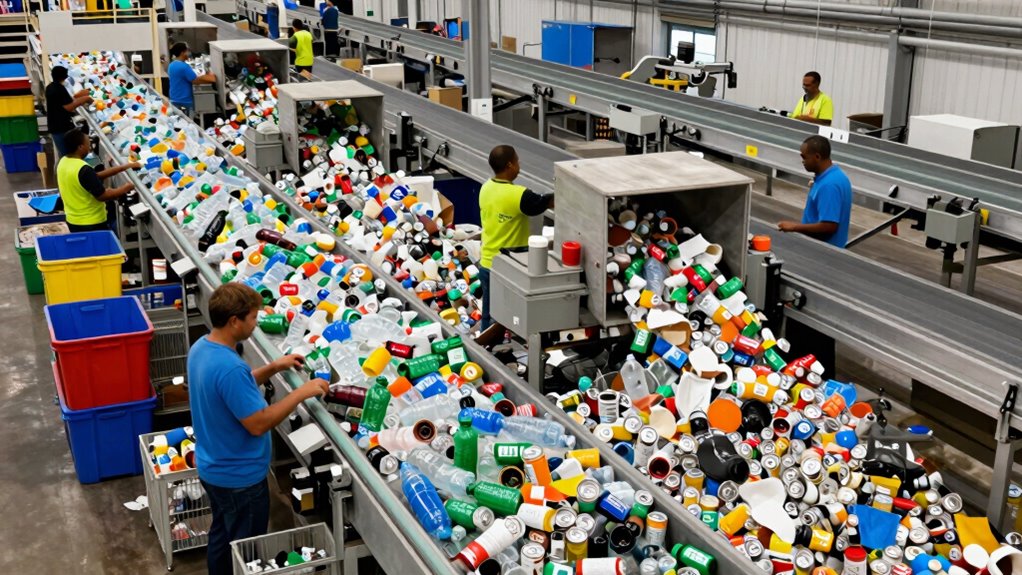
Have you ever wondered what happens to your trash once it arrives at the sorting facility? When your waste gets there, workers and machines work together to separate recyclable materials from non-recyclables. During this process, hazardous materials and electronic waste are identified and set aside carefully to prevent contamination or harm. Hazardous materials like batteries or chemicals aren’t mixed with other recyclables; instead, they’re handled separately by trained specialists. Electronic waste is also sorted out to guarantee valuable components can be recovered safely. The goal is to streamline recycling and reduce waste sent to landfills. This sorting process is essential for protecting the environment and making sure each material gets properly recycled or disposed of.
How Is Recycled Material Processed?
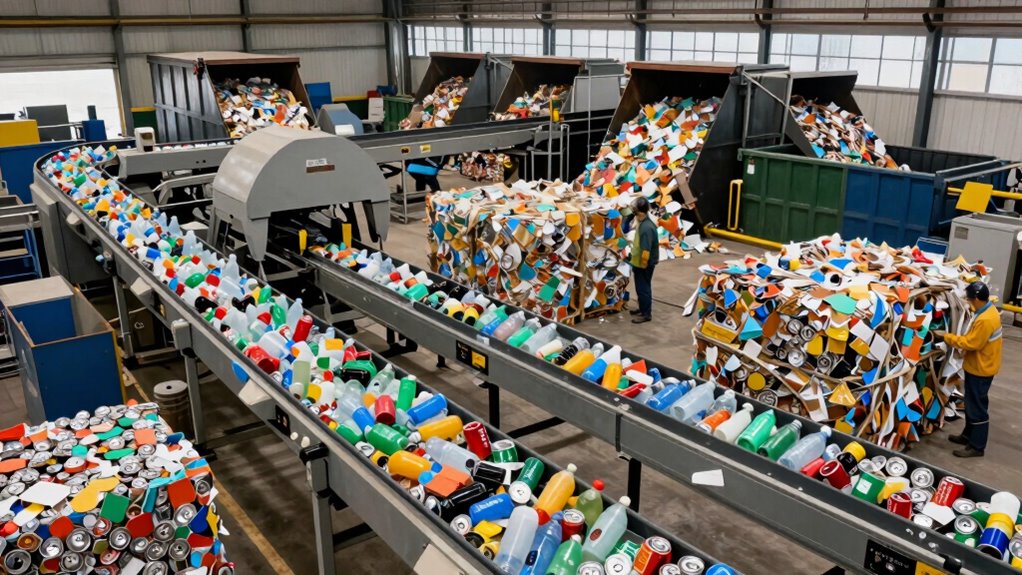
Once recyclable materials arrive at the processing plant, workers and machines work together to transform them into usable raw materials. First, the materials are sorted based on recycling symbols and type, ensuring each item goes to the right process. Next, contaminants like food residue are removed to keep the material clean. Then, the sorted recyclables are crushed and cleaned thoroughly, often using water and detergents. Finally, the cleaned material is turned into raw products, such as new paper, plastic, or metal. These raw materials are then used to make eco friendly packaging and other products. Proper processing helps conserve resources, reduce waste, and support sustainability efforts. Your recycling efforts directly influence how effectively these materials are processed and reused.
What Are Landfills and How Do They Function?
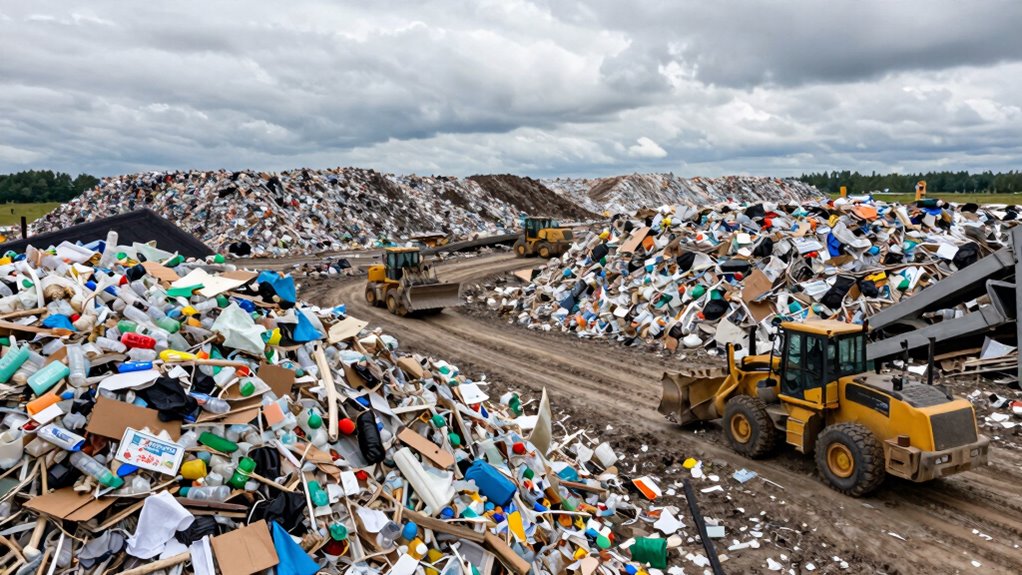
Landfills are designated areas where trash from homes and businesses is collected and stored safely. They are carefully designed to prevent environmental contamination, with features like liners and drainage systems. Modern landfill design also includes methane capture systems that collect gases produced by decomposing waste, reducing pollution and generating energy. Proper design assures waste is compacted efficiently, maximizing space and minimizing odor. Here’s a quick overview:
| Aspect | Purpose | Benefit |
|---|---|---|
| Liners | Protect groundwater | Prevent contamination |
| Gas Collection | Capture methane from decomposing waste | Reduce greenhouse gases |
| Leachate System | Manage liquid waste runoff | Protect environment |
| Cover Soil | Contain odors and pests | Improve sanitation |
| Monitoring | Ensure safety and compliance | Prevent environmental hazards |
How Does Incineration Turn Waste Into Energy?
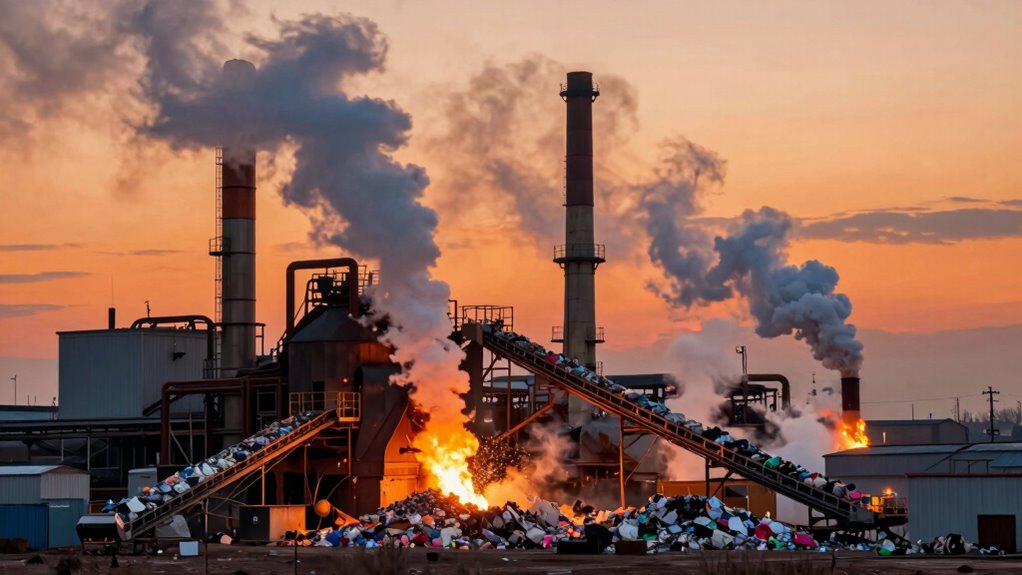
After waste is collected and managed in landfills, another method of disposal and energy recovery is incineration. You might not realize that burning trash can generate electricity and heat. Here’s how it works:
- Waste is fed into a furnace where it’s burned at high temperatures, reducing it to ash.
- The heat produced is used to boil water, creating steam that drives turbines to generate electricity.
- Hazardous waste and e waste recycling are carefully managed to prevent toxins from escaping during incineration.
- Incineration also helps reduce trash volume, but special processes are needed for hazardous waste to avoid environmental harm.
This process turns everyday waste into usable energy while managing waste safely.
How Does Composting Help Manage Organic Waste?

Have you ever wondered what happens to organic waste like food scraps and yard trimmings? Composting offers a practical solution. When you compost, these materials break down naturally into nutrient-rich soil. Instead of ending up in landfills, food scraps and yard waste decompose with the help of microbes, turning waste into valuable compost. This reduces the amount of organic waste sent to landfills, where it would produce harmful methane gases. Composting also benefits your garden by improving soil health and promoting plant growth. By managing organic waste through composting, you’re helping to reduce pollution and waste volume. Plus, it’s an eco-friendly way to recycle your food scraps and yard waste into something beneficial for your home and the environment.
How Do Waste-to-Energy Plants Generate Power?
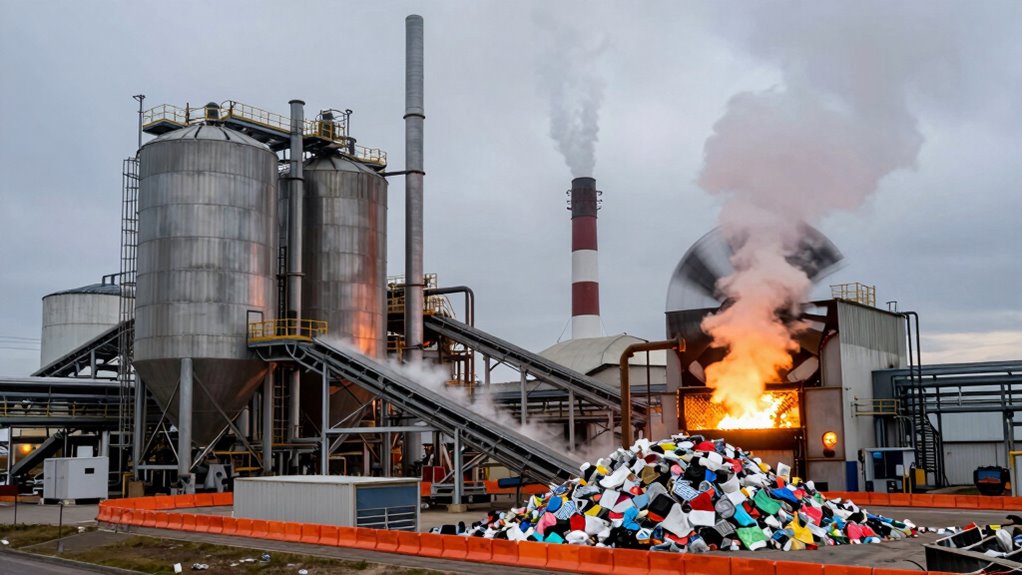
When organic waste is composted, it naturally breaks down into nutrient-rich soil, but not all waste is suitable for composting. Waste-to-energy plants transform non-recyclable waste into usable power through a series of steps:
- You feed trash into a furnace where it’s burned to generate heat.
- The heat produces steam that spins turbines.
- These turbines drive generators to create electricity.
- The resulting power is then supplied to homes and businesses.
This process, known as power generation, reduces landfill volume and captures energy from waste. Waste-to-energy plants efficiently convert waste into a valuable resource, making trash a source of renewable power. It’s an innovative way to manage waste while producing electricity.
How Can You Reduce Waste and Support Better Disposal?
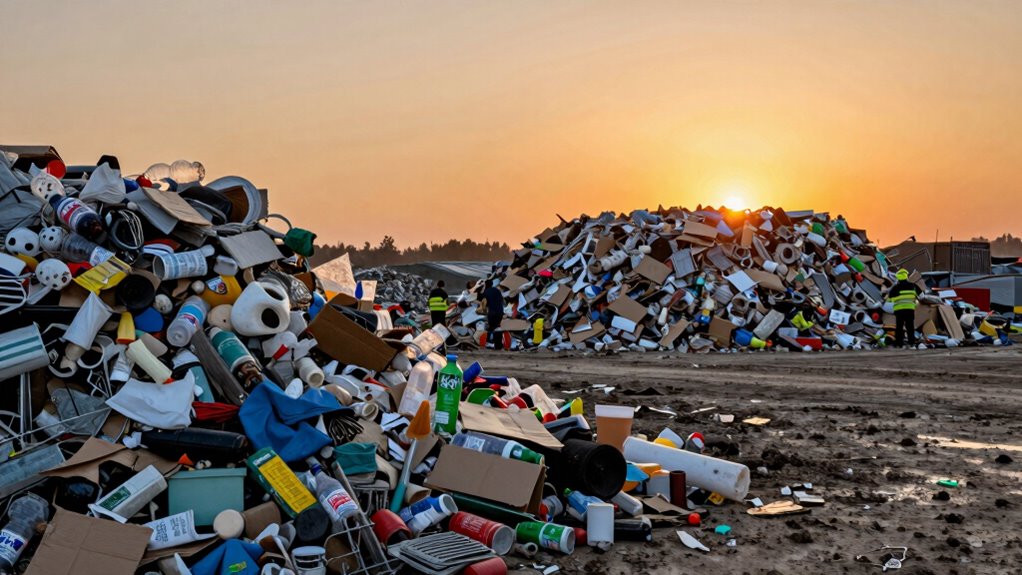
You can reduce waste by practicing effective recycling and choosing composting options whenever possible. Minimizing single-use items also makes a big difference in cutting down trash. Small changes like these help support better disposal and protect the environment.
Practice Recycling Effectively
Practicing recycling effectively begins with understanding what materials are accepted in your local programs and sorting them correctly. To reduce waste and support better disposal, consider conducting a waste audit to identify common recyclables and waste streams. This helps you target zero waste goals. Here are four tips to improve your recycling practices:
- Familiarize yourself with your area’s recycling guidelines to prevent contamination.
- Rinse containers to keep recyclables clean and reduce odors.
- Use designated bins for recyclables, separating paper, plastics, and metals.
- Regularly review and adjust your recycling habits based on your waste audit results.
Choose Composting Options
Implementing composting alongside effective recycling can considerably cut down the amount of waste sent to landfills. You can choose from various composting methods, such as backyard bins, worm composting, or community compost programs. These options help you manage organic waste like food scraps and yard trimmings responsibly. By composting, you reduce methane emissions from decomposing waste in landfills and create nutrient-rich soil for your garden. Start by identifying which method fits your space and lifestyle. If you have a yard, outdoor compost bins are a practical choice. For apartment living, worm composting or bokashi systems work well. Incorporating composting into your routine not only minimizes waste but also supports sustainable disposal practices, making a positive environmental impact.
Minimize Single-Use Items
Have you considered how much waste comes from single-use items? Reducing these items is key to waste reduction and fighting plastic pollution. Here are four ways to minimize single-use items:
- Use reusable bags instead of plastic ones at the store.
- Bring your own water bottle and coffee mug.
- Opt for cloth napkins instead of paper towels.
- Choose products with minimal or no packaging when shopping.
Frequently Asked Questions
What Environmental Impacts Do Landfills Have on Surrounding Communities?
Landfills can negatively impact community health through the release of landfill leachate, which may contaminate soil and water sources nearby. This pollution can lead to health problems like respiratory issues or waterborne diseases for residents. The environmental impacts also include methane emissions, a potent greenhouse gas that contributes to climate change. Overall, landfills pose significant risks to surrounding communities, emphasizing the need for proper waste management and pollution controls.
How Do Waste-To-Energy Plants Prevent Air Pollution During Operation?
Waste-to-energy plants prevent air pollution by using advanced emission controls and air filtration systems during operation. These technologies capture harmful pollutants and particulate matter before they can escape into the atmosphere. You can trust that modern plants continuously monitor emissions, adjusting processes to meet strict environmental standards. This way, they efficiently generate energy while minimizing their impact on air quality and surrounding communities.
Can Hazardous Waste Be Safely Recycled or Processed?
Your question about hazardous waste recycling is crucial because it’s a complex puzzle with challenges that can seem as daunting as climbing Mount Everest. Hazardous waste can be safely recycled or processed, but it requires strict protocols, specialized facilities, and careful handling to prevent environmental harm. Recycling challenges include contamination and the need for advanced technology. With proper management, hazardous waste can be transformed into safer, useful materials, reducing pollution and conserving resources.
What Innovations Are Emerging in Waste Management Technology?
You’ll see innovations like biodegradable packaging reducing plastic waste and smart waste bins that optimize collection. These technologies enable you to sort and recycle more efficiently, cutting down landfill use. Smart bins use sensors to monitor waste levels, prompting timely pickups. Meanwhile, biodegradable packaging decomposes naturally, lessening environmental impact. Embracing these advancements helps you contribute to a cleaner planet while making waste management smarter and more sustainable.
How Effective Are Current Recycling Programs in Reducing Overall Waste?
Like the myth of Icarus soaring too close to the sun, current recycling programs often struggle with efficiency. Your participation is essential; increased recycling efficiency depends on public involvement. When you sort correctly and reduce waste, you help programs work better. While they’ve improved, there’s still room to grow. Your active role can make a real difference in reducing overall waste and fostering a more sustainable future.
Conclusion
So, next time you toss something away, remember how your trash’s journey might unexpectedly lead to energy or new products, almost like a coincidence of turning waste into opportunity. By recycling, composting, and reducing what you throw out, you play a part in this fascinating cycle. It’s a small action with big impacts, proving that even your trash can be a surprising source of energy and new life—just like a hidden treasure waiting to be discovered.