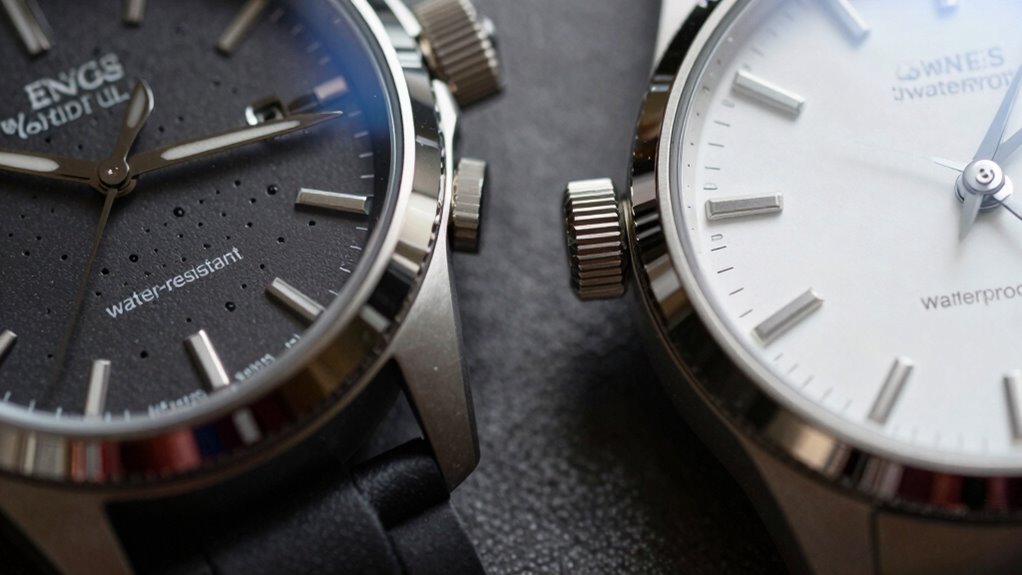

The key difference is that “water resistant” means your device can handle splashes and rain but isn’t meant for full immersion, while “waterproof” suggests it can be submerged for longer periods without damage, depending on the standard. Many labels can be misleading because testing standards vary, and seals can degrade over time. Understanding these differences helps you avoid water damage—if you want to learn more about how these ratings work, keep exploring.
Key Takeaways
- “Water resistant” devices withstand splashes and rain but aren’t meant for full immersion; “waterproof” implies safe for prolonged submersion.
- Water resistance ratings, like 50M or 100M, indicate pressure tested but don’t guarantee protection against all water conditions.
- “Waterproof” claims often lack strict regulation and may be used loosely, so verify testing standards before exposure.
- Material quality and seal integrity determine actual water protection; seals can degrade over time, reducing effectiveness.
- Understanding these differences helps prevent water damage and ensures proper use based on activity requirements.

When choosing a watch or electronic device, you might notice the labels “water resistant” and “waterproof,” but understanding the difference between them is vital. These terms can be misleading if you don’t know what they truly mean, especially when it comes to protecting your belongings from water damage. The key lies in material durability and testing standards. Water resistance relies on the materials used in the device’s construction—such as gaskets, seals, and casing—designed to withstand certain levels of water exposure. Manufacturers test these devices according to specific standards, often set by organizations like the International Organization for Standardization (ISO). For example, a device labeled “Water Resistant 50M” has undergone testing to endure pressures equivalent to 50 meters of water depth, but that doesn’t mean you can dive into the pool with it. Instead, it indicates that the device can handle splashes, rain, or brief immersion under certain conditions.
On the other hand, waterproof implies a higher level of protection. It suggests that the device can be submerged in water for extended periods without damage. However, the term “waterproof” isn’t strictly regulated, and many manufacturers use it loosely. So, it’s vital to examine the testing standards behind these claims. Devices marketed as waterproof typically undergo rigorous testing—often using pressure chambers that simulate prolonged immersion—ensuring the seals and materials maintain their integrity over time. When evaluating these standards, consider how the device’s material durability is tested against real-world conditions, like sudden impacts or temperature fluctuations, which can compromise seals and allow water ingress.
Knowing the testing standards helps you determine whether the device’s water resistance is sufficient for your needs. For instance, if you’re a swimmer or diver, you’ll want a device tested to withstand deeper water pressures and longer immersions. Conversely, if your concern is mainly protecting your device from rain or accidental splashes, a lower water resistance rating might suffice. Remember, no device is entirely immune to water damage; over time, seals can degrade, and material durability can lessen, making even “waterproof” devices vulnerable. It’s always wise to follow manufacturer guidelines and avoid exposing your device to water conditions beyond its tested limits. Additionally, advances in projector technology have improved water resistance features in some modern devices, making them more durable in various environments. In essence, understanding the difference between water resistant and waterproof, along with the testing standards and material durability involved, guarantees you choose the right protection and avoid costly mishaps.
Frequently Asked Questions
How Long Can a Waterproof Device Be Submerged?
A waterproof device can typically be submerged for up to 30 minutes at depths within its specified water immersion limits, often around 1 to 3 meters. Always check the depth thresholds indicated by the manufacturer, as exceeding them risks water ingress. You should also avoid prolonged exposure beyond the recommended time, as prolonged water contact can compromise the device’s seal, leading to potential damage.
Are Water-Resistant Watches Suitable for Swimming?
Water-resistant watches can be suitable for swimming if they are rated for appropriate water pressure and diving limits. Check the specific depth rating—usually 50 meters or more—for swimming. Keep in mind that water pressure varies with activity, so avoid using your watch for diving or snorkeling unless it’s explicitly designed for those purposes. Always follow the manufacturer’s guidelines to make sure your watch stays protected during water activities.
What Standards Determine Water Resistance Certification?
Think of water resistance standards testing as a secret code, with certification levels revealing how much water your device can handle. These standards, like ISO and ATM ratings, determine certification levels by subjecting watches to specific pressure tests. For example, a 5 ATM watch withstands pressures equivalent to 50 meters of water. Always verify these standards to make sure your watch matches your water activities, preventing surprises like leaks or damage.
Can Water-Resistant Gear Become Waterproof Over Time?
Water-resistant gear can’t become waterproof over time because water resistance decay gradually weakens its protective layer. As your gear ages, exposure to elements and wear reduce its ability to repel water, impacting gear longevity. To maintain ideal water protection, you should regularly reapply waterproofing treatments and handle your gear with care. If water resistance diminishes considerably, consider replacing or professionally re-treating your gear to ensure continued protection.
How Should I Maintain Water-Resistant or Waterproof Items?
You should regularly perform waterproof testing to guarantee your gear stays protected. Follow maintenance tips like cleaning with mild soap, avoiding harsh chemicals, and reapplying waterproofing sprays as needed. Don’t ignore signs of wear or damage, which can compromise water resistance. Proper maintenance keeps your items functioning properly, extends their lifespan, and maintains their water-resistant or waterproof capabilities. Stay proactive, and your gear will serve you well in wet conditions.
Conclusion
Now that you know the difference, you can confidently choose between water resistant and waterproof gear. Think of water resistant as a gentle shield, keeping out splashes, while waterproof is a true barrier, handling heavy rain or immersion. Just like a raincoat versus a diving suit, understanding this difference helps you pick the right protection. So, next time you’re outdoors, you’ll know whether to rely on subtle resistance or full waterproof assurance. Stay prepared, rain or shine.