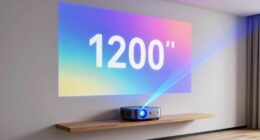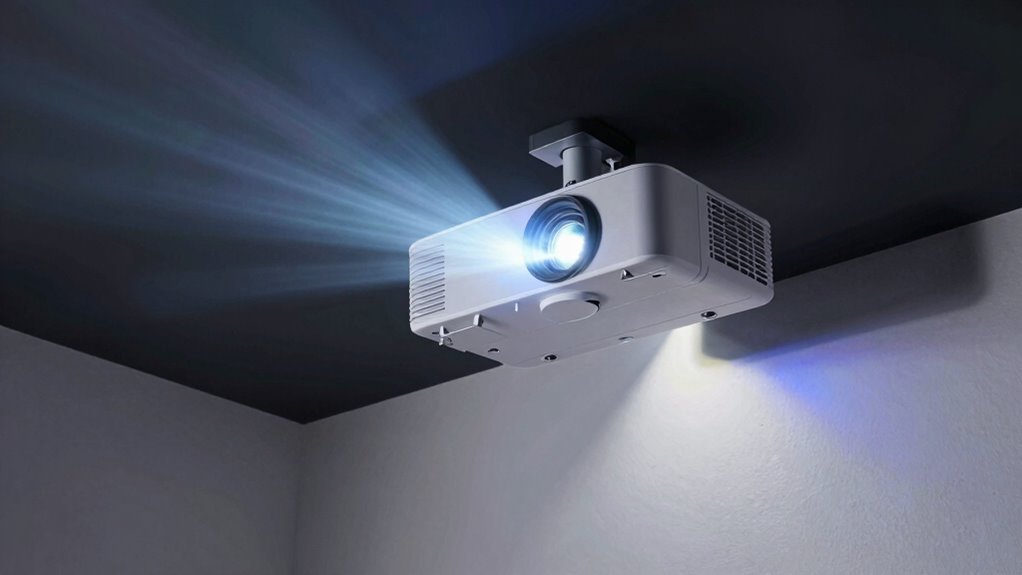

Projector brightness is more complex than just looking at a big number like lumens because many factors affect how good an image will look. Even a high-lumen projector can produce dull or washed-out images if color accuracy isn’t good. Ambient light, contrast, and light management also play key roles. To get the best picture, you need to take into account all these elements together. Keep exploring to discover how these factors can improve your viewing experience.

Prime made for students and young adults
- Fast, free delivery for dorm and study essentials
- Prime Video and Amazon Music included
- Member-only deals
Key Takeaways
- Lumens measure light output but don’t account for color accuracy or image quality.
- Brightness needs to be balanced with ambient light conditions for optimal visibility.
- High lumen ratings can be misleading if the projector has poor color reproduction.
- Light management features and contrast ratios significantly impact perceived image brightness.
- Choosing a projector requires considering environment, color fidelity, and light handling, not just lumens.
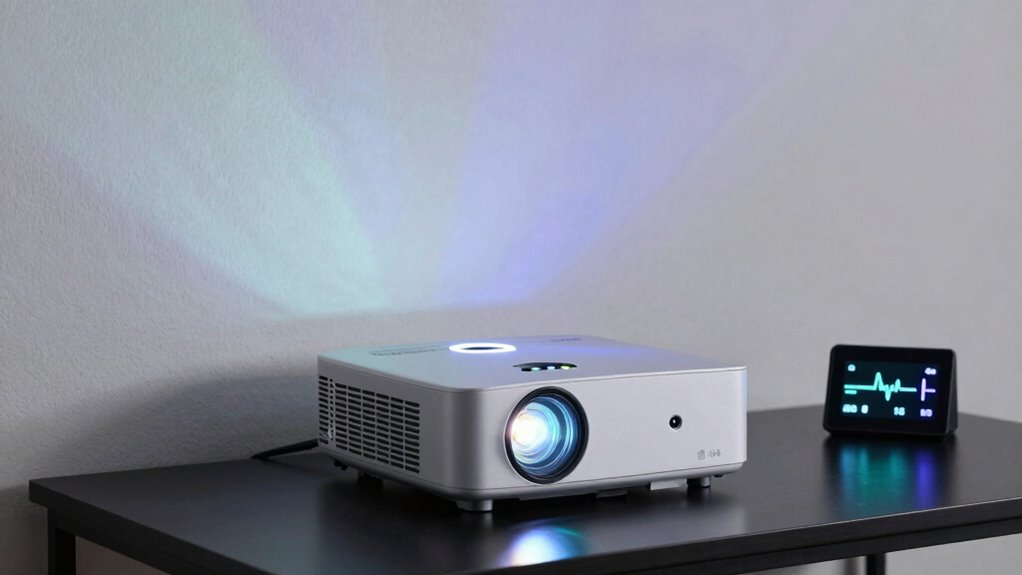
Have you ever wondered why some projectors produce a clear, vibrant image while others appear dim and washed out? The answer isn’t just about the number on the box. Projector brightness, often measured in lumens, can be misleading if you don’t take into account the context. Many people assume higher lumens automatically mean a better picture, but that’s not always true. To really understand projector performance, you need to look deeper, especially at factors like color accuracy and ambient light.
Color accuracy plays an essential role. When a projector has high brightness but poor color reproduction, the image can look flat or dull, even if it’s bright enough to be seen clearly. Brightness alone doesn’t guarantee vivid, true-to-life colors. If your projector struggles with color accuracy, the image might appear washed out or overly saturated, which diminishes the overall quality. This is especially noticeable when watching movies or presenting detailed visuals where color fidelity matters. A projector that balances brightness with good color accuracy will produce images that pop and look natural, even in less-than-ideal lighting conditions.
High brightness doesn’t ensure vibrant, true-to-life colors; balance is key for quality images.
Ambient light is another key factor that influences how bright your projector’s image appears. If you’re using a projector in a dark room, you don’t need as many lumens, because minimal ambient light allows the image to stand out without requiring excessive brightness. Conversely, in a room filled with natural or artificial light, higher lumens are necessary to cut through the glare and keep the picture visible. However, simply increasing brightness won’t fix all issues caused by ambient light. If your projector isn’t capable of handling ambient light well, the image might still look washed out or faint, regardless of how many lumens it has. Some projectors come with features like high contrast ratios or anti-glare screens, which can help improve visibility in bright environments. Recognizing performance characteristics of a projector can help you make better choices for your space.
In addition, understanding how well a projector manages ambient light can make a significant difference in your viewing experience. A well-designed projector with advanced light management features can maintain image quality even in challenging lighting conditions. Brightness uniformity is also an important aspect to consider, as uneven brightness across the image can detract from the overall viewing quality. In the end, understanding projector brightness requires more than just focusing on lumens. You need to take into account how well the projector reproduces colors and how it performs in your typical lighting environment. A projector with moderate lumens but excellent color accuracy and good handling of ambient light can outperform a brighter model that neglects these factors. So, when choosing a projector, think about your specific needs—how bright your space is, what kind of images you want to display, and how true-to-life you need the colors to be. Only then can you find a projector that truly delivers a clear, vibrant image tailored for your environment.
high lumen projector with good color accuracy
As an affiliate, we earn on qualifying purchases.
As an affiliate, we earn on qualifying purchases.
Frequently Asked Questions
How Does Ambient Light Affect Projector Brightness Perception?
Ambient light impacts how you perceive projector brightness considerably. When there’s lots of ambient light, your eyes struggle to see color accuracy clearly, making the image look dull or washed out. This can cause eye strain as your eyes work harder to interpret the image. To get the best experience, reduce ambient light, which enhances color accuracy and minimizes eye strain, helping you enjoy sharper, more vibrant visuals.
What Is the Difference Between Lumens and ANSI Lumens?
Lumens measure the total light output of a projector, but ANSI lumens specify brightness under standardized testing conditions, offering a more accurate comparison. When choosing a projector, consider ANSI lumens for consistent brightness, especially if color accuracy is important for your setup. Keep in mind, higher lumens can mean increased power consumption, so balance brightness needs with energy efficiency to get the best performance without overloading your projector.
Can a Higher Brightness Compensate for a Larger Projection Size?
Like a vintage film projector, a higher brightness can help fill a larger screen, but it’s not a magic fix. You’ll also need good projection contrast and color accuracy to keep images clear and vibrant. Remember, increasing brightness may wash out details or reduce contrast, so balance is key. For bigger projections, opt for a projector with higher lumens and solid contrast to make certain sharp, colorful images.
How Does Screen Type Influence Perceived Brightness?
Screen type considerably influences perceived brightness because different coatings and materials reflect light uniquely. A matte screen minimizes glare, making images appear brighter and more evenly lit, while glossy screens enhance contrast and color accuracy, affecting how vibrant brightness feels. Your choice of screen coating impacts the overall brightness perception, so selecting the right type helps optimize your viewing experience, especially in brighter environments or when fine color accuracy matters.
Is Brightness More Important Than Resolution for Image Quality?
Brightness isn’t more important than resolution for image quality; both matter, but it depends on your needs. Higher resolution ensures sharper, clearer images, while brightness affects visibility in well-lit environments. Also, consider color accuracy for vibrant visuals and sound quality for an immersive experience. If your setting is bright, prioritize brightness, but don’t neglect resolution, color, or sound, as these all contribute to overall image quality.
ambient light resistant projector
As an affiliate, we earn on qualifying purchases.
As an affiliate, we earn on qualifying purchases.
Conclusion
Think of projector brightness like a garden’s sunlight—more isn’t always better. Just as too much sun can scorch delicate plants, an overly bright projector can wash out your picture, losing detail. Finding the right brightness is like balancing sunlight and shade, creating a cozy, vibrant garden. So, next time you choose a projector, remember it’s not about the biggest number; it’s about creating the perfect environment for your visual masterpiece to flourish.
projector with high contrast ratio
As an affiliate, we earn on qualifying purchases.
As an affiliate, we earn on qualifying purchases.
As an affiliate, we earn on qualifying purchases.
Fall Picks
fall essentials
As an affiliate, we earn on qualifying purchases.