
TL;DR

Prime made for students and young adults
- Fast, free delivery for dorm and study essentials
- Prime Video and Amazon Music included
- Member-only deals
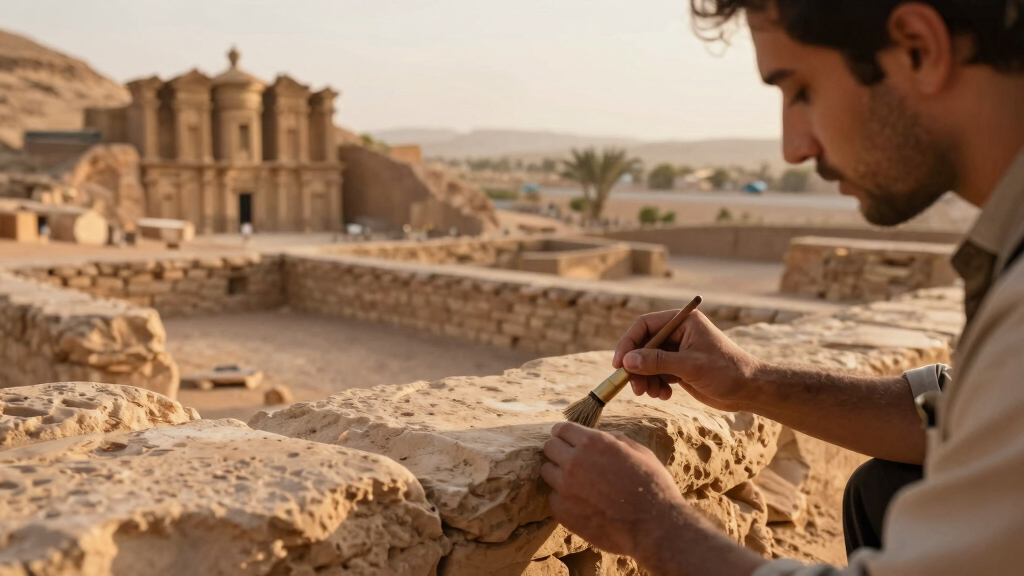
Archaeologists have discovered a previously unknown city with an ancient church beneath Egypt’s desert. This find offers new clues about early Egyptian civilization and religious history.
Archaeologists have announced the discovery of a lost city beneath Egypt’s desert, which includes the remains of an ancient church. The find was made during a recent excavation campaign and is considered one of the most significant archaeological discoveries in recent years. This development offers new insights into early Egyptian civilization and religious practices, making it a major breakthrough for historians and archaeologists.
The discovery was made by an international team of archaeologists working in the Western Desert of Egypt. They uncovered extensive remnants of a city dating back to the late Roman or early Byzantine period, approximately 4th to 6th century CE. Among the structures found is a well-preserved church with Christian iconography, including frescoes and inscriptions, indicating the presence of a significant Christian community in the area.
Initial excavations suggest the city was a thriving settlement, possibly a regional religious or administrative center. The site includes residential areas, public buildings, and the church itself, which is believed to have served as a place of worship and community gathering. The team also uncovered pottery, coins, and artifacts that help date the site and provide context for its inhabitants.
The discovery was announced by Egypt’s Ministry of Tourism and Antiquities, which confirmed the excavation’s success and emphasized its importance for understanding early Christian Egypt. The team involved includes experts from Egypt, Italy, and the United States.
Implications for Early Christian and Egyptian History
This discovery is significant because it sheds new light on the spread of Christianity in Egypt during the late Roman and early Byzantine periods. The presence of a well-preserved church with Christian iconography suggests a substantial Christian community, challenging previous assumptions about the geographic extent of early Christian settlements in Egypt. It also provides valuable material for studying religious practices, architecture, and daily life during this era.
Additionally, the site offers clues about regional trade, cultural exchange, and urban development in an era of significant political and religious transformation. The findings could alter current understanding of the historical timeline and influence future research on Egypt’s Christian history.
As an affiliate, we earn on qualifying purchases.
Recent Discoveries and Historical Background of Egypt’s Desert Sites
Egypt has a long history of archaeological discoveries, with many sites buried beneath the desert sands. Previous finds include ancient temples, tombs, and settlements from Pharaonic, Greco-Roman, and early Christian periods. However, the discovery of a city with a church from this specific era is rare and considered highly significant.
Historically, Christianity spread across Egypt from the 1st to 4th centuries CE, with many early Christian communities establishing churches and monasteries. Yet, many of these sites remain unexcavated or undiscovered. This latest find adds a new chapter to Egypt’s complex religious and cultural history, especially in a region where Christian sites are often scarce and highly valued.
Prior excavations in Egypt have yielded important artifacts and structures, but the recent discovery’s scale and preservation are unprecedented, offering fresh perspectives on the early Christian period in Egypt.
“This is one of the most important discoveries in recent Egyptian archaeology. The well-preserved church and artifacts provide invaluable insights into early Christian life in the region.”
— Dr. Ahmed El-Sayed, lead archaeologist
Egyptian archaeological excavation kit
As an affiliate, we earn on qualifying purchases.
As an affiliate, we earn on qualifying purchases.
Unresolved Questions About the Site’s Extent and Use
It is not yet clear how large the city was or the full extent of its population. The precise dating of some structures and artifacts remains under analysis, and further excavations are needed to understand the site’s full significance. Researchers are also uncertain about the reasons for its abandonment and how it fits into broader regional history.
As an affiliate, we earn on qualifying purchases.
Upcoming Excavations and Research Plans
The team plans to continue excavating the site to uncover more structures and artifacts. Radiocarbon dating and other scientific analyses are scheduled to refine the dating and cultural context. Researchers aim to map the entire city and study its relationship with other regional sites, potentially revealing new insights into early Christian Egypt.
As an affiliate, we earn on qualifying purchases.
Key Questions
How old is the city and church?
Preliminary evidence suggests the city dates back to the late Roman or early Byzantine period, approximately 4th to 6th century CE. Further dating analyses are underway to confirm this timeline.
What makes this discovery so important?
The site provides rare and well-preserved evidence of early Christian life in Egypt, including a church with Christian iconography, which can deepen understanding of religious and social history during that period.
Are there any threats to the site?
As with many archaeological sites in desert environments, natural erosion and human activity pose potential risks. The Egyptian authorities are working to preserve the site and prevent damage.
Will this site be open to the public?
It is too early to determine if the site will be accessible to visitors. Further excavations and conservation efforts are necessary before any public access is planned.
What does this discovery tell us about Egypt’s history?
It highlights the region’s diverse historical layers, especially the spread of Christianity and the development of early Christian communities in Egypt during late antiquity.
Source: hn
Halloween Picks
halloween
As an affiliate, we earn on qualifying purchases.







![Terence Tao: Math 2.0 [Pdf]](https://rottenpanda.com/wp-content/uploads/2026/10/terence-tao-math-2-0-pdf-featured-260x140.jpg)