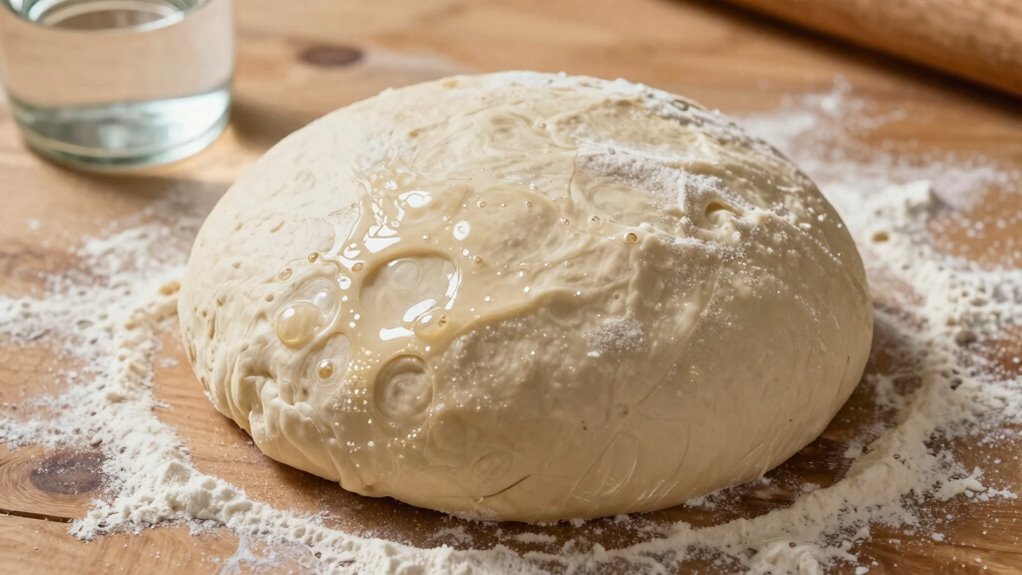

Understanding pizza dough hydration means knowing how much water you add compared to the flour. Proper hydration makes your dough stretch easily, develops gluten for structure, and results in a light, airy crust. Higher hydration (around 60-70%) often leads to a crisp, tender crust, especially with longer fermentation. Adjusting hydration to your oven type and ingredients can make a big difference. Keep exploring to master the perfect balance and get consistently great results.

Prime made for students and young adults
- Fast, free delivery for dorm and study essentials
- Prime Video and Amazon Music included
- Member-only deals
Key Takeaways
- Hydration is the ratio of water to flour, typically 60-70%, affecting dough elasticity and crust texture.
- Proper hydration ensures effective gluten development, leading to a chewy, airy crust.
- Higher hydration makes dough more extensible and easier to stretch, ideal for thin-crust pizzas.
- Overly hydrated dough can be sticky; techniques like folding help maintain structure during fermentation.
- Adjusting hydration levels optimizes fermentation, flavor, and crust quality for home and commercial pizza ovens.
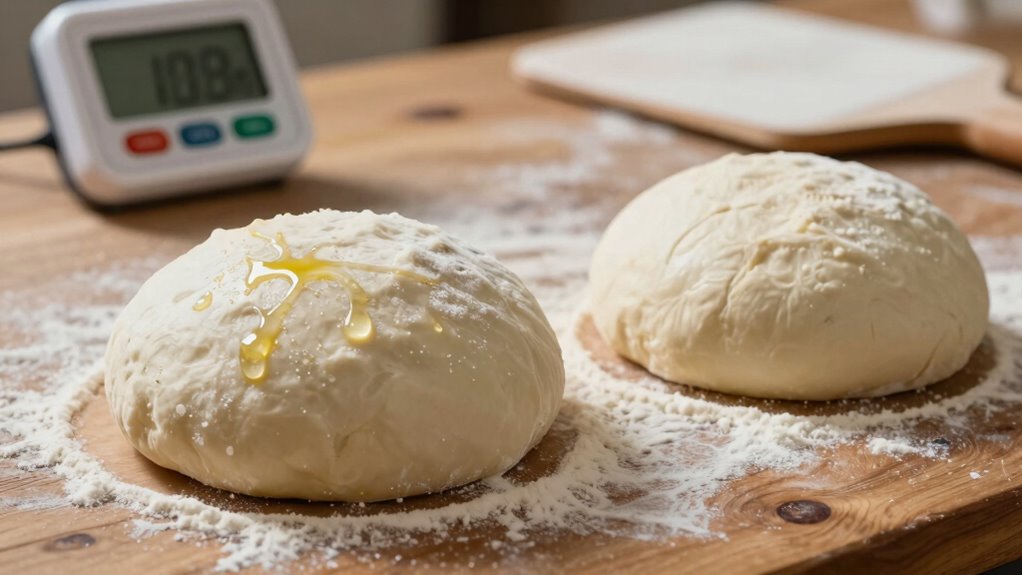
Understanding pizza dough hydration is key to achieving the perfect crust. Hydration refers to the amount of water in your dough relative to the flour, and it plays a vital role in shaping the dough’s texture, elasticity, and overall quality. When you get hydration levels right, you’re making sure that your dough has enough moisture to undergo the fermentation process properly, which is essential for developing flavor and structure. The right hydration also impacts gluten development, which determines how well your dough stretches and holds its shape. Too little water can make the dough stiff and difficult to work with, while too much can lead to a sticky, unruly mess. Striking the perfect balance allows you to produce a crust that’s both tender and chewy, with a satisfying chew and airy interior.
As you mix your ingredients, keep in mind that water activates the flour’s proteins, primarily glutenin and gliadin. These proteins interact to form gluten, the network that gives dough its strength and elasticity. Proper hydration guarantees these proteins hydrate thoroughly, enabling gluten development to occur efficiently during kneading. This is especially important during the fermentation process, as gluten provides the structure that traps gases produced by yeast. When fermentation progresses, the dough becomes more flavorful and easier to handle. If your hydration level is too low, gluten development may be incomplete, resulting in a dense or tough crust. Conversely, overly hydrated dough can become excessively sticky, making shaping and handling more challenging without proper techniques.
You’ll want to experiment with hydration percentages depending on your flour type and environmental factors. Typically, hydration ranges between 60% to 70%, but higher hydration levels can produce a lighter, more open crumb—ideal for pizza with a crisp outer crust and tender interior. When you increase hydration, you’ll notice your dough becomes more extensible, which is great for stretching out your pizza base. Just remember, with higher hydration, you need to develop gluten thoroughly through kneading or folding to make sure your dough maintains its structure during baking. Also, longer fermentation times, especially with higher hydration, allow flavors to deepen and gluten to strengthen further, creating a superior crust.
pizza dough hydration calculator
As an affiliate, we earn on qualifying purchases.
As an affiliate, we earn on qualifying purchases.
Frequently Asked Questions
How Does Hydration Affect Pizza Dough Stretchability?
Higher hydration levels make your pizza dough more stretchable by increasing dough elasticity. When you maintain consistent hydration, the dough becomes easier to shape without tearing. Too little hydration, and the dough feels stiff and resistant, while too much can make it sticky and hard to handle. Finding the right hydration consistency helps you achieve a perfectly stretchable, elastic dough that’s easy to work with and yields a better crust.
What Hydration Level Yields the Crispiest Crust?
For the crispiest crust, aim for a hydration level around 60-65%. You’ll find that this range balances flour absorption and dough elasticity, creating a thin, crispy crust without sacrificing workability. Higher hydration makes the dough more extensible but less crispy, while lower hydration results in a sturdier, crunchier crust. Adjust gradually and test to find the perfect balance for your oven and flour type.
Can Hydration Adjustments Improve Dough Fermentation?
Yes, adjusting hydration levels can improve dough fermentation by influencing hydration consistency and fermentation speed. Higher hydration usually speeds up fermentation, creating a more open crumb, while lower hydration slows it down for a denser texture. Experimenting with hydration helps you control fermentation timing, flavor development, and dough strength. Keep track of your adjustments to find the ideal balance for your environment, ensuring consistent results and better dough management.
How Does Hydration Influence Oven Spring?
When it comes to oven spring, hydration is your secret weapon. Proper hydration consistency guarantees your dough stays elastic and stretchy, allowing it to expand fully during baking. If your dough is too dry, it’ll fight back, reducing oven spring. Conversely, if it’s too wet, it won’t hold its shape. Mastering hydration helps you strike a balance, giving your pizza that perfect rise and airy crust every time.
What Hydration Percentage Is Best for Gluten Development?
You should aim for a hydration percentage around 60-65% for ideal gluten development. This level ensures good hydration consistency, which promotes dough elasticity and strength. When hydration is too low, the dough becomes stiff and tough to work with, while too high hydration can make it sticky and difficult to handle. Keep it within this range to develop a resilient, elastic dough perfect for stretching and baking.
As an affiliate, we earn on qualifying purchases.
Conclusion
Understanding pizza dough hydration helps you craft perfect crusts every time. By adjusting water content, you control texture, elasticity, and overall quality. Remember, you reap what you sow—so experiment, learn, and refine your technique. With patience and practice, you’ll master the art of hydration, turning simple ingredients into delicious masterpieces. Don’t rush the process; great pizza is worth the wait. Keep experimenting, and soon, you’ll enjoy pizza that’s truly next level.
As an affiliate, we earn on qualifying purchases.
As an affiliate, we earn on qualifying purchases.
Evergreen bestsellers Picks
bestsellers
As an affiliate, we earn on qualifying purchases.