
Pet stain odors come back because traditional cleaning often leaves behind organic residues like proteins and urea that feed bacteria and produce persistent smells. Enzyme-based cleaners break down these compounds biologically, while thorough cleaning and drying prevent bacteria from regrowing. Odors can reappear if residues are missed or surfaces stay moist. To fully eliminate odors, you need to understand how these residues work and use targeted strategies—keep exploring to learn how to keep your home fresh longer.
Key Takeaways
- Pet stains contain organic compounds that penetrate deep into fibers, making odor removal challenging.
- Enzymatic cleaners break down proteins and waste molecules, neutralizing odors at the source.
- Residual waste and incomplete cleaning allow odor molecules to linger and re-emerge over time.
- Proper drying prevents bacterial growth, which can produce new or persistent odors.
- Regular thorough cleaning and odor absorption techniques help prevent the return of pet odors.
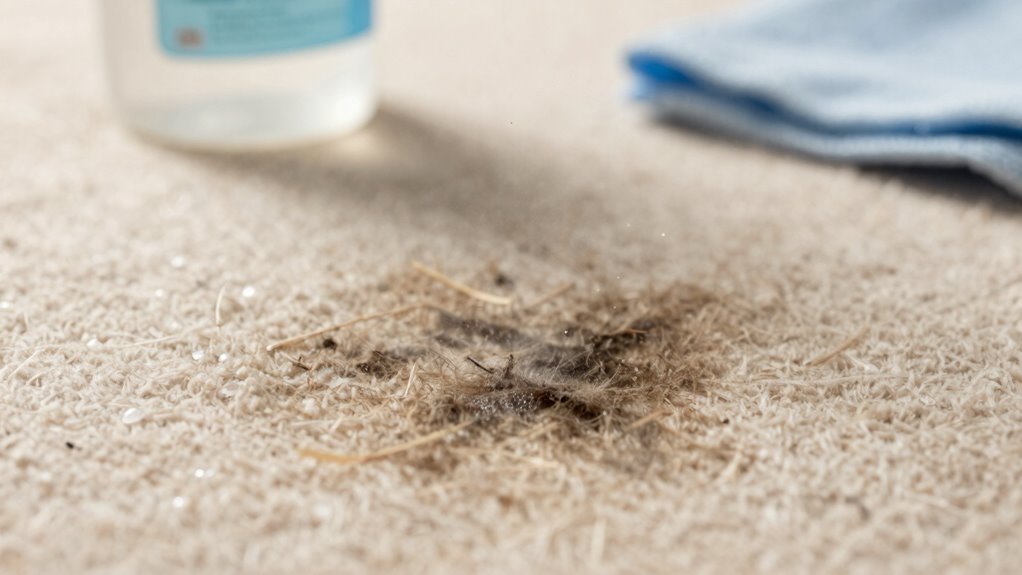
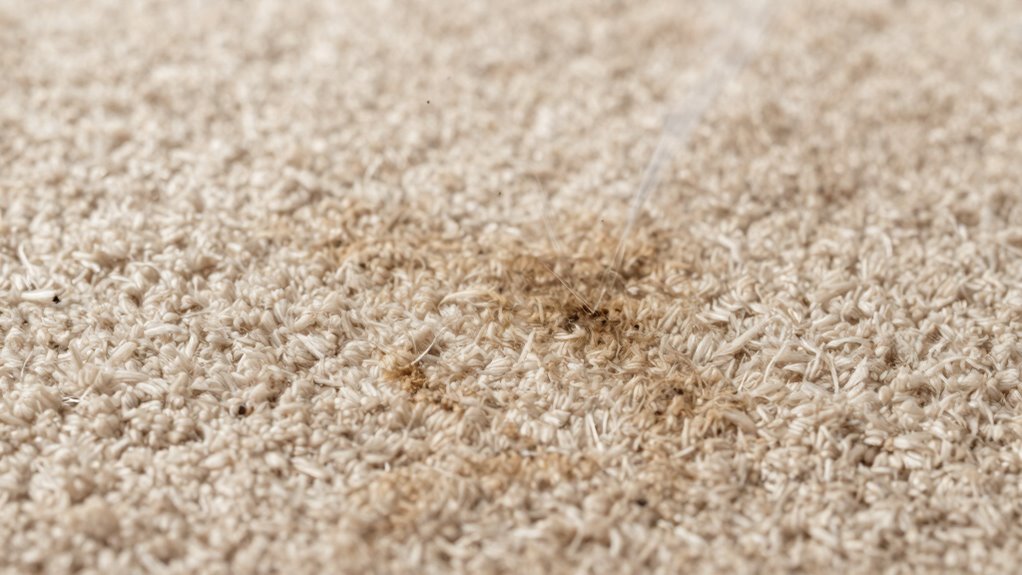
Pet stains can be stubborn and challenging to remove, but understanding the chemistry behind them makes cleanup easier. When your pet has an accident, the stain isn’t just a visual problem—it’s a combination of organic compounds, moisture, and odor molecules. To effectively eliminate both the stain and the smell, you need to understand how enzyme breakdown and odor absorption work. These are key processes that can determine whether odors come back or stay gone.
Enzyme-based cleaners are your best allies because they target the root of the odor: the organic materials in pet urine or feces. These cleaners contain enzymes that catalyze chemical reactions, breaking down proteins, urea, and other organic compounds into smaller, less offensive molecules. This enzyme breakdown process not only destroys the stain but also neutralizes the odor at a molecular level. When used correctly, enzyme cleaners penetrate deep into the fibers, ensuring that the entire stain and smell are eradicated rather than just masked. This is essential because many commercial products only cover up odors temporarily, which is why they often return after a few days.
Odor absorption is another critical aspect. Many cleaning products work by absorbing odor molecules into their structure, trapping them so they don’t escape into the air. Think of it as a sponge soaking up a spill. High-quality enzymatic cleaners not only break down organic compounds but also absorb and lock in odor molecules, preventing them from lingering or re-emerging. It’s important to note that thorough cleaning is necessary before odor absorption happens; if any residual urine or waste remains on your carpet or furniture, the odor will persist and likely come back.
To prevent odors from returning, it’s essential to clean thoroughly and use products designed to target both the stain and smell at a molecular level. Simply wiping up a pet stain isn’t enough—deep cleaning with enzymatic solutions ensures the underlying molecules are broken down and absorbed. Additionally, drying the area completely helps prevent bacterial growth, which can produce new odors. Regularly airing out the space and using odor-neutralizing sprays can also help maintain a fresh environment.

Nature’s Miracle Stain and Odor Remover Dog, 32 Ounces, Everyday Mess Enzymatic Odor Control Formula
SPOT STAIN & ODOR REMOVER: Begins to break down and remove stains immediately on contact.
As an affiliate, we earn on qualifying purchases.
As an affiliate, we earn on qualifying purchases.
Frequently Asked Questions
Can Certain Fabrics Trap Pet Odors More Than Others?
Yes, certain fabrics trap pet odors more than others because of their porosity and odor absorption qualities. Fabrics with high porosity, like plush or microfiber, allow odors to seep in and cling. In contrast, tightly woven or non-porous materials like leather or vinyl resist odor absorption. To prevent odors from returning, choose less porous fabrics and clean them thoroughly with enzymatic cleaners designed for pet stains.
How Does Pet Diet Influence Stain and Odor Persistence?
You might think pet diet doesn’t affect stains and odors, but research suggests otherwise. Pet food impact can alter the composition of odor compounds in your pet’s waste and fur, making odors more persistent. Foods high in protein or certain additives can increase ammonia and sulfur compounds, which cling to fabrics and surfaces. Changing to a balanced diet with fewer artificial ingredients can help reduce odor intensity and make cleaning easier.
Are There Natural Remedies to Neutralize Pet Odors Effectively?
You can use natural remedies like essential oils and baking soda to neutralize pet odors effectively. Mix a few drops of essential oils such as lavender or eucalyptus with baking soda, then sprinkle it on carpets or furniture. Let it sit for a while before vacuuming. This combo helps absorb smells and leaves a fresh scent behind, providing a safe and natural way to combat persistent pet odors.
How Long Does It Typically Take for Pet Stains to Fully Set?
Pet stains typically set within 24 to 48 hours, depending on the material and stain absorption. During this period, the stain penetrates deeper into fibers, making it harder to remove. You should allow ample drying time after cleaning, as lingering moisture prolongs stain setting. To prevent odors, make certain the area dries thoroughly, which helps stop bacteria growth and makes stain removal more effective.
Do Different Pets Produce Different Types of Odor-Causing Compounds?
Yes, different pets produce different types of odor-causing compounds due to species differences. These variations influence the smell of their urine, feces, and skin oils. For example, cats produce unique compounds like felinine, while dogs release different sulfur compounds. Understanding these species differences helps you target cleaning efforts effectively, preventing odors from lingering or returning. Recognizing the specific odor compounds can make your cleaning routine more successful and thorough.

Rocco & Roxie Supply Co. Stain & Strong Odor Eliminator, Enzyme Cleaner, Pet Odor Eliminator for Home – Carpet Stain Remover for Cats & Dog Pee – Urine Destroyer – Carpet Cleaner Spray Clear, 32 Fl Oz
Certified Gentle & Safe Pet Carpet Cleaner Solution: Chlorine free, color safe, no hazardous propellants or residue; safe…
As an affiliate, we earn on qualifying purchases.
As an affiliate, we earn on qualifying purchases.
Conclusion
Understanding pet stain chemistry helps you prevent lingering odors. Many believe that odors return because the enzymes break down only part of the stain, leaving behind smell-causing molecules. While this theory holds some truth, the real key is thorough cleaning and neutralizing all residues. By using enzyme-based cleaners and ensuring complete removal, you can stop odors from coming back. With proper care, your home stays fresh, and your pet’s accidents won’t leave lasting marks or smells.

Resolve Ultra Pet Carpet Cleaner Spray – for Removal of Pet Stains & Odors, 32oz
1. DESTROYS STUBBORN STAINS THE FIRST TIME Penetrates deep to lift and remove tough pet stains like feces,…
As an affiliate, we earn on qualifying purchases.
As an affiliate, we earn on qualifying purchases.
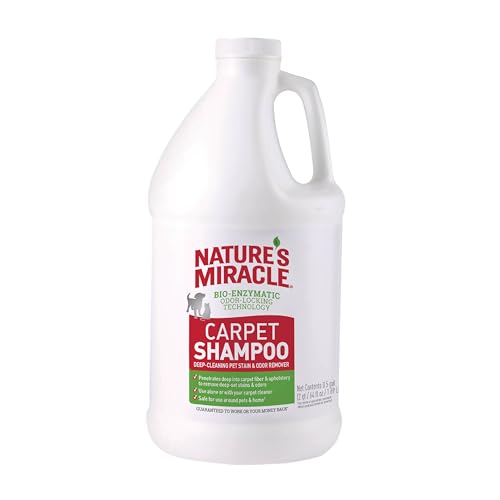
Nature’s Miracle Carpet Shampoo, Deep-Cleaning Pet Stain And Odor Remover, 64 Ounces
REMOVES OLD AND NEW STAINS & ODORS: Penetrates deep into carpet and upholstery fibers.
As an affiliate, we earn on qualifying purchases.
As an affiliate, we earn on qualifying purchases.