
TL;DR

Prime made for students and young adults
- Fast, free delivery for dorm and study essentials
- Prime Video and Amazon Music included
- Member-only deals
NASA’s September 28 guide points skywatchers to Algol, whose brightness changes on a roughly three-day cycle, and to seasonal nebulae including the Witch Head. Algol is a practical target for observing brightness changes, while the nebula is difficult to see without suitable equipment and dark skies.
NASA published an October skywatching guide on September 28, highlighting the variable star Algol and nebulae with seasonal nicknames. The guide gives observers practical targets for autumn evenings, including one star whose brightness regularly dips and a nebula that requires dark skies and capable equipment to view.
Algol, also called the Demon Star or the Ghoul, is in the constellation Perseus. NASA says it can be found during autumn alongside Cassiopeia and Andromeda in the northeastern sky, beginning after 9 p.m. The star’s name and reputation connect it to Greek mythology, where it represents the blinking eye of the gorgon Medusa.
The apparent blinking has an astronomical cause. Algol is a triple-star system, and two of its stars orbit one another. As one passes in front of the other from Earth’s point of view, the system dims from about magnitude +2.1 to +3.4 roughly every three days. NASA points to data from its Transiting Exoplanet Survey Satellite, or TESS, as a way to examine the repeating pattern in a light curve. Observers can compare Algol’s brightness with nearby Almach, also known as Gamma Andromedae, using binoculars or a small telescope.
The guide also describes IC 2118, the Witch Head Nebula, between Eridanus and Orion. This reflection nebula lies about 900 light-years from Earth and appears illuminated by the nearby star Rigel. NASA says it is not visible to the naked eye. Large-aperture telescopes at low magnification can help observers find it under dark skies; astrophotographers may capture it over a few hours, depending on their equipment and sky conditions. A further seasonal target is the Witch’s Broom in the Western Veil Nebula, in Cygnus.
Targets for Autumn Observing
The guide gives readers a way to turn a seasonal skywatching outing into two different kinds of observation. Algol’s repeated dimming can be followed over time and compared with another star, making it a target for observers interested in how astronomers study changing light. The Witch Head Nebula offers a different challenge: finding a faint object whose visibility depends on darkness, aperture and observing conditions.
Those distinctions matter for setting expectations. Algol can be located in the autumn sky, while NASA says the Witch Head cannot be seen with the naked eye. Readers can choose equipment and targets accordingly, rather than expecting every object in a seasonal guide to look equally clear through binoculars or from a lit urban area.
Top picks for "october night spooky"
As an affiliate, we earn on qualifying purchases.
How Algol Appears to Blink
Stars are often treated as steady points of light in casual observing, but some systems appear to change brightness on a regular schedule. In Algol’s case, NASA attributes the recurring dimming to an eclipsing pair within the triple-star system. The change is not a sudden disappearance: the reported range is from magnitude +2.1 to +3.4, with the cycle repeating about every three days.
The nebula targets work differently. A reflection nebula is visible through light from nearby stars scattered by surrounding material. NASA identifies Rigel as the light source associated with the Witch Head Nebula and gives its distance as roughly 900 light-years. The same guide’s opening image features a gas-and-dust cloud shaped by a massive star, nicknamed the Jack-o’-lantern Nebula; the NASA image caption says the nickname is illustrated by an overlay on an infrared image from the Spitzer Space Telescope.
Viewing Depends on Conditions
The guide does not give a single guaranteed observing time for Algol’s next minimum or a specific schedule for each evening. It says the brightness cycle repeats about every three days and points readers toward charts and data plots for calculating minima. Exact timing depends on the date and should be checked with an up-to-date observing resource.
Visibility of the Witch Head Nebula is also uncertain from one location to another. NASA says imaging can take a few hours, depending on equipment and sky quality, but does not promise a particular result or specify a universal exposure time. Local light pollution, weather and the observer’s setup will affect what can be seen or recorded.
Check the Sky Before Observing
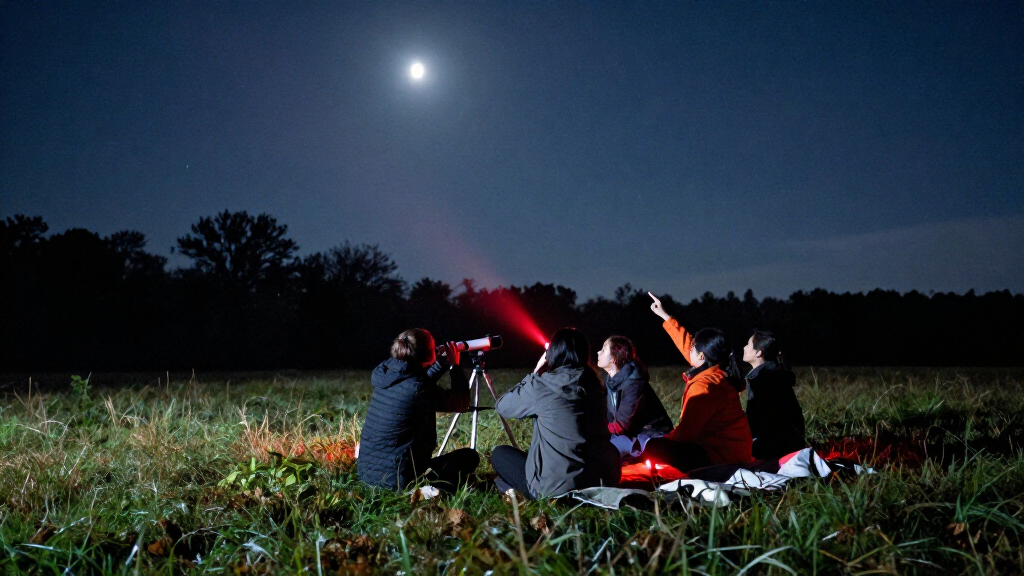
Observers planning an October outing can first locate Perseus and compare Algol with Almach, then consult an interactive chart or data plot to estimate when Algol is expected to dim. NASA’s guide also directs readers to its separate sidewalk astronomy article for ideas about sharing seasonal observing with a community.
Those seeking the Witch Head Nebula should plan for dark skies and suitable telescope or imaging equipment, and check local conditions before setting up. The guide provides targets and general viewing advice, but readers will need current sky charts and local forecasts to plan a specific night.
Key Questions
What causes Algol to dim?
NASA says two stars in the triple-star system orbit one another. The resulting eclipse makes the system appear dimmer at regular intervals.
How often does Algol’s brightness change?
The guide says Algol dims from about magnitude +2.1 to +3.4 roughly every three days. Check a current chart or data plot for the timing of a particular minimum.
Can I see the Witch Head Nebula without a telescope?
NASA says the Witch Head Nebula cannot be seen with the naked eye. Large-aperture telescopes at low magnification can make it easier to catch under dark skies.
Where is the Witch’s Broom?
The guide places the Witch’s Broom in the Western Veil Nebula, in the constellation Cygnus.
Source: primary
Fall Picks
fall essentials
As an affiliate, we earn on qualifying purchases.