TL;DR

Prime made for students and young adults
- Fast, free delivery for dorm and study essentials
- Prime Video and Amazon Music included
- Member-only deals
NASA, the Canadian Space Agency and the German Aerospace Center signed a joint statement of intent to begin coordinated preparatory work on an Earth-based demonstrator for lunar crop-growing technologies. The project is intended to test crops and systems in controlled conditions similar to those expected at a future Moon Base; no schedule, facility details or specific crops were announced.
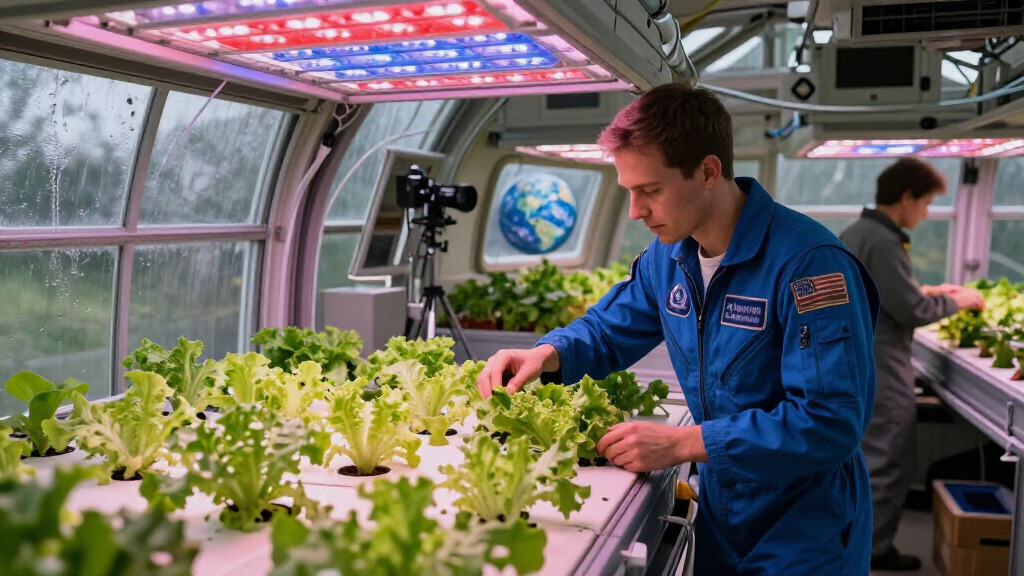
NASA, the Canadian Space Agency (CSA) and the German Aerospace Center signed a joint statement of intent to begin coordinated preparatory work on an Earth-based demonstrator for technologies that could grow crops on the Moon. The proposed Lunar Agriculture Module-Ground Test Demonstrator would test how space crops perform in controlled conditions similar to those expected for a future Moon Base, according to NASA.
The project, named the Lunar Agriculture Module-Ground Test Demonstrator (LAM-GTD), is at a preparatory stage: the agencies have agreed to start coordinated work toward a ground-based demonstration. NASA’s announcement does not describe a completed test system or report crop-growth results. It says the work aims to develop technologies for growing crops in space and study their performance in simulated mission environments.
The announcement links the demonstrator to conditions expected during missions at Moon Base. NASA describes Moon Base as an effort with international partners to build infrastructure for a sustained human presence near the Moon’s south pole. The agencies did not provide a launch date, construction timetable or details about when the proposed crop demonstration would begin.
NASA says crops could support crews with whole-food nutrition and greater dietary variety. Plants may also contribute to life-support needs by absorbing carbon dioxide, producing oxygen and recycling water. Those are stated potential functions of space crops; the announcement does not quantify how much food, oxygen or water a future system could provide, or how much support crews would still need from other systems.
Crops Could Support Longer Lunar Missions
Growing plants could add a food source and dietary options for astronauts on missions where resupply from Earth is limited. The NASA statement also points to possible contributions to air and water management, two recurring needs for crews living away from Earth. A ground demonstrator would let partner agencies study relevant technologies under controlled conditions before relying on them in a lunar setting.
The announcement describes this work as preparation, not proof that crops can yet meet those needs on the Moon. A demonstration on Earth can help evaluate systems and plant performance under simulated conditions, but the statement does not say that terrestrial testing alone would establish how a crop system would function in lunar conditions. The project’s significance will depend on what it tests and what results emerge.
The work is also part of a wider international effort. NASA says Moon Base is intended to support an enduring human presence near the lunar south pole while advancing science and technology and preparing for future human missions to Mars. Crop-growing research is one element of that broader infrastructure effort, rather than a standalone commitment to send a farm to the Moon.
As an affiliate, we earn on qualifying purchases.
From Earth Tests to Moon Base
NASA’s September 30, 2026, announcement identifies NASA, CSA and the German Aerospace Center as signatories to the joint statement of intent. It describes their agreement as the start of coordinated preparatory work toward an Earth-based demonstrator. The statement is therefore an early planning development; it does not announce a deployed lunar facility or a finalized operating system.
NASA frames the LAM-GTD as a way to develop technologies and examine crop performance in controlled environments similar to those anticipated for Moon Base missions. That approach would allow the partners to investigate the needs of space agriculture before a lunar mission depends on it. The agency’s announcement does not specify which environmental conditions will be simulated, which crops will be selected, or what measurements the demonstrator will collect.
The stated rationale reaches beyond food production. NASA says plant systems could provide nutrition while also absorbing carbon dioxide, producing oxygen and recycling water. These potential functions connect crop research with crew life support, particularly as missions extend farther from Earth. The announcement provides no performance data or claim that plants would replace existing life-support equipment.
compact grow light for indoor plants
As an affiliate, we earn on qualifying purchases.
As an affiliate, we earn on qualifying purchases.
Project Schedule and Test Scope
The joint statement of intent does not set out a project schedule, budget or construction site for the demonstrator. NASA has not named the crops to be tested, described the proposed hardware, or detailed the atmospheric and environmental conditions the system will reproduce. It is also unclear how the partners will divide the work or when they expect to publish test findings.
The announcement gives no experimental results, so the crops’ performance in the proposed simulated conditions remains unknown. It also does not quantify how much food, oxygen or recycled water a future system might supply, or explain how crop systems would work alongside other life-support technologies. NASA describes these functions as benefits of space crops, not measured outcomes from this project.
Nor does the statement announce that crops will be grown on the lunar surface. The named effort is an Earth-based demonstrator intended to inform technology development and study performance. Whether any tested systems would later be adapted for a Moon Base mission depends on subsequent design work and results not provided in the announcement.
As an affiliate, we earn on qualifying purchases.
Partners Begin Preparatory Work
NASA, CSA and the German Aerospace Center are set to begin the coordinated preparatory work described in their joint statement. The announcement does not identify a first test date or say when more technical plans will be released. The next public milestones to watch for are details on the demonstrator’s design, the test environment and the roles each agency will take.
Further information would also clarify which crops and performance measures the partners intend to study. Until those plans or test findings are published, the LAM-GTD remains a proposed ground demonstration effort. NASA presents it as part of work supporting Moon Base and longer-term exploration, including preparations for future human missions to Mars.
NASA-inspired indoor gardening system
As an affiliate, we earn on qualifying purchases.
As an affiliate, we earn on qualifying purchases.
Key Questions
What did NASA and its partners announce?
NASA, CSA and the German Aerospace Center signed a joint statement of intent to start coordinated preparatory work on an Earth-based demonstrator for lunar crop-growing technologies.
Will the demonstrator grow crops on the Moon?
No. NASA describes the LAM-GTD as an Earth-based demonstrator. The announcement does not say that crops will be grown on the lunar surface.
Why does NASA want to study space crops?
NASA says crops could provide crews with whole-food nutrition and more dietary variety, while potentially absorbing carbon dioxide, producing oxygen and recycling water.
When will testing start?
NASA’s announcement gives no testing date or schedule. It says the agencies will begin preparatory work toward the demonstrator.
Which crops will the project test?
The announcement does not identify any crops or describe the planned test conditions. Those details remain to be announced.
Source: primary
Evergreen bestsellers Picks
bestsellers
As an affiliate, we earn on qualifying purchases.