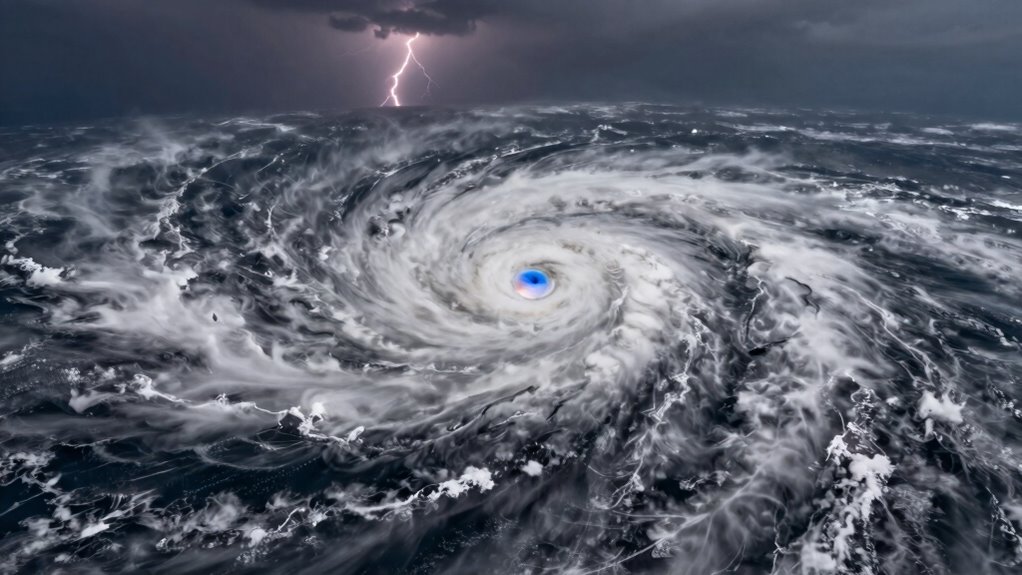

Hurricanes get their power mainly from warm ocean waters, which fuel their strong winds and storm surges. As the water heats up, it causes evaporation, adding moisture to the air and feeding the storm’s development. This process releases heat, intensifying the storm further. Names matter because they help us recognize, respond to, and remember storms quickly, reducing confusion and increasing safety. Keep exploring to discover more about how hurricanes grow and why their names are so important.
Key Takeaways
- Hurricanes derive their power mainly from the warm ocean water, which fuels evaporation and storm development.
- The transfer of heat from ocean water to the atmosphere intensifies the storm’s winds and rainfall.
- Warm ocean waters create low-pressure zones that draw in moist air, strengthening the hurricane.
- Storm surge and condensation release additional heat, further energizing the storm system.
- Naming hurricanes helps with quick identification, effective communication, and public awareness during emergencies.
What Are Hurricanes?
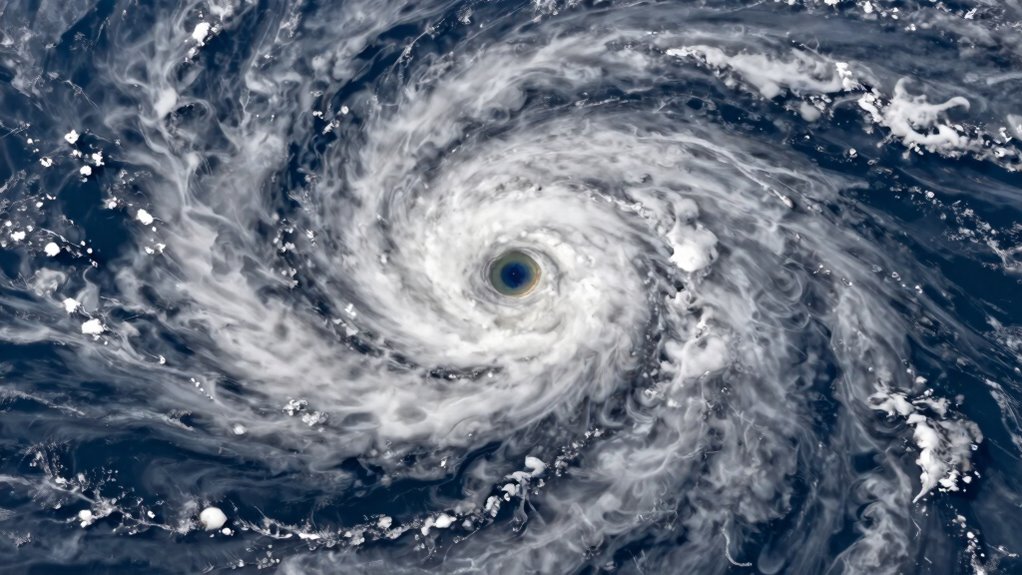
What exactly are hurricanes? They’re powerful tropical storms with a rotating system fueled by warm ocean water. When a hurricane forms, it develops an extensive storm surge, which causes rising sea levels and flooding along coastlines. The structure of a hurricane includes the eyewall, a ring of intense thunderstorms surrounding the calm eye. This eyewall structure contains the storm’s most severe winds and rainfall. As the storm intensifies, the eyewall becomes more organized, making the hurricane more dangerous. The storm surge pushes water onto land, compounding the destructive force of the winds. Understanding these features helps you grasp why hurricanes are so devastating and emphasizes the importance of early warnings and preparedness during hurricane season. Additionally, the contrast ratio of a hurricane’s cloud formations can influence how intense storms appear in satellite imagery. Recognizing the energy source behind hurricanes is crucial to understanding their development and potential impact. The structure of a hurricane, including its size and symmetry, can also affect its destructive potential and the area it impacts. Moreover, the warm ocean water plays a vital role in sustaining and strengthening hurricanes over their lifespan.
What Factors Power a Hurricane?
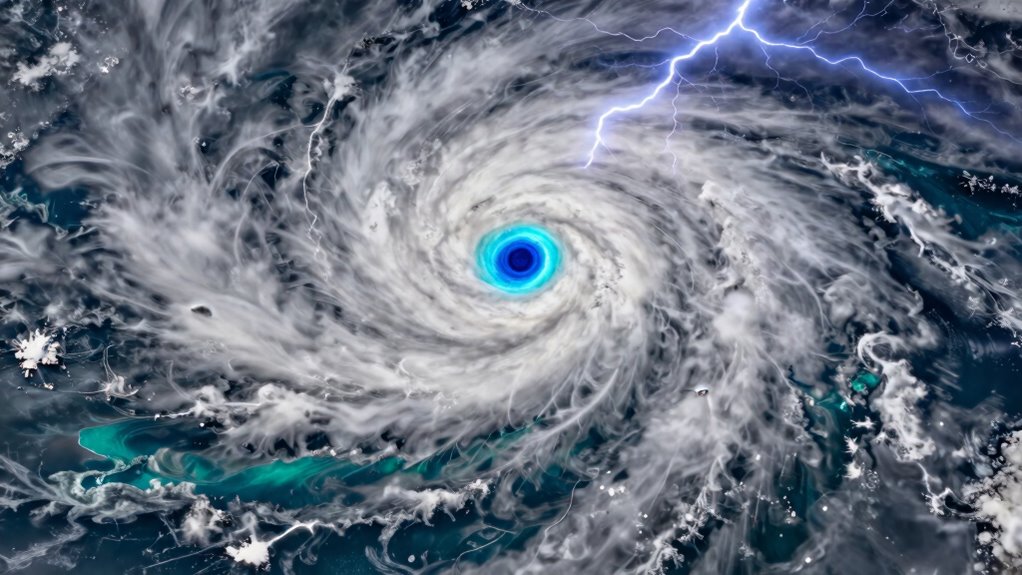
The primary factors that power a hurricane include warm ocean water, atmospheric conditions, and the Coriolis effect. Warm water fuels the storm, causing rapid wind intensification, while moist air sustains its growth. The Coriolis effect spins the storm, shaping its structure. As these factors combine, they generate a powerful storm surge and fierce winds. Additionally, essential oils like eucalyptus and peppermint can provide relief from symptoms associated with storms, such as respiratory issues or stress, demonstrating how natural elements can support health during extreme weather events. Proper air purifier maintenance ensures indoor air quality remains high during such times, helping to mitigate the impact of airborne allergens and pollutants. Understanding electric power generation through bike generators highlights how sustainable energy can be harnessed even in challenging conditions. Visualize this with the following:
| Warm Ocean Water | Creates energy for storm growth |
|---|---|
| Atmospheric Conditions | Provide moisture and instability |
| Coriolis Effect | Spins the storm, intensifying winds |
| Wind Intensification | Drives stronger winds and storm surge |
How Do Warm Ocean Waters Fuel Storm Growth?
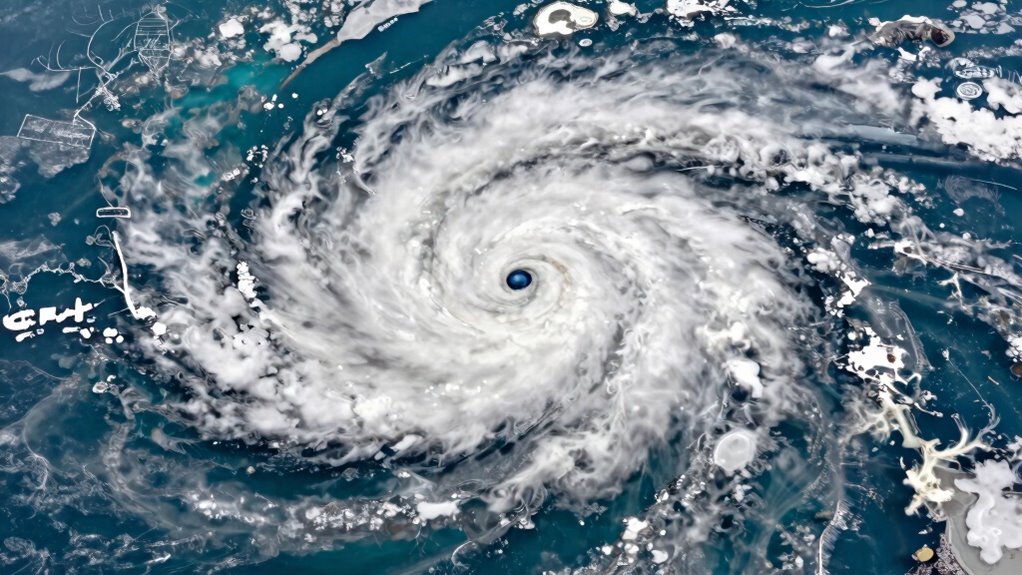
Warm ocean waters serve as the primary fuel for hurricane development. When the ocean’s heat content is high, it provides abundant energy to the storm. As the water warms, it evaporates more, increasing atmospheric moisture around the storm. This moisture fuels the storm’s growth, creating thick clouds and intense rainbands. The warm water acts like a giant energy reservoir, transferring heat to the air above. This process strengthens the storm’s core, allowing it to organize and intensify. The higher the ocean temperature, the more energy is available to sustain and grow the hurricane. Ocean heat content plays a crucial role in determining storm strength, as higher heat content supplies more energy for development. To better understand this process, scientists analyze ocean temperature patterns that influence storm behavior. Recognizing how ocean heat transfer occurs helps improve storm forecasts and preparedness. So, warm ocean waters are essential for a storm’s development, as they provide the heat and moisture needed to power these fierce weather systems. Additionally, the trend of rising ocean temperatures due to climate change increases the potential intensity and frequency of hurricanes. Understanding the role of ocean heat content can help better predict storm behavior and potential impacts.
How Do Hurricanes Transfer Energy From Ocean to Atmosphere?
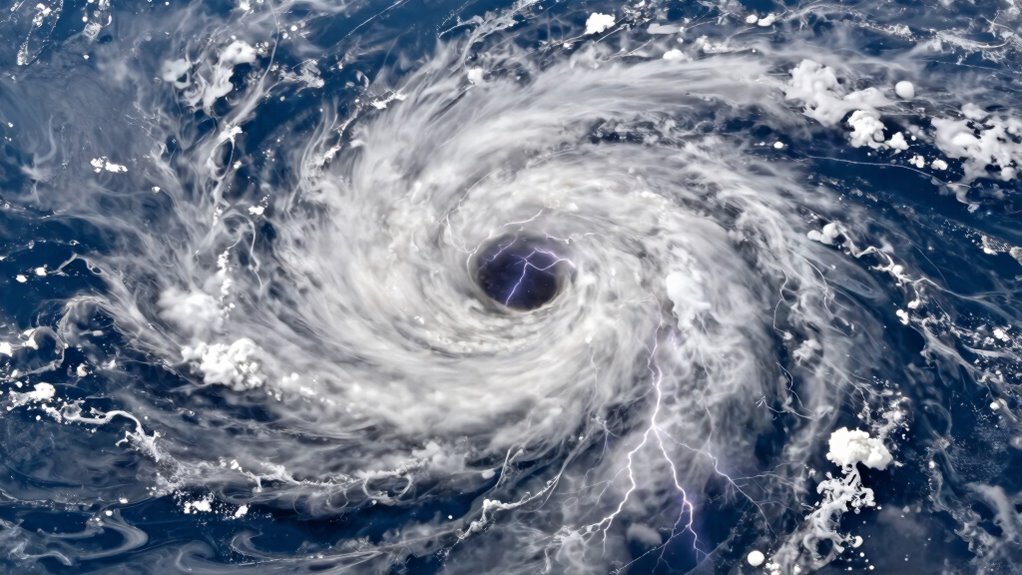
Hurricanes transfer energy from the ocean to the atmosphere primarily through the process of evaporation. Warm ocean waters heat the air just above the surface, causing moisture to rise and create low-pressure areas. This air pressure dynamic fuels the storm, drawing in more warm, moist air that feeds the hurricane’s growth. As the moisture condenses in the upper atmosphere, it releases heat, intensifying the storm. Meanwhile, storm surge mechanisms amplify this energy transfer by pushing seawater onto land, raising water levels and increasing the moisture available for evaporation. These combined processes sustain the hurricane’s power, allowing it to grow stronger as it pulls energy from the ocean and transfers it to the atmosphere efficiently. Understanding energy transfer mechanisms is crucial for predicting storm development and potential impacts.
Why Are Hurricane Names More Important Than You Think?
Why Are Hurricane Names More Important Than You Think?
Why Are Hurricane Names More Important Than You Think?
Have you ever wondered why hurricane names matter beyond just identifying storms? Storm naming conventions play a crucial role in communication, helping authorities and the public quickly recognize and respond to threats. But names also carry cultural significance, reflecting regional histories or traditions, which can influence how communities perceive and prepare for storms. A familiar or culturally relevant name might evoke stronger awareness or concern, encouraging timely action. Conversely, using generic or confusing names could lead to misunderstandings or complacency. Names also humanize storms, making them easier to remember and discuss. Additionally, the naming process often considers the cultural significance of certain names, which can influence the emotional response and level of preparedness among affected populations. Properly managing public perception through thoughtful naming can ultimately improve safety outcomes. Furthermore, effective communication strategies around storm names can enhance warning adherence and community resilience. Clear and consistent naming conventions are vital for effective emergency response, as they help reduce confusion and panic during critical moments. Overall, hurricane names are more than labels—they’re essential tools for effective communication, safety, and cultural connection during a storm’s lifecycle.
Frequently Asked Questions
How Do Scientists Predict Hurricane Paths Accurately?
You can understand how scientists predict hurricane paths accurately by looking at hurricane modeling and satellite tracking. They use advanced computer models that analyze weather data and simulate possible paths. Satellite tracking provides real-time images of a hurricane’s movement, helping meteorologists adjust predictions quickly. Combining these tools, you get precise forecasts, giving you enough time to prepare and stay safe from the storm’s potential impact.
Can Hurricanes Form in Cold Ocean Waters?
Ever wonder if cold water could fuel a hurricane? Generally, cold water inhibits hurricane formation because these storms need warm ocean temperatures to develop. Cold water cools the air above, weakening the storm’s energy source. Without the heat from warm waters, hurricanes struggle to form or intensify. So, while rare, a hurricane in cold ocean waters is highly unlikely, as the cold acts like a barrier to their powerful growth.
Do All Hurricanes Follow the Same Development Stages?
Not all hurricanes follow the same development stages. During storm formation, you’ll notice variations in how quickly they develop and intensify. As they grow, an eye begins to develop at the center, marking a mature hurricane. Some storms skip certain stages or weaken unexpectedly. You should keep in mind that each hurricane’s evolution depends on factors like water temperature and wind patterns, which influence their structure and intensity.
How Do Climate Change and Global Warming Influence Hurricane Intensity?
Climate change and global warming intensify hurricane strength by boosting warming trends in ocean temperatures, which fuels more powerful storms. As ocean surface temperatures rise, they create positive climate feedback that enhances hurricane development. You’ll notice more frequent, severe hurricanes because these warming trends provide extra energy, making storms stronger and more destructive. This is why understanding climate change’s impact on hurricanes is vital for preparing and protecting vulnerable communities.
Why Do Some Hurricanes Weaken Quickly While Others Persist?
Imagine a storm flickering like a candle in the wind. If wind shear is strong, it tilts and disrupts the hurricane, causing it to weaken quickly. Conversely, persistent ocean heat fuels the storm, helping it endure longer. When warm waters are absent or wind shear is high, the hurricane can’t sustain itself, leading to rapid weakening. Your ability to track these factors can predict a storm’s lifespan.
Conclusion
Understanding how hurricanes get their power helps you realize why their names matter. Just like a name can define a person’s identity, a hurricane’s name brings awareness and urgency to its threat. Recognizing the forces behind these storms, from warm oceans to energy transfer, makes you more prepared. Think of hurricane names as labels that grab attention—like a flashing sign in a stormy sky—reminding you to stay alert and stay safe.