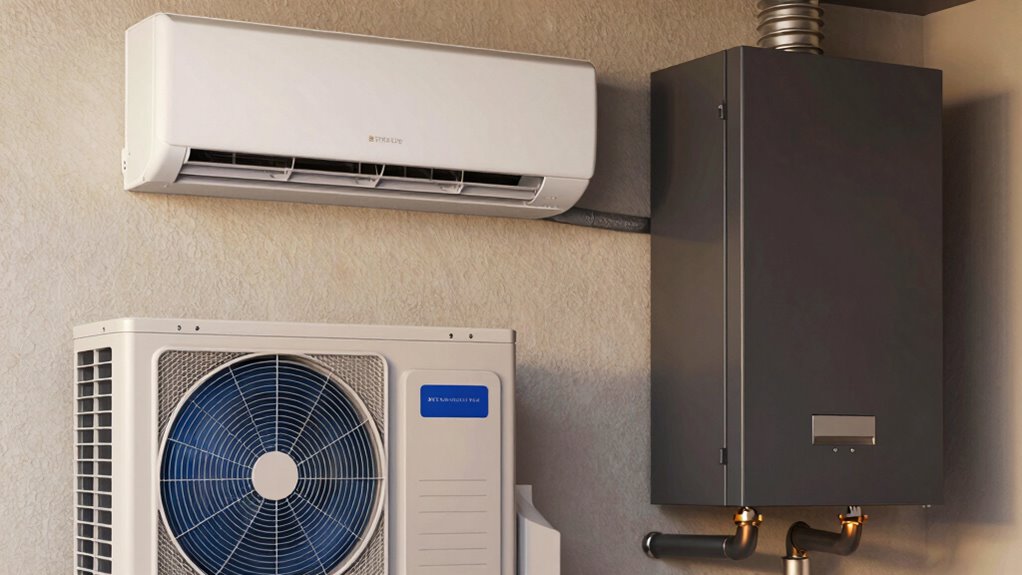

When choosing between a heat pump, AC, and furnace, consider your climate, budget, and energy goals. Heat pumps provide both heating and cooling, making them energy-efficient for moderate climates, but they have higher upfront costs. Air conditioners are great for cooling but require a separate heat source during winter. Furnaces excel in cold climates but may lead to higher energy bills. Keep exploring to discover which system fits your home best and saves money long-term.
Key Takeaways
- Heat pumps offer both heating and cooling, making them versatile for moderate climates; ACs provide cooling only, while furnaces deliver heat only.
- Installation costs are highest for heat pumps, lower for ACs, and variable for furnaces depending on ductwork needs.
- Heat pumps are highly energy-efficient, reducing long-term costs, whereas furnaces may consume more energy, increasing operational expenses.
- Suitable system choice depends on climate: heat pumps for moderate, furnaces for cold winters, and ACs primarily for cooling.
- Home infrastructure and automation can influence system performance, installation costs, and overall comfort.

When choosing a heating and cooling system for your home, understanding the differences between a heat pump, air conditioner (AC), and furnace is essential. These systems vary markedly in terms of energy efficiency and installation costs, which can influence your decision based on your budget and long-term savings. A heat pump is often praised for its high energy efficiency because it transfers heat rather than generates it, making it a cost-effective choice for moderate climates. While the upfront installation costs of a heat pump tend to be higher than those of a standard AC or furnace, they can save you money in the long run through lower energy bills. This efficiency stems from its ability to both heat and cool your home using the same system, eliminating the need for separate units.
In contrast, an air conditioner is primarily designed to cool your space, and its installation costs are generally lower than those of a heat pump. However, during winter, you’ll need a separate heating system, often a furnace. An AC’s energy efficiency is typically high when cooling, but it doesn’t provide heating, which could lead to additional expenses if you need to purchase a separate furnace or heating source. Meanwhile, furnaces, especially gas or oil models, usually have lower initial installation costs compared to heat pumps but tend to be less energy-efficient, especially older models. They generate heat directly, which can lead to higher energy consumption and higher utility bills over time. Additionally, installing a furnace involves venting and ductwork, which can add to the overall costs, especially if your home isn’t already equipped with a duct system.
Furthermore, advancements in home automation technology are increasingly integrating heating and cooling systems, allowing for smarter and more efficient climate control. When considering your options, think about the climate in your area. If you live in a moderate climate, a heat pump might be the most efficient option because it handles both heating and cooling effectively. If your winters are harsh, a furnace might be more reliable, even if it costs more to operate. Keep in mind that installation costs vary depending on the complexity of the setup and existing infrastructure in your home. Replacing an old system with a newer, more efficient model might involve additional costs, but it could also lead to substantial savings over time through reduced energy bills. Ultimately, balancing initial costs with long-term energy efficiency will help you choose the right system for your home’s comfort and your budget.
Top picks for "heat pump furnace"
Open Amazon search results for this keyword.
As an affiliate, we earn on qualifying purchases.
Frequently Asked Questions
Which System Is Most Energy-Efficient for Hot Climates?
In hot climates, a heat pump is your most energy-efficient choice because it uses renewable energy by transferring heat rather than generating it. It also works well with smart thermostats, optimizing energy use and reducing costs. Unlike traditional systems, heat pumps provide cooling and heating efficiently, making them ideal for hot weather. Plus, their eco-friendly design helps lower your carbon footprint while keeping your home comfortable.
How Do Maintenance Costs Compare Among Heat Pumps, ACS, and Furnaces?
You’ll find that heat pumps generally have higher monthly expenses due to their initial cost, but they tend to require less frequent repairs compared to traditional AC units and furnaces. ACs usually have moderate repair frequency and maintenance costs, while furnaces can be more costly to maintain over time. Regular upkeep keeps all systems running smoothly, but your overall maintenance costs depend on the system’s age and usage.
Can a Heat Pump Provide Both Heating and Cooling Effectively?
Yes, a heat pump can provide both heating and cooling effectively. You can consider DIY installation if you’re comfortable with the process, but professional installation is recommended for peak performance. Keep in mind, heat pumps tend to have moderate noise levels, so placement matters for comfort. Overall, they’re energy-efficient and versatile, making them a great choice for year-round climate control in your home.
What Is the Typical Lifespan of Each Heating and Cooling System?
Imagine your system’s durability as a soap bubble—delicate yet surprisingly lasting. Generally, furnaces last about 15-20 years, AC units 10-15 years, and heat pumps around 10-15 years. Replacement factors include usage, maintenance, and climate. Keep them well-maintained, and you’ll extend their lifespan. Without proper care, even the sturdiest system can pop early, leaving you shivering or sweltering unexpectedly.
Are There Tax Incentives Available for Upgrading to Energy-Efficient Systems?
Yes, you can take advantage of tax credits and government rebates when upgrading to energy-efficient systems. These incentives help offset the initial costs of installing heat pumps, energy-efficient AC units, or furnaces. Check with your local or federal programs, as they often offer financial rewards for choosing eco-friendly options. This can make upgrading more affordable and support your efforts to reduce energy consumption and lower utility bills.
Conclusion
Choosing between a heat pump, AC, or furnace depends on your climate and energy preferences. Did you know that heat pumps can provide both heating and cooling, making them a versatile choice? They can cut your energy bills by up to 50%! Whether you’re after efficiency, cost, or comfort, understanding these options helps you make an informed decision. Ultimately, selecting the right system guarantees your home stays cozy year-round without breaking the bank.