
Some fabrics trap heat better than others because of their material and how they’re made. Natural fibers like wool have tiny air pockets that retain heat, while synthetic options like fleece are lightweight but still insulate well. The structure of the fabric—tight or loose weaves—also affects heat retention and breathability. If you want to understand how different fabrics work to keep you warm and comfortable, you’ll find useful insights ahead.
Key Takeaways
- Fabrics with dense weaves or knits trap more air, enhancing heat retention.
- Natural fibers like wool contain tiny air pockets that provide superior insulation.
- Synthetic fabrics such as fleece are designed to trap heat efficiently while remaining lightweight.
- Thick or tightly woven fabrics limit airflow, increasing heat retention.
- The combination of insulating properties and fabric structure determines heat trapping effectiveness.
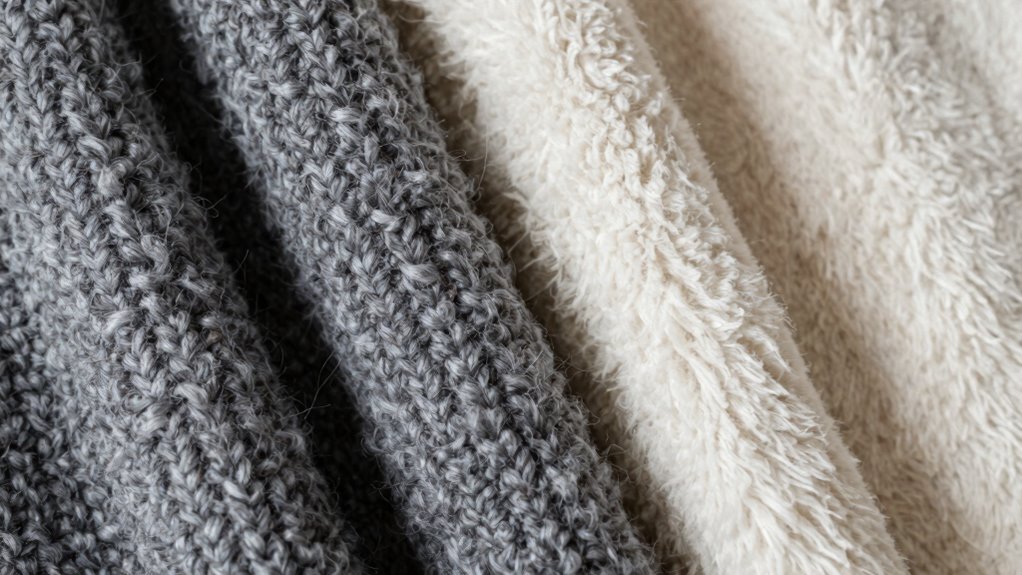
When the weather turns cold, choosing the right fabrics can make all the difference in staying warm. The key lies in understanding how different materials trap heat and keep you comfortable. Some fabrics excel at providing thermal insulation, which is essential for retaining body heat, especially in chilly conditions. These fabrics create a barrier that slows down heat loss, allowing you to stay warmer longer. Wool, for example, is a natural insulator because it contains tiny air pockets that trap heat, making it ideal for cold weather. Synthetic options like fleece also excel in this area, offering excellent thermal insulation without adding much weight.
Choosing the right fabrics helps trap heat and keep you warm in cold weather.
However, while trapping heat is vital, it’s equally important to think about breathability factors. Breathability determines how well a fabric allows moisture and excess heat to escape from your body. If a fabric doesn’t breathe, sweat can accumulate, making you feel damp and chilly, which defeats the purpose of wearing warm clothing. Materials like merino wool strike a good balance—they provide thermal insulation while maintaining breathability. This helps you stay warm without overheating or feeling clammy. Conversely, some heavy fabrics might trap heat effectively but lack breathability, leading to discomfort during physical activity or in milder weather.
The fabric’s structure also plays a significant role. Thick, densely woven fabrics trap more heat due to their tight construction, but they might hinder breathability. Conversely, fabrics with a looser weave or specialized mesh structures can allow airflow, improving breathability but sometimes sacrificing some insulation. That’s why layering becomes essential: a thermal-insulating base layer paired with a breathable outer shell can optimize both warmth and comfort. Additionally, understanding the fabric’s heat retention properties can help you choose the most suitable material for your needs. Incorporating fabrics with moisture-wicking capabilities further enhances comfort, especially during physical activities or fluctuating weather conditions. Recognizing the importance of moisture management can help prevent discomfort caused by dampness and sweat buildup, ensuring better overall insulation. Moreover, selecting fabrics with the right weave or knit pattern can enhance both heat retention and breathability, providing a tailored approach for different climates. Ultimately, the best fabrics for trapping heat are those designed with both thermal insulation and breathability factors in mind. They work together to keep you warm without letting sweat or moisture compromise your comfort.
As an affiliate, we earn on qualifying purchases.
Frequently Asked Questions
Are Synthetic Fabrics Always Better at Trapping Heat Than Natural Ones?
Synthetic fabrics aren’t always better at trapping heat than natural ones. You’ll find that natural fabrics like wool and fleece often provide excellent insulation, especially when it comes to breathability comparison. They also have strong moisture-wicking properties, keeping you dry and warm. Synthetics can trap heat effectively, but their breathability varies. So, it depends on the fabric type and your activity, not just whether it’s natural or synthetic.
How Does Fabric Color Influence Heat Retention?
Color plays a big role in heat retention. Dark fabrics absorb more heat because they absorb more UV reflection, making you feel warmer. Light colors, on the other hand, reflect UV rays and keep you cooler. When choosing fabric color, consider color contrast—darker shades trap more heat, while lighter shades keep you comfortable. It’s a classic case of playing your cards right to suit your needs.
Can Fabric Thickness Alone Determine Heat-Trapping Ability?
Fabric thickness alone doesn’t determine heat-trapping ability. You need to take into account thermal insulation and breathability balance. Thicker fabrics often trap more heat, but if they lack breathability, moisture can build up, reducing comfort. Conversely, a thinner fabric with good insulation properties and breathability can trap heat effectively without causing overheating. So, focus on both thickness and how well the fabric manages airflow for ideal warmth.
Do Fabric Treatments Affect Heat Retention Properties?
Yes, fabric treatments can considerably influence heat retention. When you choose treatments that enhance moisture management and fabric breathability, you control how heat is trapped or released. These treatments help wick moisture away from your skin, keeping you dry and warm. They also improve airflow, preventing overheating. So, by selecting fabrics with specific treatments, you can optimize your comfort, whether you need insulation or ventilation.
How Do Layering Strategies Impact Overall Heat Retention?
Layering strategies considerably impact your insulation effectiveness and air circulation. By layering clothing properly, you trap more heat between the layers, keeping you warmer. Start with a moisture-wicking base layer, add an insulating middle layer, and top with a waterproof shell. This setup minimizes air circulation where it’s not needed and traps warm air close to your body, maximizing heat retention and ensuring you stay warm in cold conditions.
As an affiliate, we earn on qualifying purchases.
Conclusion
Understanding how different fabrics trap heat helps you choose the right material for staying warm. Remember, not all fabrics are created equal, and selecting the right one can make all the difference on chilly days. When it comes to warmth, it’s clear that you should pick your fabrics wisely—because if you’re caught in the cold without the right gear, you’ll find yourself in hot water. So, choose wisely and stay cozy!
As an affiliate, we earn on qualifying purchases.
thermal moisture-wicking clothing
As an affiliate, we earn on qualifying purchases.
As an affiliate, we earn on qualifying purchases.