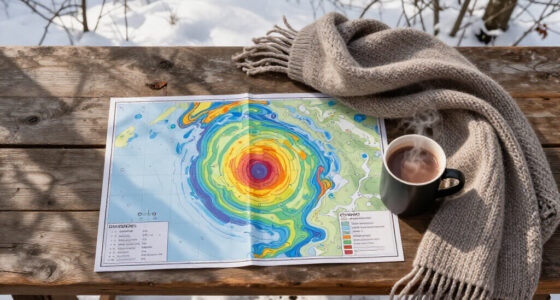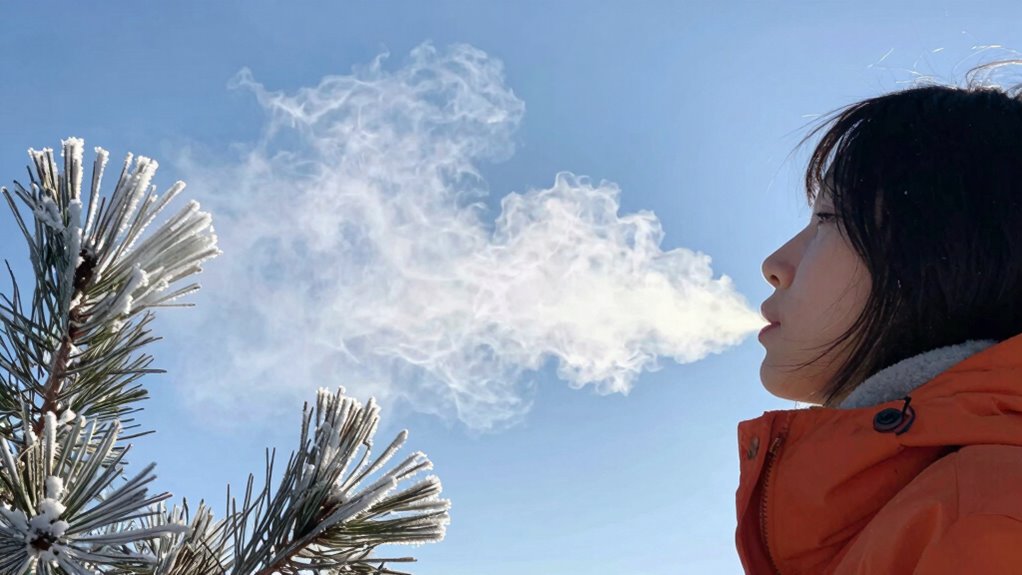

When you step into cold air, it feels sharper because higher pressure and tightly packed air molecules make sensation more intense on your skin and nerves. Cold temperatures activate nerve endings, and the increased pressure pushes more firmly on your skin, amplifying the discomfort. Wind can also boost this effect by adding physical force. If you keep exploring, you’ll discover how these physical and perceptual factors combine to create that biting sensation.

Get school and study supplies delivered free — and shop member deals
- Fast, free delivery on millions of items
- Access to Prime Big Deal Days deals on October 6–7
- Prime Video, Amazon Music and more included
Key Takeaways
- Cold air has higher pressure due to tightly packed molecules, increasing sensory stimulation on skin and nerves.
- Tightly packed air molecules in cold weather exert more force, intensifying the sensation of sharpness.
- Cold temperatures activate nerve endings sensitive to rapid temperature and pressure changes, creating a biting feeling.
- Wind in cold conditions enhances the physical force on skin, amplifying the perception of sharpness.
- Psychological factors and individual sensitivity influence how sharply cold air is perceived compared to warm air.
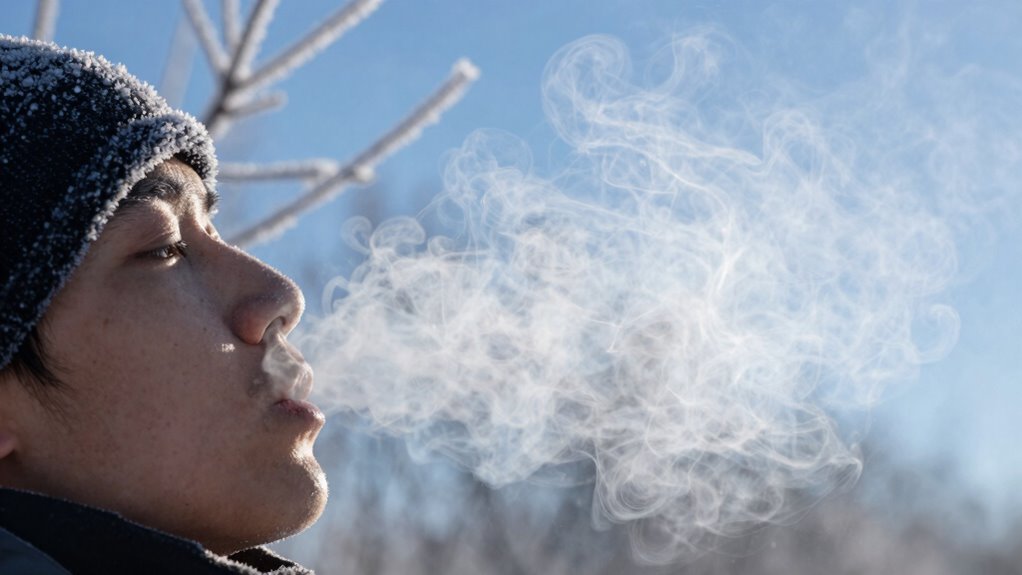
Have you ever noticed how cold air seems to cut through you more sharply than warm air? It’s a sensation that feels almost jarring, as if the air itself is slicing through your skin and bones. This feeling isn’t just about the temperature; it’s deeply connected to how your sensory perception reacts to different environmental conditions, especially influenced by air pressure. When the air is cold, it often has higher air pressure, and this increased pressure can heighten your sensory awareness. Your body perceives the cold as more intense because the higher pressure pushes more firmly on your skin and nerves, amplifying your sensation of sharpness.
In colder weather, the air molecules are packed more tightly, creating a greater air pressure. When you step outside into this environment, your skin and nasal passages respond more actively to the increased pressure. Your sensory receptors, particularly those that detect temperature and touch, become more sensitive under these conditions. The heightened sensory perception means that even slight changes in temperature or pressure are registered more vividly, making the cold feel more piercing. It’s not just the cold itself, but how your nervous system interprets the increased physical force exerted by the dense, high-pressure air. This is why a brisk wind on a chilly day feels so much more aggressive than a gentle breeze on a warm day.
Additionally, your body’s response to cold air involves the activation of nerve endings that are sensitive to rapid changes in temperature and pressure. When exposed to cold air, your nerve endings send signals to your brain indicating discomfort or sharpness. The brain, in turn, interprets these signals as a more intense sensation because of the combined effect of low temperature and the heightened air pressure pressing against your skin. This sensory perception creates that familiar feeling of cold air biting into your face, making it seem more aggressive and “sharper” than warm air, which is usually associated with lower pressure and less stimulation of those nerve endings. Furthermore, the air pressure itself plays a crucial role in amplifying these sensations, contributing to how sharply cold air is perceived. Recognizing the sensory perception and the way environmental conditions influence our sensations can also be affected by psychological factors, which may enhance or diminish this sharpness depending on individual sensitivity. Understanding these physical and perceptual mechanisms helps explain why different weather patterns evoke such distinct physical sensations.
As an affiliate, we earn on qualifying purchases.
Frequently Asked Questions
How Does Humidity Affect the Perception of Cold Air?
Humidity affects how you perceive cold air because higher moisture content and dew point make it feel colder. When the dew point is high, there’s more moisture in the air, which pulls heat from your skin more efficiently, amplifying the cold sensation. So, even if the temperature stays the same, humid cold air feels sharper because your body loses heat faster due to increased moisture content.
Why Does Cold Air Feel More Intense Indoors Than Outdoors?
Cold air feels more intense indoors because of higher air density, which increases the cooling effect on your skin. When you’re indoors, you’re often in a confined space with less airflow, making the sensation more concentrated. Your sensory perception also heightens as your body reacts to the cooler environment. This combination makes cold air seem sharper and more immediate compared to outdoor settings, where airflow disperses the sensation.
Can Cold Air Cause Long-Term Health Effects?
Cold air itself usually doesn’t cause long-term health effects, but it can impact your respiratory health. You might notice increased susceptibility to airborne viruses, which thrive in cold, dry conditions. Breathing in cold air repeatedly can irritate your airways, especially if you have allergies or asthma, potentially leading to chronic respiratory issues over time. To protect your health, cover your mouth and nose and stay warm during cold weather.
How Does Cold Air Impact Our Skin Differently Than Warm Air?
Cold air impacts your skin by making it dry and tight, because it strips moisture away, leading to skin dryness. It also stimulates your sensory nerves, causing a sharper, more intense sensation. You might notice your skin feels more sensitive or uncomfortable in cold weather. Warm air, by contrast, helps retain moisture and calms sensory nerves, making your skin feel softer and less irritated.
Why Do Some People Feel Colder Than Others in the Same Temperature?
You feel colder than others because personal comfort varies based on factors like body fat, metabolism, and clothing. Cultural perceptions also influence how you experience cold, as some cultures are more accustomed to lower temperatures. Your body’s ability to regulate heat, along with psychological factors, makes you perceive the same temperature differently. So, individual differences and cultural backgrounds shape how cold you feel compared to others.
As an affiliate, we earn on qualifying purchases.
Conclusion
So, next time you step outside and notice cold air feels sharper, remember it’s not just your imagination. The crispness cuts through, clearer and more immediate, unlike warm air’s gentle embrace. Cold air heightens your senses, making everything feel more intense. Warm air, on the other hand, soothes and softens, easing your experience. The contrast isn’t just in temperature but in how each sensation awakens your awareness—sharper, brighter, more alive in the cold, softer in the warmth.
As an affiliate, we earn on qualifying purchases.
As an affiliate, we earn on qualifying purchases.
Halloween Picks
halloween
As an affiliate, we earn on qualifying purchases.