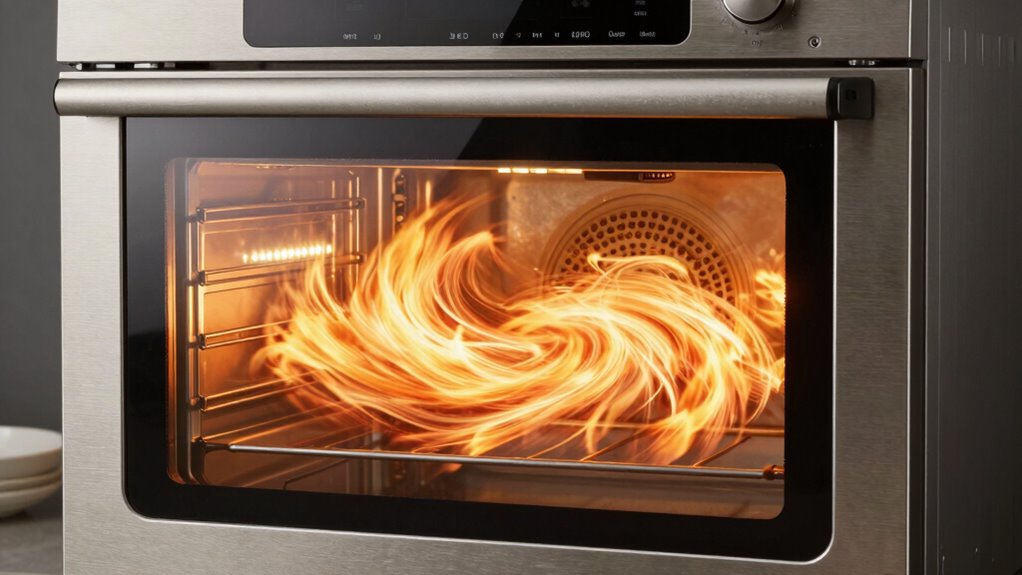

Circulating hot air in convection ovens uses fans to move hot air evenly around your food, helping it cook more uniformly and quickly. This design prevents hot spots, so your baked goods, roasts, or reheated leftovers turn out consistently delicious. There are various types of convection ovens, from compact countertop models to large commercial units, each suited for different needs. Keep exploring to discover how to choose the best oven, debunk myths, and get perfect results every time.
Key Takeaways
- Circulating hot air in convection ovens ensures even heat distribution, reducing hot spots for consistent cooking results.
- Fans inside convection ovens move hot air around food, improving efficiency and reducing cooking times.
- There are various types of convection ovens, including countertop, built-in, commercial, and residential models, suited for different needs.
- Proper use involves preheating, avoiding overcrowding, and regular maintenance for optimal performance.
- Myth-busting: convection ovens do not always cook faster; their benefits depend on food type and correct settings.
What Is Circulating Hot Air in Convection Ovens and How Does It Help?

Have you ever wondered how convection ovens cook food more evenly and quickly? It all comes down to circulating hot air, which creates specific airflow patterns inside the oven. These patterns help distribute heat more uniformly around your food, improving heat transfer from the hot air to the surface.
As the fan blows, it pushes hot air across the food’s surface, ensuring every part gets consistent warmth. This continuous movement prevents hot spots and cold spots, resulting in evenly cooked dishes. The convection technology used in these ovens significantly enhances cooking efficiency and results. Proper airflow management is essential for maximizing these benefits, especially with the help of innovative airflow systems designed to optimize circulation.
The efficiency of heat transfer increases because the moving air constantly replaces the cooler air around your food with hotter air. By controlling airflow patterns, convection ovens enhance cooking speed and consistency, making them a favorite for those who want perfect results every time. Additionally, temperature regulation plays a key role in maintaining optimal cooking conditions, ensuring precise results regardless of the dish. Incorporating airflow patterns into oven design can further improve overall performance and cooking outcomes.
How Do Convection Ovens Use Fans and Hot Air to Cook Evenly?
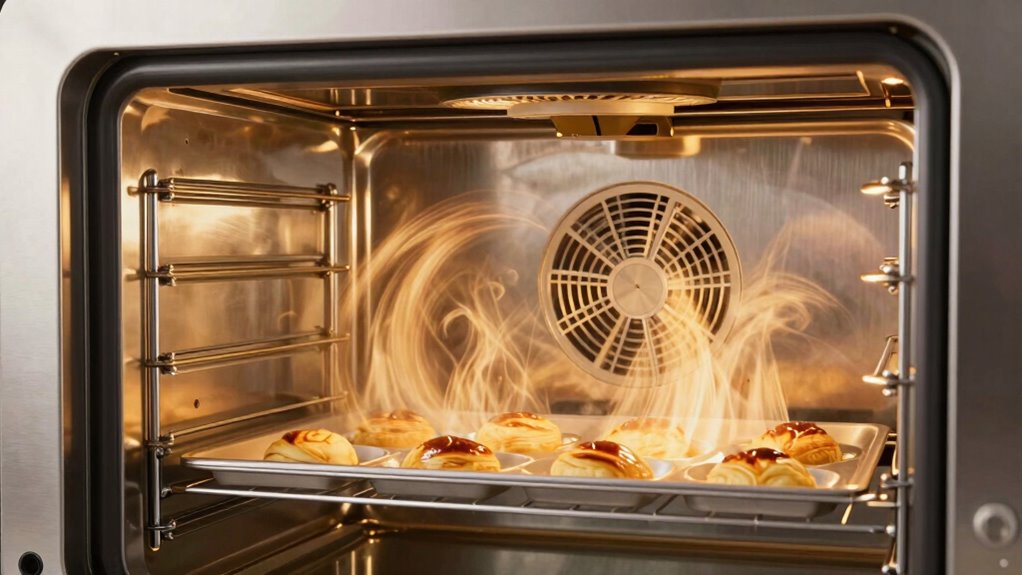
Convection ovens use fans to keep hot air moving around your food, ensuring it cooks evenly. This fan-driven air circulation helps eliminate hot spots and promotes consistent results. As a result, heat is distributed uniformly, so every part of your dish gets cooked to perfection. Additionally, the use of auditory feedback can help chefs and home cooks monitor and adjust their cooking techniques for better results. Incorporating temperature regulation ensures the oven maintains a steady heat, further enhancing cooking precision. The integration of airflow patterns plays a crucial role in achieving optimal cooking performance, and understanding piercing care and hygiene can contribute to maintaining appliance cleanliness for safer cooking environments. Proper ventilation systems are also essential for maintaining appliance longevity and ensuring safety during operation.
Fan-Driven Air Circulation
Fan-driven air circulation is the key to how convection ovens cook food more evenly. The fan creates specific airflow patterns that distribute hot air throughout the oven chamber, preventing hot spots.
This consistent movement of air enhances heat transfer efficiency, making cooking faster and more uniform. As the fan blows hot air around your food, it ensures that heat reaches all surfaces equally, reducing the risk of uneven cooking.
By controlling airflow, convection ovens maintain a steady temperature and promote even browning. The design of the fan and its placement help optimize this process, allowing you to achieve perfectly cooked dishes without having to rotate or reposition food constantly.
Fan-driven air circulation is what makes convection ovens a reliable choice for consistent results.
Uniform Heat Distribution
The circulating air ensures that heat reaches all areas, making it easier to achieve professional results at home. Plus, because heat spreads evenly, you can often reduce cooking times and temperatures, boosting energy efficiency. In addition, smart oven technology can help monitor and adjust cooking parameters for optimal results, further enhancing your cooking experience. This consistent airflow minimizes the need for frequent checking or turning food, saving you time and energy. Whether you’re baking pastries, roasting vegetables, or cooking meats, convection ovens help you produce evenly cooked dishes while using less power, making them a smart choice for both performance and efficiency.
What Types of Convection Ovens Are Available?

You’ll find convection ovens in various types, from compact countertop models to full built-in units that blend seamlessly with your kitchen. Commercial options are designed for heavy use, while residential versions focus on convenience and ease of use. Considering features like size, power, and special functions helps you choose the right oven for your needs. Additionally, understanding power efficiency can help you select a model that saves energy during operation. Modern convection ovens also incorporate advanced technology to optimize cooking performance and reduce energy consumption. Being aware of energy-saving features can further enhance your selection process for a more sustainable kitchen. Incorporating performance cookies can also help manufacturers improve oven features based on user feedback. Recognizing energy-efficient designs in convection ovens can contribute to lower utility bills and environmental impact.
Countertop vs. Built-In
When choosing a convection oven, understanding the difference between countertop and built-in models is essential. Countertop ovens are portable, easy to install, and fit on your kitchen counter without major modifications. They’re ideal if you want flexibility or have limited space. Built-in convection ovens, on the other hand, are integrated into your cabinetry, offering a seamless look. Installation differences are significant; built-ins require professional setup and proper ventilation. Proper ventilation considerations are crucial for safely operating built-in units in your kitchen. Countertop models need only an electrical outlet. Maintenance requirements also vary; built-in units may need periodic professional servicing for integrated components, whereas countertop ovens are generally easier to clean and maintain on your own. Additionally, considering ventilation considerations is crucial for safely operating built-in units in your kitchen. When selecting between these options, it’s important to evaluate installation requirements and your kitchen’s existing layout to ensure safety and functionality. Proper kitchen layout planning can help optimize your convection oven’s performance and accessibility. Moreover, understanding the different features available can help you choose a model that best fits your cooking needs and lifestyle. Consider your kitchen layout, budget, and long-term needs to choose the best option for your cooking style.
Commercial vs. Residential
Convection ovens come in a variety of types designed to meet different cooking needs, with options available for both commercial and residential use. Commercial models are built for high-volume cooking, offering greater durability and energy efficiency, but tend to be noisier. Residential ovens prioritize quiet operation and user-friendly features, often with lower energy consumption suitable for home kitchens.
| Type | Commercial | Residential |
|---|---|---|
| Energy Efficiency | High, designed for frequent use | Moderate, optimized for home use |
| Noise Levels | Louder due to powerful fans | Quieter for comfort |
| Capacity | Larger, for bulk cooking | Smaller, for household use |
| Durability | Heavy-duty, long-lasting | Lighter, easier to move |
Convection Oven Features
There are several types of convection ovens available, each designed to suit different cooking needs and spaces. You’ll find countertop models ideal for small kitchens or quick tasks, offering energy efficiency and portability. Wall-mounted units maximize space and are perfect for busy restaurants, often featuring advanced controls for precise cooking. Conventional built-in convection ovens are common in home kitchens, providing reliable performance with moderate maintenance requirements. Commercial convection ovens tend to be larger, durable, and engineered for high-volume use, often with enhanced energy efficiency features to save on operational costs. When choosing, consider how much energy the unit consumes and how easy it’s to maintain, as these factors impact long-term costs and convenience. Understanding convection oven types can help you select the best fit for your specific needs. Each type offers unique benefits tailored to specific environments and usage levels.
How to Choose the Best Convection Oven for Your Kitchen
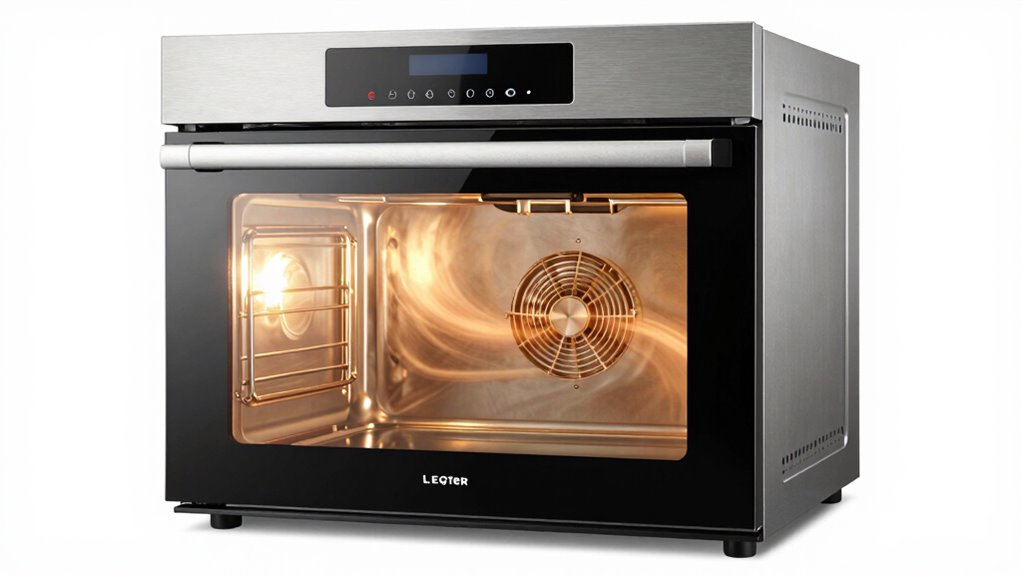
Choosing the right convection oven for your kitchen depends on understanding your cooking needs and space constraints. Consider energy efficiency to save on electricity and reduce environmental impact. Safety is also essential—look for features like cool-touch exteriors, auto shut-off, and stable bases. To compare options, review the table below:
| Feature | Description | Benefit |
|---|---|---|
| Energy Efficiency | Insulation, power consumption | Lower bills, eco-friendly |
| Safety Features | Auto shut-off, cool-touch surfaces | Prevent accidents |
| Size and Capacity | Compact or large models | Fits available space, meets needs |
| Controls | Digital or manual controls | Ease of use |
| Price Range | Budget to premium | Affordability and value |
Understanding food science principles can also help you make more informed choices about which convection oven best suits your culinary style. Additionally, knowing how heat transfer works can assist in selecting an oven that cooks evenly and efficiently. It is helpful to consider thermal conductivity to ensure uniform heating across different oven models.
Common Myths About Convection Ovens Debunked
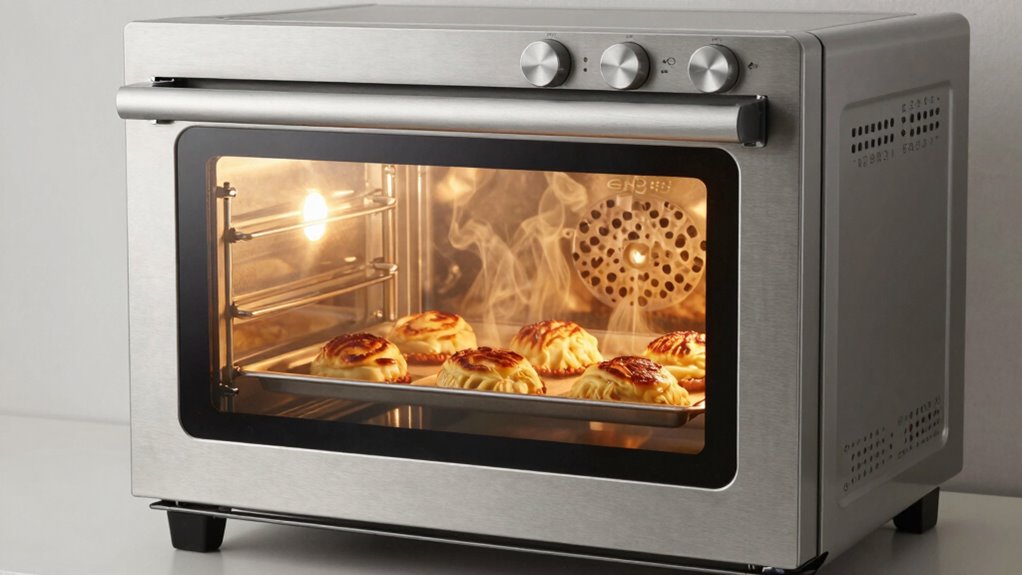
Many misconceptions about convection ovens persist, leading people to overlook their true benefits. As myth busters, it’s important to dispel common oven myths that might hold you back.
First, you don’t need to preheat longer; convection ovens heat quickly. Efficient heating means your oven reaches the desired temperature faster than traditional models.
Second, they don’t dry out food more than traditional ovens—proper techniques matter more. Additionally, convection ovens’ circulation technology ensures even cooking and moisture retention when used correctly.
Third, convection ovens aren’t only for roasting; they excel at baking and reheating, too.
Fourth, they don’t always cook faster; timing depends on the dish.
Lastly, you don’t have to use special pans—regular bakeware works fine.
Understanding the Gold IRA markets can help you make informed investment decisions if you’re considering diversifying your retirement portfolio.
Recognizing these oven myths helps you *access* the full potential of your convection oven, making cooking easier and more efficient.
Don’t let false beliefs hold you back from enjoying all its advantages.
Tips for Getting Perfect Results With Your Circulating Hot Air Oven
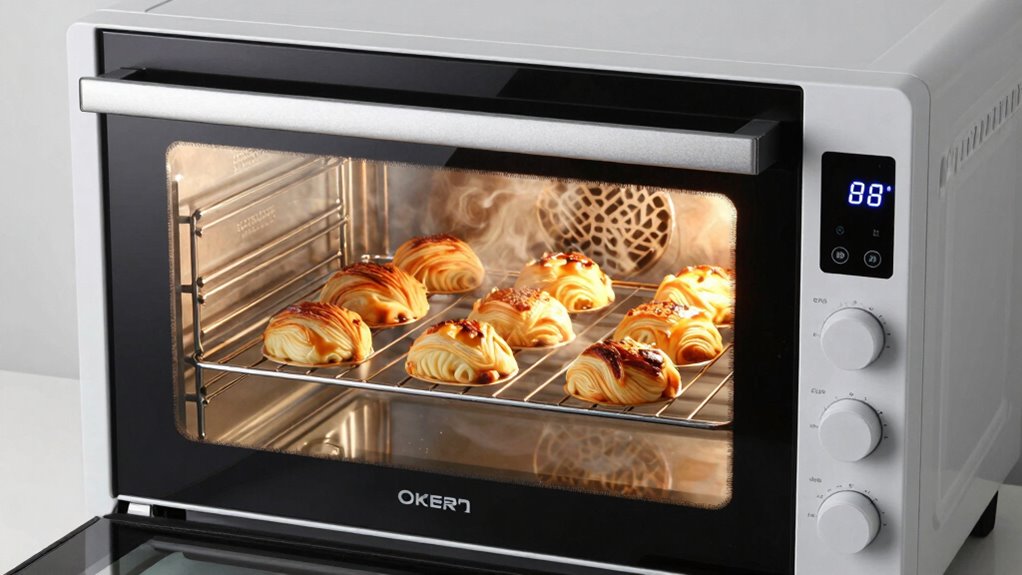
Getting the most out of your circulating hot air oven starts with understanding how to use it properly. Mastering cooking techniques like preheating, adjusting cooking times, and rotating trays ensures even results.
Keep your oven well-maintained by regularly cleaning the interior and checking the fan and heating elements, which helps prevent uneven cooking and prolongs its lifespan.
Use proper cookware that allows hot air circulation, such as metal or silicone, to optimize airflow. Avoid overcrowding the oven to guarantee hot air flows freely around your food.
Lastly, familiarize yourself with your oven’s specific settings and temperature calibration. Proper oven maintenance combined with refined cooking techniques reveal the full potential of your circulating hot air oven, leading to consistently perfect results.
Frequently Asked Questions
Can Convection Ovens Be Used for Dehydration or Drying Foods?
Yes, you can use convection ovens for dehydration or drying foods. They’re great for food preservation because the circulating hot air efficiently removes moisture, helping you achieve the desired dryness.
Plus, convection ovens can modify textures, making dried fruits or herbs crisp and perfect for storage. Just set the temperature low and keep the door slightly open to guarantee even drying without cooking the food.
How Does Altitude Affect Convection Oven Cooking Performance?
Altitude affects convection oven cooking performance by causing cooking variability due to lower air pressure. You might need to make altitude adjustments, like increasing cooking time or temperature, to guarantee your food cooks evenly.
This is because boiling points are lower at high altitudes, and air circulation may be less efficient. To get consistent results, monitor your dishes closely and tweak settings as needed for ideal performance.
Are There Safety Risks Associated With Circulating Hot Air?
Circulating hot air in convection ovens can pose safety risks like fire hazards and burn risks if you’re not careful. Always keep flammable materials away from the oven, avoid touching hot surfaces, and never leave it unattended while in use.
Regularly check the oven for malfunctioning parts or unusual heat, and follow safety guidelines to prevent accidents. Proper maintenance and cautious operation help minimize these risks.
What Maintenance Is Required to Keep the Convection Fan Functioning Properly?
A stitch in time saves nine, so you should regularly maintain your convection fan. Inspect the fan blades for dust, grease, or damage, and clean them carefully.
Check the motor and lubricate it if needed to guarantee smooth operation. Also, listen for unusual noises which might indicate a problem.
Proper maintenance keeps the fan functioning properly, prolongs its life, and ensures your oven operates efficiently.
How Energy-Efficient Are Convection Ovens Compared to Traditional Ovens?
Convection ovens are more energy-efficient than traditional ones, thanks to their faster cooking times and even heat distribution, which lead to significant energy savings.
Their eco-friendly design reduces power consumption, making them a smart choice for eco-conscious kitchens.
You’ll notice lower utility bills and a smaller carbon footprint, especially when you maintain them properly.
Conclusion
So, now that you’re a convection oven connoisseur, go ahead—embrace the circulating hot air without fear. After all, who wouldn’t want their cookies to be perfectly crispy and their roasts evenly cooked, all thanks to those fancy fans? Just don’t forget to thank your oven when it’s done making your kitchen look like a gourmet paradise. Happy baking—may your hot air always circulate in your favor!