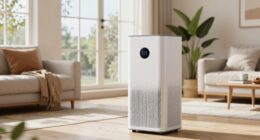
Carbon filters help remove odors, smoke, and VOCs by trapping these pollutants through a process called adsorption. They work best until their activated carbon becomes saturated, which can diminish their effectiveness. The lifespan depends on the level of contaminants and filter quality. Regular replacement ensures continuous performance, preventing smells and harmful particles from escaping. If you want to understand how to maximize their benefits and choose the right filter, keep exploring for more insights.
Key Takeaways
- Carbon filters use adsorption to trap odors, smoke, and VOCs on activated carbon surfaces.
- They are most effective before reaching saturation, which reduces their ability to remove pollutants.
- Higher-quality filters with greater adsorption capacity last longer and better eliminate strong odors and VOCs.
- Regular monitoring and timely replacement maintain filter performance and ensure clean air and water.
- Proper filter selection depends on specific needs like odor removal, smoke filtration, or VOC reduction.

Carbon filters are an effective way to remove impurities and odors from air and water. When you use a carbon filter, you’re relying on a process called adsorption, where contaminants stick to the surface of the activated carbon. The adsorption capacity of a filter determines how much odor, smoke, or volatile organic compounds (VOCs) it can handle before it becomes saturated. A higher adsorption capacity means your filter can trap more pollutants before needing replacement, making it more efficient over time. Understanding this is vital because it directly impacts the filter’s lifespan and your overall experience in maintaining clean air or water.
The filter lifespan depends on several factors, including the amount of contaminants in your environment and the filter’s size and quality. Generally, a carbon filter will perform at its best until it reaches its saturation point, after which its ability to adsorb pollutants diminishes markedly. When a filter is nearing the end of its lifespan, you might notice odors becoming less effective or a slight decrease in air quality. It’s important to monitor your filter’s condition and replace it as recommended by the manufacturer to maintain maximum performance. Ignoring this can lead to reduced efficacy, allowing unpleasant smells, smoke, or VOCs to escape.
You might think that all carbon filters are the same, but they vary greatly in terms of adsorption capacity and lifespan. Cheaper filters often have less activated carbon or lower-quality materials, which means they’ll saturate faster and need more frequent replacements. On the other hand, high-quality filters with increased adsorption capacity can trap more pollutants for a longer period, saving you money and effort in the long run. When selecting a filter, consider your specific needs—if you’re dealing with strong odors or heavy smoke, investing in a filter with a higher adsorption capacity makes sense because it will last longer and perform better.
Ultimately, the key to maximizing your carbon filter’s effectiveness lies in understanding its adsorption capacity and monitoring its lifespan. Regularly replacing your filter before it becomes saturated ensures you keep odors, VOCs, and smoke at bay. Proper maintenance is simple but essential, as it helps you enjoy cleaner air and water without surprises. Remember, a well-chosen filter with a good lifespan not only improves your environment but also saves you money and effort over time. So, stay attentive to your filter’s condition and replace it timely to get the best results. Additionally, considering the thermal behavior of activated carbon can help you optimize your filtration system, especially when dealing with high temperatures or specific conditions in outdoor cooking environments.
Frequently Asked Questions
How Often Should I Replace My Carbon Filter?
You should replace your carbon filter every 3 to 6 months to maintain ideal filter maintenance and effectiveness. Factors like air quality, usage, and the level of pollutants can influence this replacement schedule. Regularly check the filter for signs of saturation or odor; if it becomes less effective sooner, replace it earlier. Staying on top of your filter maintenance ensures your air remains clean and free of odors, smoke, and VOCs.
Do Carbon Filters Remove Viruses or Bacteria?
Carbon filters primarily focus on removing odors, smoke, and VOCs through adsorption. They don’t effectively provide viral filtration or bacterial removal. If you’re concerned about viruses or bacteria, look for filters with HEPA or UV-C features, since these are designed for viral filtration and bacterial removal. Relying solely on carbon filters won’t protect you from airborne pathogens, so consider combining filtration methods for extensive safety.
Can Carbon Filters Eliminate Mold Spores?
Like a sieve catching tiny grains, a carbon filter struggles with mold spores. It can trap some particles, but its filtration efficacy for mold spores is limited. Mold spores are often too small and lightweight, slipping through the activated carbon’s pores. For effective mold spore removal, consider HEPA filters, which are designed to capture such microscopic particles, ensuring better air quality and reducing mold-related health risks.
Are Carbon Filters Effective Against Chemical Fumes?
Yes, carbon filters are effective against chemical fumes because they excel at chemical absorption and odor neutralization. When you use a carbon filter, it captures harmful chemical vapors and unpleasant odors, improving your indoor air quality. Their porous structure allows them to trap VOCs and other gaseous pollutants, making your space safer and more comfortable. If you’re dealing with chemical fumes, investing in a good carbon filter is a smart move.
What Is the Lifespan of a Typical Carbon Filter?
A typical carbon filter lasts about 3 to 6 months, but its lifespan depends on filter maintenance and usage. You should replace it when you notice odors or a drop in air quality. Factors like the amount of pollutants, airflow rate, and filter quality influence how long it remains effective. Regularly checking and replacing your filter guarantees peak performance and keeps your air clean.
Conclusion
Now that you know how carbon filters work, you’ll see they’re like magic wands for odors, smoke, and VOCs. When used correctly, they can transform your space faster than you can blink, making your environment fresh and inviting. Remember, a good carbon filter isn’t just a tool—it’s your secret weapon against stubborn smells and harmful pollutants. Invest in one, and watch your air quality skyrocket to levels you never thought possible!