

Social anxiety follows a cycle where negative thoughts trigger fear of embarrassment, leading you to avoid eye contact, speaking less, or withdrawing. These behaviors reinforce worries, making anxiety worse and keeping you stuck in a pattern. Recognizing physical signs like a racing heart or sweating, and emotional cues like self-doubt, helps you respond more effectively. By understanding this pattern, you can learn practical strategies to break free and build confidence—if you want to explore how, keep going.
Key Takeaways
- Negative thoughts trigger fear, leading to avoidance behaviors that reinforce social anxiety.
- Physical symptoms like rapid heartbeat and sweating signal rising anxiety levels.
- Recognizing emotional cues helps in proactively managing and reducing anxious reactions.
- Practicing gradual exposure and thought restructuring breaks the cycle and builds confidence.
- Celebrating small social successes reinforces progress and encourages continued social engagement.
What Is the Social Anxiety Cycle and How Does It Work?

Have you ever wondered why social situations sometimes feel overwhelming or terrifying? The social anxiety cycle begins with negative thoughts, which trigger feelings of fear or embarrassment. You might start to avoid eye contact or speak less, reinforcing your worries. To break this pattern, try mindful breathing—deep, focused breaths to calm your nervous system. Repeating positive affirmations can help reframe your mindset, replacing self-doubt with confidence. As you practice these techniques, you’ll notice your anxiety decreasing, and social interactions become less formidable. Remember, the cycle feeds on avoidance and negative thinking, so actively challenging those thoughts with calming strategies is key. Recognizing the social anxiety cycle as a pattern can help you identify and disrupt it more effectively. Being aware of thought patterns that contribute to anxiety can further support your efforts to manage your responses. Developing an understanding of contrast ratio and other visual factors can also aid in creating a comfortable environment for social situations.
How Negative Thoughts and Avoidance Keep Social Anxiety Going

Negative thoughts fuel social anxiety by convincing you that social situations will lead to embarrassment or rejection, which heightens your fear and avoidance. When you focus on these thoughts, your mind spirals into worst-case scenarios, making social interactions seem unbearable. To break this cycle, practice mindful breathing to calm your nervous system and create space between your thoughts and reactions. Body awareness helps you notice physical signs of anxiety, like tension or rapid heartbeat, without judgment. This mind-body connection can significantly improve your ability to observe your anxiety objectively. Cultivating this awareness also reinforces your understanding of physical sensations as normal responses rather than threats. Recognizing the body’s response helps you see anxiety as a temporary state rather than an overwhelming condition. Developing emotional regulation skills further supports managing anxiety by helping you respond thoughtfully rather than react impulsively. By staying present through mindful breathing and tuning into your body, you weaken the hold of negative thoughts, reducing your urge to escape social situations and gradually easing your social anxiety. Incorporating self-compassion practices can also help you approach your fears with kindness rather than judgment, fostering resilience over time.
How to Recognize the Physical and Emotional Signs of Social Anxiety

Recognizing the physical and emotional signs of social anxiety is key to managing your reactions and breaking the cycle of avoidance. Your bodily sensations, like a racing heart or sweating, often signal rising anxiety. Emotional cues, such as feelings of embarrassment or fear, also alert you to your state. Paying attention to these clues helps you identify when social anxiety is taking hold. Here’s a simple table to understand these signs better:
| Bodily Sensations | Emotional Cues |
|---|---|
| Rapid heartbeat | Fear of judgment |
| Sweating | Feeling overwhelmed |
| Tight chest | Embarrassment or shame |
| Shaking | Self-doubt |
| Nausea | Anticipatory anxiety |
Being aware of these physical reactions can help you respond more effectively and prevent escalation. Recognizing these signs early allows you to respond proactively and regain control.
Practical Strategies to Break the Social Anxiety Cycle
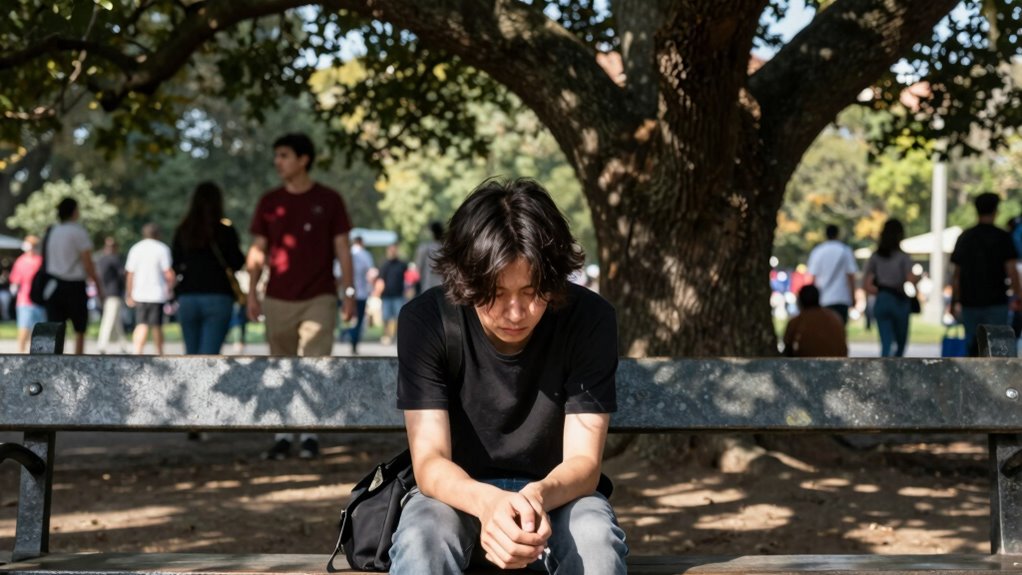
To break the social anxiety cycle, start by recognizing and challenging negative thought patterns that hold you back. Practice gradual exposure to social situations to build confidence without feeling overwhelmed. Additionally, developing supportive social skills can make interactions feel more manageable and less intimidating. Incorporating social skills training into your approach can help manage the risks associated with social anxiety and improve your overall social resilience. Engaging in natural environments and outdoor activities can also provide a calming backdrop that fosters personal growth and confidence in social settings.
Recognize Negative Thought Patterns
Understanding the thought patterns that fuel your social anxiety is a essential first step in breaking the cycle. Recognizing cognitive distortions—like all-or-nothing thinking, overgeneralization, or catastrophizing—helps you identify unhelpful beliefs. When you notice these negative thought patterns, you can practice thought restructuring to challenge and reframe them. For example, replace “Everyone will judge me” with “Some people might notice, but that doesn’t mean they’re judging harshly.” By becoming aware of these distortions, you gain control over your reactions, reducing anxiety’s grip. Consistently monitoring your thoughts allows you to catch negative patterns early and replace them with more balanced, realistic perspectives. This awareness is a fundamental foundation for overcoming social anxiety.
Practice Gradual Exposure Techniques
Practicing gradual exposure is a powerful way to confront social anxiety step by step, rather than avoiding situations altogether. Start with small, manageable steps, like making brief eye contact or saying hello. Use mindfulness techniques to stay present and reduce anxiety during these efforts. Role playing exercises can help simulate social scenarios, building confidence before facing real situations. Remember, progress may be slow, but consistency is key. To keep track, consider this approach:
| Step | Action |
|---|---|
| 1 | Practice role playing exercises with a trusted friend |
| 2 | Gradually increase social interactions |
| 3 | Use mindfulness techniques to stay calm |
| 4 | Celebrate small successes |
Consistent practice is essential for rewiring the brain’s response to social situations, leveraging neuroplasticity to improve social confidence. Developing an understanding of social behavior can also support this process by providing insights into common social cues and responses. Gradual exposure creates a safe environment for growth, helping break the social anxiety cycle.
Develop Supportive Social Skills
Building supportive social skills is a practical way to reinforce your efforts in overcoming social anxiety. One effective method is engaging in role play exercises, where you practice conversations in a safe setting. This helps you become more comfortable with real interactions and reduces fear. Assertiveness training is another valuable tool; it teaches you to express your needs and boundaries confidently without feeling guilty. By practicing these skills regularly, you’ll build a stronger sense of control in social situations. Focus on active listening, clear communication, and maintaining eye contact. Over time, these techniques boost your confidence, making social interactions feel less intimidating. Developing supportive social skills creates a positive feedback loop that diminishes anxiety and encourages more social engagement.
Small Steps That Can Help You Feel More Confident

You can build confidence by practicing small social interactions regularly and gradually increasing your comfort level. Preparing conversation topics in advance keeps you feeling ready and less anxious. Remember to celebrate your small wins—they add up and motivate you to keep progressing. Incorporating social cues into your understanding of social interactions can also enhance your confidence in diverse settings. Recognizing nonverbal communication helps you interpret others’ feelings and respond more effectively, strengthening your social skills. Additionally, understanding halal dietary practices can help you feel more at ease in social situations involving food, especially when navigating unfamiliar menus or gatherings. Being aware of essential oils for social anxiety relief, such as lavender or frankincense, can also promote calming sensations and reduce feelings of nervousness during social interactions.
Practice Regularly, Gradually
Starting with small, manageable steps can make overcoming social anxiety feel less overwhelming. Practice regularly and gradually to build your confidence. Incorporate mindfulness techniques to stay present and reduce stress in social situations. Relaxation exercises, such as deep breathing or progressive muscle relaxation, can help calm your nerves before engaging with others. Understanding art as a calming activity can also provide a soothing distraction and foster emotional resilience. Engaging in self-regulation techniques can further support your efforts to manage anxiety and maintain emotional balance. Consistency is key—set aside a few minutes each day to practice these techniques, gradually increasing your exposure to social settings. Recognizing the importance of emotional regulation can further enhance your ability to cope with social anxiety. Remember, progress may be slow, but persistence pays off. By taking small, deliberate steps, you create a solid foundation for overcoming anxiety. Over time, these habits become second nature, empowering you to face social interactions with greater ease and confidence.
Prepare Conversation Topics
How can you feel more confident in social situations? Preparing conversation topics ahead of time can make a big difference. Think of some simple small talk ideas or conversation starters related to your environment, recent events, or common interests. Having a few go-to topics ready helps reduce anxiety and keeps conversations flowing smoothly. Practice asking open-ended questions or commenting on shared experiences to engage others. This preparation gives you a sense of control and makes interactions feel more manageable. You don’t need to memorize everything—just have a few reliable topics in mind to fall back on. Over time, this habit boosts your confidence, making social situations feel less intimidating and more natural.
Celebrate Small Wins
Celebrating small wins is a powerful way to build confidence gradually. When you recognize achievements, no matter how minor, you reinforce positive progress. It’s about acknowledging each step forward to foster a sense of accomplishment. Picture yourself:
- Smiling after initiating a conversation, feeling a spark of pride.
- Noticing your heart race less during social interactions.
- Giving yourself a mental high-five after attending an event.
These moments of celebrating progress boost your motivation and diminish anxiety over time. By focusing on small, manageable successes, you create a pattern of positive reinforcement. Recognizing achievements helps you see that change is possible, encouraging you to keep moving forward with confidence. Small wins accumulate, paving the way for bigger breakthroughs.
Next Steps to Overcome Social Anxiety and Build Confidence

To effectively overcome social anxiety and build confidence, taking targeted, practical steps is essential. Start by practicing mindfulness techniques to stay present and reduce overwhelming thoughts. Mindfulness helps you observe your feelings without judgment, making social situations feel less intimidating. Incorporate self-compassion exercises to foster a kinder, more understanding attitude toward yourself. Remind yourself that everyone makes mistakes and that social anxiety doesn’t define your worth. Consistent practice of these techniques can gradually rewire your responses, making social interactions feel more manageable. Additionally, set small, achievable goals to build your confidence step-by-step. Remember, progress takes time, but with patience and persistence, you’ll develop resilience and a healthier mindset toward social encounters.

Many people wonder whether overcoming social anxiety is truly possible and what steps they should take first. The good news is, yes, change is achievable with the right approach. Here are three essential steps to contemplate:
- Visualize yourself confidently engaging in social settings, feeling grounded with mindfulness techniques.
- Seek peer support by connecting with others who understand your struggles, sharing experiences, and exchanging tips.
- Practice small, manageable social interactions daily to build your confidence gradually.
Using mindfulness techniques helps you stay present and reduce anxiety during social encounters. Peer support provides encouragement and accountability, making the journey less lonely. Remember, overcoming social anxiety isn’t about perfection but progress—each step brings you closer to freedom.
Frequently Asked Questions
Can Social Anxiety Develop Suddenly or Only Gradually Over Time?
Social anxiety can develop suddenly or gradually over time. You might experience a sudden social anxiety onset after a specific event, like a stressful encounter, making you feel overwhelmed quickly. More often, it builds gradually as you encounter repeated social challenges, leading to increased fear and avoidance. Both patterns are common, so pay attention to how your social anxiety develops to better understand and manage it effectively.
Are There Specific Triggers That Worsen Social Anxiety Symptoms?
Think of social anxiety as a fire that needs fuel; fear triggers and environmental factors are what intensify it. Certain situations, like speaking in public or meeting new people, can act as sparks that worsen symptoms. Stressful environments, crowding, or negative past experiences also serve as fuels, making your anxiety flare up. Recognizing these specific triggers helps you manage your reactions before the fire gets out of control.
How Does Social Anxiety Differ From General Shyness?
You might notice social anxiety feels more intense than shyness because it involves specific personality traits like heightened self-awareness and fear of judgment. Unlike shyness, which is usually mild, social anxiety is often influenced by cultural factors that emphasize social performance or acceptance. This makes your reactions more persistent and disruptive, leading you to avoid social situations altogether, whereas shyness is typically more fleeting and manageable.
Is Medication Necessary for Overcoming Social Anxiety?
You don’t necessarily need medication to overcome social anxiety. Medication options like antidepressants can help manage symptoms, but therapy effectiveness, especially cognitive-behavioral therapy (CBT), is often more impactful in the long run. Many people find that combining therapy with lifestyle changes reduces anxiety considerably. Talk to a mental health professional to explore the best approach for you, and remember, overcoming social anxiety is a gradual process that varies for everyone.
Can Social Anxiety Be Completely Cured or Only Managed?
Can you truly be free from social anxiety? While complete cures are rare, many find significant relief through behavioral therapy and improving social skills. You might not eliminate every anxious thought, but with consistent effort, you can manage symptoms effectively and enjoy more confident interactions. The goal isn’t perfection but progress. So, are you ready to take steps toward better social experiences? Small changes can lead to lasting confidence.
Conclusion
Understanding the social anxiety cycle is your first step toward change. Did you know that nearly 7 out of 10 people experience social anxiety at some point? By recognizing your triggers and practicing small, confident steps, you can break free from this pattern. Remember, progress comes with patience. You’ve got the tools—now it’s time to take that first step toward feeling more confident and enjoying social moments again.