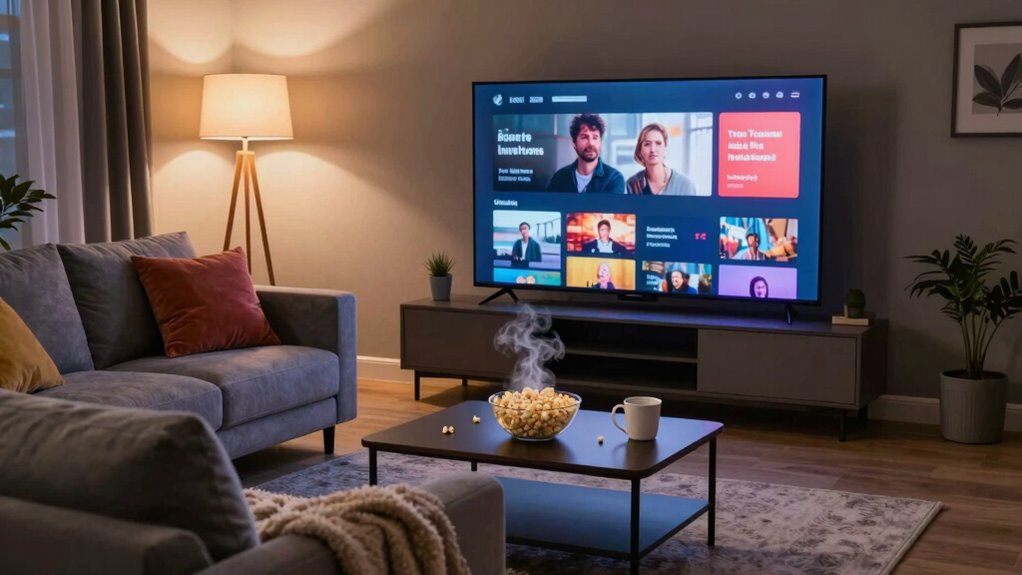

Binge-watching happens because your brain’s reward system releases dopamine with each episode, making it tough to stop even when you want to. Emotional triggers like stress or boredom encourage you to seek comfort in screen time. Setting clear limits, using apps to block access, and practicing mindful viewing help you regain control. Want to discover simple strategies and tools to break free? Keep exploring for more effective ways to balance your screen time.

Prime made for students and young adults
- Fast, free delivery for dorm and study essentials
- Prime Video and Amazon Music included
- Member-only deals
Key Takeaways
- Binge-watching stimulates dopamine release, creating cravings that make it hard to stop, especially when seeking emotional connection or escape.
- Recognizing signs like guilt, fatigue, or neglected responsibilities helps identify excessive screen time and motivate change.
- Setting specific viewing limits and using apps or alarms can help control binge episodes effectively.
- Developing a routine with scheduled viewing times, breaks, and mindful selection improves overall balance and well-being.
- Using tools like app blockers, screen time monitors, and practicing digital mindfulness supports sustainable media habits.
Why Do We Binge-Watch? Understanding the Psychology Behind Excessive Screen Time
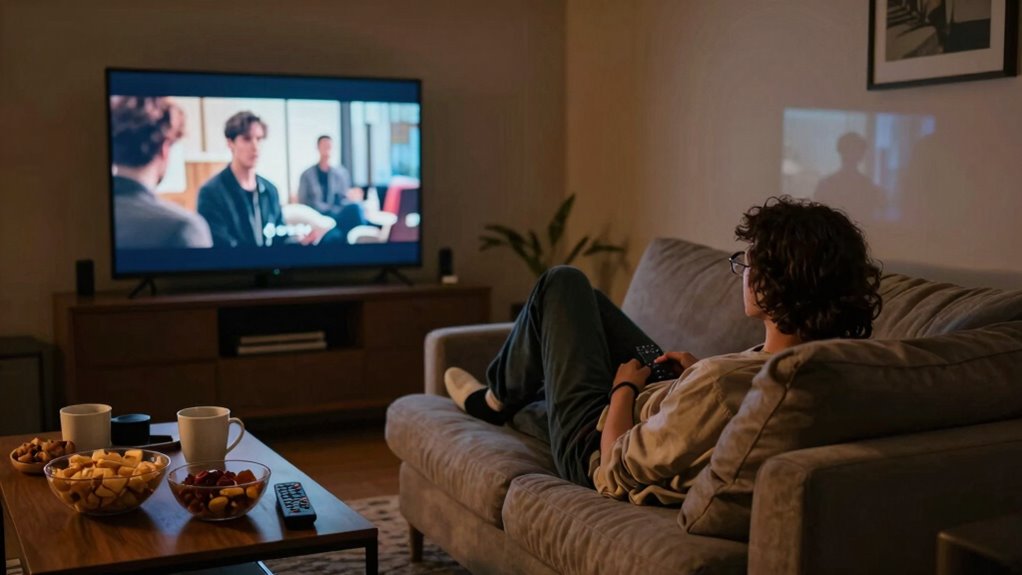
Many people find themselves unable to stop watching after just one episode because binge-watching taps into our brain’s reward system.
Neuroscience insights reveal that the brain releases dopamine when we experience something entertaining or exciting, making us crave more.
The brain releases dopamine during entertainment, fueling our craving to watch more and making it hard to stop.
Emotional triggers, like stress or boredom, also drive us to seek comfort in screen time.
When a show offers a temporary escape or emotional connection, it reinforces our desire to keep watching.
This cycle creates a habit that feels rewarding, even if it’s excessive.
Your brain associates binge-watching with a quick dopamine hit, making it hard to stop.
Understanding these psychological and neurological factors helps explain why binge-watching becomes so addictive and why breaking free requires conscious awareness.
Additionally, the high refresh rates of modern projectors can make fast-paced scenes more immersive, which might encourage prolonged viewing sessions.
Furthermore, recognizing the conscious decision-making process involved in moderation can empower viewers to set boundaries and regain control over their screen time.
How Can You Recognize When You’re Watching Too Much? Signs to Watch For
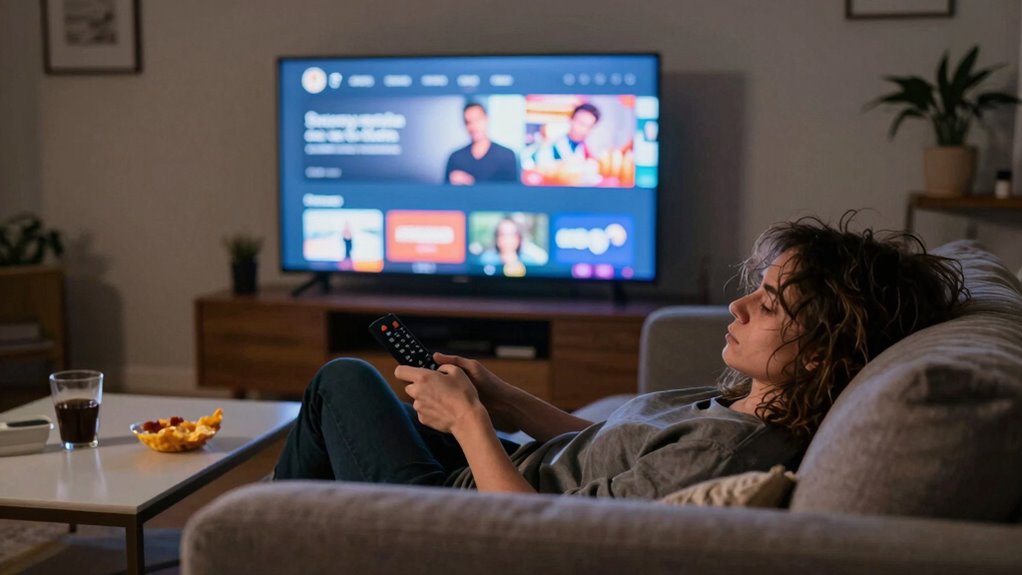
Recognizing when you’re watching too much is key to gaining control over your screen time. One sign is cueing guilt after hours of binge-watching, feeling like you’ve wasted valuable time.
You might notice a pattern where your daily tasks and responsibilities get pushed aside, leading to lost productivity. If you find yourself delaying work or neglecting social interactions because of screen time, that’s a clear warning sign. Additionally, excessive screen time can lead to physical signs like fatigue, eye strain, or disrupted sleep also indicate overuse. Moreover, understanding your cybersecurity habits can help you be more aware of digital distractions that contribute to overuse. Paying attention to these signs helps you recognize when binge-watching is taking over your life, so you can take steps to regain balance. Recognizing the impact of digital distractions on your mental and physical health can motivate you to set healthier boundaries.
What Are the Best Strategies to Break Free From Binge-Watching? Practical Tips That Work

Breaking free from binge-watching requires intentional strategies to regain control over your screen time. One effective tip is to set clear limits, like scheduling specific viewing times or using apps to block access after a certain period. Recognizing your screen time habits and how they develop can help you identify patterns that lead to unintentional binge-watching. For example, understanding how binge-watching tendencies develop can help you address underlying triggers. Motivational quotes can inspire you to stay committed, reminding you of your goals and why you want to cut back. Additionally, social accountability plays a vital role; sharing your intentions with friends or family creates a support system that encourages you to stick to your plan. Consider joining a challenge or accountability group to stay motivated. Practicing mindful viewing can increase your awareness of your consumption and help you make more intentional choices. Developing digital safety skills can further empower you to control your online habits and avoid falling into patterns of excessive viewing. Remember, progress takes time, but with consistent effort and these practical strategies, you can regain balance and enjoy a healthier relationship with your screen. Incorporating awareness of your Free Floating tendencies can help you recognize when you’re drifting into unintentional binge-watching and adjust accordingly.
How Do You Develop a Mindful, Healthy Watching Routine? Simple Steps to Balance Screen Time

Developing a mindful, healthy watching routine starts with setting intentional boundaries around your screen time. To establish this, focus on creating mindful habits that promote balance. Start by planning specific times for watching and stick to them. Use a timer to avoid overshooting your limits. Prioritize quality content over quantity, and tune into how you feel during and after viewing. Incorporate these steps: – Schedule viewing sessions with clear start and end times – Use alarms or reminders to stay on track – Choose content that aligns with your values and goals – Take regular breaks to stretch and reset – Reflect on your feelings and adjust your habits accordingly. Recognizing the importance of trusted gadget insights can help you make informed choices about your viewing habits and technology use. Being aware of virtual reality comfort tips can also aid in creating a more enjoyable and sustainable viewing experience. Additionally, understanding European cloud innovation can inspire smarter ways to manage your digital content and reduce unnecessary screen time. Furthermore, understanding dreams of deceased loved ones can provide insight into your subconscious and emotional well-being, enriching your overall approach to mindful media consumption.
What Tools and Techniques Can Help You Limit Binge-Watching and Regain Control? Easy Ways to Manage Screen Time
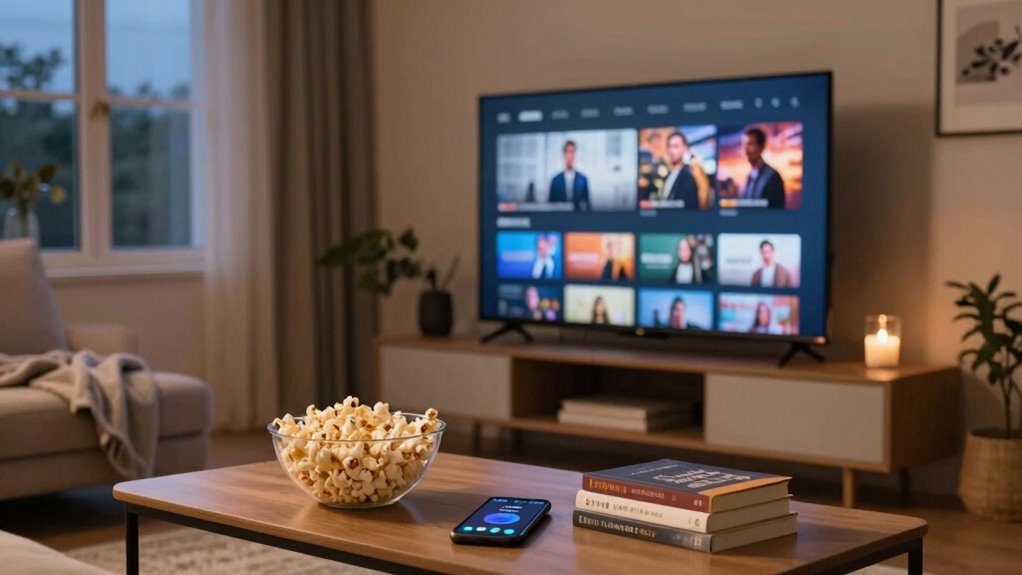
To effectively limit your binge-watching habits and regain control over your screen time, you can leverage a variety of tools and techniques designed to keep you accountable and mindful of your viewing habits. Tech gadgets like app blockers and screen time monitors help you set limits and track your usage, making you more aware of your habits. Using time management techniques, such as scheduling specific viewing periods or setting alarms, prevents endless sessions. Many streaming platforms also offer built-in tools to restrict viewing time or lock content after a set period. Implementing these simple strategies can boost your awareness, reduce impulsive watching, and help you develop healthier habits that align with your goals for balance and control. Additionally, understanding the role of digital well-being in managing screen time can guide you toward more sustainable viewing habits. Recognizing the importance of fundamentals like picture and sound quality can also motivate you to prioritize meaningful viewing experiences over mindless bingeing. Incorporating mindfulness techniques into your routine can further enhance your ability to stay present and make conscious choices about your screen use.
Frequently Asked Questions
How Does Binge-Watching Affect Mental Health Long-Term?
Binge-watching can negatively affect your mental health long-term by fostering emotional dependency on shows for comfort, which may hinder emotional resilience.
It also impacts your cognitive health, reducing attention span and impairing memory due to prolonged screen time and constant stimulation.
Over time, this can increase feelings of depression or anxiety.
To protect your mental health, set boundaries and take regular breaks to maintain emotional balance and cognitive sharpness.
Can Binge-Watching Lead to Physical Health Issues?
Yes, binge-watching can lead to physical health issues. Sitting for long periods encourages a sedentary lifestyle, increasing your risk of obesity, heart problems, and poor posture.
Additionally, staring at screens for hours causes eye strain, headaches, and discomfort. To protect your health, take regular breaks, stretch, and limit your screen time.
Staying active and mindful of your viewing habits helps prevent these negative effects.
What Role Do Social Factors Play in Binge-Watching Habits?
Social factors shape your binge-watching habits through peer influence and social validation.
When friends or online communities share enthusiasm for shows, you feel motivated to join in, watch longer, and stay connected.
This desire for acceptance and belonging encourages you to binge-watch more, aiming to fit in and gain approval.
Recognizing these social triggers helps you set boundaries and enjoy media on your terms, rather than just to impress others.
Are There Age Groups More Prone to Binge-Watching Addiction?
You’re more likely to see younger adults and teenagers prone to binge-watching addiction due to age-related trends and generational differences. These groups often have greater access to streaming services and may prioritize entertainment over other activities.
As you age, you might find it easier to set boundaries, but awareness of these age-related tendencies helps you stay in control. Recognizing these patterns empowers you to develop healthier viewing habits.
How Can Family and Friends Support Someone Trying to Cut Down?
You can support someone trying to cut down by offering emotional support and understanding. Encourage open conversations about their feelings and challenges.
Help them set boundaries around screen time and suggest alternative activities. Avoid judgment, and instead, be patient and encouraging.
Your consistent support and reassurance can boost their confidence as they work to reduce binge-watching, making the process easier and more manageable.
Conclusion
Are you ready to take control and enjoy your screen time without feeling overwhelmed? Remember, recognizing the signs and applying simple strategies can make a big difference. Binge-watching might feel unavoidable, but it’s within your power to set boundaries and create healthier habits. So, why not start today? After all, isn’t it worth investing in your well-being and reclaiming your time for what truly matters?
Fall Picks
fall essentials
As an affiliate, we earn on qualifying purchases.