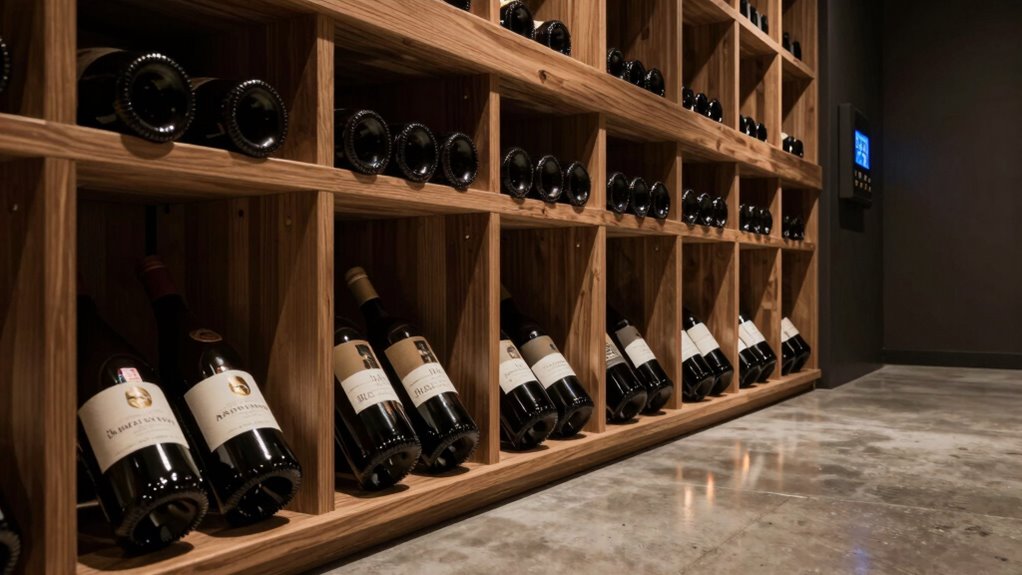
To protect your wine’s flavor, keep the storage temperature between 45°F and 65°F, with 55°F often considered ideal. Maintaining this range prevents chemical reactions that spoil the wine and avoids cork expansion or contraction that can lead to spoilage. Consistency is key—fluctuations can harm quality over time. Staying within this simple temperature range helps your wine age gracefully and stay fresh longer, and exploring more tips can maximize your wine’s potential.
Key Takeaways
- Keep wine storage temperature between 45°F and 65°F (7°C to 18°C) for optimal preservation.
- 55°F (13°C) is considered the ideal temperature for maintaining wine quality.
- Maintain consistent temperatures to prevent cork expansion or contraction, avoiding spoilage.
- Fluctuating temperatures accelerate chemical reactions that can degrade wine flavor.
- Avoid storing wine in hot or cold environments, such as near sunlight or heating sources.
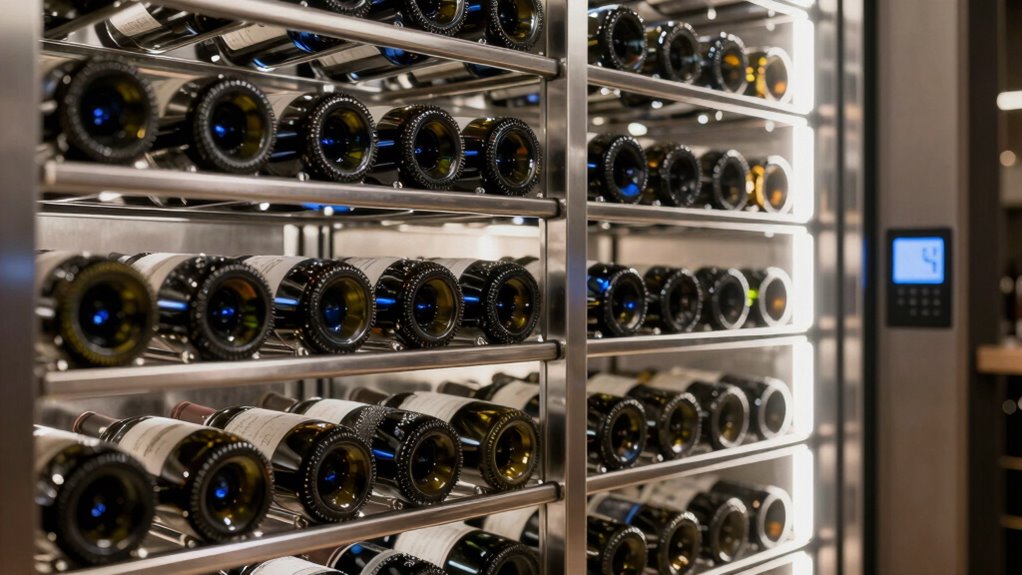
Proper wine storage is vital to preserve its flavor and quality over time. When it comes to protecting your wine, understanding the importance of cork sealing techniques and glass bottle designs can make a meaningful difference. Cork sealing techniques determine how well the wine is kept airtight, preventing oxidation and spoilage. A proper cork seal ensures that air doesn’t seep into the bottle, which can degrade the wine’s delicate aromas and flavors. There are various cork sealing methods, such as natural corks, synthetic corks, and screw caps, each offering different levels of airtightness. Natural corks are traditional and often used for aging wines, but they require careful sealing to prevent cork taint and evaporation. Synthetic corks and screw caps provide more consistent seals, reducing the risk of spoilage and making storage more straightforward. When selecting a bottle, you should also consider the glass bottle designs, which influence how the wine ages and how easy it is to store. Bottles with thicker glass or specific shapes can help stabilize temperature fluctuations and protect the wine from light exposure. The design of the bottle might seem like a minor detail, but it plays a vital role in maintaining the integrity of your wine over time. Additionally, the choice of sealing method can impact how well the wine ages, especially in relation to airtightness.
Temperature control is the next key factor. The ideal storage temperature for wine is generally between 45°F and 65°F (7°C to 18°C), with 55°F (13°C) often considered perfect. Keeping your wine within this range helps slow down chemical reactions, preserving the wine’s flavor profile. Fluctuations outside this range can cause the cork to expand or contract, leading to potential seepage or oxidation. If you’re storing wine for extended periods, consistent temperature is more important than the exact temperature. You should also avoid storing wine in places with vibrations or direct sunlight, as these can disturb the wine’s delicate aging process.
In addition to temperature, humidity levels should be maintained around 60-70%. Proper humidity prevents corks from drying out, which could compromise the seal and allow air in. A wine cellar or a dedicated wine fridge with controlled climate conditions provides the best environment for long-term storage. By paying attention to cork sealing techniques and choosing bottles with appropriate glass bottle designs, you can greatly improve your wine’s longevity. When combined with optimal temperature management, these factors help you enjoy your wine at its peak flavor, whether you’re aging it for years or simply storing it for future enjoyment.
Frequently Asked Questions
How Does Humidity Affect Wine Storage?
Humidity plays a key role in wine storage by affecting cork moisture and cellar conditions. When humidity is too low, corks can dry out, risking oxidation and spoilage. Conversely, high humidity keeps corks moist and intact, preserving your wine’s quality. Maintaining cellar humidity around 60-70% creates a stable environment that prevents cork damage, protects flavor, and guarantees your wine remains in ideal condition for longer periods.
Can Temperature Fluctuations Harm My Wine?
Don’t let temperature fluctuations ruin your wine collection. Sudden changes can cause temperature instability, accelerating wine deterioration and spoiling flavors. You might think it’s manageable, but even small swings can harm your wine over time. Maintaining a consistent temperature range is essential for preserving your wine’s quality. Protect your investment by ensuring stable conditions—your wine deserves the best environment to age gracefully and taste its best.
What Storage Options Are Best for Long-Term Aging?
For long-term aging, you should consider cellar options like a dedicated wine cellar or a temperature-controlled wine fridge. These options maintain a consistent temperature and humidity, essential for preserving wine quality. Use wine racks to organize your bottles and prevent movement, which could disturb sediment. Make certain your storage space is dark, cool, and free from vibrations to keep your wine aging gracefully over time.
How Do I Store Sparkling Wine Properly?
To store sparkling wine properly, you should keep it chilled, ideally between 45-50°F, to maintain its bubbles and flavor. Store it lying on its side to preserve the cork, preventing air from entering and losing carbonation. Avoid temperature fluctuations, and keep it in a cool, dark place. When ready to serve, chill it thoroughly, ensuring your sparkling wine stays fresh and fizzy until the very last sip.
Does Light Exposure Impact Wine Quality?
Light exposure does impact wine quality, especially if your wine is stored in improper wine bottle positioning or storage containers. Keep the bottle lying on its side to minimize light contact, and choose storage containers made of UV-protective materials. Bright light can degrade wine’s flavors and aromas over time, so store your wine in a dark, cool place to preserve its quality and prevent premature aging.
Conclusion
Storing your wine within the ideal temperature range guarantees it ages gracefully, preserving its flavor and character. Remember, a temperate environment is key—think of it as your personal Château, protecting your collection from the tempests of spoilage. Don’t forget, even in this modern age, a cool cellar or wine fridge remains your best ally. Keep it steady, stay vigilant, and let your wines tell timeless stories of elegance and finesse.