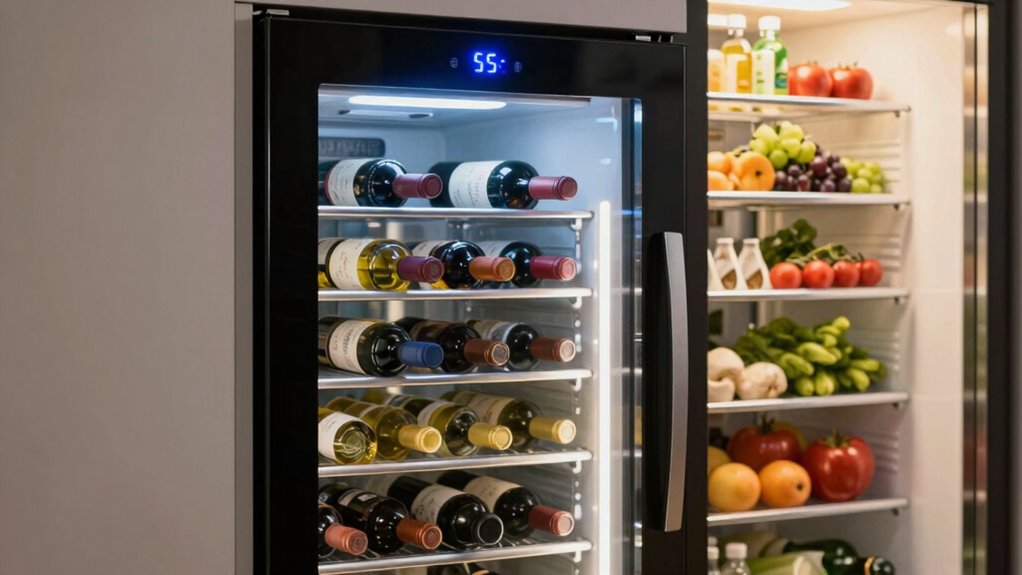

A wine fridge is designed to keep wine at precise temperatures, usually between 45°F-65°F, which are ideal for storage and serving different wine types. Regular refrigerators are much colder, set at 37-40°F, and can dull wine’s aromas and flavors over time. Using a standard fridge for wine can damage its delicate structure. If you want to learn how proper temperature controls preserve your wine’s quality, keep exploring further.

Prime made for students and young adults
- Fast, free delivery for dorm and study essentials
- Prime Video and Amazon Music included
- Member-only deals
Key Takeaways
- Regular fridges are set at 37-40°F, which is too cold and can dull wine flavors.
- Wine fridges are calibrated for 45-65°F to preserve wine’s delicate structure.
- Proper wine storage requires stable temperatures, unlike the fluctuating environment of general fridges.
- Serving wine at the correct temperature differs from storage temperature for optimal tasting.
- Using a regular fridge for wine storage can damage wine over time due to inappropriate temperature settings.
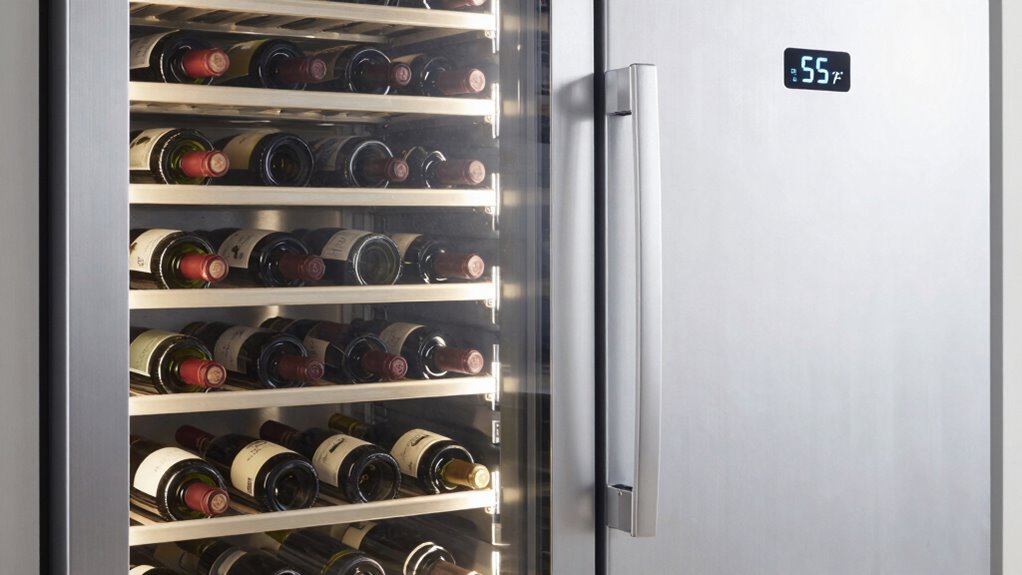
Maintaining the right temperature in your wine fridge is essential for preserving the quality and flavor of your wine collection. Unlike your regular kitchen fridge, which is designed primarily for food storage, a wine fridge is calibrated specifically to support wine preservation. The key difference lies in the temperature range: a standard fridge is typically set around 37-40°F (3-4°C), which is perfect for keeping perishable foods fresh but too cold for wine. Excessively low temperatures can cause wine to become too chilled, dulling its aromas and flavors, and potentially damaging the delicate structure of the wine itself.
A wine fridge, on the other hand, is built with a different purpose in mind. Its ideal temperature range usually sits between 45°F and 65°F (7°C and 18°C), with many enthusiasts aiming for the perfect serving temperature depending on the type of wine. Reds are generally best served slightly warmer, around 55°F to 65°F (13°C to 18°C), which allows the full spectrum of flavors and aromas to come through. Whites and sparkling wines are typically stored cooler, around 45°F to 50°F (7°C to 10°C), to preserve their crispness and invigorating qualities. When your wine fridge maintains these specific temperatures, you’re ensuring your wine’s integrity and longevity, which are essential aspects of wine preservation. Additionally, temperature fluctuations can negatively impact your wine, emphasizing the importance of a stable environment. Proper climate control is key to avoiding these issues and maintaining a consistent environment. Furthermore, many modern wine fridges include features like humidity control to prevent corks from drying out and to maintain optimal storage conditions.
It’s important not to confuse the storage temperature with the serving temperature. While your wine fridge is primarily for storage, many wine enthusiasts also use it to serve wine at the correct temperature. The idea is to keep the wine at a temperature that highlights its best qualities, which is why understanding the difference between a general fridge and a wine fridge matters. If you set your regular fridge to a typical wine fridge temperature, you might be inadvertently damaging your wine over time, as the storage environment is too cold and can cause premature aging or spoilage.
To truly maximize your wine preservation, you should consider investing in a dedicated wine fridge with precise temperature controls. This allows you to maintain the ideal serving temperature for each type of wine, ensuring that whenever you open a bottle, it’s at its peak flavor. Temperature stability is also crucial, as fluctuations can harm your wine’s quality. Maintaining these specific conditions helps you enjoy your wine as intended, preserving its nuanced flavors and aromas for years to come.
wine fridge with temperature control
As an affiliate, we earn on qualifying purchases.
As an affiliate, we earn on qualifying purchases.
Frequently Asked Questions
Can I Store Other Beverages in a Wine Fridge?
Yes, you can store other beverages like beer and soda in a wine fridge. Just keep in mind that the ideal temperature for wine might differ from what’s best for beer storage or soda cooling. Avoid storing strongly scented drinks that could transfer odors to your wine. Use the fridge’s adjustable settings to find a temperature that keeps all your beverages fresh without compromising your wine’s quality.
How Often Should I Calibrate My Wine Fridge Temperature?
Ever wonder how often you should calibrate your wine fridge? To guarantee proper wine preservation, you should calibrate your wine fridge temperature at least once every six months. Regular calibration helps maintain temperature accuracy, which is essential for wine quality. If your fridge experiences frequent door openings or temperature fluctuations, consider calibrating more often. Accurate temperature control is key to keeping your wine in ideal condition and preserving its flavor.
Does a Wine Fridge Use More Energy Than a Regular Fridge?
A wine fridge generally uses less energy than a regular fridge because it’s designed for specific temperature ranges, which helps with energy efficiency. Its power consumption is usually lower since it doesn’t need to cool as much space or maintain as wide a temperature range. You’ll find that wine fridges are more energy-efficient, making them a cost-effective choice if you want to preserve wine without increasing your energy bills too much.
Can Temperature Fluctuations Harm My Wine?
Temperature fluctuations can be as destructive as a storm to your wine, harming its aging process. You need consistent temperature stability to preserve the wine’s flavor and prevent corks from drying out or mold forming. Sudden changes can accelerate aging or spoil the wine, ruining your investment. Keep your wine fridge steady at the ideal temperature, ensuring your wine ages beautifully and retains its perfect taste over time.
What Is the Ideal Humidity Level for a Wine Fridge?
You should aim for a humidity level of around 50-70% in your wine fridge for ideal wine preservation. Proper humidity control prevents corks from drying out or molding, which can spoil your wine. Maintaining this range ensures your bottles stay well-sealed and protected from outside elements. Keep an eye on humidity levels regularly, especially if your fridge is in a dry or humid environment, to keep your wine in perfect condition.
As an affiliate, we earn on qualifying purchases.
Conclusion
Remember, setting your wine fridge to the right temperature guarantees your wine stays perfect and ready to enjoy. You might worry about adjusting your regular fridge, but a wine fridge is specifically built for wine storage, so don’t try to substitute one for the other. Trust the recommended temperature range, and you’ll always have a delightful bottle when the mood strikes. Cheers to enjoying your wine at its best!
As an affiliate, we earn on qualifying purchases.
wine storage temperature controller
As an affiliate, we earn on qualifying purchases.
As an affiliate, we earn on qualifying purchases.
Halloween Picks
halloween
As an affiliate, we earn on qualifying purchases.