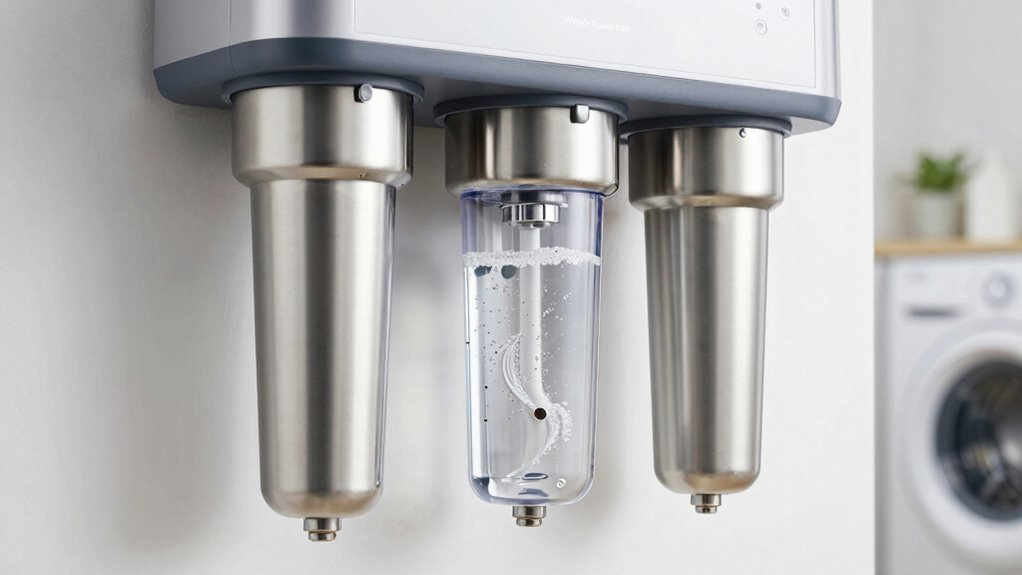

Whole house water filters effectively remove sediments, chlorine, bacteria, and many chemicals, making your water safer and better tasting. However, they don’t eliminate dissolved salts, minerals, or chemicals like pesticides. These systems mainly target particulates, certain contaminants, and microbes, but aren’t a complete solution for all water issues. To guarantee your water is thoroughly purified, explore how combining different filtration methods can give you the best results, if you keep going.
Key Takeaways
- Whole house filters effectively remove sediments, chlorine, bacteria, and viruses using sediment, carbon, and UV filtration methods.
- They do not eliminate dissolved salts, minerals, or chemicals like pesticides and herbicides.
- UV sterilization neutralizes microbes but does not filter chemical contaminants or sediments.
- Additional treatments like reverse osmosis or water softeners are needed for comprehensive purification.
- Proper maintenance ensures filters effectively remove contaminants and prolongs system lifespan.
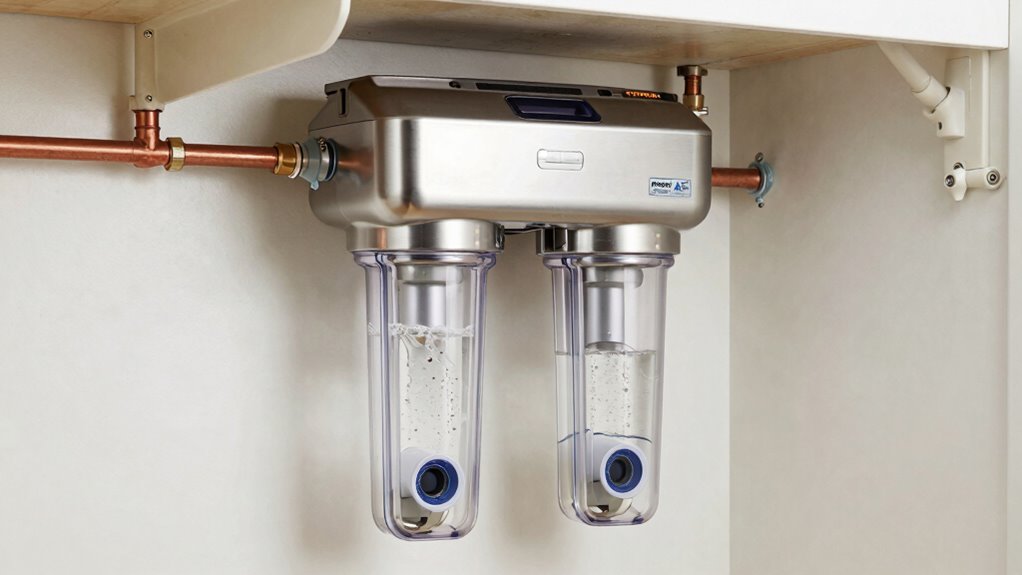
While UV sterilization is great at neutralizing biological threats, it doesn’t remove chemical contaminants or sediments. That’s where other filtration stages come into play, such as sediment filters or reverse osmosis units. Whole house systems often combine multiple filters to offer thorough treatment. For example, a typical setup might include a sediment filter to catch large particles, a carbon filter for chemicals and taste, and a UV sterilizer to handle microbes. This layered approach ensures your water is safer and more pleasant for all household uses.
Additionally, system maintenance is crucial to ensure your filters continue to operate effectively over time, preventing microbial growth and maintaining water quality. It’s also worth noting what whole house filters don’t do. They don’t typically remove dissolved salts or minerals, so if your water has high levels of hardness, you might need a water softener. Similarly, they usually don’t eliminate pesticides or certain industrial chemicals unless specifically designed to do so. Understanding the limitations of your system helps you choose the right combination of filtration methods for your needs. Overall, a well-designed whole house water filter can greatly improve your water quality, making daily activities safer and more enjoyable, especially when it includes features like UV sterilization and carbon filtration.
As an affiliate, we earn on qualifying purchases.
Frequently Asked Questions
How Often Should I Replace My Whole House Water Filter?
You should replace your whole house water filter every 6 to 12 months, depending on your filter’s maintenance and the water quality. Check the manufacturer’s replacement schedule, as some filters need more frequent maintenance if your water has high sediment or contaminants. Regularly inspecting your filter helps guarantee it functions efficiently and keeps your water clean. Don’t forget, timely filter maintenance extends its lifespan and maintains ideal water flow.
Can a Whole House Filter Remove Viruses From Water?
Imagine a strong net catching waterborne pathogens as they flow through your pipes—that’s what a whole house filter aims to do. While many filters effectively reduce bacteria and protozoa, they typically aren’t designed to remove viruses. The filter’s effectiveness depends on its pore size; most standard filters can’t block tiny viruses. To guarantee virus removal, consider a UV purifier or specialized filtration systems that target these microscopic threats directly.
What Is the Cost of Installing a Whole House Water Filter?
The installation costs for a whole house water filter typically range from $1,000 to $3,000, depending on system size and complexity. You might also find financing options available through many suppliers or installers, making it easier to budget for the upgrade. Keep in mind that professional installation guarantees proper setup, which can save you money and hassle in the long run. Always get multiple quotes to find the best deal.
Will a Filter Affect My Water Pressure?
It’s no coincidence that your water pressure might dip when installing a filter—flow restriction can cause a pressure drop. As water passes through the filter, it slows slightly, which could reduce pressure slightly but usually not enough to impact daily use. To minimize this, choose a filter with a high flow rate and guarantee your plumbing isn’t overly constricted. Proper installation helps maintain ideal water pressure.
Are There Eco-Friendly or Sustainable Whole House Water Filters?
Yes, you can find eco-friendly filtration options for your whole house water system. Look for filters made from sustainable materials and designed to minimize waste, supporting eco-friendly filtration. Many brands now offer sustainable water systems that reduce plastic use and energy consumption. By choosing these options, you help protect the environment while ensuring clean water for your home. Opting for eco-friendly filtration aligns with sustainable water systems principles and benefits both you and the planet.
sediment and carbon water filter
As an affiliate, we earn on qualifying purchases.
As an affiliate, we earn on qualifying purchases.
Conclusion
A whole house water filter acts as a guardian for your home’s water, removing many contaminants and ensuring your family’s health. However, it’s not a magic wand—some impurities, like certain chemicals or viruses, might slip through. Think of it as a sturdy shield rather than an impenetrable fortress. By understanding its limits, you can better protect your household and enjoy cleaner, safer water every day—turning your home into a sanctuary of purity amidst the chaos.
As an affiliate, we earn on qualifying purchases.
As an affiliate, we earn on qualifying purchases.