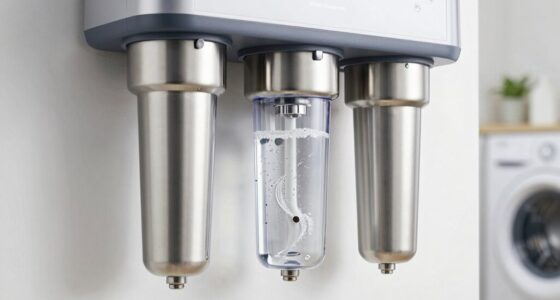
If you’re choosing between under-sink and whole-house filters, consider the problems you want to solve. Under-sink filters are perfect for improving drinking and cooking water by targeting chlorine, lead, and sediment at a specific tap. Whole-house filters treat all water entering your home, addressing issues like heavy metals, pesticides, and bacteria across your household. To find out which system fits your needs best, explore more about their capabilities and application.
Key Takeaways
- Under-sink filters target specific contaminants like chlorine, lead, and sediment in drinking and cooking water.
- Whole-house filters address broader issues such as heavy metals, pesticides, and bacteria in all household water.
- Under-sink systems solve localized water quality problems at a dedicated faucet, ideal for drinking and cooking.
- Whole-house systems resolve comprehensive water concerns affecting the entire household, including bathing and laundry.
- The choice depends on whether the primary need is improving drinking water or treating all water in the home.
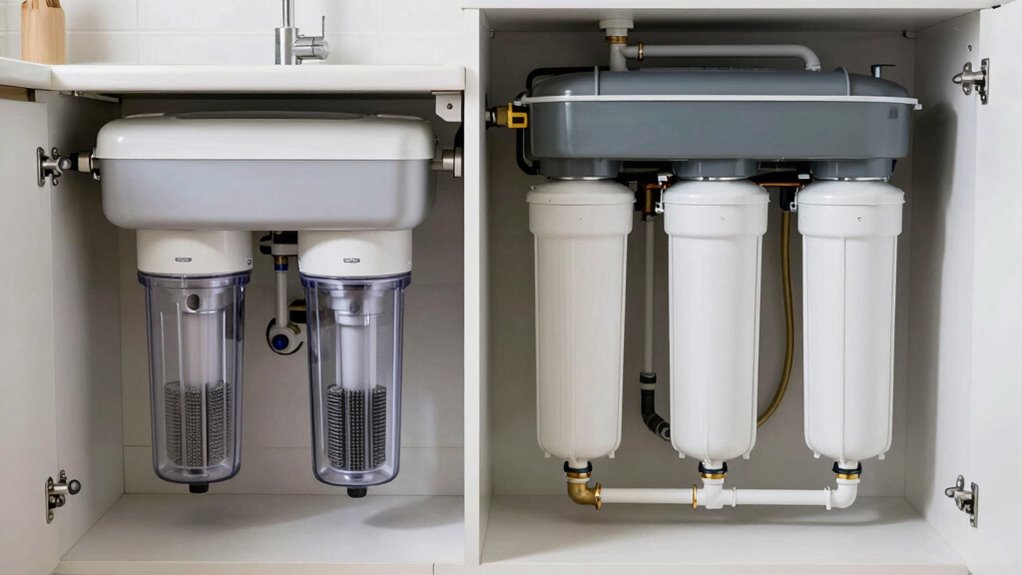
Under-sink filters are compact systems installed directly beneath your kitchen sink. Their main advantage is targeted filtration, meaning they focus on improving the water you use for drinking and cooking. When you turn on your tap, filtered water flows through a dedicated faucet, providing cleaner, better-tasting water right at the source. The installation process for under-sink filters is relatively straightforward and involves connecting the filter to your existing faucet or installing a separate faucet. You typically need basic tools, and most systems come with clear instructions, making DIY installation feasible. This setup is ideal if your primary concern is removing contaminants like chlorine, lead, or sediment from your drinking water without affecting water used for other household tasks. Additionally, under-sink filters are often more affordable and easier to maintain compared to whole-house systems.
Whole-house filters, on the other hand, are much larger systems installed at the point where water enters your home. They treat all the water before it reaches any faucet or appliance, providing extensive filtration. If you’re worried about contaminants in your entire water supply—such as heavy metals, pesticides, or bacteria—a whole-house filter addresses those issues. The installation process for these systems is more complex and usually requires professional help. It involves integrating the filter into your main water line, which may mean cutting pipes and installing additional fittings. Because they serve the entire household, these filters often have higher capacity and longer-lasting filters, but they also demand a more significant initial investment.
Choosing between the two depends on your specific needs. If you’re primarily concerned about improving the quality of water for drinking and cooking, an under-sink filter is a convenient and cost-effective option. If your concerns extend to all water used throughout your home—such as bathing, laundry, and dishwashing—a whole-house filter provides extensive protection. Both systems focus on water filtration, but their installation processes reflect their different scopes. Under-sink filters are simpler and more DIY-friendly, while whole-house systems typically require professional installation due to their complexity. Consider your budget, water quality issues, and household water usage to determine which solution fits best. Furthermore, understanding the different types of filters available aids in selecting the most suitable system for your needs.
under-sink water filter system
As an affiliate, we earn on qualifying purchases.
As an affiliate, we earn on qualifying purchases.
Frequently Asked Questions
How Often Should I Replace Under-Sink Filter Cartridges?
You should replace your under-sink filter cartridges every 6 to 12 months, depending on the cartridge lifespan and your water quality. Regular replacement guarantees peak filtration and water taste. Check your filter’s manufacturer recommendations and monitor water flow; a noticeable decrease often signals it’s time for a change. Maintaining a routine replacement frequency keeps your water clean and safe, preventing buildup and ensuring your filter performs effectively.
Can Whole-House Filters Remove Specific Contaminants Like Lead?
Yes, whole-house filters can remove specific contaminants like lead, but it depends on the filter’s design and media. Look for filters with activated carbon or specialized media formulated for lead removal, guaranteeing contaminant specificity. Regularly maintaining and replacing the filter ensures it effectively reduces lead levels, providing safer water throughout your home. Keep in mind, not all whole-house filters are designed for lead removal, so choose one suited to your needs.
Are Under-Sink Filters Suitable for Well Water?
Yes, under-sink filters are perfect for well water, acting like a shield that blocks contaminants before they reach your tap. Well water often carries impurities like bacteria, sediments, and chemicals, and these filters excel at targeted contaminant removal. They’re compact, easy to maintain, and give you peace of mind that your drinking water is clean and safe, no matter what hidden hazards lurk beneath the surface.
Do Whole-House Filters Improve Water Pressure?
Yes, whole-house filters can improve water pressure by reducing sediment buildup and preventing clogs in pipes. When filters are clean and well-maintained, you’ll notice a smoother flow throughout your home. Keep in mind, the filter’s lifespan is important; replacing it regularly guarantees ideal water pressure and prevents blockages. Proper maintenance helps your entire system work efficiently, giving you consistent, high-quality water pressure across all fixtures.
What Are the Maintenance Costs for Each Filter Type?
Ever wondered how much you’ll spend maintaining your water filters? You’ll find that under-sink filters usually cost less in maintenance, needing filter replacements every 6-12 months, while whole-house filters might require more frequent attention depending on water quality. The filter lifespan influences maintenance frequency, with costs varying based on filter type and size. Are you ready to balance ongoing costs with the convenience of cleaner water throughout your home?
whole house water filter
As an affiliate, we earn on qualifying purchases.
As an affiliate, we earn on qualifying purchases.
Conclusion
Choosing between under-sink and whole-house filters depends on your specific needs. Did you know that over 90% of household water contains some form of contaminants? If you’re concerned about drinking water quality, an under-sink filter targets that directly. For broader protection against pollutants throughout your home, a whole-house filter is the way to go. Consider your priorities carefully, and you’ll find the perfect solution to keep your water clean and safe.
best under-sink water purifier
As an affiliate, we earn on qualifying purchases.
As an affiliate, we earn on qualifying purchases.
professional whole house water filter installation
As an affiliate, we earn on qualifying purchases.
As an affiliate, we earn on qualifying purchases.