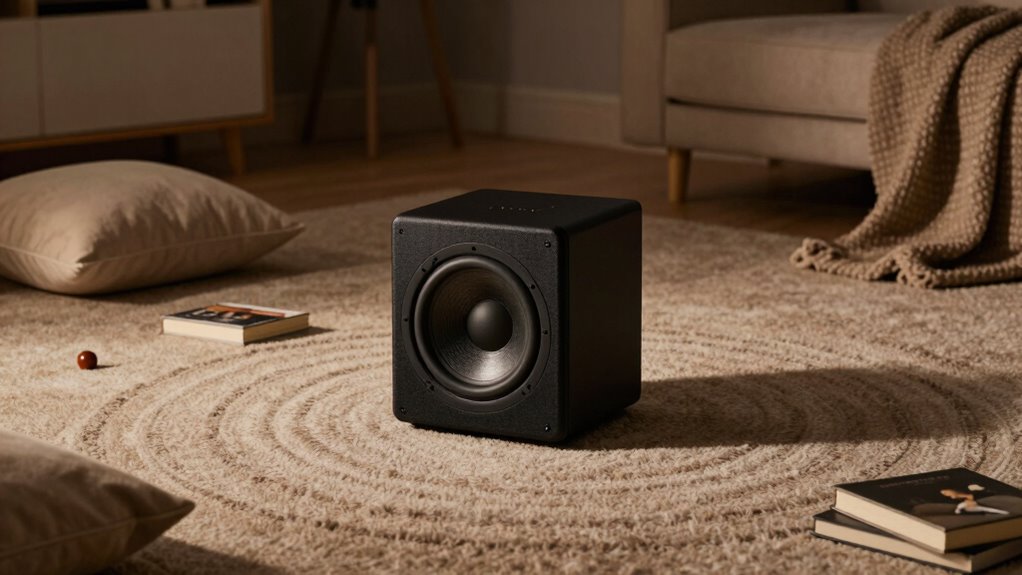
The “sub crawl” is a simple method to find the best spot for your subwoofer by testing different locations around your room. Start by placing the sub in your typical listening position, then crawl around while playing bass-heavy music or test tones. Listen carefully for where the bass sounds fullest and most balanced. When you find that spot, mark it. If you keep exploring, you’ll discover tips to optimize your setup even more.
Key Takeaways
- The sub crawl involves placing the subwoofer at the listening position, then moving it around to find the best bass response.
- It helps identify the optimal spot where bass sounds fullest and most balanced in the room.
- During the crawl, listen for the location with the deepest, most even bass using test tones or music.
- Mark the spot where bass is strongest, then place the subwoofer there for improved sound quality.
- The method simplifies sub placement without needing complex measurement tools, enhancing overall bass performance.
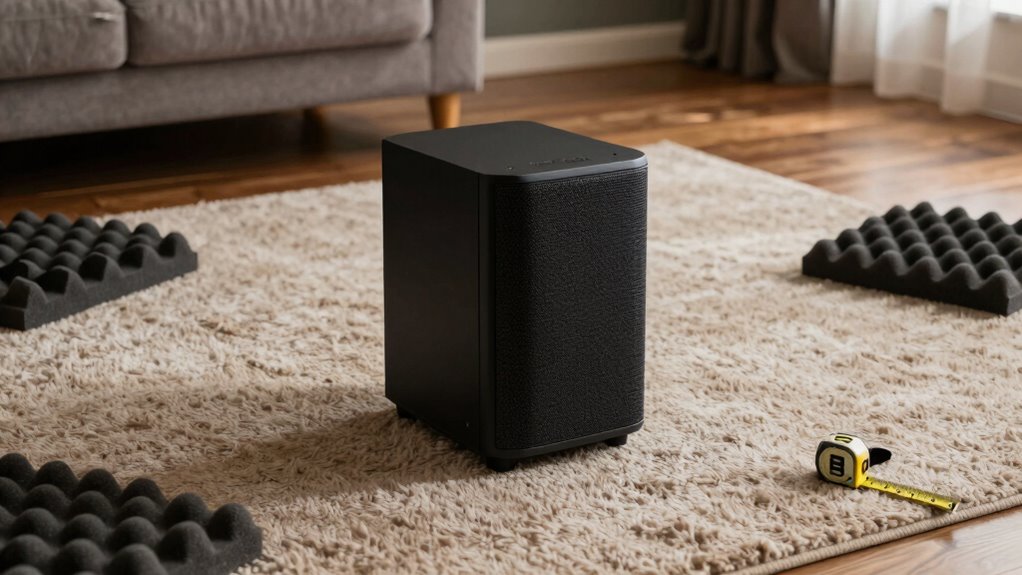
Proper subwoofer placement is vital for achieving balanced and powerful bass in your listening space. When you position your subwoofer correctly, it enhances the overall sound quality and guarantees that you experience deep, accurate lows without overwhelming other frequencies. To do this effectively, you need to understand how room acoustics influence bass response and how to calibrate your speaker system for peak performance. The way sound waves interact with your room’s surfaces can cause certain frequencies to cancel or amplify, leading to uneven bass. By paying close attention to room acoustics, you can identify the best spot for your subwoofer and avoid bass nulls or boomy spots. This is where the “sub crawl” technique comes into play.
The sub crawl is a simple yet effective method that involves moving your subwoofer around the room to find the spot where bass sounds the fullest and most balanced. You start by placing your subwoofer in your typical listening position, then play some bass-heavy music or test tones. Next, crawl around the room on your hands and knees, listening carefully for the area where the bass feels most even and powerful. When you find that sweet spot, you mark it, then move the sub back to that location. This process helps you identify the ideal placement by directly testing how your room responds to bass in different areas.
Once you’ve found the peak position via the sub crawl, it’s vital to fine-tune your speaker calibration. Proper calibration adjusts the levels, crossover points, and phase settings to guarantee your subwoofer integrates seamlessly with your main speakers. Even if your subwoofer is in the perfect spot, without proper calibration, the bass can still sound disconnected or out of sync. Many modern receivers offer calibration tools, like auto-EQ, which can help you balance the sound, but manual adjustments may still be necessary for the best results. Keep in mind that room acoustics can change over time, so periodically recalibrating helps maintain the sound quality you’re aiming for. Additionally, understanding room acoustics can help you anticipate how sound waves will behave, further improving your setup.
Ultimately, achieving the best subwoofer placement requires both a strategic approach and an understanding of your room’s acoustical properties. The sub crawl guides you to the most suitable location, while speaker calibration ensures your entire system works together harmoniously. By paying attention to how your room affects sound and making precise adjustments, you’ll enjoy deep, rich bass that complements your music and movies perfectly. Proper placement combined with calibration transforms your listening experience, making every bass note clear, punchy, and well-integrated.
Frequently Asked Questions
How Does Room Acoustics Affect Subwoofer Placement?
Room acoustics substantially impact your subwoofer placement because reflections can cause uneven bass response. You might notice bass nulls where sound cancels out, or boomy spots from standing waves. To optimize, you should perform a sub crawl, moving the subwoofer around and listening for smooth, even bass. This helps you find the best spot, minimizing room reflections and nulls for a balanced, powerful low end.
Can Multiple Subwoofers Improve Sound Quality?
Yes, using multiple subwoofers can improve sound quality. They provide more even bass distribution and reduce nulls caused by room acoustics. To get the best results, you need to perform subwoofer calibration and guarantee proper phase alignment between them. This helps prevent phase cancellation, ensuring tight, balanced bass across your listening area. Proper placement and calibration make multiple subwoofers a powerful way to enhance your audio experience.
What’s the Ideal Distance Between Subwoofers?
You should place your subwoofers about 1 to 3 feet apart to minimize phase cancellation and sound wave interference. This distance helps prevent destructive interference, which can weaken bass response. Use the “sub crawl” method to find the most effective placement—sit in your listening spot and crawl around, then position the subwoofers where the bass sounds best and interference is minimized. Proper spacing ensures balanced, powerful bass.
How Do Furniture and Decor Influence Subwoofer Placement?
Furniture interference and decor placement can ensure your subwoofer’s sound quality. Large furniture pieces may block or absorb bass waves, reducing clarity and volume. To optimize placement, keep the subwoofer away from bulky furniture and avoid placing decor that can obstruct sound waves. Adjusting furniture and decor positioning helps guarantee the subwoofer’s bass spreads evenly, giving you richer, more balanced sound in your space.
Are There Specific Placements for Different Room Sizes?
Yes, room size influences your subwoofer placement. For smaller rooms, you might place the sub closer to walls for better bass, but in larger rooms, position it more centrally and experiment using the “sub crawl.” During setup, adjust crossover settings and perform subwoofer calibration to optimize sound. Moving your sub around and fine-tuning these settings helps make certain of balanced, powerful bass regardless of your room size.
Conclusion
Think of your subwoofer as the heartbeat of your home theater. When you place it just right, it anchors your space with rich, deep bass, like a steady pulse that brings everything to life. The “sub crawl” is your journey to find that perfect spot, turning your room into a symphony of sound. Trust your ears and instincts—your subwoofer’s placement is the key to unleashing pure, immersive magic in every movie and tune.