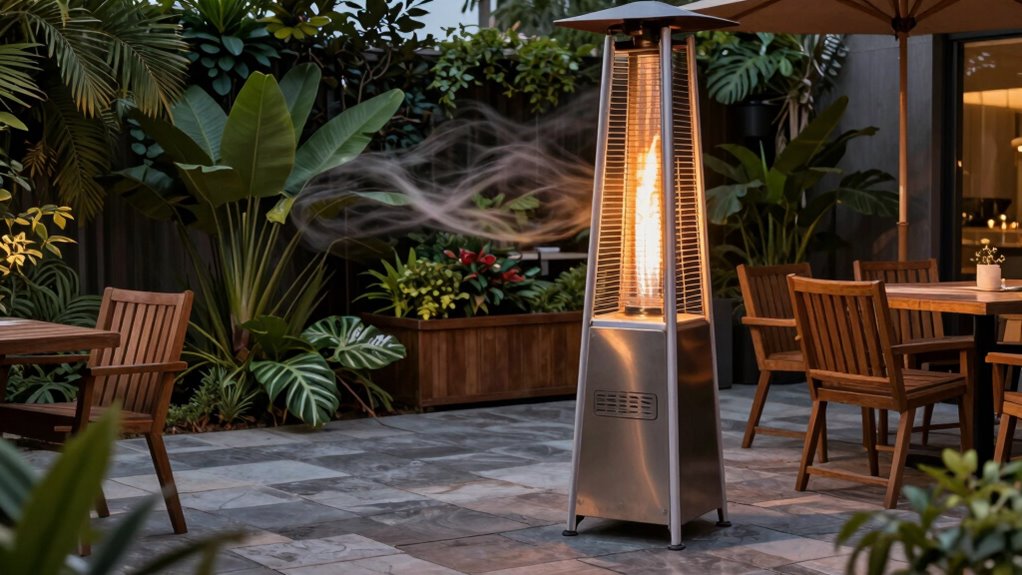

To stay safe with your patio heater, keep it at least 3 feet away from walls, furniture, and flammable materials, and guarantee good clearance on all sides. Be mindful of wind; use windbreaks or position it in sheltered spots to prevent tipping or flame blowouts. Always follow manufacturer guidelines and regularly inspect for damage. Proper placement and maintenance reduce fire risks and carbon monoxide buildup—keep safety in mind, and you’ll enjoy warmth without concern. Learn more to maximize your safety.
Key Takeaways
- Maintain at least 3 feet of clearance from walls, furniture, and flammable materials when setting up patio heaters.
- Position heaters in sheltered spots away from strong winds to prevent tipping, flame blowouts, and hazards.
- Follow manufacturer instructions for proper installation, regular inspections, and safe fuel storage to prevent accidents.
- Avoid operating patio heaters in open, windy areas to reduce risks of fire, damage, or carbon monoxide buildup.
- Turn off and disconnect fuel sources after use, especially in windy conditions, to ensure safety and prevent leaks.
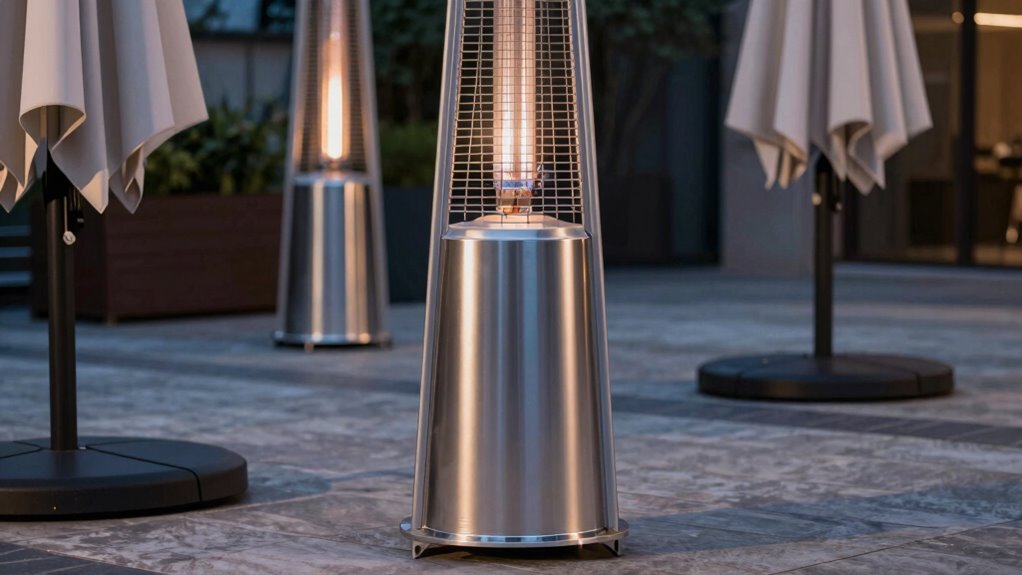
Using a patio heater can extend your outdoor living season, but safety should always come first. Proper heater placement is essential to prevent accidents and ensure efficient operation. When setting up your heater, choose a stable, flat surface away from flammable materials like umbrellas, furniture, or overhanging branches. Keep the heater at least three feet away from walls, railings, or any objects that could catch fire. Remember, the goal is to minimize the risk of heat-related fires or damage, so giving your heater ample clearance on all sides is critical. Also, avoid placing it in a high-traffic area where it could be bumped or knocked over, especially if you have children or pets.
Wind impact is another important factor to contemplate. Strong gusts can cause your patio heater to tip over or blow flames or hot surfaces onto nearby objects or people. Before igniting your heater, assess the weather conditions. If it’s windy, it’s best to wait until the wind subsides. If you must use it in breezy conditions, position it in a sheltered spot, such as behind a windbreak, wall, or large piece of furniture that can block gusts. Never operate a heater in open areas where wind can directly impact the flame or heating element, as this can lead to unpredictable behavior or even safety hazards. Additionally, some patio heaters come with wind-resistant features — if yours does, make use of these to help keep the flame steady and prevent accidents.
Beyond placement and wind, always follow manufacturer guidelines for your specific heater model. These instructions typically include recommended clearances and safety precautions that are tailored to the device. Regularly inspect your heater for signs of wear, damage, or leaks, especially if it uses propane or natural gas. Proper storage of fuel cylinders and ensuring they’re properly connected helps prevent leaks that could lead to dangerous fumes or explosions. When done using your heater, turn it off completely and disconnect the fuel source if possible, especially during windy weather or if you won’t be using it for an extended period.

Ignovate 50,000 BTU Outdoor Propane Patio Heater with Wheels – Durable Powder-Coated Steel Gas Heater with Easy Ignition & Safety Shut-Off for Patio, Backyard, Garden, Restaurant
Powerful Heat Coverage – Generates up to 50,000 BTUs of strong, consistent heat, effectively warming up to a…
As an affiliate, we earn on qualifying purchases.
As an affiliate, we earn on qualifying purchases.
Frequently Asked Questions
Can Patio Heaters Be Used Indoors Safely?
You shouldn’t use patio heaters indoors because it’s unsafe. Indoor safety relies on proper ventilation requirements, which patio heaters aren’t designed for. Using them indoors can cause dangerous carbon monoxide buildup, risking poisoning. Always follow manufacturer guidelines and avoid indoor use unless the heater is specifically made for indoor environments. Prioritize safety by only using patio heaters outdoors where ventilation naturally disperses any fumes.
What Are the Signs of Carbon Monoxide Poisoning?
You should be aware of symptoms like headache, dizziness, weakness, nausea, and confusion, which signal carbon monoxide poisoning. Prevention strategies include ensuring proper ventilation, never using indoor patio heaters outdoors, and installing carbon monoxide detectors. If you notice these signs, get fresh air immediately and seek medical help. Recognizing symptoms early is vital to avoid serious health risks, so stay vigilant when using any equipment that might produce CO.
How Often Should I Inspect My Patio Heater?
You should inspect your patio heater monthly to maintain safety and guarantee proper heater maintenance. Regular safety inspections help catch potential problems early, like leaks or wear, preventing accidents. Look for cracks, corrosion, or loose connections, and always follow the manufacturer’s guidelines. By consistently inspecting your heater, you protect yourself and others, prolong its lifespan, and ensure safe, warm outdoor evenings with peace of mind.
Are There Eco-Friendly Patio Heater Options?
Yes, you can choose eco-friendly patio heaters like solar options or biomass heaters. Solar-powered heaters use sunlight, reducing emissions and energy use, making them a sustainable choice. Biomass heaters burn organic materials, like wood pellets, which are renewable and produce fewer pollutants. These options help you enjoy outdoor warmth while minimizing your environmental impact, making them ideal for eco-conscious homeowners seeking greener heating solutions.
What’s the Ideal Storage Method for Off-Season?
Think of storing your patio heater like tucking in a favorite book for the season. You should drain fuel (if applicable), clean off any debris, and store it in a dry, well-ventilated area. Follow safety precautions by keeping it away from children and pets, and make certain it’s upright. Seasonal storage in a shed or garage protects your heater, prolongs its life, and keeps it ready for cozy nights when warmer weather returns.
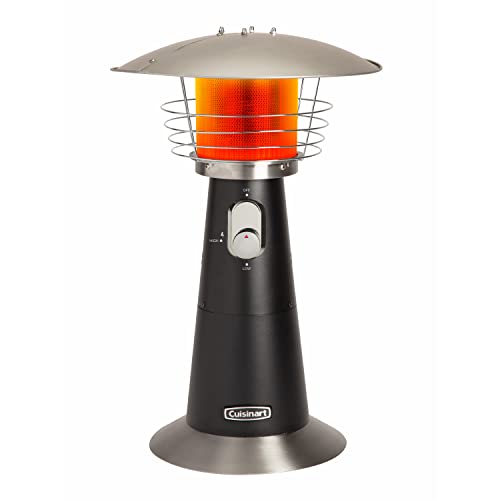
Cuisinart Portable Tabletop Patio Heater, 11,000 BTU Outdoor Propane Heater with Safety Tilt Switch and Adjustable Heat, Burner Screen Guard, 30 sq. Foot Heat Range, Black
POWERFUL & EVEN HEATING: With 11,000 BTUs, this propane heater efficiently warms up to 30 sq. ft., and…
As an affiliate, we earn on qualifying purchases.
As an affiliate, we earn on qualifying purchases.
Conclusion
Remember, prioritizing patio heater safety guarantees you enjoy cozy evenings without risks. While some might think minor precautions are unnecessary, overlooking clearance, wind, or carbon monoxide can lead to serious hazards. By taking simple steps—keeping heaters well-maintained, away from flammable objects, and ensuring proper ventilation—you protect yourself and loved ones. Don’t let convenience overshadow safety; a little extra care ensures warm, worry-free outdoor gatherings all season long.
Ignovate 50,000 BTU Outdoor Propane Patio Heater with Wheels – Durable Powder-Coated Steel Gas Heater with Easy Ignition & Safety Shut-Off for Patio, Backyard, Garden, Restaurant
Powerful Heat Coverage – Generates up to 50,000 BTUs of strong, consistent heat, effectively warming up to a…
As an affiliate, we earn on qualifying purchases.
As an affiliate, we earn on qualifying purchases.

HQQ outdoor Patio Heater Reflector Shield, Aluminum Heat Reflector Shield Top for Propane Outdoor Heaters,Dome Replacement Parts(3-Hole Mount,33" Diameter Round)
【For Your Patio Heater】The patio heater reflector shield top is a perfect replacement part for patio heater.HQQ outdoor…
As an affiliate, we earn on qualifying purchases.
As an affiliate, we earn on qualifying purchases.