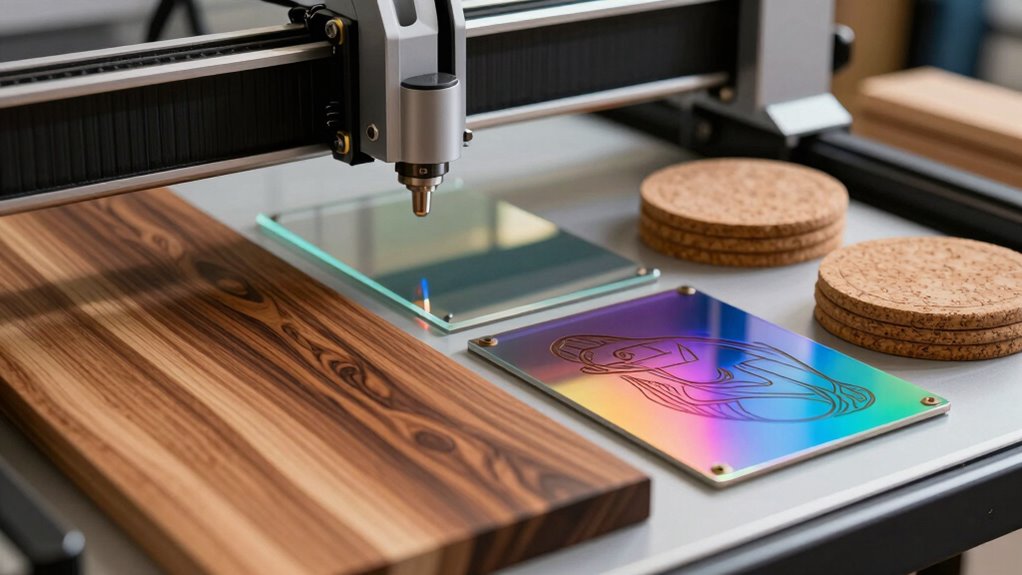
When starting with a laser engraver, safe materials include hardwoods like maple, cherry, and walnut that produce detailed engravings without harmful fumes. You can also safely engrave laser-safe acrylics, glass, ceramics, and certain metals such as aluminum and stainless steel, provided you use appropriate settings. Avoid softwoods, resins, or plastics not labeled for laser use, as they may emit toxic fumes or damage your equipment. To guarantee safe and effective results, learn more about optimizing your engravings and selecting materials wisely.

Prime made for students and young adults
- Fast, free delivery for dorm and study essentials
- Prime Video and Amazon Music included
- Member-only deals
Key Takeaways
- Use hardwoods like maple, cherry, and walnut for detailed and safe wood engraving.
- Ensure plastics are labeled as laser-safe to avoid toxic fumes during engraving.
- Glass and ceramics can be engraved safely with proper settings to prevent cracking.
- Metals such as aluminum, stainless steel, and anodized metals are suitable for durable engravings.
- Always verify material safety and conduct test engravings before full projects.
A laser engraver is a versatile tool that uses a focused laser beam to etch designs, text, or images onto various materials. While this technology opens up numerous creative possibilities, it’s vital to prioritize safety precautions to prevent accidents and health risks. Before you start engraving, ensure you’re working in a well-ventilated area and wearing appropriate protective gear, such as safety glasses designed to block laser wavelengths. Never operate the machine without proper training, and always keep a fire extinguisher nearby, as some materials can catch fire during engraving. Familiarize yourself with the specific safety guidelines for your laser engraver model, and follow the manufacturer’s recommendations diligently.
Always prioritize safety: work in well-ventilated areas, wear protective glasses, and follow manufacturer guidelines.
When it comes to engraving techniques, understanding which materials are safe to work with is essential. Not every surface is suitable for laser engraving; some materials release toxic fumes or pose fire hazards. Wood is one of the most popular options, especially hardwoods like maple, cherry, and walnut, which produce clean, detailed engravings. However, avoid softwoods like pine or cedar, as their resin content can cause the laser to produce unpleasant fumes and uneven results. Acrylics are also commonly used, offering vibrant finishes, but always check that the acrylic is labeled as laser-safe, since some plastics emit hazardous fumes when laser engraved. Glass and ceramics are safe choices for etching, although they require specific settings and techniques to prevent cracking or chipping.
Metals can be engraved with a laser, but it’s usually a more advanced process requiring specialized laser systems designed for metal marking. Aluminum, stainless steel, and anodized metals are popular because they produce durable, high-contrast results. When engraving on these materials, you need to follow specific techniques to ensure the laser penetrates properly without damaging the surface. For safety, note that engraving certain plastics or composites might release toxic gases, so always verify the material’s compatibility with laser engraving and use appropriate ventilation. Additionally, understanding the energy efficiency of different materials can help you choose those that require less power and produce fewer fumes, making your workspace safer and more sustainable.
In essence, selecting the right materials and mastering proper engraving techniques go hand in hand. Always start with test engravings on scrap pieces to dial in your settings. Keep safety precautions front and center, and never compromise on protective measures. Doing so not only protects you but also ensures your projects turn out beautifully and safely. By understanding what materials are safe to engrave and adhering to safety guidelines, you’ll make the most of your laser engraver’s capabilities while keeping your workspace secure.
As an affiliate, we earn on qualifying purchases.
Frequently Asked Questions
Can I Engrave on Transparent or Clear Materials Safely?
You can engrave on transparent or clear materials safely if you consider laser transparency and the type of material. Clear acrylic and glass are popular choices for clear engraving, but you should use appropriate settings to avoid cracking or melting. Always test on a small area first and confirm your laser is properly calibrated. This way, you achieve precise, safe results without damaging the material or compromising safety.
Are There Any Metals That Are Unsafe for Laser Engraving?
Metal may seem mighty, but some metals pose peril during laser engraving. You should avoid engraving on galvanized steel, coated metals, or metals with toxic finishes because of safety concerns. Always prioritize metal safety and follow engraving precautions to prevent harmful fumes or damage. Stay vigilant, verify metal types beforehand, and use proper ventilation. With careful consideration, you’ll confidently create with metals that are safe and suitable for laser engraving.
How Does the Thickness of Materials Affect Safety During Engraving?
The thickness of materials impacts safety because thicker materials can cause more material deformation and may require higher laser power. You should adjust the laser power accordingly to prevent overheating or damage. Thicker materials may also absorb more energy, increasing the risk of unintended fire or smoke. Always test on a small area first, and monitor the process closely to guarantee proper laser power adjustment and safe engraving.
Can I Engrave on Heat-Sensitive or Melting Plastics Safely?
You should avoid engraving heat-sensitive plastics and melting plastics with a laser engraver. These materials can release harmful fumes, emit unpredictable smoke, and pose safety risks due to their low melting points. If you attempt to engrave them, you risk damaging your equipment and creating hazardous conditions. Instead, select safer, laser-compatible plastics designed for engraving, and always operate in a well-ventilated area to ensure safety.
Are There Specific Safety Precautions for Engraving on Recycled or Reclaimed Materials?
When engraving on recycled or reclaimed materials, you should follow specific safety precautions. For example, if you’re working with reclaimed wood, guarantee it’s free of nails, staples, or chemical treatments to prevent hazards. Recycled safety involves thoroughly inspecting materials for contaminants and testing small areas first. Always wear appropriate PPE, work in well-ventilated areas, and verify that the reclaimed materials are safe for laser engraving to avoid toxic fumes or fires.
As an affiliate, we earn on qualifying purchases.
Conclusion
Now that you know what materials are safe to engrave, you’re practically a laser engraving superhero! With this knowledge, you can transform ordinary objects into stunning masterpieces faster than a speeding bullet. Just remember, choosing the right materials is your secret weapon against mishaps. So go ahead, wield your laser like a pro, create jaw-dropping designs, and turn everyday items into priceless works of art—your friends will think you’ve got magic in your hands!
engraving glass and ceramics kit
As an affiliate, we earn on qualifying purchases.
As an affiliate, we earn on qualifying purchases.
As an affiliate, we earn on qualifying purchases.
Fall Picks
fall essentials
As an affiliate, we earn on qualifying purchases.