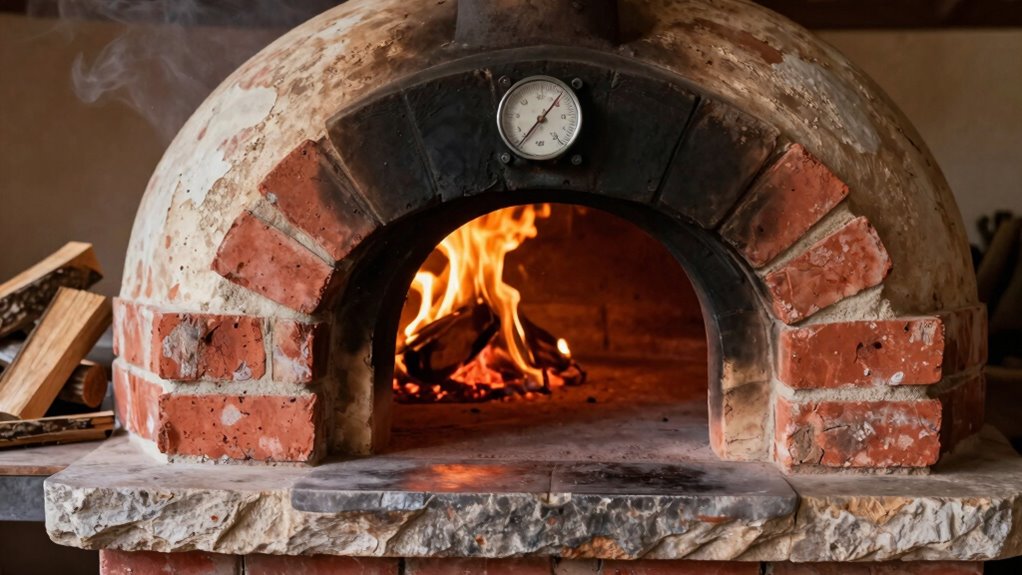
To get restaurant-quality pizzas in your outdoor oven, aim for a temperature around 800°F. This high heat creates a light, airy crust and perfect crust blistering. Proper insulation and controlling your fire guarantee consistent temperatures, making your pies cook evenly. Balancing dough preparation with temperature management is key to success. Keep experimenting with heat and techniques, and you’ll access the full potential of your outdoor oven for perfect pizzas every time.
Key Takeaways
- Achieving high oven temperatures (~800-900°F) is essential for authentic, restaurant-quality Neapolitan-style pizzas.
- Proper insulation retains heat, enabling consistent high temperatures necessary for perfect crusts and toppings.
- Monitoring with infrared thermometers ensures your oven maintains the optimal temperature for baking.
- Well-hydrated, rested dough responds better to high heat, resulting in airy, blistered crusts.
- Controlling fire and fuel sources helps sustain the ideal temperature throughout the cooking process.
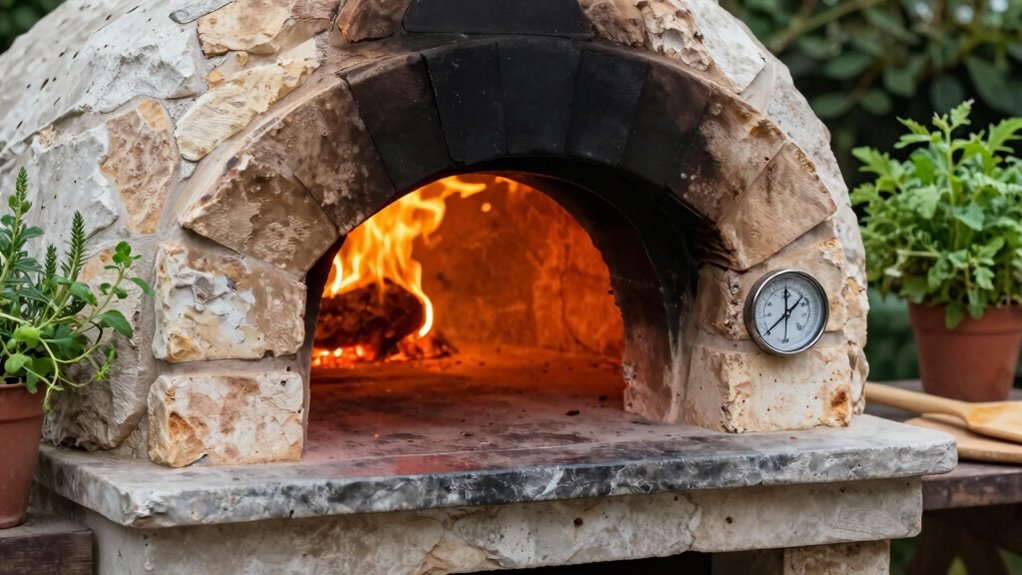
If you’re considering adding an outdoor pizza oven to your backyard, understanding the basics is vital to making an informed choice. One of the most important factors in achieving perfect pizzas is mastering the right temperature, which directly impacts how your dough cooks and how toppings develop. Before diving into the specifics, it’s helpful to familiarize yourself with pizza dough techniques, as the dough’s hydration, kneading, and resting times influence how it responds to different oven temperatures. A well-prepared dough will stretch easily and develop a light, airy crust when baked at high heat, typically around 800-900°F. Conversely, lower temperatures produce a denser, softer crust, so knowing your ideal outcome helps you select the right oven setup.
Getting the temperature right begins with understanding oven insulation tips. Proper insulation guarantees that heat stays inside your oven, reaching those high temperatures efficiently and maintaining consistent heat during cooking. Without good insulation, your oven loses heat rapidly, forcing you to increase fuel consumption and risking uneven cooking. You should look for ovens with thick insulating materials like ceramic fiber or high-temperature bricks, which help retain heat and reduce energy waste. Also, consider the oven’s shape and size; a well-designed dome or enclosed chamber promotes even heat distribution, essential for creating that perfect, crispy crust. When you set up your outdoor pizza oven, make sure to insulate the foundation and external surfaces to prevent heat loss and protect surrounding structures. This not only improves performance but also enhances safety during use.
Proper insulation and design ensure consistent heat for perfect outdoor pizza baking.
Once your oven is heated to the appropriate temperature, the combination of your pizza dough techniques and insulation tips becomes apparent. For instance, if your dough is correctly hydrated and rested, it will handle high temperatures better, resulting in a beautifully blistered crust with a chewy interior. If your oven isn’t well-insulated, you might notice uneven cooking or longer bake times, which can compromise your pizza’s texture and flavor. Managing the temperature involves more than just preheating; it requires monitoring and adjusting your firewood or fuel to maintain consistent heat. Using a good infrared thermometer can give you precise readings, so you know when the oven hits that sweet spot—around 800°F for Neapolitan-style pizzas. Additionally, understanding how insulation impacts heat retention can help you optimize your oven’s performance and energy efficiency. Ultimately, mastering the right temperature involves understanding how your dough techniques and oven insulation work together. When you focus on these fundamentals, your outdoor pizza oven can produce restaurant-quality pies, right in your backyard. With practice and attention to detail, you’ll be able to control heat levels effectively, ensuring every pizza turns out perfectly cooked and packed with flavor.
outdoor pizza oven infrared thermometer
As an affiliate, we earn on qualifying purchases.
As an affiliate, we earn on qualifying purchases.
Frequently Asked Questions
What Are the Best Fuels for Outdoor Pizza Ovens?
You should choose wood, charcoal, or propane as fuel types for your outdoor pizza oven. Wood provides authentic flavor and high heat, while charcoal offers steady fuel efficiency. Propane is convenient and easy to control, making it a popular choice. Consider your fuel efficiency needs—wood and charcoal might require more attention, but they deliver superior flavor. Propane offers quick heating with less effort, perfect for consistent, efficient cooking.
How Long Does It Take to Preheat an Outdoor Pizza Oven?
Preheat duration for your outdoor pizza oven typically takes about 15 to 30 minutes, depending on the oven’s size and insulation. You should aim to reach the ideal oven temperature of around 700°F to 800°F for perfect pizzas. During this time, keep the fire steady and monitor the temperature gauge closely. Once the desired temperature is achieved, you’re ready to start cooking your delicious pizzas.
Can Outdoor Pizza Ovens Reach High Enough Temperatures for Neapolitan Pizza?
Yes, outdoor pizza ovens can reach the high temperatures needed for Neapolitan pizza. To achieve this, you need to monitor the pizza stone temperature, which should reach around 900°F. Proper oven insulation helps retain heat efficiently, allowing you to reach and maintain these intense temperatures. By preheating adequately and ensuring your oven is well insulated, you’ll create the perfect environment to craft authentic Neapolitan pizzas.
What Safety Precautions Should I Follow When Operating an Outdoor Pizza Oven?
You should prioritize fire safety and proper ventilation when operating your outdoor pizza oven. Always keep a fire extinguisher nearby and ensure your oven is on a stable, non-flammable surface. Make sure your area is well-ventilated to avoid smoke buildup and carbon monoxide hazards. Never leave the oven unattended while in use, and wear heat-resistant gloves to prevent burns. These precautions keep you safe and your pizza perfect.
How Do Ambient Outdoor Temperatures Affect Oven Performance?
Ambient outdoor temperatures can substantially impact your outdoor pizza oven’s performance. High temperatures and humidity effects can make it harder to reach and maintain ideal cooking heat, leading to uneven cooking. Wind influence can cool down the oven and disrupt heat retention, so shielding it from gusts helps. Keep an eye on these factors; adjusting your fire and insulation accordingly ensures your pizzas cook perfectly every time.
high temperature pizza oven insulation
As an affiliate, we earn on qualifying purchases.
As an affiliate, we earn on qualifying purchases.
Conclusion
Mastering the right temperature for your outdoor pizza oven transforms your cooking game completely. When you hit that perfect heat, your pizza’s crust becomes legendary—crispier than a winter’s frost and more irresistible than a siren’s call. Remember, temperature isn’t just a detail; it’s the secret ingredient that turns an ordinary pie into a culinary masterpiece. So, keep your thermometer close, stay attentive, and soon you’ll be creating pizzas that are nothing short of perfection—an experience you’ll never forget.
outdoor pizza oven with dome design
As an affiliate, we earn on qualifying purchases.
As an affiliate, we earn on qualifying purchases.
pizza oven firewood or fuel
As an affiliate, we earn on qualifying purchases.
As an affiliate, we earn on qualifying purchases.