To monitor how long food lasts, start by following general storage guidelines: leftovers typically stay safe for 3–4 days in the fridge, and most refrigerated foods like dairy or cooked meats should be consumed within a week or so. Freezing extends shelf life but keep foods at 0°F and label packages with dates. Watch for spoilage signs like mold, sliminess, or sour smells. Staying aware of these simple rules helps you prevent waste and keep your food safe—there’s more to learn as you continue.
Key Takeaways
- Consume leftovers within 3–4 days to prevent foodborne illness; label with date for easy tracking.
- Recognize spoilage signs like mold, sour smell, sliminess, or discoloration to ensure food safety.
- Store raw meats separately and keep the fridge below 40°F to extend shelf life and prevent cross-contamination.
- Use airtight containers and proper packaging to maintain freshness and avoid freezer burn; label with storage date.
- Follow recommended shelf lives for pantry staples: dry pasta (up to 2 years), rice (1–2 years), canned goods (1–5 years).
How Long Can You Keep Leftovers in the Fridge?

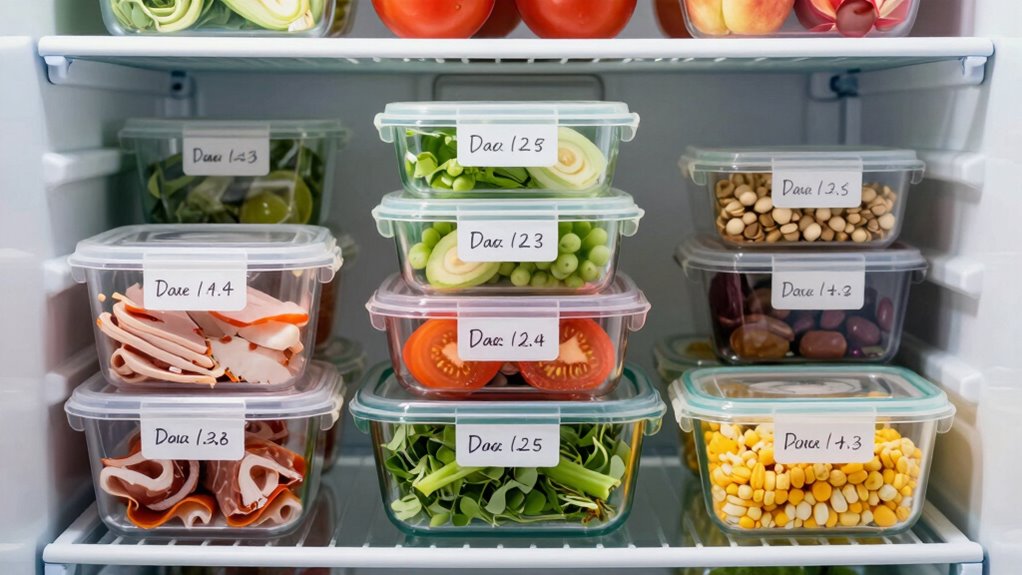
How long can you keep leftovers in the fridge before they become unsafe to eat? Generally, leftovers stay good for about three to four days if stored properly. To maximize safety, practice good food rotation—consume older leftovers first and regularly check storage dates. Label your containers with the date you cooked or stored the food, so you always know how long they’ve been in the fridge. Ensuring your fridge is set to the proper temperature is crucial for food safety, as temperature control helps prevent bacterial growth. Maintaining the correct refrigerator temperature reduces the risk of foodborne illnesses. Effective labeling practices help prevent accidental consumption of spoiled food and reduce waste. Keep your fridge at the correct temperature, and organize leftovers to guarantee proper airflow. Additionally, using a reliable vetted vacuum cleaner can help keep your kitchen clean and reduce cross-contamination risks. Proper food safety practices are essential for preventing foodborne illnesses and ensuring your leftovers remain safe to eat.
How to Tell If Refrigerated Foods Are Still Good?
Ever wonder if your leftovers are still safe to eat? To determine food safety, look for spoilage indicators like foul odors, slimy textures, or discoloration. If it smells sour or off, it’s best to discard it.
Check for changes in appearance—mold, strange spots, or a dull, faded look can signal spoilage. Tactile cues matter too; if the food feels slimy or sticky, don’t risk eating it.
Remember, even if the food looks and smells okay, it’s important to contemplate how long it’s been in the fridge. Generally, leftovers should be consumed within 3-4 days, but relying on spoiled food indicators helps prevent foodborne illness. Proper refrigeration techniques can help extend the safety and quality of your stored foods. When in doubt, err on the side of caution and discard questionable items to prioritize your health and food safety. Regularly monitoring storage times is crucial for maintaining freshness and avoiding potential health risks. Additionally, proper temperature control in your refrigerator can also significantly reduce bacterial growth and spoilage. Incorporating food safety awareness can further help prevent health issues related to spoiled food.
What Is the Shelf Life of Common Refrigerated Foods?

Understanding how long different refrigerated foods last helps you prevent waste and stay safe. Dairy products typically stay fresh for about a week after opening. Meat and poultry can last 1 to 2 days longer if stored properly. Fresh produce varies widely, with some items lasting only a few days and others staying good for over a week. Being aware of food storage guidelines can help you make better decisions about food safety and freshness, and recognizing proper storage techniques is key to extending their shelf life. Implementing European standards for packaging in food preservation can also contribute to better preservation.
Dairy Products Shelf Life
Dairy products typically stay fresh for a limited time when stored properly in the refrigerator. Milk, for example, generally lasts about 1 week past the printed date if kept cold and sealed tightly. Keep an eye out for signs of dairy spoilage, such as sour smell, curdling, or a change in texture.
Milk expiration dates provide a helpful guideline, but your senses are the best indicator of freshness. Yogurt and soft cheeses usually last about 1 to 2 weeks beyond their sell-by date, while harder cheeses can last several weeks longer if properly wrapped.
Avoid consuming dairy products once they show signs of spoilage, as bacteria growth can cause foodborne illnesses. Proper storage and timely consumption are key to preventing dairy spoilage.
Meat and Poultry Durability
How long can you safely keep meat and poultry in the refrigerator? Typically, raw meat and poultry should be consumed within 1 to 2 days to maintain meat freshness and guarantee poultry safety. Beyond this window, bacteria can grow quickly, increasing the risk of foodborne illness. Use the table below as a quick reference:
| Food Type | Refrigerator Shelf Life | Notes |
|---|---|---|
| Beef | 3-5 days | Keep in coldest fridge part |
| Poultry | 1-2 days | Use or freeze promptly |
| Ground Meat | 1-2 days | Avoid keeping too long |
| Pork | 3-5 days | Check for spoilage signs |
| Cooked Meat | 3-4 days | Store in airtight container |
Monitoring these times helps maintain meat freshness and poultry safety, reducing waste and health risks. Proper storage and hygiene practices are essential to prevent infection risks and ensure food remains safe to eat.
Fresh Produce Longevity
Just like meat and poultry, fresh produce has a limited shelf life in the refrigerator. Your fruits and vegetables undergo ripening stages, which influence how long they stay fresh. As they ripen, their texture and flavor change, impacting how quickly they spoil. Understanding food ripening helps predict how long produce remains optimal for consumption. Seasonal variations also play a role; produce harvested at peak times tends to last longer. Proper storage can extend freshness, but it’s essential to monitor signs of spoilage. Additionally, storage conditions such as temperature and humidity significantly affect produce longevity. Recognizing food spoilage indicators can help prevent waste and ensure food safety. For example, some produce, like berries, are highly sensitive to temperature fluctuations, which can accelerate spoilage. Being aware of storage techniques can further help in maintaining freshness. Here are some key points to factor in:
- Most berries last 1-3 days, depending on ripening
- Leafy greens stay fresh for 3-7 days if properly stored
- Apples can last 4-6 weeks, influenced by seasonal harvests
- Root vegetables like carrots last 2-4 weeks
- Tomatoes are best consumed within 1 week after ripening
Adjust storage based on ripening stages and seasonal factors for ideal freshness.
How Long Does Freezing Food Last? Storage Tips for Frozen Items

To keep your frozen foods safe and fresh, proper packaging is vital. Use airtight containers or heavy-duty freezer bags to prevent freezer burn and maintain quality. Additionally, labeling your items with the date can help you keep track of storage times and avoid unnecessary waste. Proper packaging techniques are essential for maintaining food quality and safety in your freezer. Also, keep your freezer at the right temperature—around 0°F (−18°C)—to ensure your food stays preserved as long as possible. Using appropriate storage containers can further extend the shelf life of your frozen items and preserve their taste and texture. Maintaining a consistent temperature control is a key aspect of freezer safety and food preservation, which is supported by standards in the Gold IRA markets to ensure reliable and secure storage.
Proper Packaging Techniques
Proper packaging is essential to keep your frozen foods safe and maintain their quality. Using airtight containers prevents moisture loss and freezer burn, while vacuum sealing removes air that causes spoilage. Make certain all food is tightly wrapped to avoid freezer odors transferring. Additionally, incorporating natural filtration systems in your storage setup can help maintain optimal water quality and reduce chemical usage. Implementing proper storage durations based on food type helps prevent spoilage and ensures safety. Label packages with dates to track storage times easily. For added protection, double-wrap items with plastic wrap and foil before placing them in containers. When vacuum sealing, remove as much air as possible for maximum freshness. Properly sealed packages prevent freezer burn and preserve texture and flavor. Always choose the right container size to avoid excess air and space. Understanding storage durations can help you determine how long specific foods last in the freezer, reducing waste and ensuring safety. These techniques help foods stay fresher longer and reduce waste, making your frozen storage more efficient and reliable.
Optimal Storage Temperatures
Maintaining the correct storage temperature is essential to preserving the quality and safety of your frozen foods. Ideally, your freezer should be set at 0°F (-18°C) to slow bacterial growth and prevent freezer burn.
Consistent temperature control is key; avoid frequent temperature fluctuations that can compromise food quality. Proper humidity regulation also plays a role—keeping humidity low minimizes ice crystals and dehydration.
Use a thermometer to monitor your freezer’s temperature regularly, ensuring it stays steady. Avoid overloading the freezer, which can hinder airflow and affect temperature consistency.
How Long Do Pantry Staples Stay Fresh? Essential Storage Times
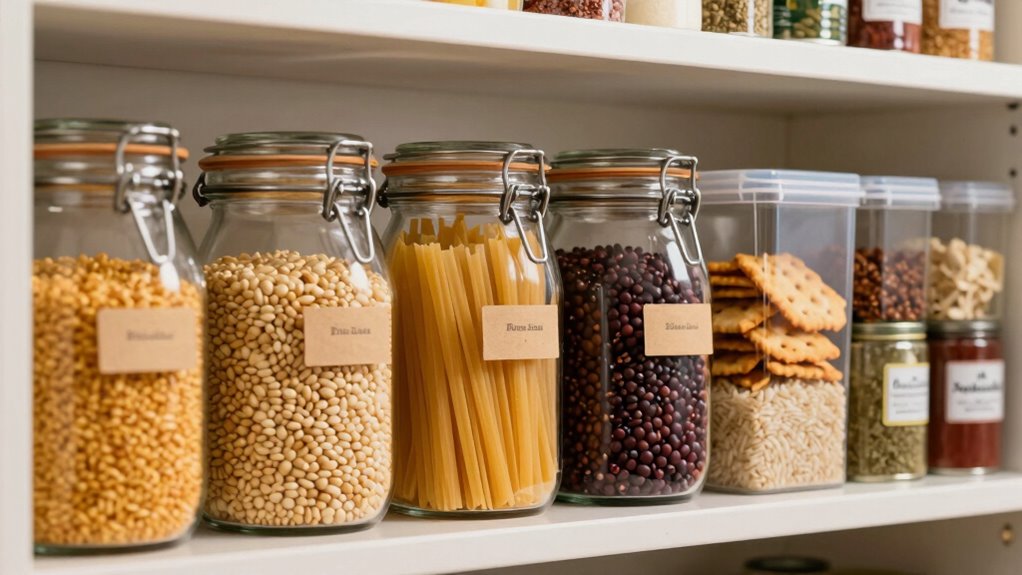
Pantry staples can last for months or even years when stored correctly, but knowing their ideal shelf lives helps you prevent waste and ensure freshness. Proper pantry rotation is key; place newer items behind older ones to manage staple expiration effectively. Understanding these storage times allows you to use products before they spoil, saving money and reducing waste.
Proper storage and rotation of pantry staples prevent waste and keep ingredients fresh longer.
Consider these guidelines:
- Dry pasta: up to 2 years
- Rice: 1-2 years
- Canned goods: 1-5 years
- Spices: 1-3 years
- Flour: 6-12 months
Storing staples in airtight containers and cool, dark environments extends their freshness. Keeping track of staple expiration dates and practicing good pantry rotation keeps your supplies fresh and safe to use.
How to Recognize Food Spoilage and When to Toss Food?

Ever wonder how to tell if food has gone bad? Recognizing spoilage indicators is key to maintaining food safety. Look for visual signs like mold, discoloration, or sliminess, which often indicate bacterial growth. Smell is also a reliable indicator—offensive or sour odors suggest fermentation or spoilage.
Texture changes, such as a mushy or sticky surface, can signal deterioration. Pay attention to expiration dates, but remember they’re guidelines, not absolutes. If food looks, smells, or feels different from when you bought it, it’s safest to toss it.
Following these spoilage indicators helps prevent foodborne illnesses and keeps your meals safe. When in doubt, err on the side of caution—discard any food that shows signs of spoilage to protect your health.
Tips for Proper Food Storage to Extend Freshness
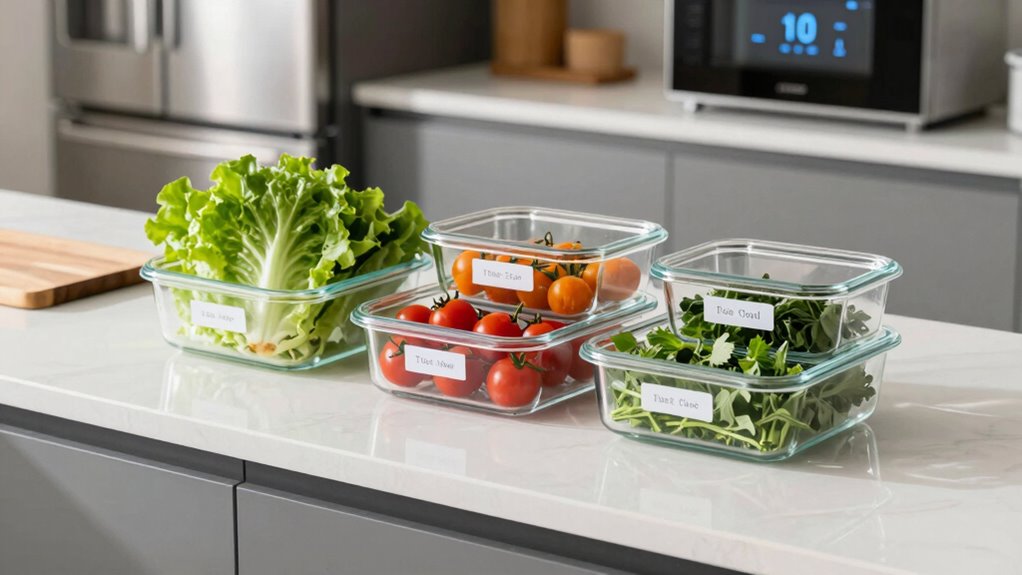
To keep your food fresh longer, proper storage techniques are essential. Using the right food storage containers helps prevent spoilage and maintain quality.
Keep your refrigerator at the correct temperature—ideally below 40°F—to slow bacterial growth. Ascertain containers are airtight to reduce moisture loss and prevent odors from spreading. Label and date your items to track freshness effectively.
Store perishable foods in the coldest part of your fridge, away from the door. For fruits and vegetables, use breathable storage options to extend shelf life. Regularly clean your storage areas to avoid cross-contamination.
- Choose high-quality, airtight food storage containers
- Maintain consistent temperature control in your fridge and freezer
- Use clear containers for easy visibility of contents
- Keep raw meats separate from ready-to-eat foods
- Practice proper layout to optimize airflow and cooling
Simple Rules to Reduce Food Waste and Save Money
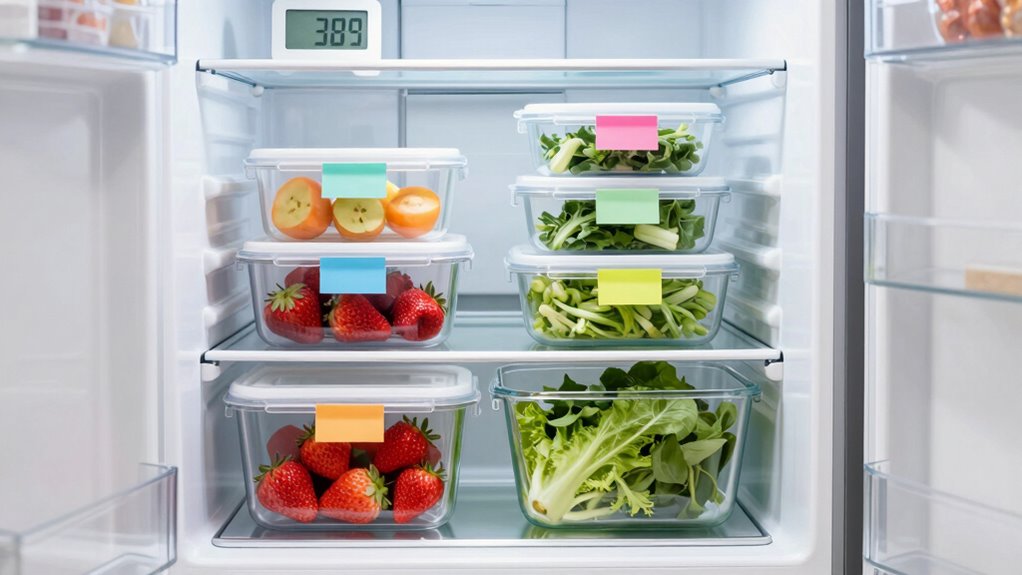
Reducing food waste not only saves you money but also helps protect the environment. One simple rule is practicing portion control; by serving just what you need, you minimize leftovers that might spoil.
Meal planning also plays a vital role—by planning your weekly meals, you buy only what’s necessary, reducing impulse purchases and excess food. Use your planned menu to create shopping lists, which helps prevent buying items you won’t use before they expire.
Store leftovers properly and label them with dates to guarantee you consume them on time. These small changes make a big difference, helping you cut costs and reduce waste.
Stick to these straightforward rules, and you’ll enjoy fresher food, more savings, and less environmental impact.
How to Organize Your Food Storage for Easy Tracking

Organizing your food storage system makes it much easier to keep track of what you have and when it expires. To streamline this process, consider integrating effective labeling techniques and dedicated zones for meal prep.
Use clear, waterproof labels that include the date of storage and expiration. Arrange items by category—dairy, vegetables, meats—to quickly locate what you need.
Implement a system for rotating stock, like “first in, first out.” Keep frequently used items at eye level for easy access.
Dedicate specific containers or bins for meal prep ingredients to simplify cooking and reduce waste. Regularly audit your storage to discard expired items and update labels.
This organized approach saves time, minimizes food waste, and ensures you use ingredients at their freshest.
Frequently Asked Questions
Can You Freeze Leftovers Indefinitely Without Quality Loss?
You can’t freeze leftovers indefinitely without quality loss. Food safety myths suggest that freezing stops spoilage, but over time, texture and flavor deteriorate.
Proper storage container types, like airtight and freezer-safe containers, help preserve quality longer. However, even with ideal containers, leftovers can develop freezer burn or lose taste after a few months.
For best results, consume leftovers within recommended storage times to guarantee safety and flavor.
How Does Packaging Affect Food Storage Duration?
Think of packaging types as your food’s armor, protecting it like a knight in shining armor. Proper packaging enhances food preservation by preventing air, moisture, and bacteria from invading.
Vacuum-sealed bags, airtight containers, and foil wraps create a barrier that extends freshness and shelf life. Without this armor, food is vulnerable to spoilage, so choosing the right packaging is key to keeping your food safe and delicious longer.
Are There Differences in Storage Times for Organic Versus Conventional Foods?
Organic foods often have shorter storage times compared to conventional standards due to fewer preservatives and additives. You should consume organic products sooner to enjoy their freshness and quality.
Keep in mind, organic differences mean you might need to be more attentive to expiration dates and storage conditions. Proper refrigeration and timely use are essential, especially for organic items, to prevent spoilage and maximize their quality.
What Are Signs of Bacterial Growth in Stored Foods?
You’ll notice signs of bacterial growth in stored foods through mold development and a slimy texture. Mold appears as fuzzy or discolored spots, often green, black, or white.
The food may also feel sticky or slimy, indicating bacteria and spoilage. If you see these signs, it’s best to discard the food to avoid health risks.
Always check for unusual odors, colors, and textures before consuming stored foods.
How Do Altitude and Temperature Impact Food Shelf Life?
Altitude effects and temperature influence food shelf life greatly. At higher altitudes, lower air pressure can cause certain foods to spoil faster.
Meanwhile, cooler temperatures slow bacterial growth, extending freshness. Conversely, warmer temperatures accelerate spoilage, reducing storage time.
You should always consider both altitude effects and temperature influence when storing food, adjusting your storage methods accordingly to prevent spoilage and ensure food safety over time.
Conclusion
By mastering these simple storage rules, you’re the hero of your kitchen, saving money and preventing waste. Think of your fridge and pantry as your food’s best allies—keeping them fresh and safe is within your control. When you pay attention to storage times and spoilage signs, you’re not just avoiding waste; you’re making a smart choice for your health and wallet. Isn’t it time you became the master of your food’s fate?