
To master laundry labels, start by recognizing common symbols: a bucket for washing, a triangle for bleaching, and a circle for dry cleaning. Check temperature icons and cycle symbols to pick the right settings, and pay attention to drying and ironing icons for proper care. Special labels like hand wash or no machine wash warn you to be gentle. Keep learning these symbols, and you’ll handle laundry like a pro in no time.
Key Takeaways
- Familiarize yourself with common laundry symbols for washing, bleaching, drying, and ironing to understand proper care instructions.
- Always check temperature and cycle icons to select appropriate settings based on fabric type and soil level.
- Pay attention to drying symbols, including heat levels and drying methods, to prevent damage.
- Interpret special care symbols like hand wash, dry clean, or no machine wash to handle delicate fabrics correctly.
- Re-examine labels for additional instructions, and when unclear, opt for gentle or alternative cleaning methods to protect garments.
What Do Laundry Labels Tell You About Fabric Care?
Laundry labels provide essential information about how to care for your fabrics properly. They reveal details like fiber content, which helps you understand the material’s durability and how it reacts to cleaning methods. Knowing the fiber content also guides you in selecting the right temperature and washing cycle to prevent damage. Additionally, labels often mention fabric dyeing details, indicating whether colors may bleed or fade. This info keeps your clothes looking fresh and vibrant longer. For example, natural fibers like cotton or silk need gentler care, while synthetic fibers such as polyester are more resilient. Paying attention to fabric composition can help you choose the most suitable cleaning approach for each garment. Understanding laundry symbols can further help you interpret how to handle each item correctly. Recognizing the importance of proper fabric care labels helps maintain the quality and longevity of your wardrobe, especially when selecting clothing with the right dog sweater styles for festive occasions.
How to Recognize and Understand Common Laundry Symbols
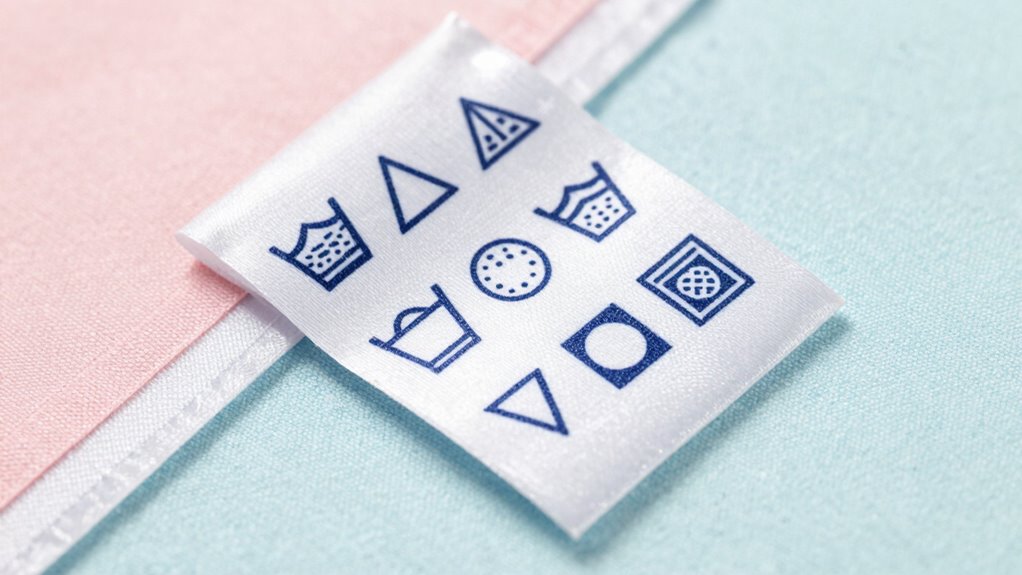
Have you ever looked at a laundry label and wondered what all those symbols mean? Recognizing common laundry symbols helps you care for your clothes properly. Symbols like a bucket with water indicate washing instructions, while a triangle relates to bleaching. Pay attention to fabric composition icons, which show if the fabric is delicate or sturdy, guiding you on handling it gently or more firmly. Understanding these symbols ensures you follow the right care methods, preventing damage. Familiarize yourself with the basic icons to quickly identify whether your clothing needs delicate handling, specific washing cycles, or special treatments. Mastering these symbols makes laundry day more efficient and helps your clothes last longer. Additionally, knowing how to interpret laundry symbols can prevent costly mistakes and extend the lifespan of your wardrobe. Incorporating knowledge about water-resistant fabrics can also help you choose proper cleaning methods for technical or outdoor clothing. Recognizing fabric care symbols can further assist you in selecting suitable products and avoiding fabric damage during washing. Being aware of fabric durability indicators can guide you in choosing appropriate washing and drying settings to preserve your clothing’s quality.
What Do Washing Temperature and Cycle Icons Mean?

Understanding washing temperature and cycle icons helps you choose the right settings for your clothes. You’ll learn to interpret the symbols that indicate water temperature and specific wash cycles. This knowledge guarantees your laundry gets cleaned effectively without damage. Recognizing cycle options allows you to customize your wash based on fabric type and soil level, ensuring optimal results. Additionally, familiarizing yourself with styling product differences can help you select the best products for maintaining your hair’s health and style. Being aware of affiliate disclosures ensures transparency in your shopping choices, which can influence the products you select for laundry or hair care. Knowing about energy-efficient features can further help you reduce both costs and environmental impact during laundry. Understanding washing machine labels can also assist you in selecting appliances that offer better efficiency and performance.
Interpreting Temperature Settings
Washing machine temperature settings and cycle icons are essential for ensuring your clothes are cleaned properly without damage. Choosing the right temperature helps protect fabric durability and color preservation. High temperatures (usually 60°C or above) are ideal for whites and heavily soiled items, killing germs and removing stains. Lower temperatures (30°C to 40°C) are gentle, preserving colors and delicate fabrics. Many machines display icons like a tub with water levels or numbers indicating specific temperatures. Always match the icon or number to the fabric type and care label instructions. Using the correct temperature prevents shrinking, fading, and wear. Additionally, understanding Lifevest Advisors can be important when considering the longevity of your laundry area’s environment, ensuring it remains clean and well-maintained. Proper temperature selection also aligns with philosophical insights on authenticity and existence, encouraging mindful choices that reflect care for your clothing and environment. Remember, hotter isn’t always better—select the right setting to keep your clothes vibrant and intact while achieving a thorough clean.
Recognizing Cycle Icons
Cycle icons on your washing machine provide quick visual cues about the appropriate settings for each load. Recognizing these icons helps you select the right cycle based on fabric composition and colorfastness. For delicate fabrics like silk or wool, look for icons with a feather or hand symbol, indicating gentle washing. Heavily soiled items or sturdy fabrics like towels may show a tub with water and a higher temperature, often represented by a number or heat waves. Bright or dark-colored clothes should be washed on gentle or cold cycles to prevent fading and preserve colorfastness. Understanding these icons guarantees you choose the correct cycle, protecting fabrics from damage and maintaining their appearance. Properly interpreting cycle icons keeps your laundry looking fresh and your clothes lasting longer. Additionally, paying attention to piercing healing times can help you avoid exposing healing piercings to water or bacteria during laundry day, ensuring a smooth healing process. Being aware of laundry detergent types can also influence which cycle is best, especially for sensitive or specialized fabrics. Using the appropriate cycle can also reduce energy consumption, which helps save on utility bills and is better for the environment. Recognizing cycle icon functions can give you insights into how different settings cater to specific fabric care needs and laundry challenges, making your laundry routine more effective.
When and How to Dry Clothes: Deciphering Drying Symbols
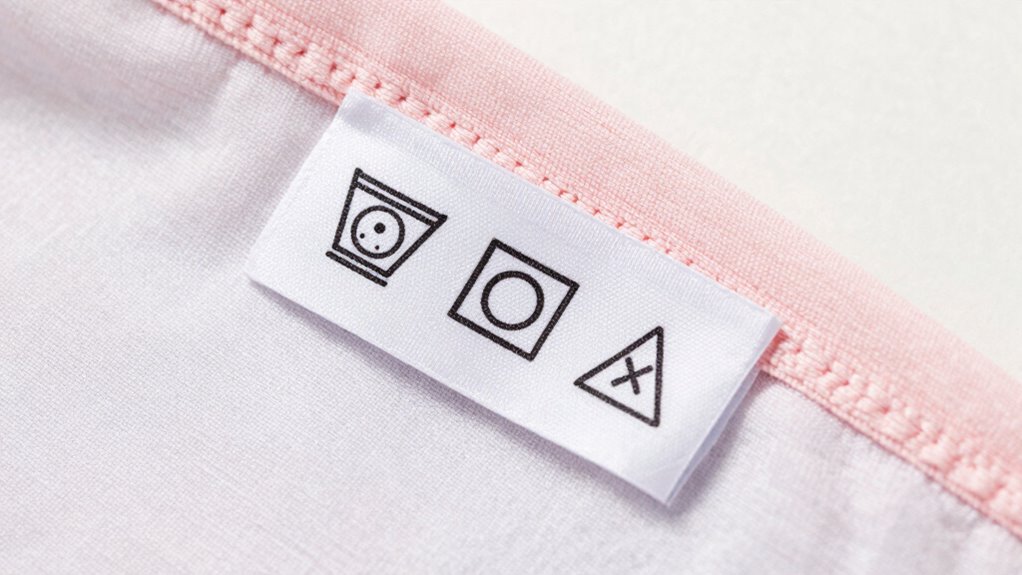
Deciphering drying symbols on laundry labels helps you choose the right method to protect your clothes and save time. Understanding these symbols guarantees you don’t damage delicate fabrics or cause colors to bleed during drying. For example, a tumble dry icon with a specific dot indicates the heat level, which is essential for delicate fabrics or those prone to dye transfer. Always consider your laundry sorting: separating items by fabric dyeing properties and drying requirements prevents color bleeding and fabric damage. If the symbol shows a line beneath the tumble dryer, it means tumble drying is gentle, while a circle inside indicates air drying only. Following these symbols helps maintain your clothes’ quality and color vibrancy, making laundry less of a chore.
How to Read Bleach and Stain Removal Icons

Ever wonder what the bleach and stain removal icons on your laundry label really mean? These symbols guide you on bleach safety and stain removal techniques. A triangle indicates whether you can use bleach—an empty triangle means yes, filled or crossed out means no. A square with a circle inside shows tumble drying instructions, but look for additional icons for stain removal. For stain removal, a hand or spot icon suggests pre-treating, while an “X” warns against certain products. Understanding these symbols can improve your laundry results and help avoid fabric damage, especially as content relevance plays a crucial role in maintaining fabric quality.
What Do Ironing Symbols Say About Wrinkle Removal?
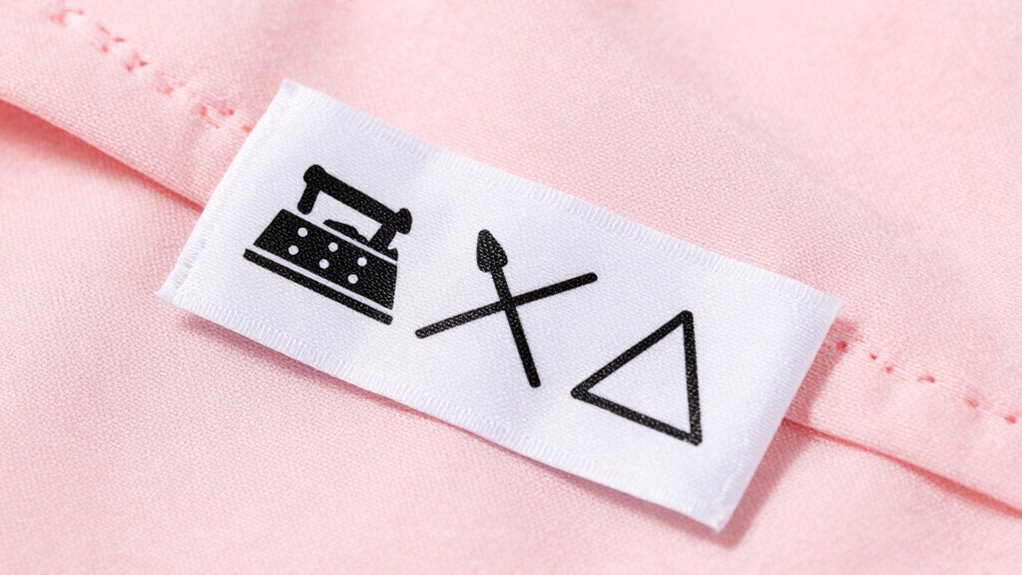
Have you ever looked at ironing symbols and wondered what they reveal about wrinkle removal? These symbols provide quick guidance on how to handle your clothing to minimize wrinkles. For example, a single dot on the iron indicates a low iron temperature, ideal for delicate fabrics that need wrinkle prevention without damage. Two dots mean medium heat, suitable for most fabrics, while three dots suggest high heat for stubborn wrinkles on sturdy materials. Using the correct iron temperature helps prevent scorching or shine marks, ensuring smooth, wrinkle-free results. Following these symbols guarantees you use the right amount of heat, making wrinkle removal more effective and reducing the risk of fabric damage. Paying attention to ironing symbols helps you achieve professional-looking results safely and efficiently.
Special Care Symbols: Hand Wash, Dry Clean, and More

You’ll want to recognize the hand wash symbol to know when gentle cleaning is necessary. Identifying dry clean indicators helps you determine if professional cleaning is required. Understanding these symbols ensures you care for your clothes properly and avoid damage.
Recognizing Hand Wash Symbols
Recognizing hand wash symbols on laundry labels is essential for properly caring for delicate fabrics. These symbols indicate when gentle washing is necessary to maintain fabric softness and color preservation. Look for a simple basin icon with or without a hand inside—this signals hand washing requirements. Keep these tips in mind:
- Hand wash symbols often feature a basin with a hand, indicating delicate handling
- No machine wash symbols mean you should avoid regular washing cycles
- Temperature limits may be specified to protect fabric integrity
- Some symbols include a line underneath, indicating gentle or reduced agitation
- When unsure, opt for hand washing or dry cleaning to prevent damage
Understanding these symbols helps you care for your clothes properly, ensuring they stay soft and vibrant longer.
Identifying Dry Clean Indicators
Are you unsure how to identify dry clean indicators on your laundry labels? Fabric labels use specific symbols to communicate dry cleaning requirements. Look for a circle, which signifies dry cleaning. A plain circle means dry cleaning is allowed, while a circle with a letter inside indicates the recommended solvent—like ‘P’ for perchloroethylene or ‘F’ for hydrocarbons. If the circle has a line underneath, it suggests gentle cleaning. A crossed-out circle means do not dry clean. These symbol meanings help you decide whether your garment needs professional cleaning or can be safely washed at home. Recognizing these symbols ensures you follow proper care instructions, preventing damage and prolonging your clothes’ lifespan. Familiarize yourself with fabric labels to read dry clean indicators confidently.
Tips for Reading Labels on Delicate and Specialty Fabrics

Ever wonder how to properly care for delicate or specialty fabrics? Reading labels on these materials is key. Look for symbols indicating gentle cycles, hand washing, or dry cleaning. Remember, these fabrics often require special handling to prevent damage or color fading. When laundry sorting, separate delicate textiles from sturdier items to protect their fibers and preserve fabric dyeing. Check for instructions on water temperature—cold is usually safest. Be mindful of symbols for bleach or fabric softeners, which can harm delicate fibers. Always follow the recommended drying method—air drying is often best. Understanding these labels helps you avoid mishaps and keeps your specialty fabrics looking their best longer. Proper laundry sorting and careful reading ensure your delicate pieces stay beautiful.
Troubleshooting Confusing Laundry Labels: What Should You Do?

When laundry labels are confusing or unclear, your best move is to take a step back and carefully examine all the symbols and instructions again. Start by understanding label jargon—sometimes, words or symbols aren’t as straightforward as they seem. Focus on deciphering symbol meanings, which often represent specific washing, drying, or ironing instructions. If a symbol isn’t clear, consult a laundry symbol guide or look for similar images online. Remember, many symbols are universal, but some brands may use variations. When in doubt, err on the side of caution: hand wash delicate items or dry flat to avoid damage. Taking these steps helps you interpret confusing labels correctly and keeps your clothes in great shape.
Frequently Asked Questions
How Often Should I Check Laundry Labels for New Clothing?
You should check laundry labels on new clothing before every wash to protect garment durability and guarantee proper care. This habit helps you follow stain removal tips accurately and avoid damage. Regularly reviewing labels allows you to understand specific instructions, like water temperature and drying methods. By making it a routine, you prolong your clothes’ lifespan and keep them looking their best, saving you time and money in the long run.
Can Laundry Symbols Vary by Country or Brand?
Think of laundry symbols as international travelers—they can change depending on standards and brands. Yes, symbols vary by country due to different international standards, like ISO or ASTM, and brand variations can add unique icons. When traveling or shopping for clothes, you might notice slight differences in symbols. Always check the legend on the label to confirm you’re following proper care instructions, regardless of where the garment comes from.
What Should I Do if a Label’s Symbols Are Faded or Unclear?
If a label’s symbols are faded or unclear, don’t guess—try to identify the fabric type first. You can then use substitute cleaning methods suited for delicate or easily deteriorated fabrics to prevent damage. For example, hand wash or air dry. When in doubt, consult the care instructions online or contact the manufacturer. This helps avoid fabric deterioration and ensures your clothes stay in good shape.
Are There Eco-Friendly Laundry Symbols I Should Look For?
You should look for eco-friendly symbols on laundry labels, which often indicate organic fabric care or environmentally conscious practices. These eco-friendly symbols typically include icons like a leaf, a water droplet, or a recycling sign, showing the garment’s eco credentials. By recognizing these symbols, you can select laundry methods that support sustainable living, helping you care for your clothes while protecting the environment through organic fabric care practices.
How Do I Handle Clothing With Conflicting Care Symbols?
When fabric compatibility clashes with conflicting care symbols, don’t panic. First, interpret each symbol carefully; sometimes, they suggest different methods. To handle this, prioritize the most delicate method or test a small, hidden area first. If unsure, opt for gentle hand washing or air drying. Remember, understanding symbol interpretation helps you make safe decisions, ensuring your clothes stay in great shape without damage.
Conclusion
Next time you’re sorting laundry, take a moment to read those labels carefully. It’s like discovering a secret code that keeps your clothes looking their best. You might find yourself effortlessly avoiding mishaps—like shrinking a favorite sweater or ruining delicate fabrics. With a little practice, understanding laundry symbols becomes second nature. Before you know it, you’ll be confidently handling your laundry, and maybe even enjoying the quiet satisfaction of mastering this everyday skill.