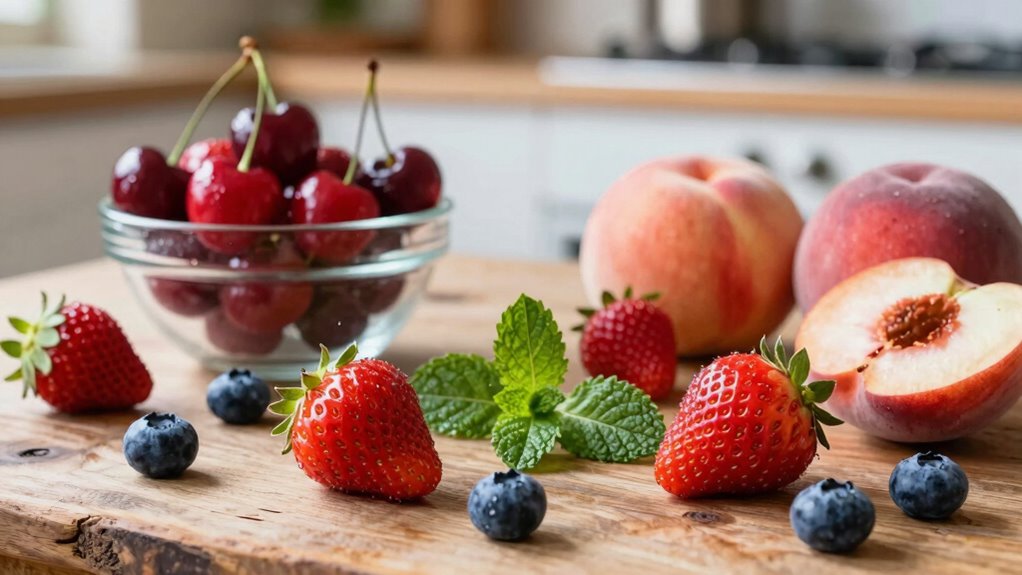
To keep fruit from spoiling quickly, store it in a cool, humid environment, ideally between 32–40°F, and keep ethylene-sensitive fruits separate to slow ripening. Use breathable containers, avoid washing before storage, and handle gently to prevent bruising. Regularly check for signs of overripe or moldy fruit and remove these promptly. For more tips on extending your fruit’s freshness, continue exploring effective storage and handling methods.
Key Takeaways
- Store fruits at optimal temperatures (30–40°F for apples, 32–36°F for berries) to slow enzymatic and microbial activity.
- Keep fruits dry and in breathable containers to prevent mold and moisture buildup.
- Separate ethylene-producing fruits from sensitive varieties and use ethylene inhibitors to delay ripening.
- Handle fruits gently to avoid bruising, which accelerates spoilage.
- Regularly inspect and remove overripe or rotten fruit to prevent spoilage spread.
Why Does Fruit Spoil So Fast: And How Can You Keep It Fresh Longer?
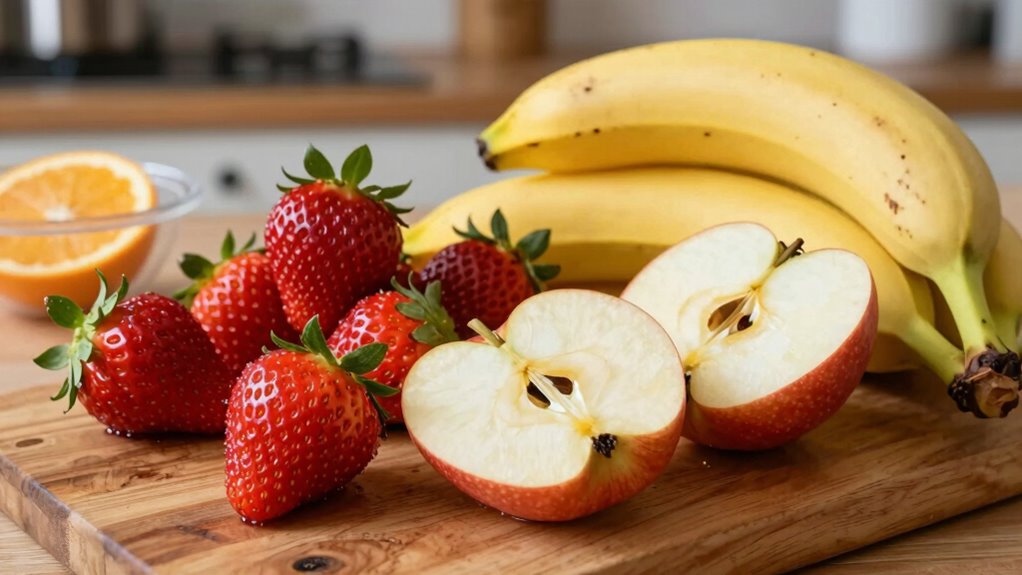
Fruit spoils quickly because natural enzymes, bacteria, and mold start breaking down its tissues soon after harvest. A key factor is ethylene production, a plant hormone that accelerates ripening and spoilage. When fruit produces ethylene, it triggers ripening enzymes that soften the fruit and increase sugar content, making it more attractive to microbes. This process happens rapidly once the fruit is removed from its plant, especially if conditions are warm or humid. To slow spoilage, you can control ethylene exposure by storing ethylene-sensitive fruits separately from those that produce high levels of it. Keeping the fruit cool and limiting its exposure to ethylene slows down the activity of ripening enzymes, helping you keep your fruit fresh longer. Energy-efficient storage solutions can further extend freshness by maintaining consistent temperatures and reducing spoilage caused by uneven conditions. Additionally, proper refrigeration techniques and moisture control can significantly delay spoilage and preserve fruit quality. Understanding ethylene management is essential for maintaining fruit freshness over time, and using proper storage methods can make a notable difference in extending the shelf life. Implementing controlled atmospheres can also help regulate humidity and gas levels, further slowing spoilage processes.
Best Storage Methods for Different Types of Fruit

To keep your fruit fresh longer, you need to use the right storage methods for each type. For example, refrigerate berries properly to prevent mold, keep apples cold and dry to extend their crispness, and store citrus in a well-ventilated area to maintain their juiciness. Applying these specific techniques helps your fruit stay delicious and lasts much longer. Utilizing proper storage techniques can further enhance freshness by reducing spoilage risks. Additionally, understanding food preservation strategies allows you to maximize fruit longevity and minimize waste. Moreover, avoiding common scams related to investment safety can ensure your efforts in food preservation are secure and effective. Incorporating storage environment control can also help regulate humidity and temperature, further protecting your produce from spoilage.
Refrigerate Berries Properly
Have you ever wondered how to keep berries fresh longer in the fridge? Proper refrigeration slows down fruit ripening and reduces spoilage bacteria, which cause berries to spoil quickly. Keep berries dry by storing them in breathable containers or lightly lined with paper towels to absorb excess moisture. Avoid washing berries before storing, as added moisture promotes bacteria growth. Instead, wash them just before eating. Place berries in the main part of your fridge, ideally at a temperature around 32–36°F. Keep them in a single layer when possible to prevent crushing. Proper storage methods can significantly prolong their freshness. Additionally, energy-efficient refrigeration models help reduce maintenance costs of refrigeration equipment, which are often underestimated, so choosing energy-efficient models can help reduce ongoing expenses. Proper temperature control is essential for maintaining optimal fruit freshness and preventing spoilage. To further preserve berries, consider using humidity control features available in some refrigerators, which can help optimize moisture levels for fruit storage. By following these steps, you’ll minimize spoilage bacteria activity and extend the freshness of your berries, ensuring they stay delicious for longer.
Keep Apples Cold and Dry
Wondering how to keep apples fresh longer? The key is to store them cold and dry. Keep your apples in a refrigerator’s crisper drawer, ideally in a storage container that allows some airflow. This prevents excess moisture, which can cause spoilage. Before storing, consider applying a fruit wax to the apples’ surface; this forms a protective barrier that slows down moisture loss and keeps them crisp longer. Avoid washing apples before storage, as moisture encourages decay. Instead, wash them just before eating. Keeping apples cold and dry minimizes ethylene buildup, which can hasten ripening and spoilage. Proper storage methods are essential for extending freshness and preventing spoilage. Regularly check your stored apples and remove any that show signs of rot to prevent spreading. Additionally, controlling the storage environment by maintaining consistent temperature and humidity levels can significantly prolong fruit freshness. With these tips, your apples stay fresh and crunchy for longer.
Store Citrus in Ventilated Area
After ensuring your apples stay fresh in the fridge, it’s equally important to store citrus properly to maintain their juiciness and flavor. Citrus preservation relies on ventilated storage, which helps prevent moisture buildup that can lead to mold and spoilage. Keep oranges, lemons, limes, and grapefruits in a well-ventilated container or basket, rather than sealed plastic bags. Proper airflow reduces humidity around the fruit, slowing down deterioration. Avoid stacking citrus tightly or storing them in confined spaces, as this traps moisture and accelerates spoilage. Instead, place them in a cool, dry area with good air circulation. This method keeps your citrus fresh longer while preserving their flavor and texture. Ventilated storage is a simple, effective way to extend the shelf life of your citrus fruits. Using ventilated storage methods is essential for maintaining optimal freshness and preventing spoilage. Additionally, choosing appropriate storage conditions helps ensure your citrus retains its quality over time. To further improve freshness, consider monitoring humidity levels in storage areas. Proper temperature control also plays a vital role in keeping citrus at their best.
How Temperature and Humidity Impact Fruit Freshness
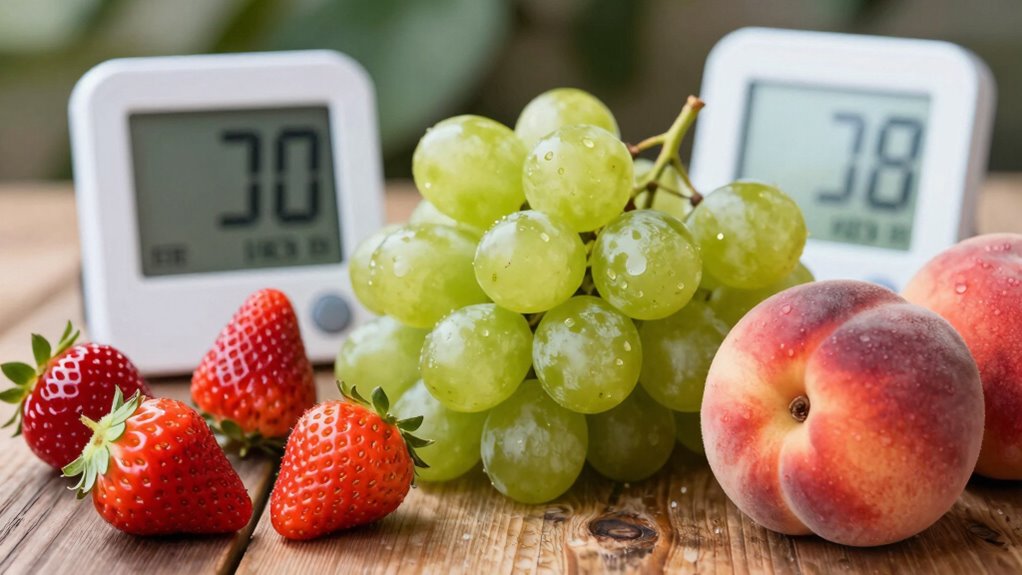
Temperature directly influences how quickly fruit ripens and spoils, so keeping it cool slows down these processes. Pomade Vs Putty Vs Styling Cream Humidity levels affect spoilage too—too much moisture encourages mold and rot. Understanding how both factors work helps you better preserve your fruit’s freshness. Additionally, maintaining optimal storage conditions can significantly extend fruit shelf life by balancing temperature and humidity effectively. Using appropriate storage tools and techniques ensures that your fruit stays fresh longer by creating a stable environment. Proper temperature control is essential to prevent rapid deterioration and maintain fruit quality over time.
Temperature’s Effect on Ripening
Since warmth accelerates ripening, storing fruit at the right temperature is essential for keeping it fresh longer. Higher temperatures boost ethylene buildup, the hormone responsible for ripening, causing fruit to spoil faster. Cooler storage slows this process, maintaining freshness and flavor. For example, apples and pears ripen slowly in the fridge, while bananas and avocados need a little warmth to ripen properly. Keep in mind that overly cold temperatures can cause chilling injury, damaging delicate fruits. Use this table as a quick guide:
| Fruit Type | Ideal Storage Temp | Ripening Notes |
|---|---|---|
| Apples, Pears | 30-40°F | Slow ripening, long shelf life |
| Berries | 32-36°F | Keep dry, avoid ethylene exposure |
| Bananas, Avocados | 55-60°F | Ripen faster, monitor closely |
Adjust storage to control ripening hormones and prolong freshness.
Humidity’s Role in Spoilage
Maintaining the right humidity levels is essential for preventing fruit spoilage, as both excessive moisture and dryness can cause damage. Proper humidity control helps keep fruit fresh by reducing dehydration and inhibiting mold growth. Too much moisture encourages mold and rot, while too little causes dehydration and shriveling. To manage moisture effectively, store fruit in breathable containers or perforated bags that allow airflow and moisture regulation. Keep humidity levels consistent by avoiding drastic fluctuations, which can accelerate spoilage. Implementing good moisture management techniques ensures your fruit stays fresh longer and minimizes waste. By paying attention to humidity’s role in spoilage, you can better preserve the quality and flavor of your fruit, extending its shelf life and reducing spoilage risks.
Perfect Ripening and Handling Tips to Extend Shelf Life
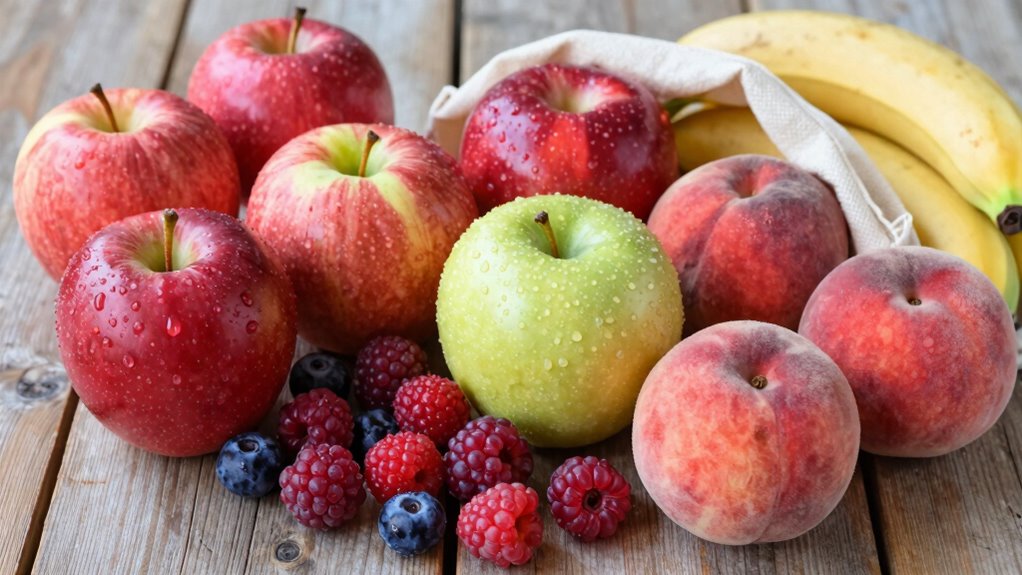
To guarantee your fruit ripens perfectly and stays fresh longer, proper handling is essential. Controlling ethylene production helps manage ripening speed. Keep ethylene-producing fruits separate from others to slow spoilage, or use ethylene inhibitors to delay ripening. Store delicate fruits in cool, well-ventilated areas, and handle them gently to avoid bruising. Check your fruit regularly and remove any that show signs of over-ripening to prevent faster decay. Use this table to guide your ripening process:
| Tip | Benefit |
|---|---|
| Store ethylene producers separately | Delays ripening of nearby fruits |
| Use ethylene inhibitors | Slows down ripening, extends shelf life |
| Handle gently | Prevents bruising and spoilage |
| Keep in cool environment | Slows natural ripening process |
| Regular inspection | Removes overripe fruit, prevents spread |
Packaging and Containers That Help Keep Fruit Fresh

Choosing the right packaging and containers can considerably extend the freshness of your fruit. Use breathable containers, like perforated plastic or mesh bags, to allow air circulation and prevent moisture buildup that speeds spoilage. When storing fruits, consider labeling them with organic labels if they’re organic; this helps you identify the best storage methods for different types. Recycling bins are useful for eco-friendly packaging options, so opt for containers made from recyclable materials whenever possible. Proper packaging minimizes exposure to ethylene gases and contaminants, slowing ripening and decay. Avoid airtight containers for delicate fruits like berries, which need airflow. By selecting appropriate containers and being mindful of labeling and recycling options, you help keep your fruit fresher longer and reduce waste.
Common Mistakes That Speed Up Spoilage: And How to Avoid Them
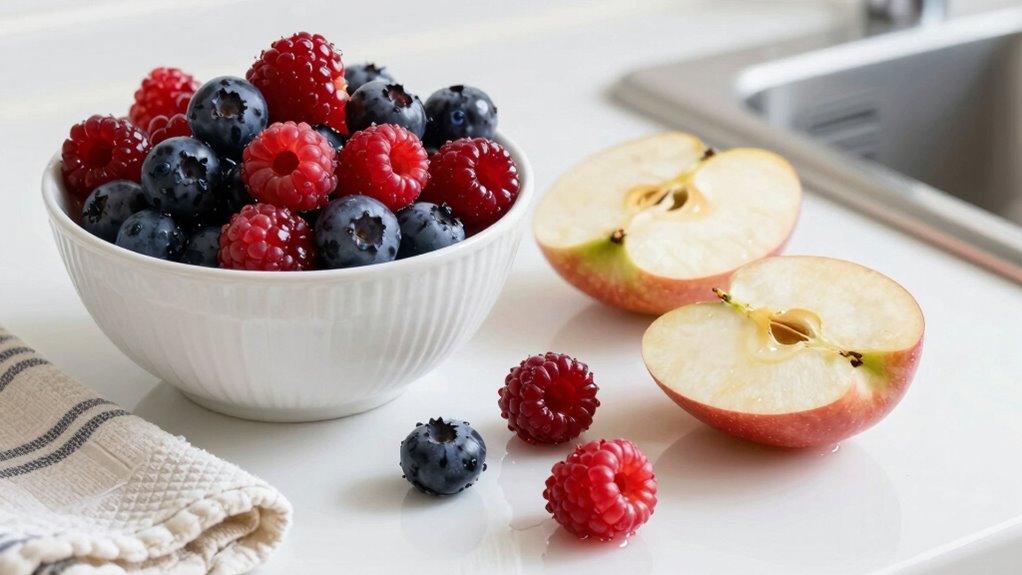
Using the wrong storage methods can considerably speed up fruit spoilage, undoing any benefits of proper packaging. Avoid leaving fruit at room temperature too long, which accelerates overripe fruit turning bad. Improper washing can introduce bacteria or moisture that promotes mold growth. For example, washing with cold water before storing may cause excess moisture, leading to quicker spoilage. To prevent this, dry fruit thoroughly before refrigerating. Here’s a quick guide:
| Mistake | Effect | How to Avoid |
|---|---|---|
| Overripe fruit kept too long | Spoils faster, spreads mold | Use ripe fruit promptly |
| Improper washing | Introduces bacteria, moisture | Wash gently, dry completely |
| Storing in warm areas | Speeds up decay | Keep in a cool, dark place |
| Using unsuitable containers | Traps moisture, causes rot | Use breathable containers |
Avoid these pitfalls to keep your fruit fresher longer.
How to Tell If Your Fruit Is Still Good or Should Be Discarded

Knowing when fruit is still good to eat can save you from waste and potential health risks. To tell if your fruit is still fresh or should be discarded, look for spoilage indicators linked to fruit ripening. Here are four key signs:
- Color Changes: If your fruit has turned dull or brown, it’s likely overripe or spoiled.
- Texture: Soft spots or mushiness indicate overripeness or decay.
- Smell: A sour or off-putting odor signals spoilage.
- Appearance: Mold or unusual spots are clear signs to throw it out.
Frequently Asked Questions
Can Freezing Fruit Extend Its Shelf Life Effectively?
Freezing fruit definitely extends its shelf life effectively. Use proper freezing methods, like washing and drying the fruit thoroughly before freezing. Store it in airtight storage containers or freezer bags to prevent freezer burn. Label the containers with the date to keep track of freshness. When you’re ready to use it, simply thaw or add directly to recipes. Freezing is a great way to keep your fruit fresh longer without losing flavor or texture.
Does Washing Fruit Before Storage Affect Its Freshness?
Washing fruit before storage is like opening a window to fresh air, but it can sometimes speed up ripening and spoilage. You might notice your fruit ripening faster if moisture remains on its surface. To keep it fresh longer, dry the fruit thoroughly and store it at the right temperature. Proper storage temperature slows down ripening, while washing can introduce excess moisture that accelerates spoilage, so wash only when you’re ready to eat.
Are There Natural Preservatives That Can Keep Fruit Fresh Longer?
Yes, natural coatings and edible preservatives can help keep your fruit fresh longer. You might try brushing fruit with beeswax or applying a light layer of natural olive oil, which creates a protective barrier. Some edible preservatives like chitosan or certain plant-based waxes also extend freshness. These options are safe, effective, and environmentally friendly, so you can enjoy your fruit without worry about quick spoilage.
How Does Ethylene Gas Influence Fruit Ripening and Spoilage?
You might think ethylene gas speeds up spoilage, but it actually plays a key role in ripening control. Ethylene impact triggers natural ripening processes, so managing its exposure helps you delay spoilage. For instance, keeping ethylene-producing fruits separate from others slows down over-ripening. By understanding how ethylene influences ripening, you can better control freshness and extend your fruit’s lifespan, making your produce last longer and stay delicious.
What Are the Signs of Hidden Mold or Bacteria on Fruit?
You should look for mold detection signs like fuzzy spots, discoloration, or powdery textures on the fruit’s surface. Bacteria signs include slimy textures, foul odors, or unusual softness. Always inspect your fruit thoroughly before eating, especially in hidden areas like stems or crevices. If you notice any mold or bacteria signs, it’s safest to discard the fruit to avoid health risks. Stay vigilant and keep your fruit fresh longer.
Conclusion
To keep your fruit fresh longer, follow proper storage tips and avoid common mistakes. Notably, some believe that storing fruit with bananas speeds up spoilage due to ethylene gas. While there’s some truth, the key is managing storage conditions—like temperature and humidity—to slow down ripening. By being mindful, you can extend your fruit’s shelf life and enjoy it at its best, reducing waste and saving money in the process.