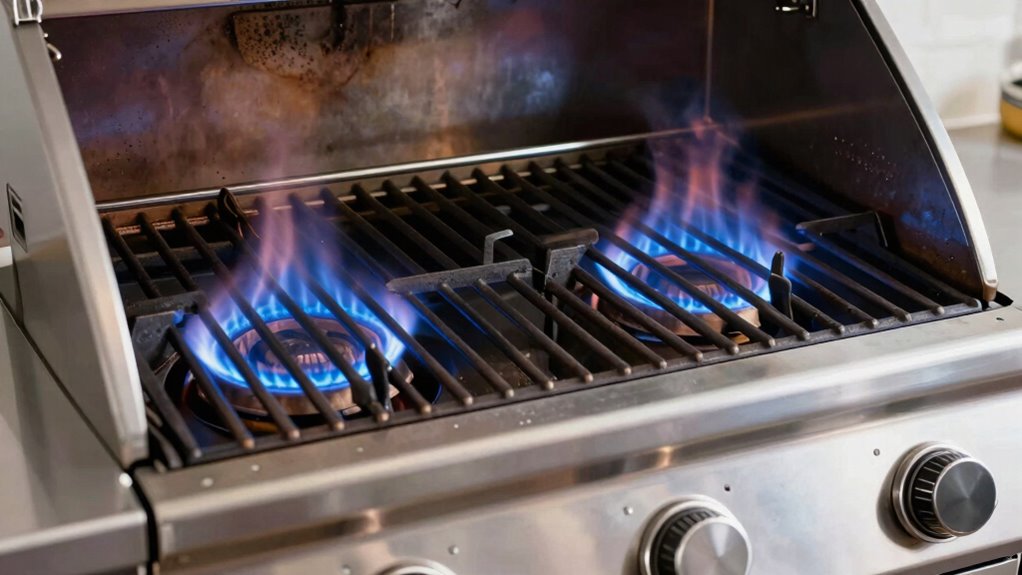
To prevent burnt food, you should set up distinct heat zones on your gas grill. Turn burners on one side to high for searing and keep the other side on low or off for indirect cooking. Preheat the grill thoroughly and monitor temperatures with a thermometer. Moving food between hot and cooler zones helps control doneness and keeps your food from burning. Keep these tips in mind, and you’ll master heat zones for perfect grilling results—if you keep exploring, you’ll discover more ways to optimize your grill setup.
Key Takeaways
- Preheat your grill thoroughly to identify hot and cool spots before creating heat zones.
- Use multiple burners at different levels to establish distinct high and low heat areas.
- Turn burners on one side only to develop a direct heat zone for searing and an indirect zone for gentle cooking.
- Monitor temperature with a grill thermometer to ensure consistent heat distribution across zones.
- Adjust airflow and burner settings during cooking to maintain proper heat zones and prevent food from burning.
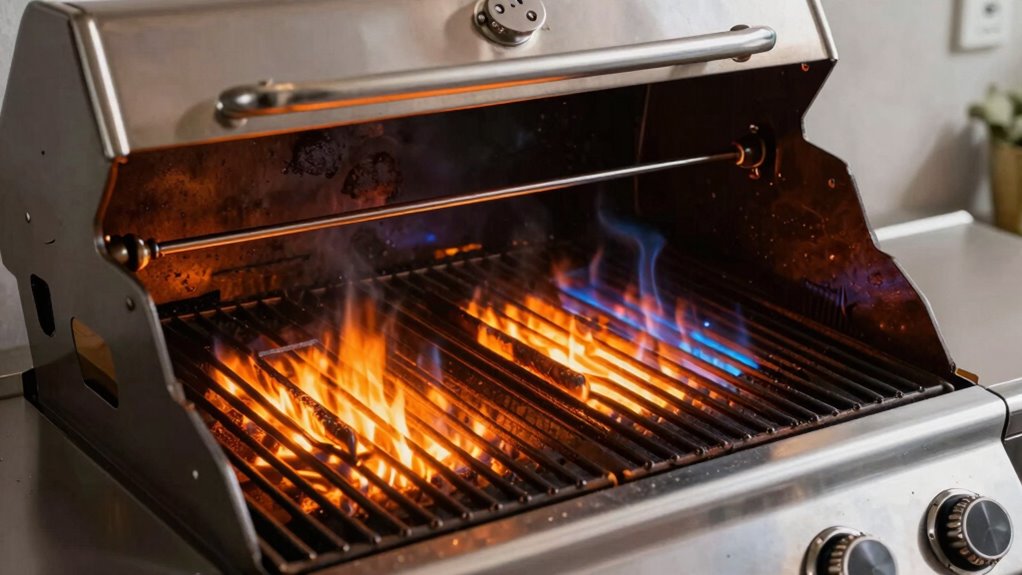
Understanding heat zones on a gas grill is essential for cooking your food evenly and efficiently. When you’re setting up your grill, proper grill zone placement is key to controlling how your food cooks and preventing those pesky burnt spots. By dividing your grill into distinct heat zones, you can manage the heat more precisely and avoid overcooking or undercooking different items. Typically, you’ll create at least two zones: a direct heat zone for searing and a indirect heat zone for slower cooking or finishing. This setup allows you to move food between zones as needed, giving you better control over the cooking process.
To establish effective heat distribution techniques, start by preheating your grill and then turning on your burners to different levels. For example, turn one side of the grill to high heat to develop a hot zone for searing steaks or burgers. On the other side, keep the burners on low or off to create a cooler zone. This strategic grill zone placement ensures that you can sear meats quickly over high heat and then move them to the cooler zone to finish cooking without burning. Using a two-zone setup is especially helpful when grilling thicker cuts of meat or delicate items that require gentle cooking.
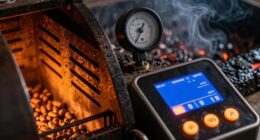
Pay attention to how heat distributes across your grill surface. Many modern gas grills come with built-in heat diffusers or heat tents that help spread heat evenly. If yours doesn’t, you can use a two-zone setup by turning burners on one side only. To monitor heat distribution, use a grill thermometer placed at different spots to identify hot and cool areas. This step helps you understand any inconsistencies in heat zones and adjust the grill zone placement accordingly. Proper heat distribution techniques involve not just setting the right zones but also managing airflow and burner adjustments throughout the cooking process. Additionally, understanding high-temperature capabilities and heat retention can help improve your overall grilling results.
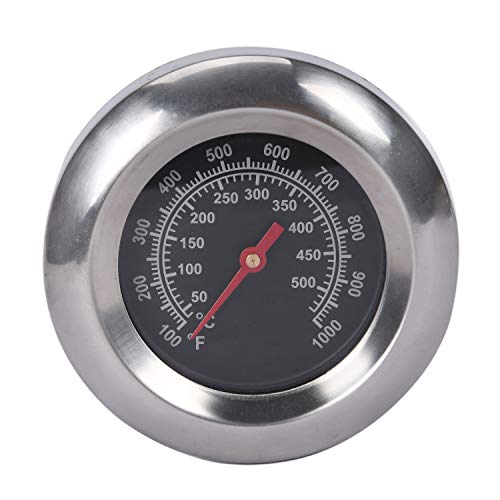
GasSaf 3" BBQ Temperature Gauge Thermometer Replacement for Master Forge, Cuisinart, Backyard, Uniflame and Other Gas Grill, Stainless Steel High Temperature Heat Indicator -100F to 1000F
Wide temperature range: 100 F-1000 F/ 50 ℃- 500 ℃(Accurate Readings). Dimensions: 3" face, 2" stem, M10 nut…
As an affiliate, we earn on qualifying purchases.
As an affiliate, we earn on qualifying purchases.
Frequently Asked Questions
How Do I Identify the Hot and Cool Zones on My Grill?
To identify hot and cool zones on your grill, start by turning on all burners and preheating it. Use a grill thermometer to check the temperature at different spots; hot zones will be considerably warmer. Zone identification helps you control grill temperature, allowing you to sear meat on high heat and cook delicate items on cooler areas. This technique prevents burnt food and ensures even cooking across your grill.
Can Heat Zones Be Adjusted During Cooking?
Yes, you can adjust heat zones during cooking. To do this, you simply manipulate the burners, turning them up or down as needed. This helps with regulating heat zones, allowing you to maintain temperature in specific areas of your grill. By maintaining temperature, you prevent burnt food and ensure even cooking. Keep an eye on your grill’s heat, making small adjustments throughout your cook for perfect results.
What Foods Are Best Suited for Each Heat Zone?
You should place delicate foods like fish and vegetables in the lower heat zone where the grill temperature is cooler, preventing burning. Thicker cuts of meat or burgers go in the hotter zone for searing. Use zone placement to control cooking speed and avoid burnt food. Adjust the heat zones as needed during cooking to keep the temperature consistent, ensuring each food type cooks perfectly without overdoing it.
How Do Wind and Weather Affect Heat Zones?
Wind interference and weather can disrupt your grill’s heat zones, making it harder to maintain consistent temperatures. When it’s windy, gusts can blow out flames or cause uneven heat distribution. To counter this, you should make weather adjustments like shielding your grill with a windbreak or adjusting burner flames to compensate for temperature fluctuations. Always monitor your grill closely in windy or rainy conditions to guarantee your food cooks evenly.
Are There Safety Tips for Managing Multiple Heat Zones?
To guarantee safe zone management on your grill, always keep a fire extinguisher nearby and never leave it unattended. Use long-handled tools to avoid burns and wear heat-resistant gloves. Make sure to turn off burners when adjusting zones and keep the lid closed to control heat. Regularly check for gas leaks, practice proper grill safety, and stay alert to prevent accidents while managing multiple heat zones.

Grills House 2-Burner Gas and Charcoal Grill Combo with Offset Smoker & Side Burner, 34,000 BTU Dual Fuel Grill, 1020 Sq. In. Cooking Area, Ideal for Outdoor Cooking, Black, ZH3005Y-SC
Gas & Charcoal Combo: The dual-fuel grill with an attached offset smoker and a side burner provides the…
As an affiliate, we earn on qualifying purchases.
As an affiliate, we earn on qualifying purchases.
Conclusion
By mastering your gas grill’s heat zones, you can cook food evenly and avoid those pesky burnt spots. Studies show that using proper heat zones can cut flare-ups by up to 30%, making your grilling experience safer and more enjoyable. So next time you fire up your grill, remember to set up those zones wisely. With just a little planning, you’ll serve perfectly cooked meals every time—delicious, consistent, and burnt-free.

Universal Adjustable Grill Heat Plates/Heat Tents/Burner Covers/Heat Deflectors/BBQ Grill Heat Shields/Grill Cover Plates/Grill Diffuser for Gas Grill, Porcelain Steel Grill Replacement Parts (4-Pack)
【DIMENSIONS】Contains FOUR grill heat plates, which has a 2-piece telescoping design. Each adjustable heat shield measures 3.75-inches wide…
As an affiliate, we earn on qualifying purchases.
As an affiliate, we earn on qualifying purchases.

2 pcs BBQ Grill Temperature Gauge, Charcoal Pit Grill Smoker Thermometer Gauge BBQ Temp Gauge
BBQ / Grill pit thermometer, safe and environmentally friendly.
As an affiliate, we earn on qualifying purchases.
As an affiliate, we earn on qualifying purchases.