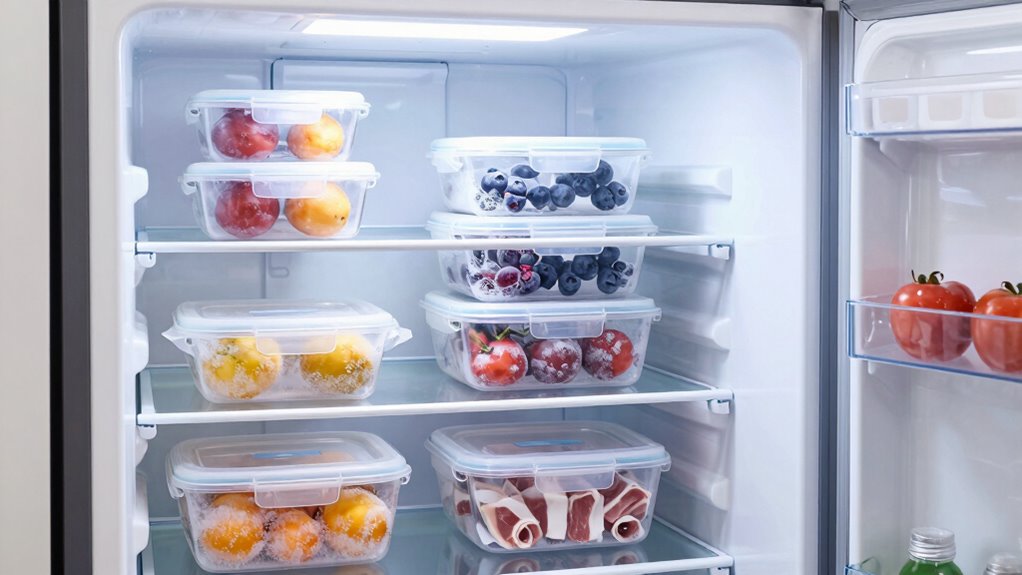

To prevent freezer burn, assure your food is properly packaged in airtight containers or freezer-specific bags, removing as much air as possible. Maintain your freezer at a steady 0°F (-18°C) to slow spoilage and dehydration. Organize your items so frequently used foods are accessible, and label everything with dates to avoid keeping items too long. Proper sealing and temperature control are key—keep learning for more tips on keeping your food fresh longer.

Prime made for students and young adults
- Fast, free delivery for dorm and study essentials
- Prime Video and Amazon Music included
- Member-only deals
Key Takeaways
- Use airtight containers or freezer-specific bags to block air contact and retain moisture.
- Remove excess air from packaging before sealing to prevent dehydration and freezer burn.
- Label and date items to prioritize timely use and avoid prolonged storage that increases freezer burn risk.
- Maintain consistent freezer temperature at 0°F (-18°C) and monitor regularly to prevent temperature fluctuations.
- Organize the freezer efficiently, keeping frequently used items accessible and avoiding overpacking to ensure proper airflow.
airtight freezer storage containers
As an affiliate, we earn on qualifying purchases.
As an affiliate, we earn on qualifying purchases.
Why Freezer Burn Happens and How to Prevent It
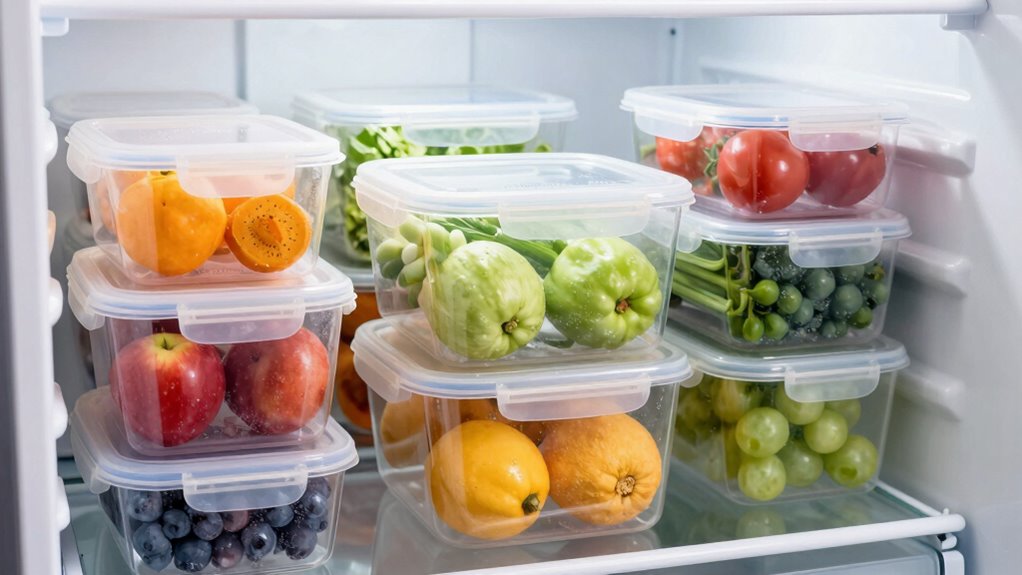
Freezer burn occurs when food is exposed to air, causing moisture to escape and form ice crystals on its surface. The primary causes of freezer burn are improper packaging or leaving food uncovered, which allows air to contact the food directly. Using airtight containers or freezer-specific bags** can significantly reduce the risk of freezer burn. This effective sealing creates a barrier against air and moisture loss, which is essential for maintaining freshness and preventing freezer burn. Dehydration damages the texture and flavor, making the food less appealing. To prevent dehydration, always wrap or seal your food tightly using airtight containers or freezer-specific bags. Remove excess air before sealing to minimize air exposure. Label your packages with dates to ensure you use items before they develop freezer burn. Proper packaging, combined with maintaining a consistent freezer temperature, helps preserve food quality by inhibiting ice crystal formation that contributes to freezer burn. Additionally, regular temperature monitoring ensures your freezer stays at an optimal setting to prevent temperature fluctuations that could lead to freezer burn. Maintaining proper air circulation** within the freezer can also help distribute cold evenly and prevent localized temperature rises that cause dehydration. Taking these steps helps preserve the quality of your frozen food for longer periods.
As an affiliate, we earn on qualifying purchases.
How Do Temperature Settings Affect Freezer Food Preservation?

Maintaining the correct temperature in your freezer is essential for preserving food quality and safety. Proper temperature control ensures that your food stays frozen consistently, preventing spoilage and freezer burn. A consistent temperature helps avoid unexpected weather changes, which can cause fluctuations and compromise food preservation. Ideally, your freezer should be set at 0°F (-18°C) for ideal preservation. Temperatures higher than this can lead to faster deterioration and increased risk of bacteria growth, while lower temperatures waste energy and may cause unnecessary freezer burn. By keeping a steady, appropriate temperature, you enhance energy efficiency, reducing electricity costs and extending the lifespan of your appliance. Regularly checking your freezer’s temperature with a reliable thermometer helps you maintain these crucial conditions. Temperature stability is vital for optimal food storage and safety, preventing both spoilage and freezer burn. Proper temperature management is a simple yet critical step in ensuring your frozen foods stay fresh and safe to consume.
digital freezer temperature thermometer
As an affiliate, we earn on qualifying purchases.
As an affiliate, we earn on qualifying purchases.
How to Package Food Properly to Stop Freezer Burn
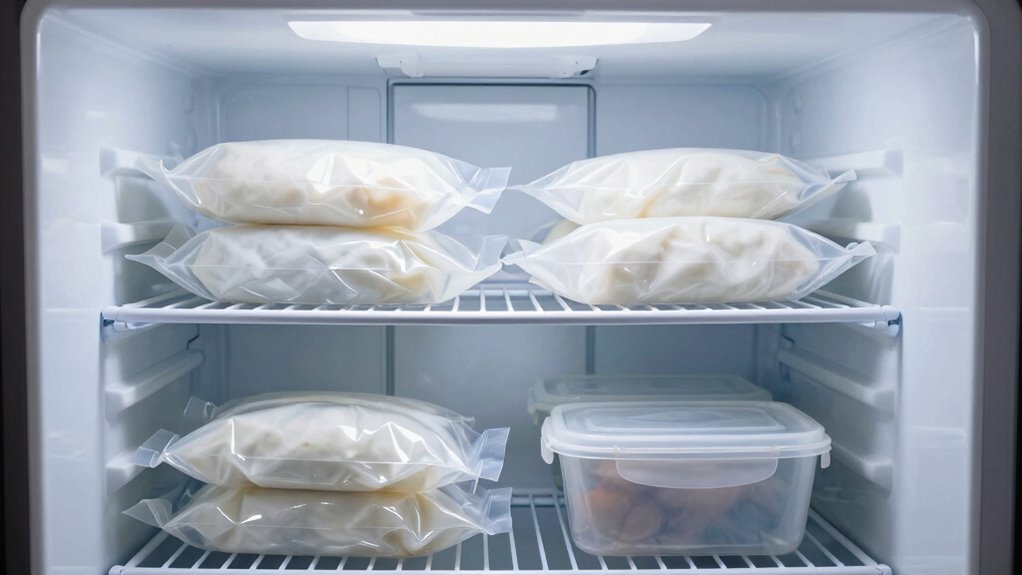
To prevent freezer burn, use airtight containers to keep moisture in and air out. Make sure to remove excess air from bags before sealing, as this reduces the risk of dehydration. Proper packaging helps your food stay fresh and preserves its flavor longer. Incorporating proper landscaping techniques can also enhance the overall environment of your backyard. Additionally, selecting the right air purifiers for your home can improve indoor air quality, which is crucial for maintaining a healthy living space. Proper food storage methods are essential for extending the shelf life of frozen items and preventing spoilage. Paying attention to freezer organization can further help in reducing freezer burn by ensuring consistent temperature distribution. Furthermore, utilizing smart home automation can assist in maintaining the ideal freezer temperature consistently, minimizing temperature fluctuations that contribute to freezer burn.
Use Airtight Containers
Using airtight containers is one of the most effective ways to prevent freezer burn and keep your food fresh. They create a tight seal that minimizes exposure to air, which is essential for proper food preservation. Additionally, selecting containers that are compatible with your smart home devices can help you monitor and manage food storage more efficiently. To maximize their benefits, consider these tips:
- Choose containers with secure lids that lock in moisture and prevent air leaks.
- Fill containers to the top to reduce air space, which can cause freezer burn.
- Label containers with dates to track freshness and prioritize older items for use.
- Properly organize your freezer to improve airflow and maintain consistent temperatures, extending the quality of stored food.
- Using airtight containers also helps prevent moisture loss and flavor transfer between foods, ensuring your items stay fresher longer. Incorporating innovative storage solutions can further enhance food preservation and reduce waste. Additionally, understanding the importance of air circulation within the freezer can help maintain a uniform temperature, further preventing freezer burn and preserving food quality.
Remove Excess Air
After securing your food in airtight containers, the next step is to remove as much excess air as possible before sealing. This minimizes freezer burn and preserves freshness. You can use vacuum sealing, which extracts air completely, or manually squeeze out air from bags. For portion control, divide food into smaller servings so you only thaw what you need. Here’s a quick guide:
| Method | Best For | Tips |
|---|---|---|
| Vacuum sealing | Long-term storage | Use a vacuum sealer for best results. Properly removing air can also help maintain food quality. |
| Manual squeezing | Shorter storage, smaller amounts | Remove air before sealing |
| Resealable bags | Quick, easy packing | Press out excess air carefully |
| Freezer-safe containers | Moderate-term storage | Leave some headspace |
| Portion control | Meal prep and convenience | Divide into manageable sizes |
Removing excess air helps prevent freezer burn and extends your food’s freshness. Additionally, properly removing air can help maintain the quality of frozen foods, ensuring they stay fresh longer. It’s also helpful to label and date your packages to keep track of storage times and prevent unnecessary waste. Using proper packaging techniques can further enhance food preservation and minimize the risk of freezer burn. Being aware of freezer burn prevention strategies can significantly improve your food storage outcomes.
As an affiliate, we earn on qualifying purchases.
Signs of Freezer Burn and When to Toss or Use Frozen Foods
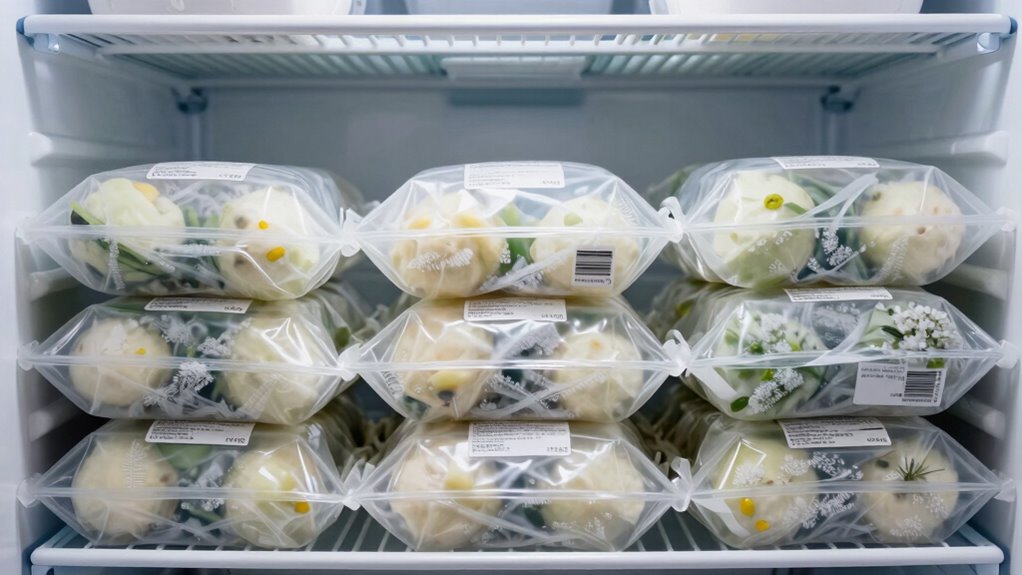
Freezer burn is a common issue that signals your stored foods may no longer be at their best quality. Recognizing signs through proper food inspection helps you decide whether to toss or use your frozen items.
Here are key indicators for signs identification: 1. Discolored patches, often white or grayish, on the surface of foods. 2. Dry, leathery texture or ice crystals that have formed unevenly. 3. Off or stale odors when you open the package.
If you notice these signs, especially extensive freezer burn, it’s best to discard the food, as it may affect taste and texture. Proper freezer maintenance and consistent storage practices can significantly reduce the risk of freezer burn and preserve food quality over time.
However, minor spots can still be used in cooked dishes where texture isn’t as critical. Always trust your senses and food inspection to keep your meals safe and delicious.
Organize Your Freezer to Reduce Freezer Burn Risks
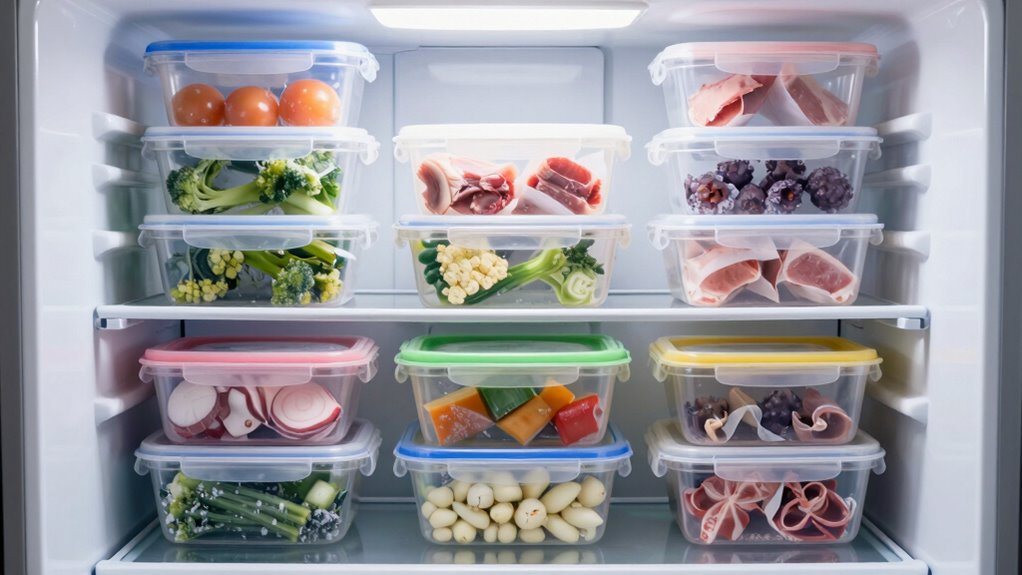
Properly organizing your freezer is essential to prevent freezer burn and keep your food fresh longer. Use clear storage bins to categorize items, making it easier to access and monitor quantities. Keep frequently used foods at the front and less-used items toward the back. Label everything with dates to track freshness and avoid freezer burn risks from old food. Incorporate this simple table to guide your organization:
| Food Category | Storage Method |
|---|---|
| Vegetables | Airtight containers |
| Meat | Vacuum-sealed bags |
| Prepared Meals | Stackable storage bins |
| Baked Goods | Resealable freezer bags |
This setup minimizes air exposure and optimizes freezer space, ensuring your food stays fresh and reduces freezer burn chances. Proper freezer organization is key to efficient storage. Additionally, understanding the importance of proper storage techniques can further enhance food preservation in your freezer. Maintaining a consistent temperature level is also crucial for preventing freezer burn and preserving food quality over time. Regularly checking your freezer temperature helps ensure optimal conditions for long-term storage, which is an essential part of food preservation practices.
How to Thaw Frozen Food Safely and Preserve Quality
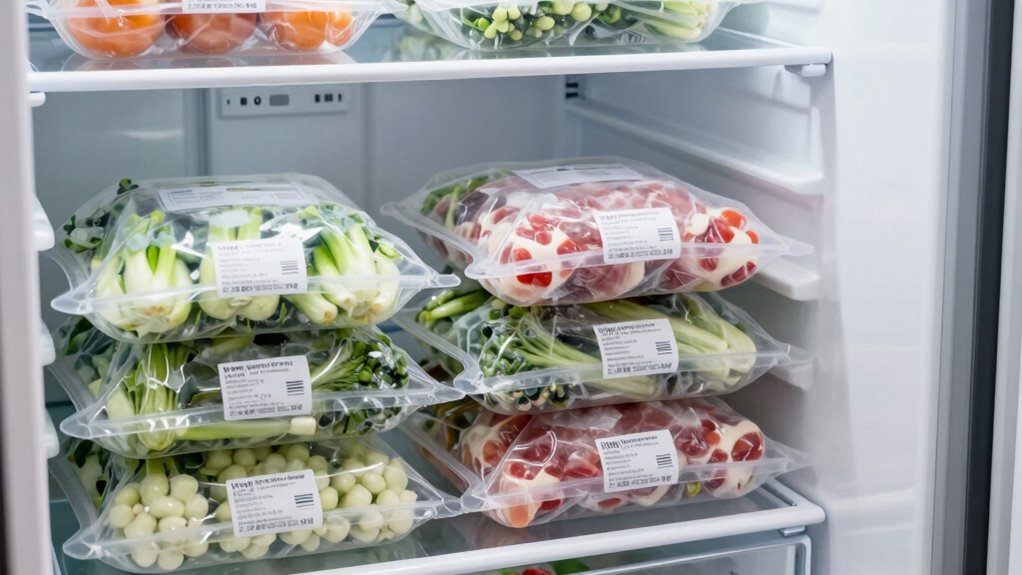
To guarantee your frozen food stays safe and retains its quality, it’s essential to choose the right thawing method. Proper thawing techniques help prevent bacteria growth and preserve flavor. Here are three effective methods:
Choosing the right thawing method ensures food safety and preserves flavor effectively.
- Refrigerator thawing: Plan ahead and allow 24 hours per 5 pounds of food. This slow method keeps food at a safe temperature.
- Cold water thawing: Submerge sealed food in cold water, changing it every 30 minutes. It’s faster but still maintains food safety.
- Microwave thawing: Use the defrost setting for quick thawing. Cook the food immediately afterward to avoid bacteria growth.
Always prioritize food safety by never thawing at room temperature, which promotes bacterial growth. Proper thawing ensures your food remains fresh and safe to eat.
Common Mistakes That Cause Freezer Burn and How to Avoid Them
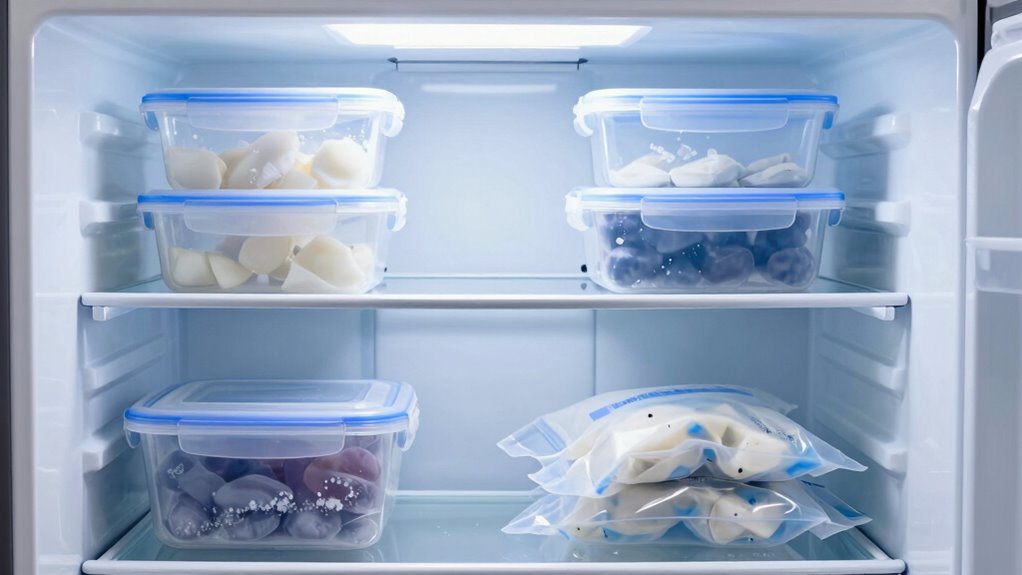
Even if you choose the best thawing method, careless packing and storage habits can still lead to freezer burn. Common packaging mistakes, like leaving too much air in bags or not sealing tightly, expose food to moisture loss and oxidation.
Overlooking proper packaging can result in freezer burn even after a short storage duration. Additionally, keeping food in the freezer for too long increases the risk, as prolonged storage allows ice crystals to form and damage cell structure.
To prevent this, use airtight containers or vacuum-sealed bags, and label everything with dates. Avoid overfilling your freezer, which hampers proper air circulation.
Being mindful of packaging mistakes and tracking storage duration helps preserve food quality and prevents freezer burn effectively.
How to Maintain Your Freezer for Fresh Food Long-Term
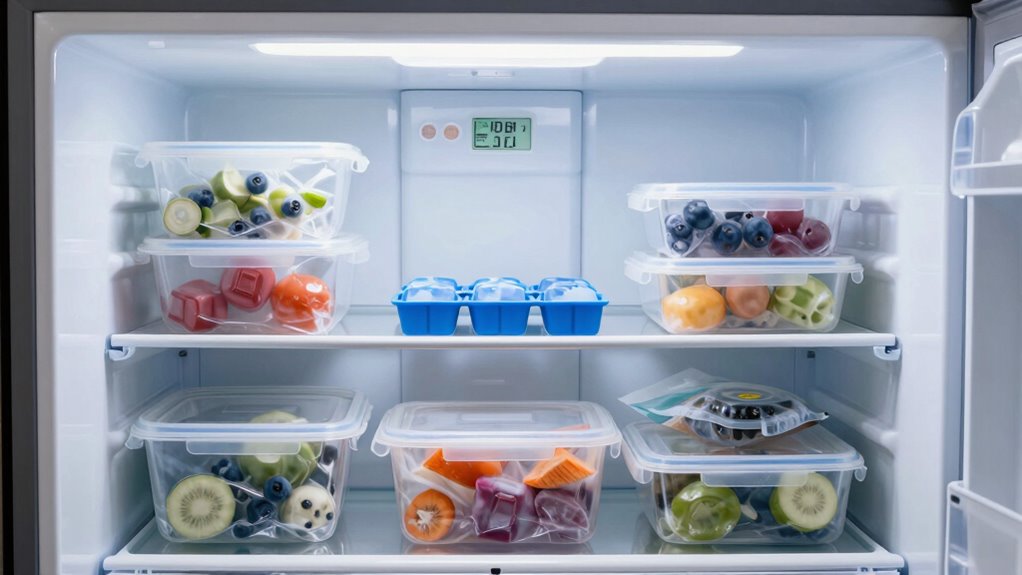
To keep your freezer working efficiently and your food fresh, regular maintenance is essential. Make sure you’re using proper packaging methods and setting the temperature to the right level.
These simple steps help preserve your food quality long-term.
Regular Freezer Maintenance
Regular freezer maintenance is essential to keep your food fresh and prevent costly repairs. Regularly check and clean the coils to improve efficiency.
Ensure you vacuum seal items tightly to prevent air exposure, which causes freezer burn. Label stored foods with clear dates to track freshness and avoid unnecessary waste.
Also, defrost the freezer when frost buildup exceeds a quarter inch to maintain maximum performance. Keep the door gasket clean and free of debris to ensure a proper seal.
Regular maintenance helps you spot potential issues early, saving money and preserving food quality long-term. Incorporate these simple steps into your routine, and your freezer will stay efficient, reducing spoilage and keeping your food fresher for longer.
Proper Packaging Methods
Proper packaging is key to maintaining your freezer’s efficiency and keeping food fresh for the long term. Use vacuum sealing to remove air and create a tight seal around your food, which markedly reduces the risk of freezer burn.
For items that don’t fit a vacuum sealer, wrap them tightly in moisture barriers like heavy-duty aluminum foil or freezer paper, ensuring no air pockets remain.
Label each package with the date to track freshness and avoid unnecessary waste.
Avoid overloading containers, which can prevent proper sealing.
When packaging, make sure to eliminate as much air as possible to prevent moisture from entering.
This careful approach preserves flavor, texture, and nutritional value, making your frozen foods last longer and stay fresher.
Optimal Temperature Settings
Maintaining the ideal temperature in your freezer is essential for preserving food quality and preventing spoilage. Proper temperature calibration ensures your freezer stays at the right setting, typically around 0°F (-18°C), which balances freshness and energy efficiency.
To optimize your freezer’s performance, consider these tips:
- Regularly check and calibrate the temperature to avoid settings that are too high or low.
- Keep the temperature steady; frequent fluctuations can cause freezer burn.
- Adjust the thermostat based on usage and seasonal changes to maximize energy efficiency.
How to Fix or Salvage Food Affected by Freezer Burn
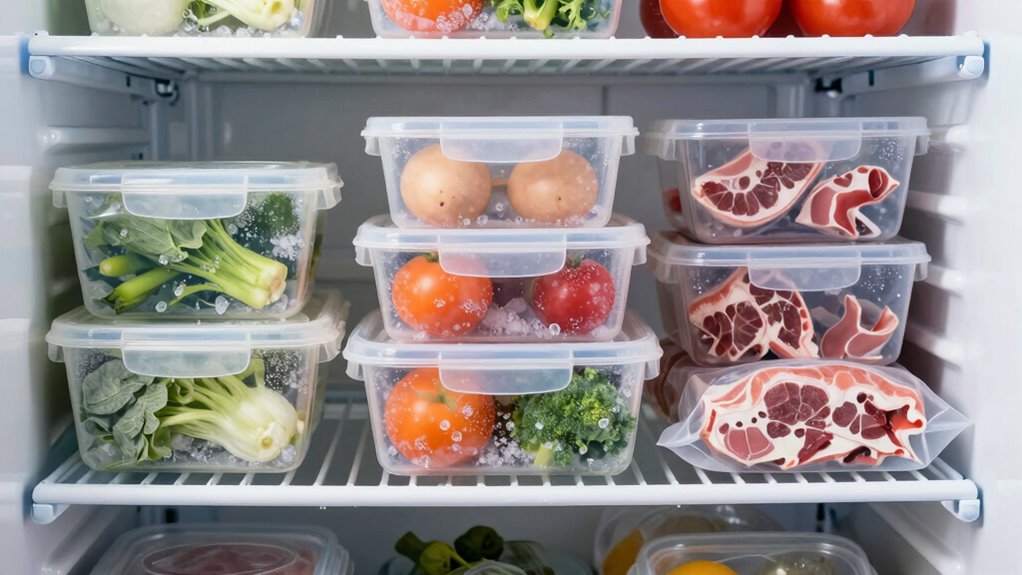
Freezer burn can be frustrating, but it doesn’t mean your food is necessarily ruined. To salvage affected items, start by trimming away the dry, discolored areas with a sharp knife. This helps maintain food safety and reduces the risk of spoilage.
While the texture may be compromised, the remaining food often retains much of its flavor and nutrition if properly handled. You can also rehydrate or cook freezer-burned vegetables and meats into soups or stews, disguising the affected parts and preserving nutrients.
Freezer-burned food can still retain flavor and nutrients with proper rehydration or cooking.
Keep in mind, though, that some foods may not be salvageable if the damage is extensive. Always prioritize food safety by checking for off smells or strange textures before consumption.
With careful trimming and cooking, you can extend the usability of your freezer-burned food.
Frequently Asked Questions
Can Vacuum Sealing Completely Prevent Freezer Burn?
Vacuum sealing substantially reduces freezer burn by removing air, which is the main cause. The benefits include extended storage and better preservation of texture and flavor.
However, seal integrity is vital; if the seal isn’t airtight, moisture can still get in, leading to freezer burn. So, while vacuum sealing greatly minimizes the risk, ensuring a proper, secure seal is essential for maximum protection.
Does the Type of Packaging Material Affect Freezer Burn Prevention?
Think of packaging materials as the armor protecting your food from freezer burn. Yes, the type of packaging material greatly impacts preservation methods; airtight, moisture-resistant options like vacuum-sealed bags or heavy-duty foil can keep air out and moisture in.
Using the right packaging materials guarantees your food stays fresh longer, preventing freezer burn and maintaining quality. So, choose your preservation armor wisely to keep your food safe and delicious.
How Long Can Different Foods Be Stored Before Freezer Burn Occurs?
You can typically store foods for 3 to 12 months before freezer burn affects their food freshness and storage duration. Fruits and vegetables last about 8-12 months, while meats stay good for 4-6 months.
To maximize freshness, use airtight packaging and label your items. Regularly check your freezer to guarantee temperature consistency, helping you prevent freezer burn and maintain ideal food quality over time.
Is It Better to Store Foods in the Freezer Door or Deeper Inside?
Think of your freezer like a vintage jukebox—placement matters. You should store most foods deeper inside the freezer, away from the door, because the freezer door placement experiences more temperature fluctuations.
Internal freezer storage keeps your food at a consistent temperature, reducing freezer burn risks. So, for longer-lasting freshness, avoid placing items in the freezer door and opt for deeper, more stable spots inside.
Do Freezer Additives or Treatments Help Reduce Freezer Burn?
Freezer additives and treatments can help prevent freezer burn by creating a barrier that minimizes moisture loss. You might consider using specialized freezer treatments designed to protect food quality. These additives can help maintain texture and flavor, but they’re not foolproof.
Always combine treatments with proper storage techniques like airtight wrapping. This dual approach ensures your food stays fresher longer and resists freezer burn more effectively.
Conclusion
By mastering these freezer storage techniques, you’ll turn your freezer into a fortress against freezer burn, keeping your food fresh and delicious for what feels like an eternity. Proper packaging, ideal temperature settings, and smart organization are your secret weapons. Don’t let freezer burn sabotage your tasty treasures—stay vigilant and maintain your freezer regularly. With these tips, your frozen foods will stay pristine, ensuring every bite is as good as the first.
Fall Picks
fall essentials
As an affiliate, we earn on qualifying purchases.