A dehumidifier with a pump becomes essential when you’re dealing with large, hard-to-reach, or flood-prone spaces where manual water emptying is impractical. If you want continuous, hassle-free removal of excess moisture to prevent mold, water damage, or flooding, a pump helps direct water away automatically, saving time and effort. For environments requiring long-term moisture control without frequent maintenance, understanding when a pump actually matters can make a big difference—stay tuned to learn more.
Key Takeaways
- When managing large or hard-to-reach spaces, a pump automates water removal efficiently.
- In flood-prone or constantly damp areas, a pump ensures continuous drainage without manual intervention.
- For spaces without gravity drainage options, a pump directs water to distant or elevated outlets.
- When frequent water accumulation risks mold or structural damage, a pump maintains optimal humidity levels.
- In situations requiring minimal maintenance and quiet operation, a pump provides reliable, automated water management.
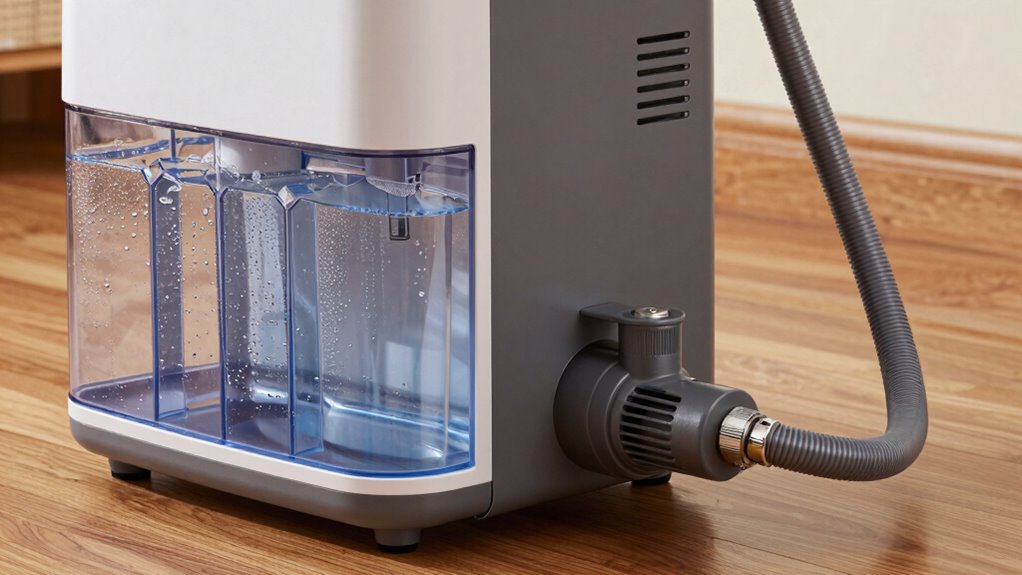
A dehumidifier with a pump offers a convenient solution for managing excess moisture in your home or basement. When humidity levels rise, excess water can cause a range of problems—mold, musty odors, and structural damage. With a pump integrated into your dehumidifier, water extraction becomes more efficient and less of a hassle. Instead of regularly emptying a bucket, the unit automatically removes water and channels it away, saving you time and effort. This feature is especially beneficial if your space is large or hard to reach, where manual water removal would be impractical or inconvenient.
One of the key advantages of a dehumidifier with a pump is its flexible drainage options. Unlike standard models that rely on gravity to drain water into a nearby drain or container, a pumped dehumidifier can direct water to distant or elevated locations. Whether you want to drain into a sink, a basement floor drain, or an outdoor area, the pump handles the heavy lifting. You don’t have to worry about positioning the unit just right or lifting heavy buckets; the pump does the work for you. This flexibility makes it ideal for basements, crawl spaces, or garages where traditional drainage might be difficult to set up.
A pumped dehumidifier easily directs water to distant or elevated locations, offering flexible drainage options for hard-to-reach areas.
When considering water extraction, you want a system that’s reliable and quiet. A dehumidifier with a pump typically features a built-in, automatic shutoff when the water tank reaches capacity, preventing overflow. The pump then activates to move the water away through a hose, which you can run to a drain or outside. This continuous process keeps moisture levels under control without your constant supervision. Plus, many models allow you to customize drainage options—using different hose lengths or attaching to various outlets—so you can adapt the system to fit your space.
Another benefit of these units is their ability to handle high humidity levels, especially in areas prone to flooding or persistent dampness. Because they can continuously extract water and drain it away efficiently, they’re perfect for maintaining ideal humidity without manual intervention. This means fewer worries about water damage or mold growth over time.
Top picks for "pump dehumidifier actually"
Open Amazon search results for this keyword.
As an affiliate, we earn on qualifying purchases.
Frequently Asked Questions
How Does a Pump Improve Dehumidifier Efficiency?
A pump improves dehumidifier efficiency by streamlining moisture removal through continuous, automatic drainage. When the pump operates, it actively transfers collected water from the dehumidifier to a drain or external container, preventing overflow and reducing manual emptying. This guarantees your device runs consistently without interruption, especially in large spaces or areas with high humidity. The pump’s operation maintains ideal dehumidification, making your environment more comfortable and moisture-free.
Can I Use a Dehumidifier With Pump Outdoors?
You can use a dehumidifier with a pump outdoors, but you need to consider weather conditions and outdoor placement. Make sure it’s protected from rain, snow, and extreme temperatures, as these can damage the unit. Place it in a shaded area to prevent overheating and ensure the pump functions properly. Regular maintenance is essential to handle outdoor humidity levels and prevent water damage to your equipment.
What Maintenance Does a Pump-Based Dehumidifier Require?
Think of your pump-based dehumidifier as a well-loved pet that needs care. You’ll want to regularly perform pump cleaning to keep it running smoothly and prevent buildup. Keep an eye out for signs that the pump might need replacement, like strange noises or reduced efficiency. By maintaining your pump with routine cleaning and timely replacement, you guarantee your dehumidifier continues to perform at its best, saving you hassle and extending its lifespan.
Are Pump Models More Energy-Efficient Than Gravity Drain Units?
Pump models can be more energy-efficient than gravity drain units because they actively move moisture, reducing the runtime needed to dehumidify a space. This leads to potential energy savings, especially in challenging setups. However, they often come with a higher upfront cost. When comparing costs, consider long-term savings from lower energy use versus initial investment. Overall, pump models might be a smarter choice if you prioritize efficiency and convenience.
How Long Do Pumps Typically Last in Dehumidifiers?
Your pump in a dehumidifier can last an astonishing 3 to 5 years, but it’s no superhero—its lifespan depends on usage and maintenance. Expect to replace it every 2 to 3 years if you run the unit constantly or notice reduced performance. Regular cleaning and checking for leaks or noise can extend the pump’s life, ensuring your dehumidifier keeps working efficiently without unexpected breakdowns.
Conclusion
So, next time you’re battling a flood of humidity and think a regular dehumidifier will do, imagine it politely asking, “Can I borrow your sink?” Meanwhile, a dehumidifier with a pump is like having a loyal water ninja, swiftly whisking away moisture before it throws a soggy tantrum. Sure, it’s a little more expensive, but your basement’s future sogginess will thank you. After all, who wouldn’t want a tiny superhero working tirelessly in the shadows?