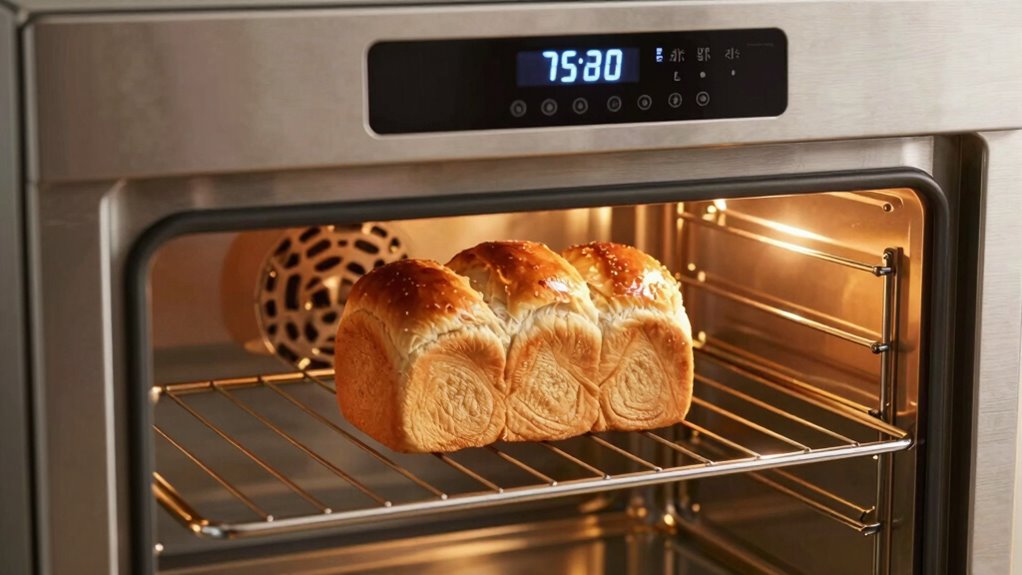

To tell if your oven runs hot, start by using an oven thermometer placed in the center. Preheat the oven and check if the thermometer matches the set temperature; if it’s consistently higher, your oven may be too hot. Watch for signs like burnt edges or uneven cooking. Regular calibration and inspections help maintain accurate heat. Keep exploring to learn simple steps for testing and fixing temperature issues effectively.
Key Takeaways
- Use an oven thermometer to verify if the actual temperature matches the oven’s dial or digital display.
- Preheat the oven and compare the thermometer reading to ensure consistent heat before baking.
- Look for signs like burning on the outside of baked goods while the insides remain raw, indicating excessive heat.
- Conduct baking tests, such as baking cookies or bread, and observe if they brown or cook faster than usual.
- Regularly calibrate your oven if discrepancies are found, to maintain accurate and consistent temperatures.
Why an Accurate Oven Temperature Matters for Perfect Baking
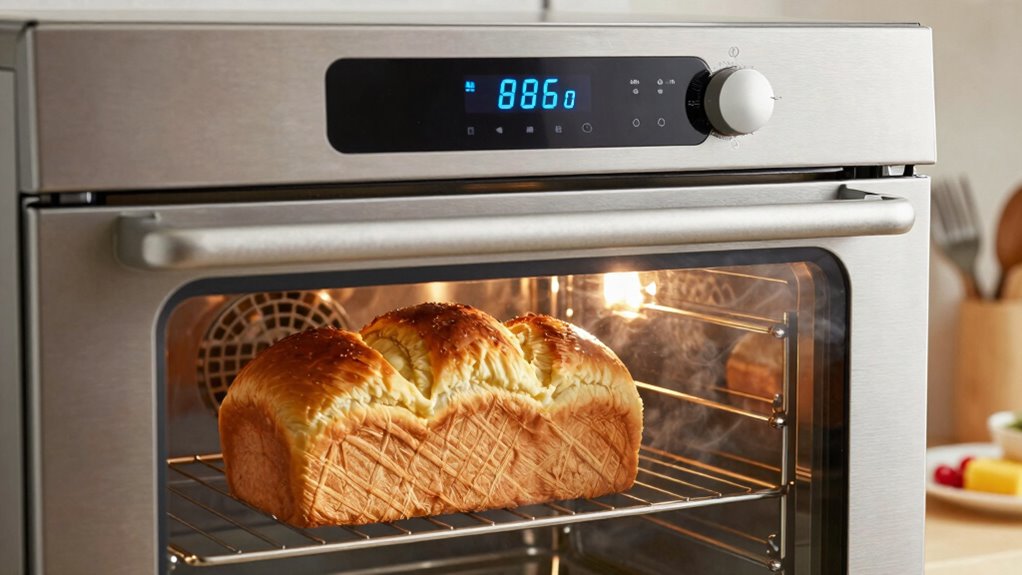
An accurate oven temperature is essential because it directly affects how your baked goods turn out. If your oven isn’t properly insulated, heat escapes, causing inconsistent temperatures that can ruin your baking. Proper heat distribution inside the oven ensures that heat reaches all areas evenly, preventing hot spots that can lead to uneven baking. Modern ovens rely on temperature sensors to monitor internal heat levels, but if these sensors are faulty or poorly calibrated, the oven may misread the temperature. This means your baked items could be undercooked or burnt, even if the dial shows the correct setting. Ensuring your oven’s insulation is intact and its temperature sensors are functioning properly is key to achieving consistent, perfect results every time you bake. Additionally, temperature calibration checks can help verify that your oven’s readings are accurate and reliable, especially when considering sensor accuracy in modern appliances. Regularly performing oven maintenance can also prevent temperature discrepancies and prolong the lifespan of your appliance.
How to Check Your Oven’s Temperature Using a Thermometer
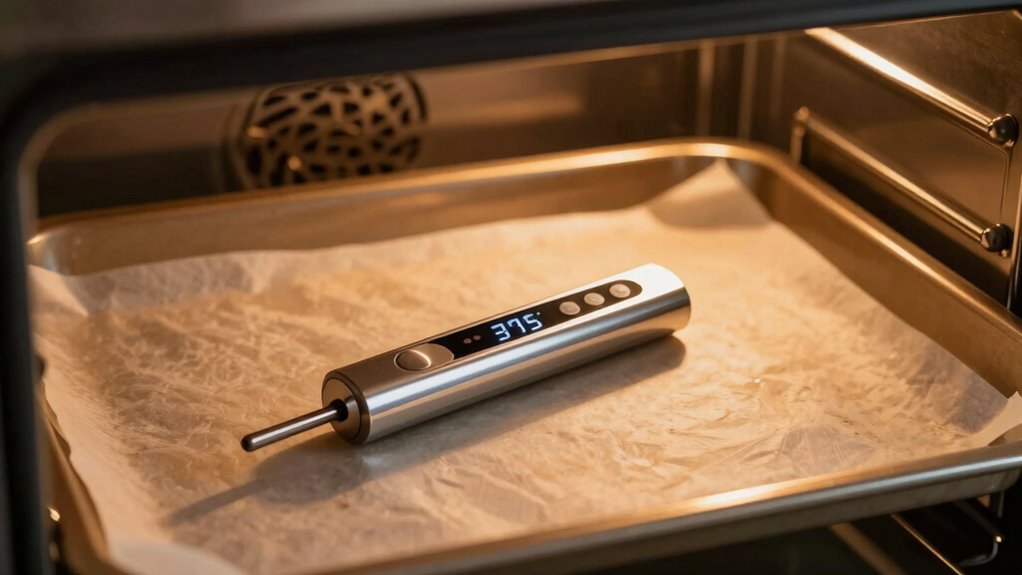
The first step is choosing the right oven thermometer, ensuring it can handle the temperature range you need. Once you have it, place the thermometer in your oven and heat it to your desired temperature. Finally, compare the thermometer reading to your oven’s setting to see if they match. To improve your baking accuracy, understanding oven calibration can help ensure consistent results. Being aware of affiliate disclosures can also inform your purchasing decisions when selecting tools like thermometers. Additionally, selecting a vetted thermometer ensures accuracy and reliability for your cooking needs. Using a high-quality filtration system for your oven’s temperature sensors can help maintain consistent readings and prevent inaccuracies caused by dust or debris. Regularly checking your oven’s temperature with a reliable essential oils can help maintain consistent cooking conditions and prevent overheating.
Selecting the Right Thermometer
Choosing the right thermometer is essential for accurately checking your oven’s temperature. You’ll find both oven thermometers and options like digital vs analog models. An oven thermometer is a simple, reliable tool that stays inside during cooking. Digital thermometers often provide quick, precise readings and are easy to read, making them popular. Analog thermometers, on the other hand, offer a traditional design with a dial that’s easy to glance at. When selecting, consider durability, ease of use, and how well it withstands high temperatures. Both types can give accurate measurements if calibrated correctly. Calibration techniques are crucial for ensuring accuracy. Regularly checking and calibrating your thermometer helps maintain consistent temperatures, which is essential for successful baking and cooking. Using a high-quality temperature calibration method can significantly improve your cooking results. For best results, choose a thermometer with a durable construction that can withstand the heat in your oven. Ultimately, choose a thermometer that fits your preferences and needs, ensuring you can monitor your oven’s temperature consistently for better cooking results.
Performing the Temperature Test
To accurately check your oven’s temperature, start by placing your thermometer in the center of the oven on a flat, stable surface. Turn on the oven and set it to the desired temperature. Allow the oven to preheat fully, then leave the thermometer undisturbed for at least 15-20 minutes. Proper calibration is essential to ensure your oven maintains accurate temperatures over time. Check the reading without opening the door too often, as this can affect temperature consistency. If the thermometer shows a markedly different temperature from your setting, your oven may need calibration. Regular testing helps identify temperature fluctuations and guarantees your oven maintains a steady heat. Performing this test periodically allows you to spot issues early, ensuring your oven stays reliable and cooks evenly. Proper oven calibration promotes consistent results every time you bake.
Signs Your Oven Is Running Hot or Inaccurate

If your baked goods are consistently burning on the outside while still raw inside, your oven might be running hotter than the set temperature. During oven warm-up, you may notice uneven cooking or sudden flare-ups of heat, indicating a thermostat malfunction. An inconsistent oven temperature can cause your food to cook unevenly or burn quickly. If your oven heats inconsistently or the temperature gauge shows fluctuations, it’s a sign that the thermostat isn’t functioning properly. Also, if the oven seems to take longer to heat or shuts off unexpectedly, these are clues it might be running hot or inaccurate. Recognizing these signs helps prevent ruined dishes and indicates the need for calibration or repair of your oven’s temperature controls. Regular maintenance and proper calibration can help ensure your oven heats accurately and consistently, preventing issues caused by thermostat malfunction or other internal problems. A trusted repair technician can diagnose and fix temperature issues effectively. Additionally, some models may have built-in diagnostic tools that assist in identifying temperature irregularities. Being aware of these signs can also help you optimize oven performance and extend the lifespan of your appliance.
Easy Ways to Test Your Oven’s Temperature at Home
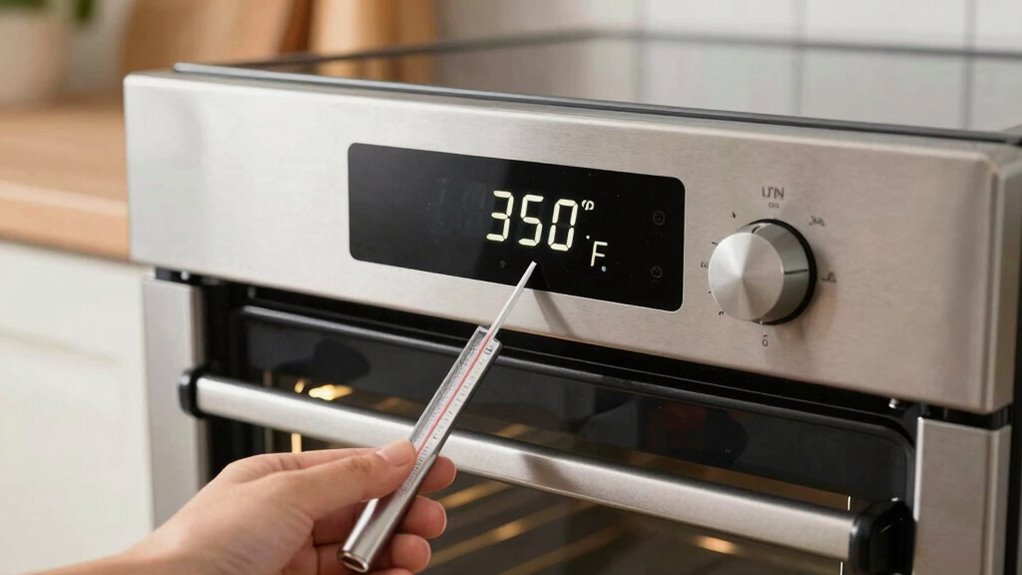
To guarantee your oven is accurate, start by using an oven thermometer and placing it inside while heating. You can also conduct a baking test by measuring how long it takes to bake a simple item, like cookies, and comparing it to the recipe’s instructions. These easy methods help you verify if your oven maintains the correct temperature for perfect results. Additionally, proper calibration techniques can help ensure consistent heating performance over time.
Use an Oven Thermometer
Using an oven thermometer is one of the simplest and most accurate ways to guarantee your oven reaches the right temperature. By placing the thermometer inside, you can easily detect temperature fluctuations that might indicate your oven isn’t properly calibrated. Connected home technology can also assist in monitoring and adjusting your oven settings remotely. If you notice consistent discrepancies between the oven’s display and the thermometer, it’s a sign you may need oven calibration. This ensures your oven maintains a steady temperature, preventing uneven baking or cooking. Regular use of an oven thermometer helps you spot these fluctuations early, allowing you to adjust your oven’s settings or seek calibration if needed. oven calibration is an important step in maintaining accurate temperatures. This simple step provides peace of mind, ensuring your baked goods come out perfectly every time and reducing the guesswork involved in managing oven temperature accuracy. Incorporating temperature consistency into your routine can also help extend the lifespan of your oven and improve overall cooking results. Additionally, understanding how to interpret temperature variations can help you troubleshoot issues more effectively.
Conduct a Baking Test
Conducting a baking test is one of the most straightforward ways to verify your oven’s accuracy without specialized equipment. To do this, place an oven-safe thermometer or a simple piece of bread or a biscuit dough in the center of your oven. Set the oven to the desired temperature, like 350°F (175°C), and let it preheat for at least 15 minutes.
Check the bread or thermometer after the oven signals it’s ready. If the bread browns too quickly or the thermometer reads differently from your set temperature, it indicates your oven’s temperature accuracy might be off. Understanding oven calibration can help you make precise adjustments for better baking results. Regularly monitor oven performance ensures consistent baking outcomes over time.
Repeating this process periodically helps you track inconsistencies and decide if calibration or professional repair is necessary. A baking test provides a quick, practical way to ensure your oven bakes evenly and accurately.
How to Calibrate Your Oven for Consistent Results
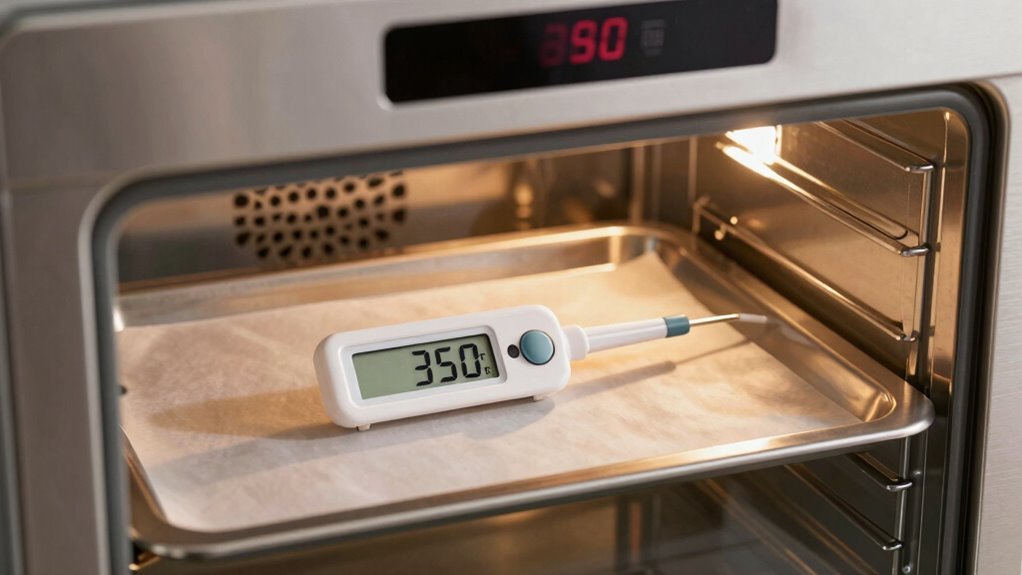
Even the most reliable ovens can drift from their set temperatures over time, making it essential to calibrate yours regularly. To ensure consistent results, start by using an oven thermometer to check the actual temperature. If you notice discrepancies, you may need to adjust the oven’s temperature calibration.
Most modern ovens have a calibration feature accessible through the control panel—consult your user manual for specific instructions. Proper calibration improves temperature accuracy and can save you from unnecessary oven repair or replacement.
Before adjusting, make sure the oven is fully preheated. Once calibrated, retest with the thermometer to confirm the settings. Regular calibration helps maintain consistent cooking and baking, ensuring your oven performs reliably and eliminates guesswork.
Common Causes of Oven Temperature Errors and How to Fix Them

Oven temperature errors often stem from several common issues that can be surprisingly easy to fix. One frequent cause is oven sensor issues, where a faulty sensor gives inaccurate readings, leading to temperature fluctuations. Replacing or cleaning the sensor can often resolve this.
Thermostat malfunctions are another common problem, causing your oven to run hotter or colder than set. If the thermostat is faulty, it might need recalibration or replacement.
Additionally, wiring problems or loose connections can disrupt temperature control. Regularly inspecting and tightening these connections can prevent errors.
Keep in mind that age and wear can also impact components, so replacing outdated parts might be necessary. Addressing these issues promptly guarantees your oven maintains consistent, accurate temperatures, making your cooking more reliable.
Tips for Maintaining Your Oven’s Temperature Over Time

Maintaining consistent oven temperatures over time requires regular care and attention to its components. Start by inspecting your oven insulation; damaged or worn insulation can cause heat loss and temperature fluctuations. Keep it intact to ensure even heat distribution.
Regularly test your thermostat’s accuracy with an oven thermometer; if it’s off, recalibrate or replace the thermostat to prevent inconsistent heating. Clean the oven’s interior and heating elements to remove grease and debris that can interfere with temperature control.
Check door seals for gaps or damage, as poor sealing allows heat to escape. Additionally, avoid opening the oven door frequently, which can cause temperature drops.
Routine maintenance of these parts helps keep your oven running at the correct temperature, ensuring your cooking results stay consistent over time.
Frequently Asked Questions
How Often Should I Check My Oven’s Temperature Accuracy?
You should verify your oven’s temperature accuracy at least once every six months. Regularly testing helps identify issues with your oven repair, especially if the temperature sensor malfunctions.
Use an oven thermometer to confirm the actual temperature, and if there’s a significant difference, consider replacing the temperature sensor or scheduling professional service.
Staying proactive ensures your oven cooks evenly and saves you from future repair costs.
Can Oven Temperature Inconsistencies Affect Different Types of Baked Goods?
Yes, oven temperature inconsistencies can affect your baking results, especially with delicate baked goods like soufflés or cookies. When your oven runs hot or cold, it disrupts proper rising, browning, and texture.
Poor oven performance leads to uneven baking and can ruin recipes. To guarantee consistent results, regularly check and calibrate your oven’s temperature, and consider using an oven thermometer for accuracy.
This way, all your baked goods turn out perfect every time.
Is It Necessary to Calibrate My Oven Regularly?
Your oven calibration isn’t something you can afford to overlook, or it’ll turn your baking into a disaster movie. Regular temperature adjustment ensures your oven heats accurately, preventing burnt or undercooked results.
To keep your baked goods perfect, you should calibrate your oven periodically—especially if you notice uneven cooking or inconsistent temperatures.
This simple routine guarantees your oven stays true to its set temperature, making every bake a masterpiece.
What Tools Do I Need to Test My Oven’s Temperature at Home?
To test your oven’s temperature at home, you’ll need an oven thermometer or a kitchen probe.
Place the thermometer inside your oven, ideally in the center, and turn on the oven to your desired temperature.
Wait about 15-20 minutes for it to stabilize.
Check the reading to see if it matches your setting, and adjust your oven if needed.
Both tools give you accurate readings for reliable cooking.
How Can I Tell if My Oven’s Thermostat Needs Replacement?
Imagine your oven’s heat flickering unpredictably, like a faulty lighthouse beam. If your baked goods burn on the outside but remain raw inside, it’s a sign your thermostat needs replacement.
Test your oven’s temperature with a thermometer; if it consistently reads off, it’s time for oven repair. A faulty thermostat causes uneven heating, so don’t hesitate to seek professional help for thermostat replacement to restore perfect cooking conditions.
Conclusion
Keeping your oven’s temperature accurate is key to perfect baking, and regular checks can prevent costly mistakes. Did you know that many ovens can be off by up to 20 degrees? That small difference can turn a perfect cake into a burnt mess. By testing, calibrating, and maintaining your oven, you’ll enjoy consistent results every time. Stay attentive to your oven’s quirks, and baking will become easier and more enjoyable!