
TL;DR

Prime made for students and young adults
- Fast, free delivery for dorm and study essentials
- Prime Video and Amazon Music included
- Member-only deals
A study in Current Biology traces collagen-degrading enzymes across 700 bacterial genomes and finds that collagenases spread into oxygen-using bacteria around the Ediacaran-Cambrian transition. The researchers propose this may have accelerated decay and reduced the chances of soft-bodied animals becoming fossils, but the findings offer an explanation rather than proof of a single cause.
A Cambridge-led study proposes that the spread of collagen-degrading enzymes among oxygen-using bacteria may help explain why soft-bodied animal fossils became less common around the transition from the Ediacaran to the Cambrian Period, roughly 539 million years ago. The researchers say the change could have sped up the decay of animal tissues, making preservation less likely; the study identifies a possible mechanism, not a definitive explanation for every gap in the fossil record.
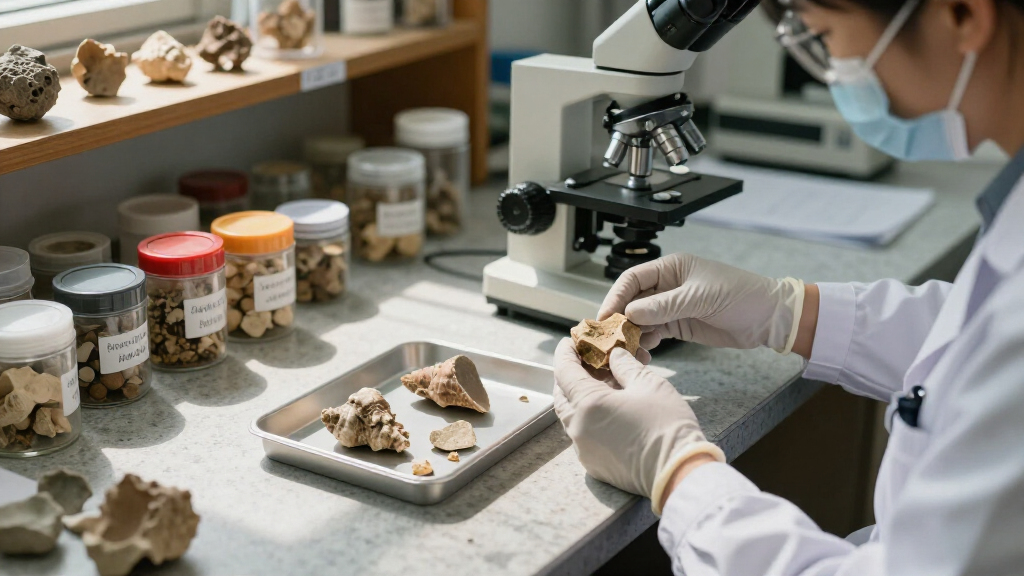
Collagen is a structural protein that gives strength and support to animal tissues. After an animal dies, enzymes called collagenases can break collagen down. The research team traced collagenase genes across 700 bacterial genomes and compared their history with a time-dated evolutionary tree, investigating when microbes gained the ability to consume collagen.
The researchers report that collagenases predate animals and initially occurred only in anaerobic microbes, which cannot tolerate oxygen. They propose that in oxygenated Ediacaran waters, collagen in dead animals could persist until oxygen in surrounding sediment was depleted, leaving more time for burial and fossilisation. Around the Ediacaran-Cambrian boundary, they found collagenases spreading into a wider range of microbial groups, including aerobic bacteria associated with modern decay.
The timing of that spread coincides with a marked decline in the abundance of soft-bodied fossils, the team says. The researchers argue that once collagen-degrading microbes could act in more oxygen-rich settings, tissues needed to be buried and fossilised faster to escape decay. Their findings, published in Current Biology under the title “Temporal heterogeneity in the animal fossil record driven by proliferation of microbial collagenases,” are presented as a proposed biological contribution to changing fossil preservation.
How Microbes Could Alter Fossil Preservation
The study offers a way to connect changes in microbial evolution with changes in what survives as a fossil. The fossil record is incomplete partly because soft tissues such as skin, muscles and organs usually decay, while durable structures such as bones and shells are more readily preserved. A shift in the microbes able to consume collagen could have changed the odds of preservation across many environments, rather than only at particular sites.
If the proposed mechanism is supported by further work, it could help palaeontologists interpret why exceptionally detailed Ediacaran fossils occur even though those animals lacked hard body parts, and why comparable soft-tissue preservation is rarer later. It would not mean that fossils simply stopped forming: younger soft tissues can still be preserved when burial and other conditions prevent decay. The claim is that the biological conditions for preservation may have become less favourable in more settings.
Ediacaran fossils illustrated book
As an affiliate, we earn on qualifying purchases.
As an affiliate, we earn on qualifying purchases.
Ediacaran Fossils and the Preservation Puzzle
The late Ediacaran Period, between 579 million and 539 million years ago, contains some of the oldest known complex animal fossils. Many are preserved in unusual detail despite the animals having no mineralised skeletons. At some fossil sites, whole communities are represented, giving researchers evidence about early animal life that is often missing from other parts of the record.
Scientists have proposed several explanations for that preservation, including unusual ocean chemistry, differences in tissue composition and microbial films on the seafloor. The Cambridge team says these explanations can account for preservation in some places but do not apply universally. Its study instead examines whether the changing distribution of collagen-degrading microbes could have affected the survival of soft tissue through time.
The researchers compare collagen’s persistence without suitable enzymes to modern plastic, which can remain in the environment until organisms capable of breaking it down become established. The comparison is an analogy about biological degradation, not evidence that collagen and plastic behave identically or that microbes will necessarily develop a way to consume today’s plastics.
““Around this critical time when these soft-bodied animals stopped fossilising, we start seeing the appearance of collagenases in aerobic bacteria, meaning the ability to break down collagen-bearing tissues could start to spread into new environments as animal diversity accelerated.””
— Philip Vixseboxse, lead author, who completed the work as a PhD candidate at Cambridge
Cambrian explosion paleontology book
As an affiliate, we earn on qualifying purchases.
As an affiliate, we earn on qualifying purchases.
Limits of the Collagenase Explanation
The study reports a temporal association between the spread of collagenases into aerobic bacteria and a decline in soft-bodied fossils. That correspondence supports the researchers’ hypothesis, but does not by itself establish that enzyme evolution caused the fossil decline. The source material does not report direct experimental evidence that collagenases were responsible for decay in the environments where the relevant fossils formed.
It also remains unclear how much the proposed mechanism contributed relative to other factors, including local chemistry, sedimentation, tissue differences and burial conditions. The team acknowledges that exceptional preservation continued in younger rocks: an animal buried rapidly beneath sediment, for example, may escape decay. The research therefore does not claim that soft tissues became impossible to fossilise or that collagenases explain every gap in the record.
As an affiliate, we earn on qualifying purchases.
Testing the Proposed Preservation Shift
The reported work establishes a proposed evolutionary timeline by comparing collagenase genes in bacterial genomes with a dated tree of life. Further research would need to test how enzyme activity affects collagen-bearing tissues under different oxygen, sediment and burial conditions, and whether the proposed timing matches evidence from additional fossil deposits. The source report does not identify a specific follow-up study or publication date.
For now, the finding is a possible explanation for a broad pattern that palaeontologists have debated for decades. The fossil record’s unevenness remains shaped by both the biology of decay and the conditions in which an organism dies and is buried; how much microbial collagenases changed those odds remains open.
microbiology and evolution educational book
As an affiliate, we earn on qualifying purchases.
As an affiliate, we earn on qualifying purchases.
Key Questions
What did the researchers find?
The Cambridge-led team traced collagenase genes across 700 bacterial genomes and reports that these enzymes spread into a wider range of microbes, including aerobic bacteria, around the Ediacaran-Cambrian transition. The researchers suggest this may have increased the breakdown of soft animal tissues.
Why does collagen matter to fossil preservation?
Collagen is a structural protein in animal tissue. The researchers argue that when microbes can make collagenases, they can break down collagen-bearing tissues more readily, potentially reducing the time available for an organism to be buried and preserved.
Does the study prove collagenases caused the fossil decline?
No. The study reports a timing connection and proposes a mechanism. It does not establish that collagenases were the sole cause of fewer soft-bodied fossils, or rule out factors such as local chemistry and burial conditions.
Can soft-bodied animals still become fossils?
Yes. The researchers say soft tissue can be preserved in younger rocks under exceptional circumstances, including rapid burial that limits decay. Their argument is that such preservation became less likely in many settings, not impossible.
Source: hn
Fall Picks
fall essentials
As an affiliate, we earn on qualifying purchases.