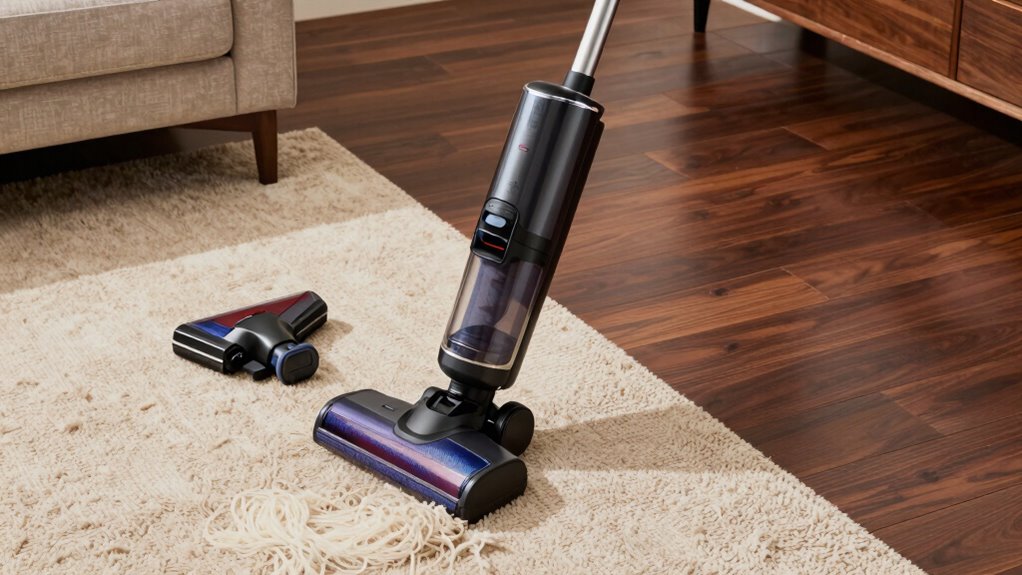

You can’t use the same vacuum for both carpets and hardwood floors because each surface needs different cleaning features. Carpets require strong suction and deep extraction to remove dirt and pet hair, while hardwoods need gentle brushes and softer settings to prevent scratches and damage. Using one vacuum might work temporarily, but it won’t keep both surfaces in top shape long-term. If you want to find out how to choose the right tools, keep exploring this topic.
Key Takeaways
- Carpets require powerful suction and agitation to remove deep-seated dirt, unlike hardwoods which need gentle brushing.
- Different floor surfaces demand specific brush types and height settings for effective and safe cleaning.
- Area rugs over floors need targeted cleaning methods, distinct from direct cleaning of exposed hardwood surfaces.
- Using a vacuum suited for one surface can cause damage or ineffective cleaning on the other.
- Proper cleaning tools and techniques vary to preserve flooring integrity and extend lifespan.
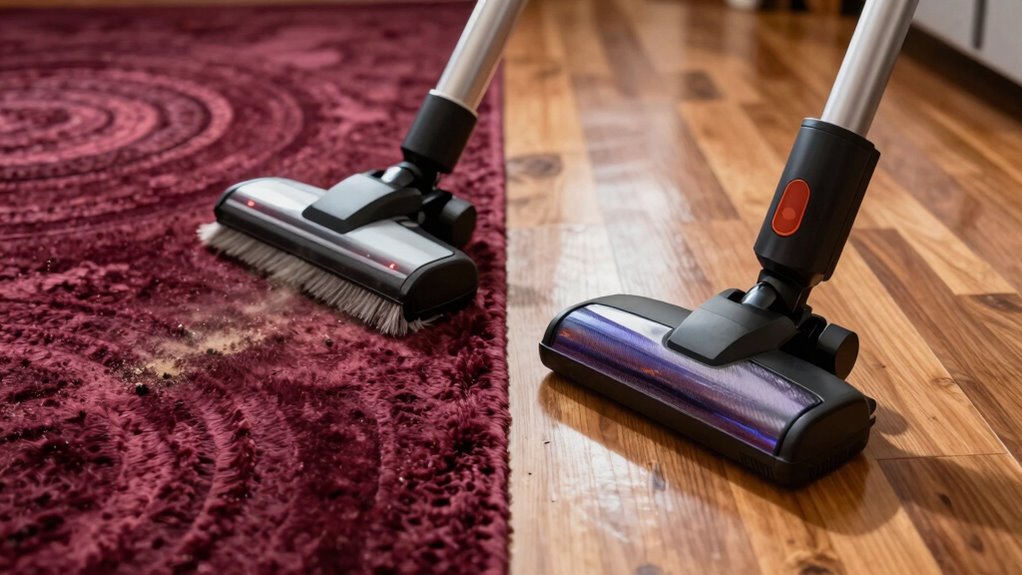
When choosing between carpet and hardwood flooring, cleaning methods play a crucial role in maintaining their appearance and longevity. You need to understand that what works for one type of flooring might not be suitable for the other. For example, if you have area rugs layered over hardwood or carpet, cleaning them effectively requires specific techniques. Area rugs can trap dirt, dust, and pet hair, so regular vacuuming is essential. However, the type of vacuum you use matters. A vacuum with good suction and adjustable height works well for both, but for deep cleaning, a steam cleaner might be better suited for hardwood floors rather than carpets, which often need more intensive extraction to remove embedded dirt.
Proper vacuuming and cleaning techniques are essential for maintaining both carpet and hardwood floors effectively.
Pet stains present another challenge that highlights why one vacuum doesn’t always do both. For carpets, pet stains can penetrate deep into fibers, requiring targeted treatments and specialized cleaning methods. In contrast, hardwood floors, while easier to clean up quickly, can still suffer from pet accidents that leave behind odors or cause damage if not addressed promptly. You’ll want to use stain removers designed specifically for carpets to lift pet stains without harming the fibers. For hardwood, a simple vinegar solution or enzymatic cleaner can do wonders, but you must be careful not to oversaturate the wood, which can lead to warping or long-term damage.
Vacuuming frequency and technique also differ based on the flooring type. Carpets benefit from daily vacuuming to prevent dirt buildup that can wear down fibers over time. For hardwood, regular sweeping or vacuuming with a soft brush attachment keeps dust and debris from scratching the surface. When dealing with area rugs, a thorough vacuuming on both sides helps maintain their appearance and prevents dirt from spreading to the underlying floor. Additionally, understanding the importance of proper cleaning techniques can help extend the lifespan of your flooring and keep it looking its best.
Another consideration is the impact of cleaning methods on long-term durability. Carpets, especially those with thick pile, can trap allergens and pet dander, so deep cleaning every few months is recommended. Hardwood floors require gentle cleaning products to preserve their finish but still demand frequent dusting. Using the wrong vacuum or cleaner on either surface can cause scratches, dullness, or other damage, so you need to choose your tools carefully.

Eureka Lightweight Powerful Upright Vacuum Cleaner for Carpet and Hard Floor, PowerSpeed, New Model,Blue,black/New Model
Upgraded Cyclone System: The Eureka PowerSpeed is now upgraded with new cyclone technology to handle larger debris, smaller…
As an affiliate, we earn on qualifying purchases.
As an affiliate, we earn on qualifying purchases.
Frequently Asked Questions
Can a Single Vacuum Handle Both Carpet and Hardwood Effectively?
A single vacuum can’t always handle both carpet and hardwood effectively because of its limited versatility. For multi surface cleaning, you need a vacuum with adjustable settings and multiple attachments. This ensures you can switch from deep-cleaning carpets to gentle hardwood floors without hassle. Investing in a versatile vacuum makes your cleaning routine easier, saving you time and effort while maintaining a thorough clean on different surfaces.
What Features Should I Look for in a Versatile Cleaning Appliance?
Think of your vacuum as a chameleon, blending seamlessly with your home’s needs. Look for features like multi surface adaptability, so it gracefully shifts from carpet to hardwood. An ergonomic design ensures comfort during use, reducing fatigue. Powerful suction coupled with adjustable settings helps tackle diverse debris. A versatile appliance like this becomes your cleaning partner, effortlessly adapting to various surfaces and making your chores feel less like work and more like art.
How Often Should I Switch Cleaning Methods Between Surfaces?
You should switch cleaning methods based on your surfaces and your cleaning schedule. For carpets, vacuum more frequently, about two to three times a week, and maintain your vacuum regularly to guarantee peak performance. For hardwood floors, vacuum less often, maybe once a week, but be gentle. Regular vacuum maintenance prevents damage. Adjust your cleaning schedule accordingly, and always use the right attachments to avoid scratches and keep each surface looking its best.
Are There Specific Vacuum Attachments for Different Flooring Types?
Think of your vacuum as a versatile artist, wielding the right tools for each masterpiece. Yes, there are vacuum attachments and flooring-specific tools designed for different surfaces. Use a brush nozzle for carpets to lift deep dirt, and a hard floor tool with soft bristles for hardwoods to avoid scratches. Switching attachments guarantees you clean effectively, respecting each surface’s unique texture and needs.
Do Cleaning Products Differ for Carpets and Hardwood Floors?
Yes, cleaning products differ for carpets and hardwood floors. You should use surface-specific detergents because carpets need gentle, deep-cleaning solutions that lift dirt without damaging fibers. Hardwood floors require cleaning solutions that cut through grime without leaving residue or causing damage. Using the right cleaning solution differences guarantees effective cleaning and maintains your floors’ appearance, preventing issues like staining or warping. Always choose products tailored to your flooring type for the best results.
Eureka Lightweight Powerful Upright Vacuum Cleaner for Carpet and Hard Floor, PowerSpeed, New Model,Blue,black/New Model
Upgraded Cyclone System: The Eureka PowerSpeed is now upgraded with new cyclone technology to handle larger debris, smaller…
As an affiliate, we earn on qualifying purchases.
As an affiliate, we earn on qualifying purchases.
Conclusion
Ultimately, mastering the art of cleaning means recognizing the unique needs of carpets and hardwoods. Don’t settle for a one-size-fits-all approach—adapt your arsenal accordingly. With careful consideration, you can conquer dirt and dust on both surfaces, ensuring a spotless sanctuary. Remember, your diligent diligence makes your home delightful. So, switch skills, select specific tools, and stay savvy—because successful cleaning is all about knowing when to switch and how to shine.

Shark Steam & Scrub Steam Mop, All-in-One Scrubbing and Sanitizing Hard Floor Cleaner, LED Headlights, 4 Dirt Grip Soft Scrub Pads Included, XL Water Tank, Swivel Steering, Hawaiian Grey, S8001
SCRUBBING AND SANITIZING*: Tough on stains and gentle on floors. *To sanitize floors, be sure to completely follow…
As an affiliate, we earn on qualifying purchases.
As an affiliate, we earn on qualifying purchases.

Resolve Ultra Pet Carpet Cleaner Spray – for Removal of Pet Stains & Odors, 32oz
1. DESTROYS STUBBORN STAINS THE FIRST TIME Penetrates deep to lift and remove tough pet stains like feces,…
As an affiliate, we earn on qualifying purchases.
As an affiliate, we earn on qualifying purchases.