To improve your sleep quickly, focus on creating a dark, quiet, and cool environment by using blackout curtains, earplugs, and setting the room to 60-67°F. Choose comfortable bedding and supportive pillows for better rest. Control lighting and noise with sleep masks and white noise machines, and make certain proper ventilation. Keep your bedroom clutter-free and distractionless. Implementing these simple tweaks will make a noticeable difference—discover more tips to optimize your sleep setup next.
Key Takeaways
- Create a dark, quiet, and cool room using blackout curtains, earplugs, and a temperature of 60-67°F.
- Use comfortable, supportive bedding and hypoallergenic pillows to enhance comfort.
- Minimize distractions by removing electronics and decluttering the bedroom.
- Regulate lighting and noise with sleep masks, white noise, and proper window coverings.
- Ensure good ventilation and air quality with air purifiers and consistent airflow.
Create a Quiet, Dark, and Cool Sleep Environment
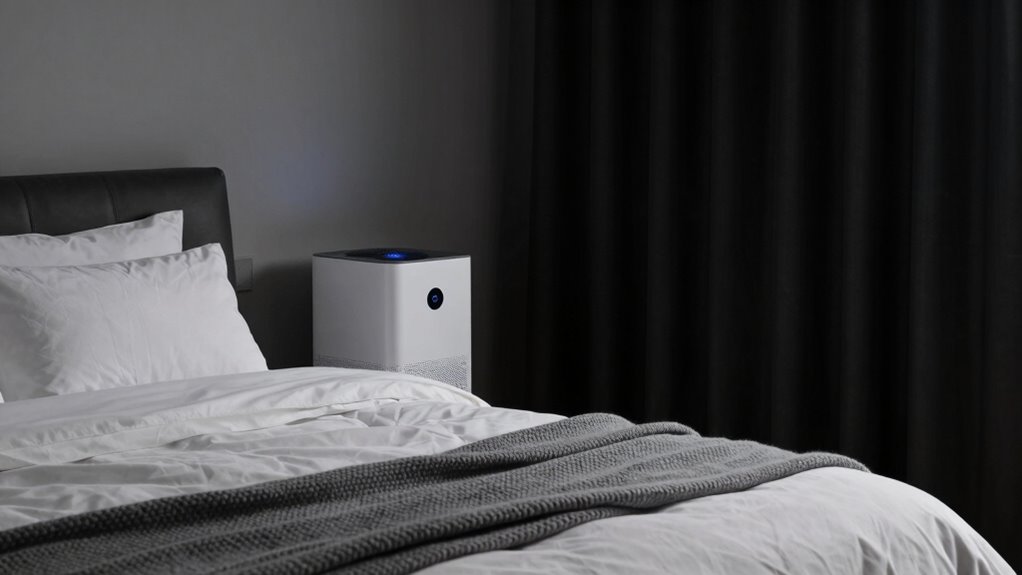
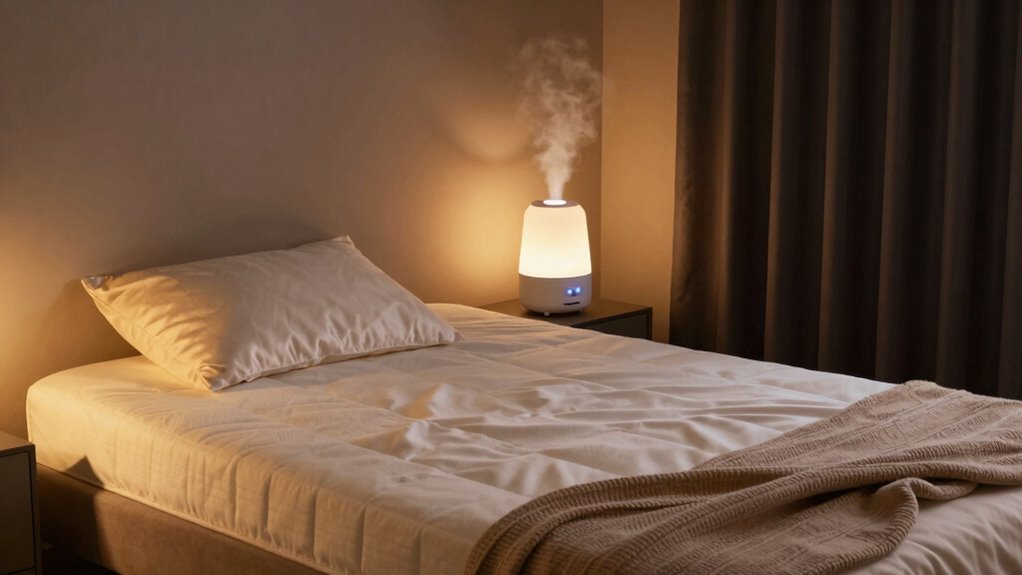
Creating a sleep-friendly environment starts with making your bedroom quiet, dark, and cool. Prioritizing good sleep hygiene involves minimizing noise and light, which can disrupt your sleep cycle. Use blackout curtains or an eye mask to block out light, and consider earplugs or white noise machines to reduce sound disturbances. Keeping your room at a comfortable, cool temperature—around 60-67°F (15-19°C)—helps your body shift into sleep more easily. Establishing a consistent sleep routine is essential; going to bed and waking up at the same time reinforces your body’s internal clock. When your environment is quiet, dark, and cool, it signals to your brain that it’s time to wind down, promoting quicker sleep onset and a more restful night. Incorporating an air purifier into your bedroom can also help reduce airborne pollutants and allergens, further supporting restful sleep. Additionally, choosing appropriate lighting can help regulate your circadian rhythms and improve sleep quality. Using smart home automation to control lighting and temperature can optimize your sleep environment automatically. Ensuring good air quality in your room is vital, as poor air can interfere with breathing and sleep quality. Incorporating air quality monitoring devices can provide real-time feedback and help you maintain optimal conditions.
Choose Comfortable Bedding and Supportive Pillows

Have you ever wondered how much your bedding affects your sleep quality? Choosing the right bedding can make a significant difference in how quickly you fall asleep and stay asleep.
Start by selecting a mattress with the right firmness—neither too soft nor too firm—to support your body comfortably. A well-chosen mattress can enhance overall sleep quality and reduce discomfort that might interfere with rest.
Next, consider pillow material; memory foam or hypoallergenic options can provide better neck support and comfort. These materials are often recommended by trusted sleep experts for their ability to adapt to your sleeping position.
To optimize your sleep environment, keep these points in mind:
- Use a mattress that balances firmness and softness for personalized support
- Opt for pillows made from materials that suit your sleeping position and preferences
- Invest in high-quality bedding that feels cozy and breathable
- Remember that air purifier maintenance and proper filter replacement can contribute to a healthier sleeping environment by reducing allergens and pollutants
- Also, consider the temperature regulation of your bedding to maintain a comfortable sleep climate throughout the night.
- Incorporating sleep-inducing scents like lavender can further promote relaxation and faster sleep onset.
Making these choices helps create a supportive sleep environment that promotes faster, deeper rest.
Control Lighting and Noise for Better Sleep
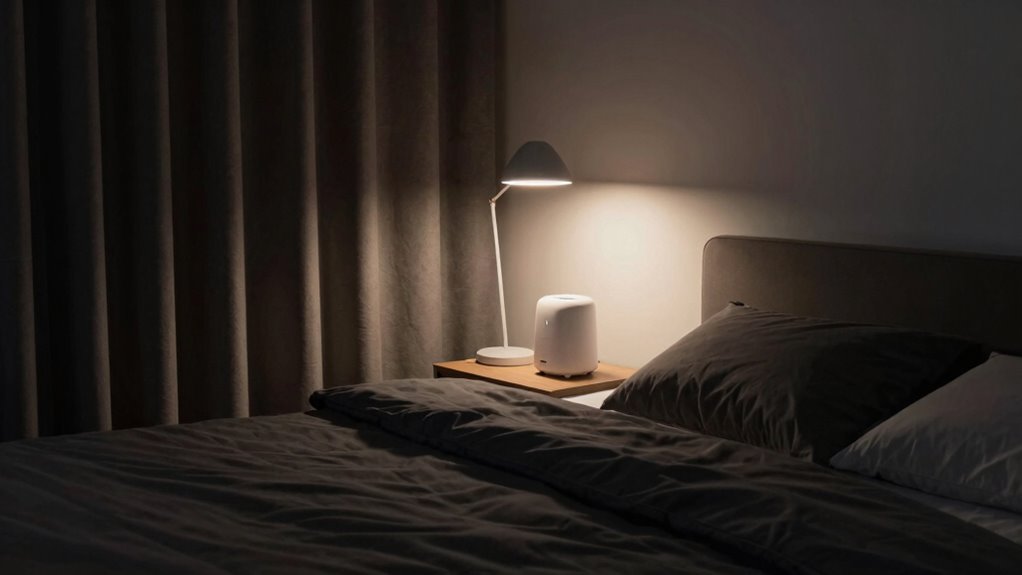
Your sleep environment plays a pivotal role in how well you rest, and controlling light and noise is a key part of optimizing it. To block out unwanted light, use blackout curtains or a sleep mask. Blackout curtains create a dark room, signaling your body it’s time to sleep, even if outside lights are bright. If you prefer a portable solution, a sleep mask is effective and easy to adjust. Noise can disrupt your sleep, so consider using earplugs or a white noise machine to drown out disturbances. Keeping your sleep space quiet and dark helps your body produce melatonin, the hormone responsible for sleep. Additionally, controlling ambient light can help reinforce your sleep cues, leading to faster sleep onset and better quality rest. Incorporating soundproofing techniques can further enhance your sleep environment by minimizing external noise sources, ensuring a peaceful atmosphere. Simple adjustments like these, combined with sleep environment optimization, can make a significant difference in how quickly and deeply you fall asleep. For example, using ventilation considerations to regulate airflow can prevent stuffiness and maintain a comfortable temperature, further improving sleep quality. Creating a consistent sleep routine can also support your body’s natural sleep signals and improve overall sleep quality.
Set the Right Room Temperature and Ventilation
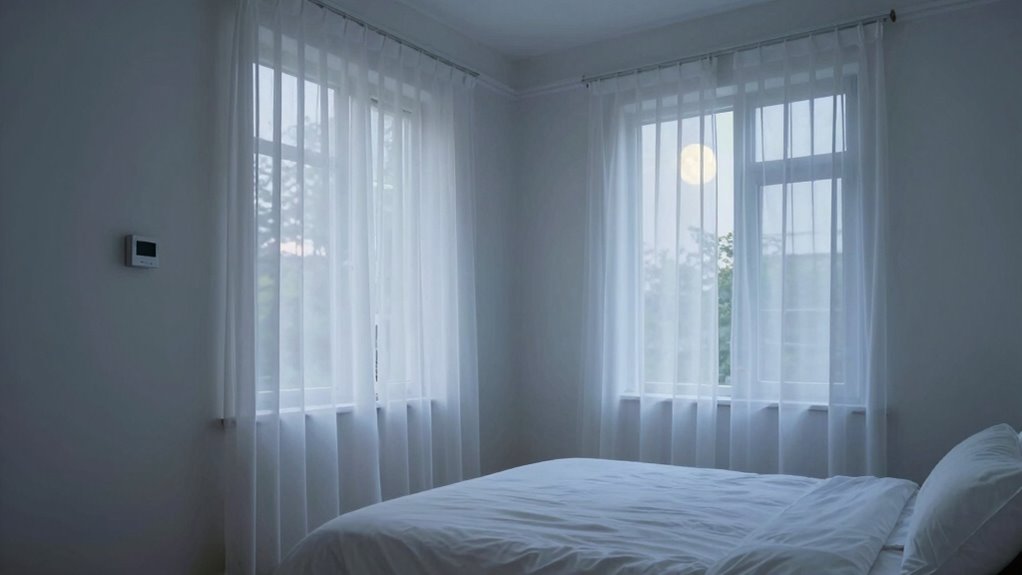
Maintaining the right room temperature and good ventilation is essential for restful sleep. Proper temperature regulation helps your body stay comfortable, preventing overheating or becoming too cold. Using a reliable backup power system can ensure your sleep environment remains stable during power outages, maintaining optimal temperature and air quality. Good air quality ensures fresh oxygen and reduces pollutants that can disturb your sleep cycle. To optimize your sleep environment, prioritize air circulation techniques that promote consistent airflow throughout the room. Additionally, ensuring proper air filtration can further improve indoor air quality and support better sleep. Understanding climate control systems can help you select the most effective methods for maintaining ideal room conditions year-round. Incorporating energy-efficient devices can also reduce energy consumption while maintaining a comfortable environment.
Declutter and Minimize Distractions in Your Bedroom
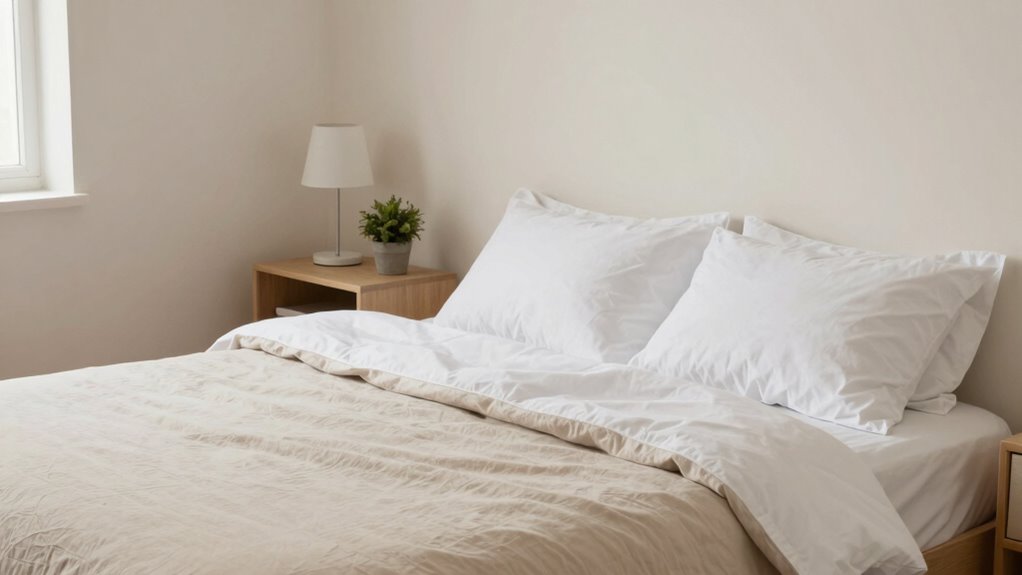
A cluttered bedroom can easily become a source of distraction that interferes with your ability to fall asleep. To improve your sleep environment, focus on bedroom organization by keeping surfaces clear and storing items out of sight. Creating a designated storage space for common clutter can help maintain a tidy look and reduce visual distractions. Minimize distractions by removing electronic devices, such as phones or tablets, from your sleeping area. A tidy space helps create a calm atmosphere, reducing visual clutter that can keep your mind active. Consider using storage solutions like baskets or drawers to keep clutter out of sight and maintain a streamlined look. The goal is distraction reduction, so your bedroom becomes a peaceful retreat rather than a busy space. When your environment is organized and free of unnecessary items, falling asleep becomes easier and quicker. Additionally, managing ear wax odor and other sensory distractions can contribute to a more restful sleep environment. Paying attention to piercing hygiene and ensuring they are clean and free from irritation can also promote a more comfortable sleeping experience. Regularly ventilating the room can further improve air quality and help create a more soothing sleep setting.
Frequently Asked Questions
How Does Sleep Environment Affect Sleep Cycles?
Your sleep environment directly affects your sleep cycles by supporting good sleep hygiene. A quiet, dark, and cool room helps regulate your internal clock, making it easier to fall asleep and stay in restful sleep stages.
Ambient noise can disrupt your sleep cycles, so using white noise or earplugs can help.
When your environment is optimized, you wake up feeling more refreshed and your sleep cycles become more consistent and restorative.
Can Specific Colors Improve Sleep Quality?
Yes, specific colors can improve your sleep quality through color psychology and sleep lighting. Soft, muted hues like blue and green promote relaxation, helping you fall asleep faster and enjoy deeper sleep.
Using sleep lighting in these calming colors creates a tranquil environment, reduces stress, and signals to your brain it’s time to wind down. Incorporate these colors into your bedroom decor or lighting for a better night’s rest.
What Role Does Scent Play in Sleep Enhancement?
Scent plays a significant role in sleep enhancement through aromatherapy benefits, helping you relax and fall asleep faster. Using scent layering techniques, you can combine calming aromas like lavender or chamomile to create a soothing environment.
These techniques enhance the overall aroma experience, making your sleep space more inviting. Incorporate gentle scents into your bedtime routine to improve sleep quality naturally and enjoy more restful nights.
How Do Electronic Devices Impact Sleep Environment?
Electronic devices, especially screens emitting blue light, disrupt your sleep environment by suppressing melatonin production. This screen exposure tricks your brain into thinking it’s daytime, making it harder to fall asleep.
While these devices offer entertainment and connectivity, their impact on sleep quality is profound. To improve your sleep environment, limit screen use before bed, use blue light filters, or switch to non-electronic activities, helping your body wind down naturally.
Are Certain Mattress Types Better for Environmental Comfort?
Yes, certain mattress types are better for environmental comfort. You should look for mattresses with the right firmness level to suit your sleep preferences, as this enhances comfort and sleep quality.
Opt for eco-friendly materials like organic cotton, natural latex, or recycled fabrics, which reduce environmental impact and promote healthier sleep. These choices support a sustainable sleep environment, helping you rest better while caring for the planet.
Conclusion
You might think making these changes takes too much effort, but they quickly transform your sleep. Creating a quiet, dark, and cool space, plus comfy bedding, isn’t just for perfectionists—it’s for anyone wanting better rest. Even if you’re busy, small tweaks like controlling noise or decluttering can make a big difference fast. Don’t let distractions hold you back; a simple, calm environment helps you fall asleep faster and wake up refreshed. Give it a try tonight—you’ll notice the difference.