To alternate between sitting and standing without soreness, focus on using ergonomic accessories like adjustable desks, support cushions, and anti-fatigue mats. Switch positions gradually to prevent muscle strain, paying attention to any discomfort that signals you need to adjust. Maintain good posture in both positions by aligning your back, neck, and shoulders properly. Remember to move regularly and listen to your body. Keep exploring these strategies to stay comfortable and avoid long-term issues.

Prime made for students and young adults
- Fast, free delivery for dorm and study essentials
- Prime Video and Amazon Music included
- Member-only deals
Key Takeaways
- Alternate between sitting and standing every 30-60 minutes to prevent muscle fatigue and stiffness.
- Use ergonomic accessories like adjustable desks and supportive footrests to maintain proper posture.
- Incorporate anti-fatigue mats during standing periods to reduce foot and leg discomfort.
- Pay attention to your body’s signals and adjust positions to avoid prolonged static postures.
- Ensure proper alignment of back, neck, and shoulders during shifts to minimize soreness.
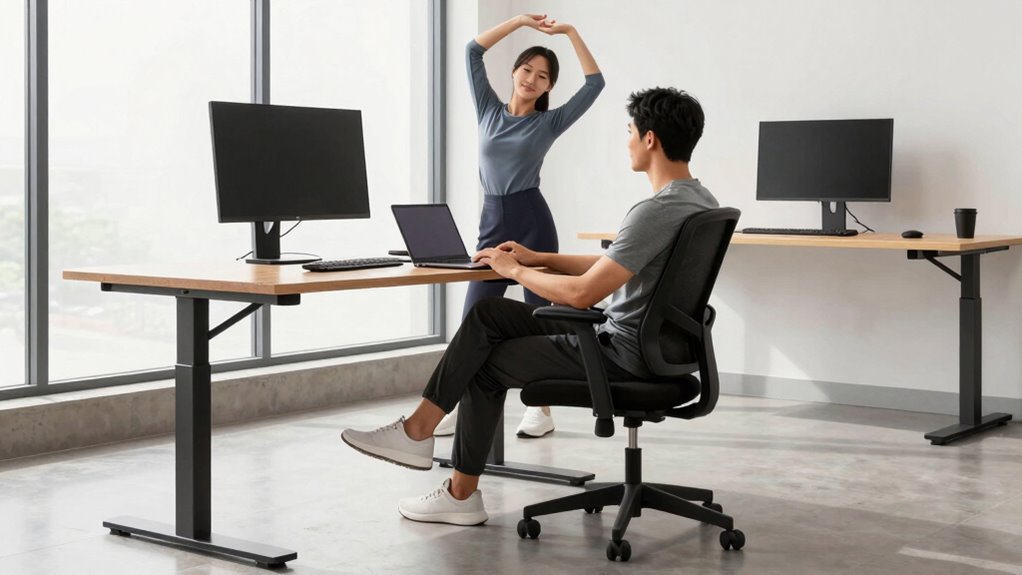
When it comes to workplace ergonomics and daily routines, the debate between sitting and standing often takes center stage. If you want to stay comfortable and productive throughout the day, finding the right balance is key. Using ergonomic accessories can make a significant difference in maintaining proper posture and reducing fatigue. For example, an adjustable desk or a supportive footrest can help you switch positions without sacrificing comfort. These tools encourage correct alignment, which is essential for posture correction and preventing strain. Incorporating thoughtful essentials like ergonomic desks and accessories can support your efforts to maintain a healthy and efficient workspace. Standing desks are a popular solution, but they’re not a one-size-fits-all fix. You might find that standing for hours leads to sore feet or back discomfort. That’s why alternating between sitting and standing is so effective. When you switch positions, your muscles get a break from the constant pressure, and you avoid the stiffness that comes from prolonged periods in one stance. To make this easier, consider ergonomic accessories like anti-fatigue mats that provide cushioning and reduce the impact on your joints when standing. Likewise, a sit-stand converter can help you effortlessly transition between sitting and standing throughout the day. It’s important to listen to your body and pay attention to how you feel during these shifts. If your posture begins to falter or you notice discomfort, take that as a cue to adjust. Proper posture correction isn’t just about standing or sitting; it’s about maintaining alignment that supports your back, neck, and shoulders. Ergonomic accessories designed for posture correction, such as lumbar supports or ergonomic chairs, can help you stay in the right position whether you’re seated or standing. This minimizes the risk of developing musculoskeletal issues over time.
As an affiliate, we earn on qualifying purchases.
Frequently Asked Questions
How Often Should I Switch Between Sitting and Standing Daily?
You should switch between sitting and standing every 30 to 60 minutes to optimize desk ergonomics and prevent discomfort. This helps with posture correction and reduces strain. Use a timer or sit-stand desk to remind you. Incorporate gentle stretches during breaks, and listen to your body. Consistent, moderate changes promote comfort and productivity, ensuring you avoid soreness while maintaining good posture throughout your workday.
What Are the Best Ergonomic Accessories for Alternating Positions?
Ever wonder what ergonomic accessories can make switching between sitting and standing easier? You should consider desk accessories like adjustable monitor stands, footrests, and cushioned mats to support your posture. Ergonomic tools such as sit-stand desks and wrist supports help reduce strain and keep you comfortable. These accessories promote proper alignment, prevent soreness, and make your progression seamless, ensuring you stay productive and pain-free throughout the day.
Can Standing Too Long Cause Health Issues?
Standing too long can lead to health issues like joint pain or varicose veins. To prevent this, focus on posture correction and take regular breaks. Use ergonomic tips such as shifting your weight, wearing supportive shoes, and adjusting your standing height. Incorporating movement and sitting periodically helps reduce strain, ensuring you stay comfortable and healthy while alternating between sitting and standing throughout the day.
How Do I Know if My Posture Is Correct When Standing?
You can tell if your posture is correct by paying attention to alignment during standing. Keep your ears over your shoulders, shoulders over hips, and hips over ankles. To verify proper posture, consider a posture correction or ergonomic assessment, which can help identify and fix misalignments. Regularly check in with your body, and avoid slouching or locking your knees, to prevent discomfort and strain.
Are There Specific Exercises to Prevent Soreness From Alternating Positions?
Think of your muscles as a rubber band—regular stretching routines keep them flexible and prevent soreness. Incorporate simple exercises like hamstring stretches, calf raises, and shoulder rolls into your day. Focus on posture adjustments, such as keeping your back straight and shoulders relaxed, to reduce strain. Alternating positions gradually and doing these exercises regularly helps your body adapt, keeping soreness at bay and making standing and sitting more comfortable.
As an affiliate, we earn on qualifying purchases.
Conclusion
So, next time you swap between sitting and standing, remember—you’re not just changing positions, you’re transforming your entire day from a sluggish crawl to a lively sprint! Keep moving, switch often, and don’t let soreness take over your life. If you master this dance, you’ll avoid the agony of a thousand sore muscles and become a true master of comfort. Your body will thank you, and you’ll feel unstoppable—like a superhero in a sea of stiff, tired workers!
supportive footrest for standing desk
As an affiliate, we earn on qualifying purchases.
As an affiliate, we earn on qualifying purchases.
lumbar support cushion for office chair
As an affiliate, we earn on qualifying purchases.
As an affiliate, we earn on qualifying purchases.
Fall Picks
fall essentials
As an affiliate, we earn on qualifying purchases.