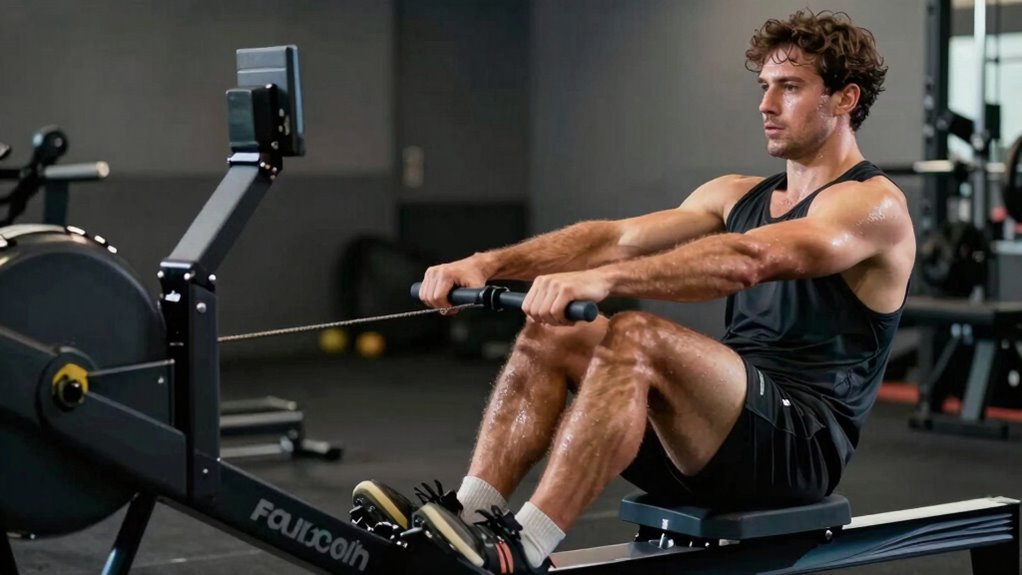

When you start rowing, it often feels harder because your technique isn’t fully developed and your equipment may not be properly calibrated. Poor form can lead to muscle fatigue and inefficient movements, making the workout seem tougher. Adjusting your technique guarantees effort is evenly distributed, which can reduce fatigue and improve your experience. Also, setting your rowing machine correctly makes the resistance feel more natural. Keep exploring to discover how mastering these aspects will transform your workouts.
Key Takeaways
- Improper technique causes uneven effort distribution, making rowing feel harder until proper form is learned.
- Correct technique ensures smoother strokes, reducing muscle fatigue and perceived exertion.
- Equipment miscalibration can increase difficulty until resistance is properly adjusted.
- Mastering technique helps prevent over-reliance on smaller muscle groups, easing workout intensity.
- Proper setup and form improve efficiency, making rowing feel more natural and less strenuous.

If you’ve ever felt like rowing machines are tougher than they should be, you’re not alone. Many newcomers hit the machine expecting a smooth, manageable workout but find themselves struggling more than anticipated. Usually, this comes down to a few factors, including muscle fatigue and equipment calibration. When your muscles tire quickly or the machine isn’t properly calibrated, it can feel like you’re fighting against an invisible force, making each stroke harder and less efficient.
Muscle fatigue is a common culprit. When you start rowing without proper technique, you tend to overuse certain muscle groups, especially your arms and back, which leads to quicker exhaustion. Poor form also prevents you from engaging the bigger, more powerful muscle groups like your legs, which are essential for a smooth, effective stroke. As your muscles tire, every pull feels more strenuous, and it’s easy to assume the machine itself is to blame. However, it’s often just your muscles reacting to inefficient movement patterns. Focusing on proper technique helps distribute effort evenly, delaying fatigue and making rowing feel less difficult over time.
Proper technique distributes effort evenly, reducing fatigue and making rowing feel easier over time.
Equipment calibration plays a critical role in how hard the workout feels. If the rowing machine isn’t calibrated correctly, it can either undervalue or overvalue your effort. For instance, if the resistance is set too high, every stroke will feel disproportionately difficult, even if your form is perfect. Conversely, if it’s too low, it might not challenge you enough, but you might still feel like you’re working harder due to inconsistent resistance. Many machines have adjustable resistance settings, but if they’re not calibrated properly, the readings won’t reflect your actual effort. Checking and adjusting the equipment calibration ensures the resistance level aligns with your workout goals and your effort level, making the workout more predictable and manageable. Proper setup ensures accuracy and an understanding of how resistance impacts effort are essential for an accurate and effective workout.
Until your technique clicks, it’s easy to get discouraged because the effort feels unbalanced. When you’re new, focusing on proper form can feel awkward at first, but it’s crucial for reducing muscle fatigue and ensuring the equipment provides accurate resistance feedback. Additionally, understanding the importance of equipment calibration can help you make adjustments that improve your workout experience. Once your technique improves, you’ll notice a marked difference — rowing will feel smoother, more natural, and less exhausting. Remember, it’s not just about pushing harder but about working smarter. Take the time to set up your machine correctly and refine your form, and you’ll find that rowing becomes a more efficient, less daunting workout. The moment your technique clicks, you’ll likely notice that the machine feels less like a challenge and more like a powerful tool to reach your fitness goals.
adjustable rowing machine resistance
As an affiliate, we earn on qualifying purchases.
As an affiliate, we earn on qualifying purchases.
Frequently Asked Questions
How Long Does It Typically Take to Improve Rowing Technique?
It usually takes a few weeks of consistent training to see significant improvements in your rowing technique. By sticking to regular practice and focusing on technique drills, you’ll gradually develop better form. Keep in mind that patience is key—your muscles and coordination need time to adapt. With consistent effort and attention to proper form, you’ll notice your rowing feels smoother and more efficient within a few sessions to a couple of months.
Can Improper Technique Cause Injuries When Using a Rowing Machine?
Improper technique on a rowing machine can cause injuries faster than a lightning strike! If you neglect ergonomic adjustments, you risk muscle strain, joint pain, and even long-term damage. Poor form puts unnecessary stress on your back, shoulders, and knees, increasing injury chances. To stay safe, focus on proper posture, smooth movements, and correct sequencing. When your technique clicks, you’ll row more efficiently and reduce injury risks dramatically.
Are Some Rowing Machines Easier to Master Than Others?
Some rowing machines are easier to master because they offer better machine consistency and are more user-friendly. When a machine provides consistent resistance and smooth operation, you, as the user, gain familiarity faster, making it simpler to develop proper technique. Less complexity reduces the learning curve, so you can focus on your form and workout rather than fighting the equipment. This ultimately helps you avoid injuries and improve performance more quickly.
What Are Common Mistakes Beginners Make on Rowing Machines?
You often make mistakes on rowing machines by neglecting proper rowing posture and skipping equipment adjustments. Keep your back straight, engage your core, and avoid hunching your shoulders. Guarantee the foot straps fit snugly and adjust the footplates for comfort and proper leverage. Rushing through the movements or pulling with your arms alone can make rowing feel harder. Focus on smooth, coordinated strokes to improve technique and reduce fatigue.
How Does Body Type Influence Rowing Machine Difficulty?
Your body type influences rowing machine difficulty through body biomechanics and equipment ergonomics. If you have longer limbs or a different torso length, you might find certain strokes more challenging, requiring adjustments in technique. Properly setting the foot straps and seat height helps match equipment ergonomics to your body. When your technique aligns with your body type, rowing feels smoother and less strenuous, making workouts more effective and enjoyable.
As an affiliate, we earn on qualifying purchases.
Conclusion
So, here’s the irony: the hardest part of rowing isn’t the machine itself, but your own technique. You might struggle and feel like quitting until everything clicks into place. Once your form improves, those tough sessions suddenly become smoother and more manageable. It’s almost funny—what once felt impossible becomes a breeze, all because you just needed to get your technique right. Turns out, the real workout was learning how to row properly all along.
rowing machine with calibration settings
As an affiliate, we earn on qualifying purchases.
As an affiliate, we earn on qualifying purchases.
As an affiliate, we earn on qualifying purchases.