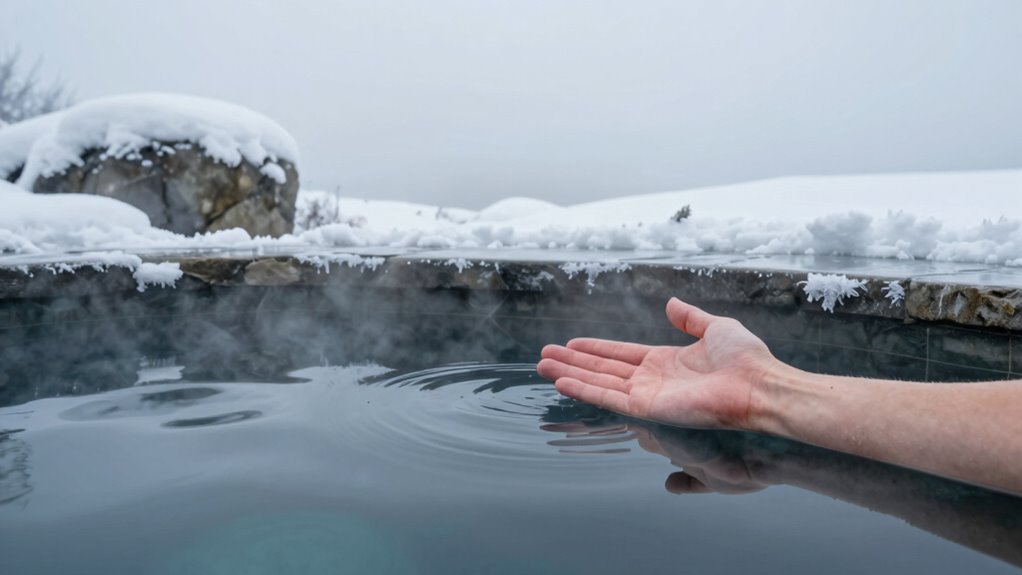
You should avoid cold plunging if you experience symptoms like uncontrollable shivering, numbness, confusion, chest pain, dizziness, or shortness of breath, as these indicate your body is struggling to cope and serious health risks are present. People with heart conditions or who are very young or elderly should consult a doctor beforehand. Environmental hazards like wind, rough water, or prolonged exposure also increase danger. Stay safe and learn how to identify warning signs before jumping in deeper.
Key Takeaways
- Avoid cold plunging if you experience chest pain, dizziness, confusion, or uncontrollable shivering.
- Do not enter cold water if you have pre-existing heart conditions or high blood pressure.
- Refrain from plunging alone; always have a companion or emergency support nearby.
- Skip cold plunges in extremely cold water, high winds, or rough conditions that increase hypothermia risk.
- Stop immediately if you feel disoriented, numb, or experience difficulty breathing during immersion.
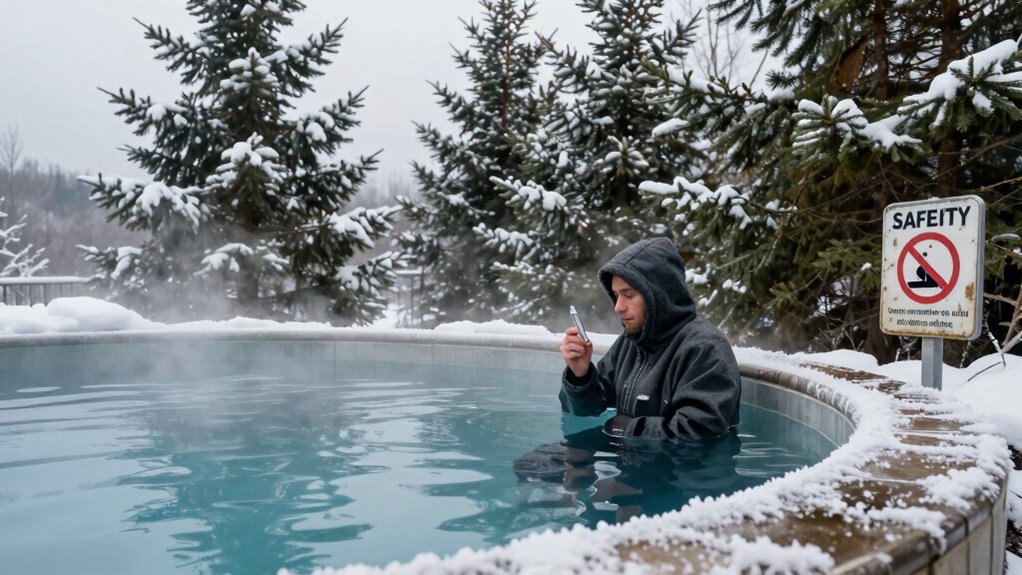
Taking a cold plunge can be invigorating, but it’s important to prioritize safety to avoid potential health risks. When you immerse yourself in icy water, your body reacts quickly, and if you’re not careful, you could face serious issues like hypothermia or cardiac concerns. Hypothermia risk increases when your body temperature drops below normal, especially if you stay submerged for too long or if the water is extremely cold. This can happen even if you feel fine at first, so it’s essential to pay attention to how your body responds and limit your exposure accordingly. If you start shivering uncontrollably, feel numbness, or experience confusion, it’s a clear sign to get out immediately. Prolonged exposure can cause your core temperature to fall dangerously, impairing your body’s ability to function properly. Additionally, understanding the contrast ratio of your environment can help you gauge how quickly your body may lose heat in cold water and surrounding conditions.
Cardiac concerns are another critical consideration, particularly if you have pre-existing heart conditions or risk factors. The sudden shock of cold water causes blood vessels to constrict, which can elevate blood pressure and place stress on your heart. This vasoconstriction, combined with rapid breathing and increased heart rate, can trigger arrhythmias or even a heart attack in vulnerable individuals. If you have a history of cardiovascular issues, it’s best to consult your doctor before attempting cold plunges. Even if you’re healthy, the shock to your cardiovascular system can be intense, so start slowly and don’t push yourself beyond your comfort zone. Always listen to your body—if you experience chest pain, dizziness, or shortness of breath, exit the water immediately and seek medical attention.
It’s also important to think about environmental factors that can influence safety. Wind, air temperature, and water conditions can all impact how your body responds to cold immersion. Wind chill can accelerate heat loss, increasing hypothermia risk, while rough water or currents may tire you out or make it harder to get out safely. Never plunge into cold water alone; having someone nearby can be essential in case you need assistance. Stay within your limits, gradually build up your tolerance, and always have a plan for warming up afterward. Remember, the thrill of a cold plunge shouldn’t come at the expense of your health. Prioritize safety, heed your body’s signals, and stay informed about the risks to make your experience both invigorating and safe.
cold plunge safety thermometer
As an affiliate, we earn on qualifying purchases.
As an affiliate, we earn on qualifying purchases.
Frequently Asked Questions
Can Cold Plunges Cure Chronic Health Conditions?
Cold plunges can’t cure chronic health conditions, but some people believe they help as an alternative medicine. You might experience temporary relief or improved mood due to the placebo effect, but there’s no solid scientific evidence that cold plunges treat long-term illnesses. Always consult your healthcare provider before relying on cold plunges for chronic conditions, as they should complement, not replace, established medical treatments.
How Long Should I Stay in a Cold Plunge?
You should stay in a cold plunge for about 1 to 3 minutes, following duration guidelines for safety precautions. Keep an eye on how your body responds; if you start shivering or feel numb, it’s time to get out. Always listen to your body’s signals, and don’t push beyond your comfort zone. Short, controlled sessions help maximize benefits while minimizing risks, ensuring you enjoy cold plunges safely.
Are There Age Restrictions for Cold Plunging?
Age restrictions for cold plunging vary, but generally, safety guidelines recommend that children and teenagers avoid cold plunges without medical advice. Adults should consider their health status and consult a doctor if unsure. Older adults or those with cardiovascular issues should be cautious, following safety guidelines closely. Always listen to your body, start slow, and never force yourself into a cold plunge if you feel uncomfortable or unwell.
Can Cold Plunges Help With Mental Health Issues?
Cold plunges can definitely boost your mental health benefits and build emotional resilience. Think of it as a shot of adrenaline for your mood—helping reduce stress and anxiety while sharpening focus. When you immerse yourself in cold water regularly, you strengthen your mind to handle life’s ups and downs better. Just remember, it’s not a magic pill; listen to your body and consult a professional if you’re dealing with serious mental health issues.
Is It Safe to Combine Cold Plunges With Other Therapies?
You can combine cold plunges with other therapies, but you should be cautious. Be aware of the risks of overexposure, which can cause hypothermia or skin damage. Additionally, some medications may interact negatively with cold exposure, affecting your body’s response. Always consult your healthcare provider before integrating cold plunges with other treatments to guarantee safety, especially if you have underlying health conditions or are on medication.
cold water immersion suit
As an affiliate, we earn on qualifying purchases.
As an affiliate, we earn on qualifying purchases.
Conclusion
So, next time you consider a cold plunge, remember to listen to your body and know your limits. Avoid plunging if you’re pregnant, have heart issues, or feel unwell. Isn’t your health worth prioritizing over the thrill? Always consult with a healthcare professional if you’re unsure. Safety first guarantees you enjoy the benefits without risking unnecessary harm. After all, isn’t feeling good about your wellness worth taking the right precautions?
hypothermia protection gear
As an affiliate, we earn on qualifying purchases.
As an affiliate, we earn on qualifying purchases.
cold plunge rescue kit
As an affiliate, we earn on qualifying purchases.
As an affiliate, we earn on qualifying purchases.