

A blood sugar spike is a temporary rise in your blood glucose levels after eating or drinking, but it’s important not to panic. Not every increase means something is wrong. Small, natural fluctuations happen throughout the day, and many factors like stress or dehydration can cause unexpected rises. Understanding the difference between normal changes and concerning spikes helps you stay calm. Keep exploring to learn practical tips and how to manage these fluctuations confidently.
Key Takeaways
- A blood sugar spike is a temporary rise in glucose levels after eating, not necessarily an emergency.
- Normal fluctuations happen throughout the day; focus on overall trends rather than single high readings.
- Recognizing symptoms like thirst or fatigue helps identify spikes without panic, but consistent monitoring is key.
- Small lifestyle adjustments, such as balanced meals and regular activity, can prevent or reduce spikes.
- Understanding that occasional spikes are normal helps maintain calm and focus on long-term blood sugar management.
What Is a Blood Sugar Spike and Why Does It Happen?

A blood sugar spike occurs when your blood glucose levels rise rapidly after eating or drinking. This happens because your body’s blood sugar regulation system temporarily struggles to manage the influx of glucose. Normally, insulin helps facilitate glucose metabolism, allowing cells to absorb sugar for energy or storage. However, certain foods—especially those high in refined carbs or sugars—can cause sudden surges in blood sugar. When this occurs, your body releases insulin quickly to bring levels back down. If this process happens frequently or insulin response is impaired, spikes can become more pronounced and harder to control. Understanding how glucose metabolism and blood sugar regulation work helps you recognize why these spikes happen and how they can affect your overall health. Proper insulin response is crucial for maintaining stable blood sugar levels and preventing frequent spikes. Additionally, dietary habits and overall health can influence how effectively your body manages blood sugar. Furthermore, glucose metabolism can be affected by various lifestyle factors, making it important to adopt healthy habits for better regulation. For example, consuming a balanced diet rich in fiber and healthy fats can support blood sugar stability and reduce the likelihood of spikes.
How Can You Tell When Your Blood Sugar Is Spiking?

Recognizing the signs of a blood sugar spike can help you manage your health more effectively. Common symptoms include sudden increased thirst, fatigue, and blurred vision. Many people fall for blood sugar myths, believing only diabetics experience spikes, but anyone can have them—especially if you believe glucose myths that oversimplify blood sugar control. To stay alert, watch for these signs:
| Symptom | What It Means | When to Be Concerned |
|---|---|---|
| Increased thirst | Your body tries to flush excess sugar | Persistent or severe symptoms |
| Fatigue | Cells aren’t getting enough energy | During or after meals |
| Blurred vision | Fluid shifts affect your eyesight | Recurrent or worsening episodes |
Being aware of how blood sugar regulation works can further help you understand these symptoms and take appropriate action. Understanding the role of healthy eating in stabilizing blood sugar levels is essential for avoiding unnecessary health risks. Additionally, monitoring your blood sugar levels regularly can provide valuable insights into your overall health. Recognizing that blood sugar spikes can occur in anyone, regardless of diabetes status, is crucial for early detection and management. Stay informed and don’t let myths cloud your understanding of blood sugar spikes.
What’s the Difference Between Normal Fluctuations and Dangerous Blood Sugar Spikes?

Understanding the difference between normal blood sugar fluctuations and dangerous spikes is essential for managing your health effectively. Normal fluctuations, or glucose variability, happen throughout the day as your body responds to meals, activity, and stress. These changes are usually mild and quickly balanced by your insulin response. Dangerous blood sugar spikes, however, involve a rapid and significant increase in glucose levels that can overwhelm your insulin response, leading to potential complications over time. The key is recognizing that minor ups and downs are normal, but persistent or extreme spikes signal an issue. Monitoring your blood sugar and understanding your body’s insulin response can help you distinguish between healthy variability and dangerous spikes, enabling better management and healthier outcomes. Regularly checking your blood glucose levels can also provide valuable insights into your body’s response mechanisms and help prevent long-term health problems. Being aware of blood glucose patterns can further assist in identifying when your levels are trending toward concerning spikes.
What Common Factors Cause Blood Sugar to Rise Unexpectedly?

Several common factors can cause your blood sugar to rise unexpectedly, catching you off guard. One misconception is the blood sugar myths that certain foods always cause spikes, but it’s often more complex. Stress impact also plays a big role; when you’re stressed, your body releases hormones like cortisol, which can raise blood sugar levels even without changing your food intake. Additionally, dehydration can concentrate blood sugar, making it appear higher. Lack of sleep affects insulin sensitivity, leading to unexpected increases. Sometimes, medications or illnesses trigger these rises too. Recognizing these factors helps you avoid unnecessary panic and understand that not every blood sugar spike is linked directly to what you ate. Being aware of these common causes can empower you to manage your levels better.
How Do Your Food Choices Affect Blood Sugar Levels?

Your food choices have a direct impact on your blood sugar levels, as what you eat determines how much glucose enters your bloodstream. Effective meal planning helps you balance carbohydrates, proteins, and fats, minimizing spikes. Focus on whole, minimally processed foods and portion control to keep blood sugar steady. Reading food labels is essential; check for added sugars and carbohydrate counts to make informed decisions. Choosing options with high fiber content slows glucose absorption, preventing sudden increases. Combining protein or healthy fats with carbohydrates can further stabilize blood sugar levels. Being mindful of ingredients and serving sizes allows you to better manage your blood sugar and avoid unexpected spikes. Employing passive voice detection tools can help identify and improve unclear or overly passive constructions in your writing. Additionally, selecting whole foods and reducing processed items in your diet supports more stable blood sugar levels. Incorporating nutrient-dense foods into your meals ensures you receive essential vitamins and minerals that aid in overall blood sugar regulation. Including a variety of sustainable food sources can also promote long-term health and well-being. To further support blood sugar management, it is beneficial to understand glycemic index ratings, which help you choose foods that have a lower impact on blood sugar levels. Thoughtful food choices and label reading empower you to maintain balanced blood sugar levels throughout the day.
When Should You Be Concerned About a Blood Sugar Spike?

You should be concerned about a blood sugar spike when levels reach dangerous heights or happen frequently. The timing of these spikes can impact your health, especially if they occur after meals or during the night. Pay attention to symptoms like excessive thirst, fatigue, or blurred vision, which can signal trouble.
Recognizing Dangerous Levels
A blood sugar spike becomes a concern when levels rise sharply and stay elevated beyond normal ranges. While some blood sugar myths suggest small fluctuations are harmless, persistent high levels can damage your health. Recognizing dangerous levels involves understanding your body’s signals and measuring accurately. In general, a reading above 180 mg/dL after eating indicates a spike needing attention. Dietary influences, such as sugary foods or carb-heavy meals, can cause these spikes. Use this table to picture your blood sugar response:
| Duration | Concern Level | Action Needed |
|---|---|---|
| Temporary | Mild discomfort, manageable spike | Monitor, adjust diet, stay active |
| Persistent | Elevated for hours, symptoms present | Consult healthcare provider immediately |
| Extremely high | Over 300 mg/dL, symptoms like dizziness | Seek emergency care immediately |
Stay aware, and don’t ignore sustained high readings. Monitoring blood sugar levels regularly can help you manage and prevent dangerous spikes. Recognizing blood sugar fluctuations as early warning signs allows for better management and intervention. Additionally, understanding the impact of dietary choices on blood sugar can empower you to make healthier decisions.
Timing of Spikes Matters
Timing plays a key role in managing blood sugar levels. Understanding when a spike occurs helps you prevent long-term issues. Foods with a high glycemic index cause rapid increases in blood sugar, triggering a swift insulin response. This quick spike can be problematic if it happens frequently or at inappropriate times, such as late in the day. Ideally, you want your blood sugar to rise gradually and return to normal soon after eating. Monitoring the timing of these spikes allows you to adjust your meals and snacks for better control. If you notice sudden or frequent spikes shortly after eating, it’s a sign to reassess your diet or consult a healthcare professional. Managing when spikes happen is just as important as their magnitude. Additionally, understanding Free Floating can help you develop strategies to minimize unnecessary blood sugar fluctuations throughout the day.
Symptoms to Watch For
Blood sugar spikes often come with noticeable symptoms that signal your body is struggling to maintain balance. You might feel sudden fatigue, dizziness, or irritability after meals. Recognizing these signs helps you differentiate between normal fluctuations and concerning spikes. Beware of blood sugar myths that downplay symptoms or suggest they’re insignificant; true spikes can impact your health. Dietary triggers like sugary snacks or carb-heavy meals often cause these symptoms. Here’s a quick guide:
| Symptom | Possible Cause |
|---|---|
| Fatigue | Blood sugar drop after spike |
| Thirst | Dehydration from high glucose |
| Blurred vision | Rapid glucose changes |
| Headaches | Hormonal response to spikes |
| Irritability | Brain’s response to fluctuating glucose |
Staying aware of digital literacy can also help you track and manage your health data effectively. Being knowledgeable about blood sugar regulation can empower you to make better dietary choices and prevent dangerous spikes. Stay alert to these signs and adjust your diet accordingly.
What Are Simple Ways to Prevent Excessive Blood Sugar Spikes?

To keep blood sugar levels stable, you can adopt simple strategies that prevent sudden spikes after meals. One effective approach is paying attention to meal timing; eating smaller, more frequent meals can help avoid large blood sugar jumps. Incorporate balanced portions of fiber, protein, and healthy fats to slow digestion and absorption. Using sugar substitutes instead of regular sugar can reduce quick glucose entry into your bloodstream, especially if you have a sweet tooth. Avoid highly processed carbs and sugary drinks, which cause rapid spikes. Staying active after meals also helps regulate blood sugar levels. Engaging in mindful eating practices can further support metabolic health, making these adjustments more effective. Developing awareness of blood sugar regulation can empower you to make better dietary choices and maintain steady levels. Additionally, understanding the role of insulin sensitivity can guide you in managing your blood sugar more effectively. These straightforward adjustments can make a significant difference in maintaining steady blood sugar without feeling restricted or overwhelmed.
How Does Your Body Signal a Blood Sugar Rise?
You might notice signs like feeling more tired or thirsty when your blood sugar rises. Your body also responds hormonally, releasing signals to help manage the spike. Understanding these cues can help you stay aware of your blood sugar levels and take action early.
Blood Sugar Monitoring Signs
When blood sugar levels start to rise, your body often sends subtle signals to alert you. You might notice increased hunger, especially shortly after meals, or feel more fatigued than usual. Sweaty palms, irritability, or difficulty concentrating can also indicate a spike. Monitoring these signs helps you recognize how your dietary habits influence your blood sugar. Consuming high-carb foods or irregular eating patterns can trigger noticeable changes. Stress management plays a vital role too; elevated stress levels can cause your blood sugar to rise unexpectedly. Paying attention to these bodily cues allows you to better understand your body’s responses and make adjustments. Being mindful of these signals encourages healthier habits, such as balanced meals and stress reduction techniques, to keep your blood sugar levels stable.
Hormonal Responses Explained
As your body detects rising blood sugar levels, it responds by releasing hormones that act as signals, prompting various physiological reactions. These hormonal responses are vital for maintaining balance and ensuring your cells get the energy they need. When blood sugar spikes, your pancreas releases insulin, a key hormone that regulates blood sugar by helping cells absorb glucose. This insulin regulation prevents excessive sugar buildup in your bloodstream. Additionally, other hormones like glucagon may be suppressed during this process, stabilizing blood sugar levels. Your body’s ability to coordinate these hormonal responses quickly is essential for avoiding prolonged high blood sugar, which can lead to health issues. Understanding these signals helps you better interpret your body’s reactions without panic.
How Can You Interpret Blood Sugar Readings Without Overreacting?
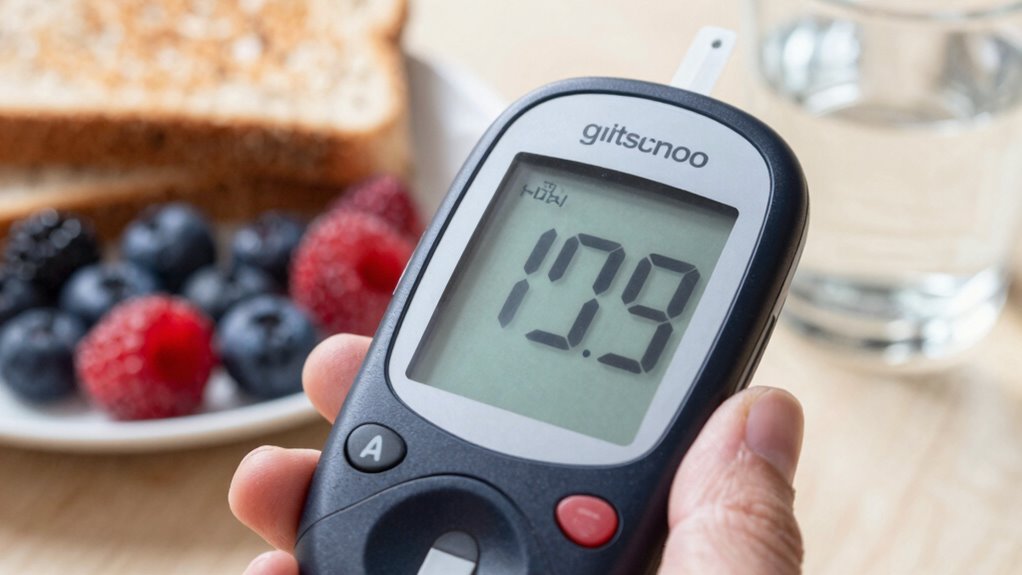
Interpreting blood sugar readings accurately is key to managing your health without unnecessary stress. Many people fall for blood sugar myths or dietary misconceptions that cause panic over normal fluctuations. Remember, a single high reading doesn’t mean you’ve failed or have a problem. Instead, look at trends over time and consider factors like recent meals, activity, or stress. Understanding that blood sugar naturally varies helps you avoid overreacting. Focus on consistent habits rather than perfect numbers. If you see occasional spikes, don’t panic—these are often temporary. Educate yourself about what normal ranges are and how your body responds. This balanced perspective prevents unnecessary worry and empowers you to make informed decisions about your health.
What Are Practical Tips for Confidently Managing Blood Sugar Spikes?
Managing blood sugar spikes confidently starts with practical strategies you can implement daily. Focus on meal planning by choosing balanced meals with fiber, healthy fats, and lean proteins to slow glucose absorption. Avoid high-sugar and processed foods that cause rapid spikes. Incorporate regular physical activity into your routine, like brisk walks or strength exercises, which help your body use glucose more efficiently. Monitoring your blood sugar levels consistently provides insight into how different foods and activities affect you, enabling better choices. Stay hydrated and manage stress, as both influence blood sugar levels. Consistency is key—small, sustainable changes build confidence over time. By staying mindful of your diet and staying active, you can reduce the frequency and intensity of blood sugar spikes without panic.
Frequently Asked Questions
Can Stress Cause Blood Sugar Spikes?
Yes, stress can cause blood sugar spikes. When you’re stressed, your body triggers a hormonal response, releasing cortisol and adrenaline. These hormones raise your blood sugar levels to give you quick energy, but if stress persists, it can lead to frequent spikes. Managing stress through techniques like deep breathing, exercise, and relaxation helps regulate your hormonal response, keeping blood sugar levels more stable and reducing health risks.
Do Exercise and Physical Activity Impact Blood Sugar Levels?
Like a skilled conductor guiding an orchestra, your exercise and physical activity influence your blood sugar levels. They act as a dynamic baton, helping to keep diabetes management in harmony. Regular movement lowers blood sugar spikes, making blood sugar monitoring more predictable. You energize your body and simplify control, transforming chaos into cadence. Embrace activity as your ally, and you’ll find managing blood sugar becomes a more manageable, rhythmic part of daily life.
How Do Medications Influence Blood Sugar Fluctuations?
Medications can cause blood sugar fluctuations through side effects like increased appetite or insulin resistance, impacting your blood sugar control. Some drugs may raise your levels, while others help lower them, but you need to monitor these changes carefully. Proper insulin management is essential to counteract medication effects, ensuring your blood sugar stays stable. Always discuss potential side effects with your doctor to optimize your treatment plan and prevent unwanted spikes or drops.
Are There Long-Term Health Risks From Frequent Spikes?
Frequent blood sugar spikes can increase your risk of long-term health issues like insulin resistance and type 2 diabetes. When your blood sugar rises suddenly, your insulin response kicks in to regulate it, but repeated spikes can strain this process. Rapid carbohydrate absorption causes these spikes, so managing your intake helps keep your blood sugar stable. Over time, consistent control supports better health and reduces complications.
Can Sleep Quality Affect Blood Sugar Regulation?
Yes, sleep quality impacts blood sugar regulation. Poor sleep hygiene disrupts your dream cycles, leading to frequent awakenings and less restorative rest. This imbalance can cause your body to produce more cortisol, which raises blood sugar levels. When you get quality sleep, your body better manages glucose, reducing spikes. Prioritizing consistent sleep routines and creating a relaxing sleep environment help stabilize blood sugar and improve overall health.
Conclusion
Remember, understanding your blood sugar levels helps you stay in control, not panic. Keep an eye on your habits, eat balanced meals, and listen to your body’s signals. It’s normal for levels to fluctuate; what matters is managing them wisely. As the saying goes, “Forewarned is forearmed.” With knowledge and a calm approach, you can confidently handle blood sugar spikes and maintain your health without unnecessary worry.