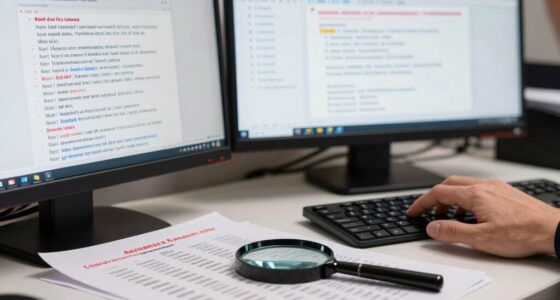
Even if a screenshot looks real, it can still mislead you if it’s taken out of context or subtly edited. Digital manipulation is easy, and images can be altered with cropping, text changes, or background edits. Just because something appears genuine doesn’t guarantee its accuracy or truthfulness. To avoid being fooled, always question the source and consider missing details. If you want to understand how to spot these tricks, there’s more to uncover.
Key Takeaways
- Even genuine screenshots can be taken out of context, leading to misinterpretation.
- Digital images are easily manipulated; authenticity doesn’t guarantee accuracy.
- Missing background or preceding statements can distort the intended message.
- Always verify the source and seek additional context before trusting viral screenshots.
- Critical scrutiny helps distinguish between true content and misleading or manipulated images.

Have you ever seen a screenshot online that seemed convincing but left you feeling unsure? It’s a common experience in today’s digital landscape, where images can be easily manipulated and shared to create specific impressions. Even if a screenshot appears authentic at first glance, it doesn’t mean it tells the whole story. Digital manipulation allows people to alter images, sometimes subtly, to change the meaning or context entirely. It’s essential to remember that what you see isn’t always what’s real, especially when it comes to screenshots that can be edited or taken out of context.
When analyzing a viral screenshot, consider the role of contextual interpretation. A single image or snippet of text can seem impactful or damning, but without understanding the full background, you might jump to conclusions that aren’t justified. For example, a screenshot of a conversation or a quote might be real but selectively edited to support a particular narrative. The surrounding circumstances—what was said before or after, the tone of voice, or the situation—are often missing but vital for understanding the true meaning. Recognizing this helps you avoid being misled by partial information.
It’s tempting to trust what’s immediately visible, especially when a screenshot aligns with your beliefs or confirms suspicions. However, digital manipulation can be sophisticated, making it difficult to spot tricks or edits without careful scrutiny. Sometimes, images are cropped, text is altered, or backgrounds are changed to enhance or distort the original message. These manipulations can be so seamless that only detailed analysis or expert tools reveal the truth. So, when you come across a viral screenshot, don’t just accept it at face value. Question its authenticity and seek out the original source or additional context. Developing a critical thinking approach to digital content can significantly reduce the risk of being deceived.
Understanding the significance of both digital manipulation and contextual interpretation equips you to navigate online information more critically. Recognize that a screenshot, even if genuine, might be misleading if taken out of context. Always consider what might be missing or altered. Look for corroborating sources or statements that can clarify the full story. By doing so, you protect yourself from misinformation and ensure your interpretations are based on a complete picture—not just a fragment designed to provoke a specific reaction. In today’s digital age, staying vigilant about the authenticity and context of what you see is key to forming accurate, informed opinions.
Additionally, awareness of content authenticity can help you develop a more discerning approach to digital content, reducing the likelihood of falling for misleading information.
MOVEED Reversible L-Shaped Reference Scales, Photo Evidence PVC Rulers, Crime Scene Forensic Supply, 5pcs/Pack (300 x 150 mm, Folding)
Excellent for scientific photography in most lighting conditions
As an affiliate, we earn on qualifying purchases.
As an affiliate, we earn on qualifying purchases.
Frequently Asked Questions
How Common Are Misleading Screenshots Online?
Misleading screenshots are quite common online. You need to be cautious about image authenticity, as many can be edited or taken out of context. Digital forensics tools help verify whether a screenshot is genuine, but not everyone uses them. Always question what you see, especially if it seems sensational or unlikely. Developing a healthy skepticism and checking sources can protect you from falling for misleading images.
Can You Tell if a Screenshot Is Manipulated?
You can often tell if a screenshot is manipulated by examining its image authenticity through digital forensics tools. Look for inconsistencies like irregular pixelation, mismatched fonts, or altered backgrounds, which may indicate editing. Skilled digital forensics can reveal signs of manipulation, helping you assess whether a screenshot is genuine or altered. Always verify with trusted sources before accepting a screenshot as proof, especially if it seems suspicious.
What Are the Signs of a Fake Viral Screenshot?
To spot a fake viral screenshot, look for inconsistencies like blurry text, mismatched fonts, or unusual shadows, which can hint at digital manipulation. You should also verify the image’s authenticity through digital verification tools or reverse image searches. Be cautious of screenshots that seem out of context or contain suspicious metadata, as these signs can reveal the image isn’t genuine, helping guarantee you trust accurate information.
How Do Screenshots Influence Public Opinion?
Screenshots heavily influence public opinion by shaping perceptions quickly, but digital authenticity is often compromised through image manipulation. You might believe what you see, yet false or altered screenshots can spread misinformation, swaying opinions unfairly. It’s essential to question the origin and integrity of these images. Recognizing the potential for manipulation helps you stay informed and critical, ensuring your views aren’t shaped by misleading digital content.
Are There Legal Consequences for Sharing False Screenshots?
Sharing false screenshots can lead to legal risks, especially if they defame or deceive others. You might face lawsuits for defamation or spreading misinformation. Ethically, it’s wrong to share content that could mislead or harm someone’s reputation. Always verify screenshots before sharing, as spreading false information can have serious legal consequences and damage your credibility. Being responsible protects you legally and maintains ethical standards.

Burning Studio 26 – Burn, copy, save – the multimedia all-rounder – burning software – create covers, inlays, disk labels for Win 11, 10
Your powerful burning software for burning and copying CDs, DVDs and Blu-ray Discs
As an affiliate, we earn on qualifying purchases.
As an affiliate, we earn on qualifying purchases.
Conclusion
Remember, a viral screenshot is like a shiny lure in a vast pond—you might be drawn in by its sparkle, but it doesn’t tell the whole story. Just because it’s real, doesn’t mean it’s truthful. Always dig a little deeper before you bite. In the sea of information, don’t let a single flash of light steer you wrong. Stay curious, question everything, and navigate wisely through the waves of social media.
Calibrite ColorChecker Passport Photo 2 Portable Color Calibration Kit for Photo and Video, 4 Target Set for White Balance, Exposure and Camera Profiling, Protective Folding Case with Lanyard (CCPP2)
SPECIFICATIONS: Portable ColorChecker Passport kit with 4 targets for exposure control, custom white balance, camera profiling, and enhancement…
As an affiliate, we earn on qualifying purchases.
As an affiliate, we earn on qualifying purchases.

Computational Retinal Image Analysis: Tools, Applications and Perspectives (The MICCAI Society book Series)
As an affiliate, we earn on qualifying purchases.
As an affiliate, we earn on qualifying purchases.