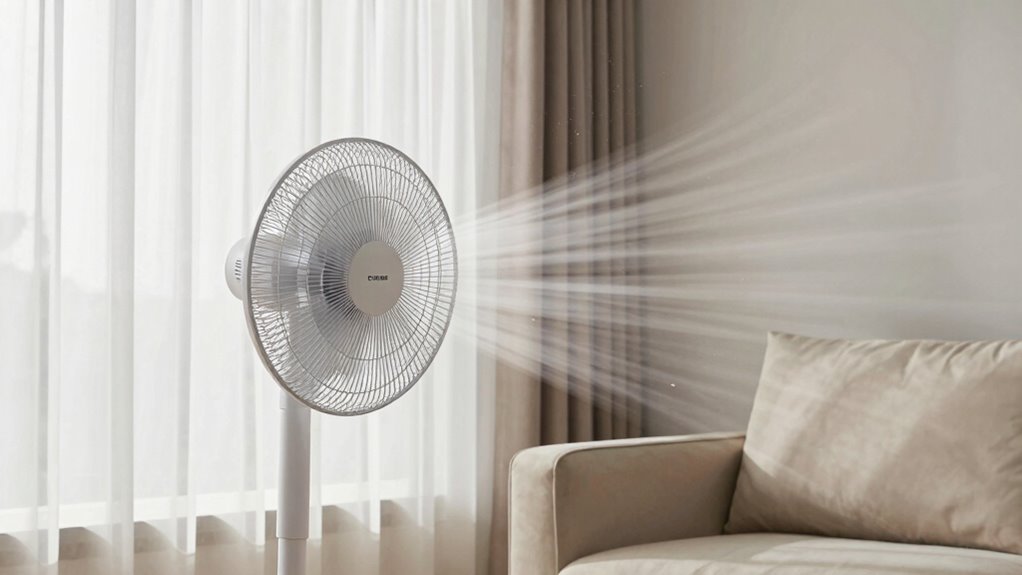

Proper fan placement can dramatically improve your room’s airflow by promoting even circulation and preventing stagnation. Positioning the fan near windows, doors, or key spots helps draw in fresh air and pushes stale air out, while angling it correctly guarantees warm or cool air reaches every corner. Adjusting height and direction boosts efficiency, making your space comfortable and well-ventilated. Keep exploring, and you’ll discover how small changes can make a big difference in your environment.

Prime made for students and young adults
- Fast, free delivery for dorm and study essentials
- Prime Video and Amazon Music included
- Member-only deals
Key Takeaways
- Proper fan placement directs airflow to avoid stagnant zones and ensure even distribution throughout the room.
- Positioning fans near windows or doors can harness natural airflow patterns for better ventilation.
- Adjusting fan angle and height influences vertical and horizontal air circulation, enhancing comfort.
- Incorrect placement can cause turbulence, dead spots, and uneven temperature or air quality.
- Strategic fan placement transforms airflow from chaotic to steady, improving overall environmental comfort and air quality.
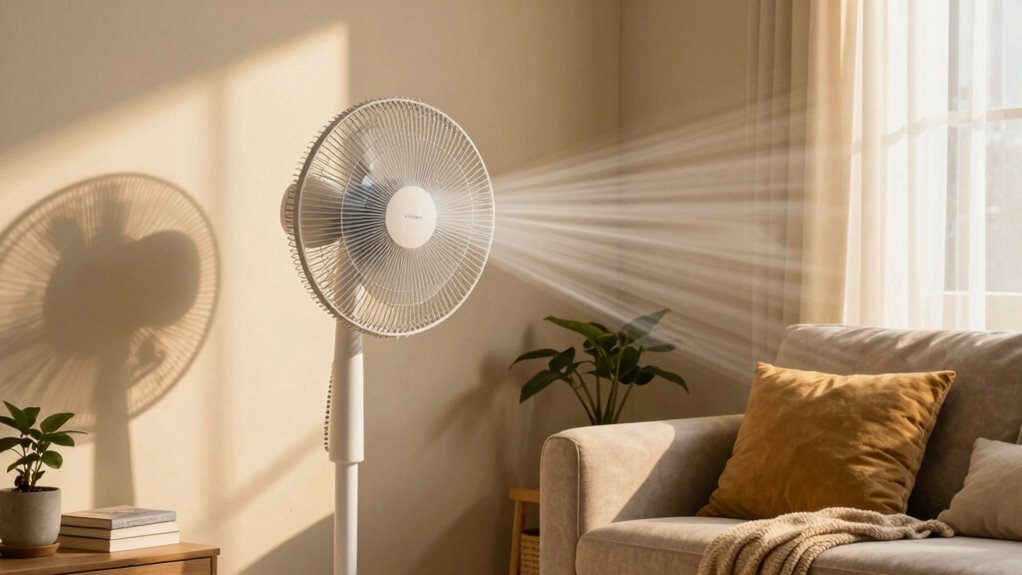
Have you ever wondered how air moves within a room and affects comfort and air quality? Understanding airflow patterns is essential because they determine how fresh air circulates, how evenly heat or coolness spreads, and ultimately, how comfortable you feel. The key to optimizing airflow lies in proper fan positioning. When you place a fan correctly, you can substantially influence how air moves, creating a more pleasant environment and improving air quality. Conversely, poor fan placement can cause stagnant zones, uneven temperatures, and even dust buildup.
Proper fan placement improves airflow, comfort, and air quality by preventing stagnation and uneven temperatures.
To get a grasp on airflow patterns, consider how air naturally moves from high to low-pressure areas. A fan’s job is to manipulate these patterns to your advantage. For example, positioning a fan near a window or door can help draw in fresh air and push stale air out, establishing a continuous flow that refreshes the room. If you place a fan too close to walls or furniture, it may cause turbulence or dead zones where air doesn’t circulate well. That’s why understanding the room’s layout and how airflow travels within it is vital before setting up your fan.
Your goal should be to create a steady, even circulation. To do this, angle the fan so that it directs airflow toward the center of the room or toward areas where air tends to stagnate. For instance, if you notice corners or behind furniture where air seems to linger, adjust the fan to create a flow that reaches these spots. Positioning a fan behind or beside a vent can also help distribute conditioned air more evenly, preventing hot or cold spots. When you experiment with different placements, observe how the air moves—do you feel a gentle breeze across your space? Is there a noticeable difference in temperature distribution? These signs indicate your fan is helping establish an effective airflow pattern.
Another important factor is fan height and orientation. Elevating a fan can help it better influence the upper parts of a room, promoting vertical circulation. Conversely, a low, oscillating fan can stir up air close to the floor, preventing the buildup of cooler or warmer pockets. The right combination of fan speed, placement, and angle ensures that air moves smoothly throughout the space rather than in chaotic swirls. When you take the time to optimize fan positioning, you’re actively controlling airflow patterns, which leads to better comfort, cleaner air, and more efficient temperature regulation. Additionally, understanding how to harness pressure differentials can significantly enhance your airflow management.
In essence, understanding how airflow patterns work and how to position your fan accordingly makes all the difference. It’s not just about turning it on; it’s about strategic placement that encourages consistent, healthy, and comfortable air movement. When you master fan positioning, you gain control over your environment, transforming a simple fan into a powerful tool for better living space airflow.
oscillating table fan for optimal airflow
As an affiliate, we earn on qualifying purchases.
As an affiliate, we earn on qualifying purchases.
Frequently Asked Questions
How Does Room Size Affect Fan Placement Strategies?
You should adjust fan placement based on room size considerations to optimize airflow. In smaller rooms, position the fan to create a circular airflow pattern, ensuring even distribution. For larger spaces, consider airflow zone design by strategically placing fans at key points to cover different sections effectively. Proper placement enhances comfort, reduces stagnant air, and improves overall ventilation, regardless of room size.
Can Multiple Fans Improve Overall Airflow Efficiency?
Yes, using multiple fans can improve overall airflow efficiency. By strategically placing fans, you enhance ventilation effectiveness and promote better airflow distribution throughout the room. This setup helps prevent dead zones where airflow stagnates, ensuring fresh air circulates evenly. Keep in mind, the key is to position the fans correctly, so they work together to create a more balanced and efficient airflow pattern that benefits the entire space.
What Are Common Mistakes in Fan Placement?
You often make ventilation myths worse by placing fans too close to walls or in corners, which blocks airflow. Avoid pointing fans directly at people or pets to guarantee fan safety, and don’t forget to keep vents unobstructed. A common mistake is not testing different placements, which hampers efficiency. Proper placement ensures better circulation, reduces noise, and minimizes safety risks, making your airflow setup more effective and safe.
How Does Furniture Placement Influence Airflow Patterns?
Furniture placement greatly influences airflow patterns by causing obstructions and disrupting the natural flow. When you position large pieces like sofas or bookshelves in the path of a fan, it blocks and redirects airflow, reducing efficiency. To optimize circulation, keep pathways clear and avoid placing furniture directly in front of or behind fans. This way, you guarantee smooth airflow and better cooling throughout your room.
Are There Specific Fan Types Better for Airflow Optimization?
You should choose fans with aerodynamic blade designs that promote smooth airflow, effectively optimizing circulation in your space. Look for models with quiet motors, reducing noise and making the fan less disruptive. Oscillating fans or those with adjustable speeds give you more control over airflow direction and strength, ensuring you get the best ventilation without unwanted noise. Prioritize these features to enhance your room’s airflow and comfort.
As an affiliate, we earn on qualifying purchases.
Conclusion
When you position your fan just right, you’re guiding a gentle breeze that dances across the room like a whisper, evenly distributing cool air and banishing stuffiness. Imagine the airflow swirling smoothly, like a calming river flowing effortlessly around obstacles. With that perfect placement, you create a invigorating oasis, where every corner breathes easier and comfort feels like a natural breeze on your skin. Small change, big difference—your room’s airflow, transformed.
fan placement for room ventilation
As an affiliate, we earn on qualifying purchases.
As an affiliate, we earn on qualifying purchases.
As an affiliate, we earn on qualifying purchases.
Fall Picks
fall essentials
As an affiliate, we earn on qualifying purchases.