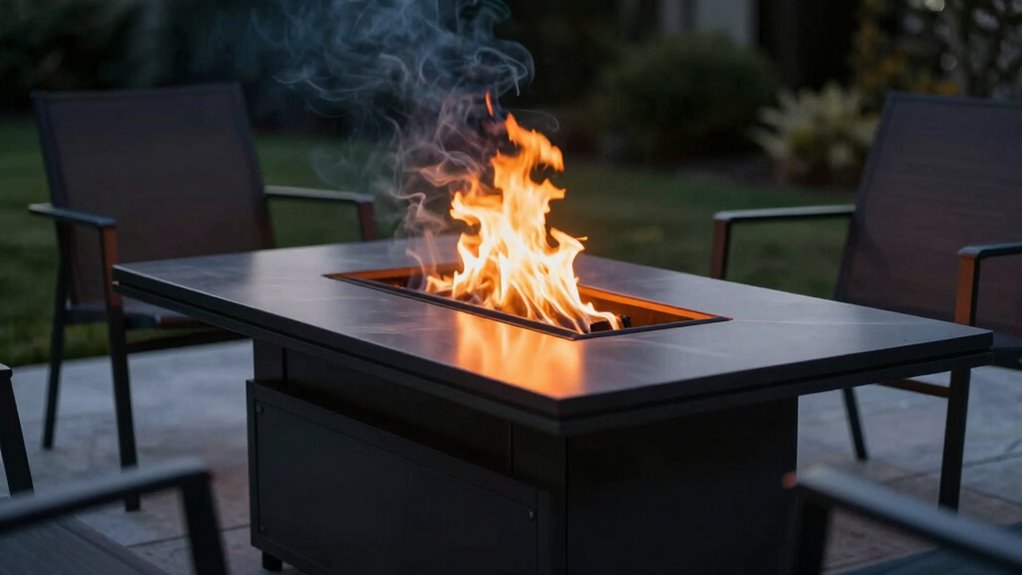

Fire pit tables seem straightforward until you consider fuel safety and wind effects. You need to handle fuel carefully, checking connections and avoiding leaks during refueling. Wind can cause flames to flicker, blow sparks, or even extinguish the fire. Using barriers or positioning your fire pit away from breezes helps maintain safety and a steady burn. To keep your fire pit safe and effective, paying attention to these factors is essential—you’ll discover more tips if you keep exploring.
Key Takeaways
- Fuel management is critical to prevent leaks, buildup, and ensure safe, continuous operation of fire pit tables.
- Wind can cause flickering, extinguish flames, or create sparks, requiring wind protection strategies.
- Proper placement away from wind channels and flammable materials enhances safety and flame stability.
- Regular maintenance and inspections help identify and fix potential hazards related to fuel and wind effects.
- Effective safety measures, including ventilation and barriers, mitigate risks posed by fuel handling and wind exposure.
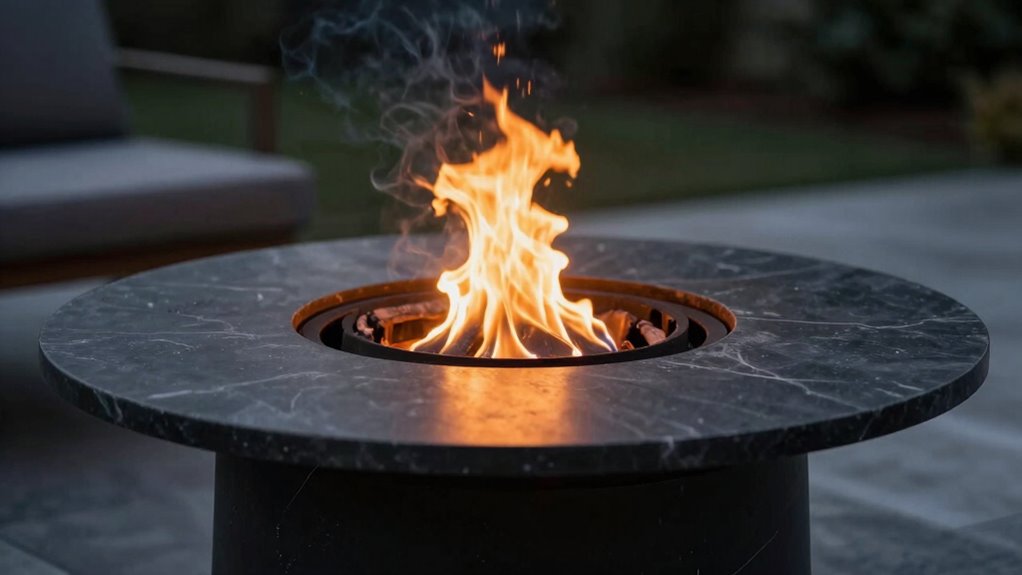
A fire pit table combines the warmth of a traditional fire pit with the functionality of a table, making it a versatile centerpiece for outdoor spaces. At first glance, it seems simple—just a cozy spot to gather around. But once fuel and wind come into play, things get a lot more complicated. Gas safety becomes a top concern because you want to make sure the fuel source is secure and that there’s no risk of leaks or accidents. Always check your connections, keep propane tanks properly stored, and follow manufacturer instructions to prevent any hazards. It’s easy to overlook these details when everything seems straightforward, but neglecting gas safety can lead to dangerous situations.
Ensure gas safety by checking connections, storing propane properly, and following manufacturer instructions for safe outdoor fires
Wind protection is another factor that can quickly turn a relaxing evening into a frustrating experience. Without proper wind barriers, gusts can blow out the flame or cause flickering, reducing the heat and ambiance you’re after. Strong winds can even make the flames unpredictable or, in worst cases, cause smoke or sparks to escape, which isn’t safe for you or your guests. You might think a simple screen or wind guard is enough, but the right design makes a difference. Look for fire pit tables with built-in wind protection features or add accessories like tempered glass covers or barriers to shield the flames. Not only does this improve safety, but it also helps maintain a clean, steady burn, so your gathering isn’t interrupted by unpredictable flames.
Managing fuel and wind isn’t always intuitive, but it’s essential for a safe, enjoyable experience. When you’re dealing with gas safety, always prioritize proper ventilation and secure connections. Never leave a lit fire unattended, and keep a fire extinguisher nearby just in case. For wind protection, consider the placement of your fire pit table—position it away from open windows, trees, or structures that could redirect or amplify gusts. Cover or shield the flames when not in use to prevent accidental ignition or damage. These precautions turn what seems like a simple fire feature into a safe, reliable centerpiece. Ensuring proper ventilation and understanding how to manage fuel safety are key elements to prevent the buildup of dangerous gases, especially when refueling or maintaining your fire pit. Remember that proper maintenance can help extend the lifespan of your fire pit table and ensure safety over time.
By paying attention to gas safety and incorporating wind protection, you create a safer environment for everyone. It’s the little details that ensure your outdoor space remains warm, inviting, and secure, no matter what weather or fuel conditions arise. Proper ventilation is also crucial to prevent the buildup of dangerous gases, especially when refueling or maintaining your fire pit.
As an affiliate, we earn on qualifying purchases.
Frequently Asked Questions
How Do I Safely Operate My Fire Pit Table?
To safely operate your fire pit table, always follow safety precautions like keeping a fire extinguisher nearby and never leaving it unattended when lit. Use the correct fuel type and guarantee the area is clear of combustible materials. Be mindful of wind, which can cause sparks or flames to spread. Regularly check for leaks or damage. Practicing these fire safety measures helps prevent accidents and keeps your gatherings enjoyable.
What Are the Best Types of Fuel for Fire Pit Tables?
Choosing the best fuel types for your fire pit table hinges on safety and performance. Propane is popular for its clean burn, easy ignition, and safety features, making it a top choice. Natural gas offers continuous fuel, but requires permanent installation. Always prioritize fuel safety by handling fuels carefully and storing them properly. Be cautious, as wind can alter flames unexpectedly, turning a simple fire into a potential hazard if you don’t select the right fuel.
How Does Wind Affect Fire Pit Table Performance?
Wind turbulence can profoundly impact your fire pit table’s performance by disrupting the flame and causing uneven fuel ignition. Strong gusts may blow out the flame entirely or create flickering, making it less enjoyable and potentially unsafe. To counter this, position your fire pit table in a sheltered spot and consider adding wind guards. This helps maintain steady fuel ignition and guarantees a safer, more enjoyable experience despite windy conditions.
Can I Use My Fire Pit Table in All Weather Conditions?
Sure, you can use your fire pit table in all weather conditions—if you enjoy a fiery spectacle in the rain or a smoky mess in the snow. But for the best experience, it’s wise to take into account seasonal decorations and fire pit accessories that protect your setup. Wind and rain can turn your cozy gathering into a soggy, smoky adventure. So, think twice before leaving it out in harsh weather!
What Maintenance Is Required for Fire Pit Tables?
You should regularly clean your fire pit table to maintain its design aesthetics and guarantee material durability. Remove debris, wipe down surfaces, and check for rust or corrosion, especially if it’s made from metal. Cover it during harsh weather to protect against moisture and UV damage. Also, inspect the fuel system and replace parts as needed. Proper maintenance keeps your fire pit table looking great and functioning safely year-round.
As an affiliate, we earn on qualifying purchases.
Conclusion
So, next time you light up your fire pit table, remember—it’s more than just flickering flames and glowing embers. When fuel and wind join the dance, they turn a simple centerpiece into a wild, unpredictable partner. Handle it with care, respect its fiery spirit, and enjoy the symphony of crackles and sparks. Embrace the chaos, for in that wild dance, you’ll find the true magic of your fire pit table.
As an affiliate, we earn on qualifying purchases.
As an affiliate, we earn on qualifying purchases.