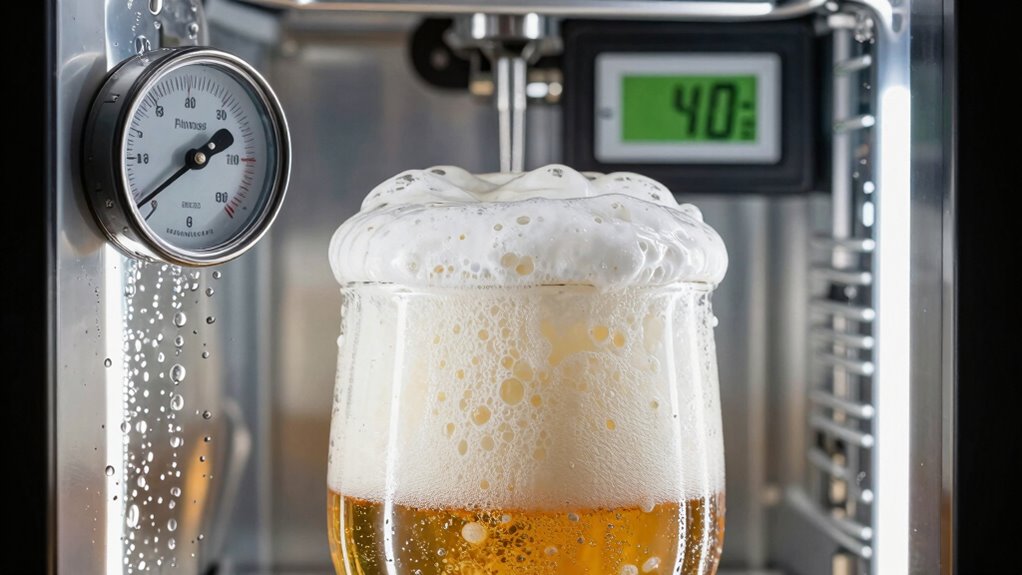
Maintaining the right temperature in your kegerator is key to preventing foam problems. If it’s too warm, the beer can become over-carbonated, causing excessive foam. If it’s too cold, CO2 can get trapped, resulting in flat beer. Inconsistent temperatures can also disrupt carbonation, leading to poor pours. By keeping your kegerator at the ideal 36°F to 38°F, you’ll guarantee a smooth, perfect pour every time. Keep going to discover how to keep your beer at the right temp.
Key Takeaways
- Incorrect temperature causes CO2 imbalance, leading to excessive or insufficient foam in the beer.
- Temperatures outside the 36°F–38°F range affect carbonation and foam consistency.
- Warm beer increases foam production and reduces carbonation stability.
- Cold temperatures trap CO2, resulting in flat beer and poor foam formation.
- Maintaining stable, optimal temperature prevents foam issues and ensures quality pours.
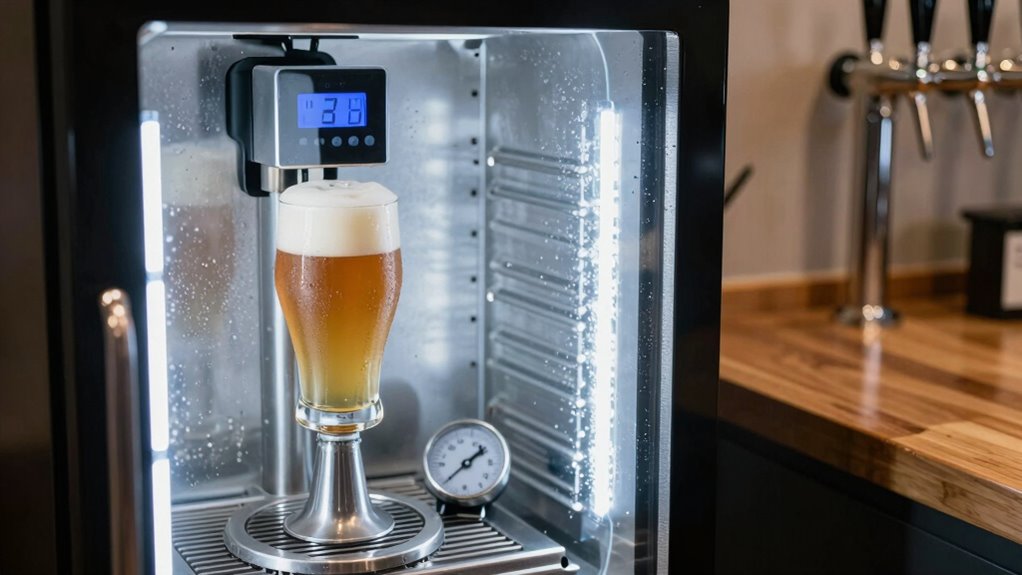
Ever wondered what a kegerator is and how it works? A kegerator is essentially a refrigerated unit designed to store and dispense draft beer, letting you enjoy fresh brews right at home. It combines a cooling system with a tap system, keeping your draft beer at the ideal temperature while maintaining proper carbonation levels. This setup makes serving beer convenient and ensures each pour is just as good as one from a tap at your favorite bar.
A kegerator keeps your draft beer cold and perfectly carbonated for fresh, bar-quality pours at home.
When you’re dealing with draft beer, temperature plays a crucial role in maintaining its quality. If the temperature isn’t just right, you’ll notice issues like excessive foam or flat beer. Foam problems usually start with temperature because the cooler the beer, the better it can retain its carbonation. When beer is too warm, the dissolved carbon dioxide escapes more rapidly, resulting in flat beer and excessive foaming when poured. Conversely, if it’s too cold, the beer might not release enough CO2, leading to a lack of proper carbonation and a dull taste. Finding that perfect temperature range, typically between 36°F and 38°F, is key to ensuring your draft beer pours perfectly with just the right amount of foam and carbonation.
Temperature fluctuations can also mess with the carbonation levels. When a kegerator isn’t consistently cooled, it causes the CO2 to either come out of solution or stay dissolved unevenly. Too warm, and your draft beer may become over-carbonated, resulting in a frothy head that’s hard to pour. Too cold, and the CO2 might stay trapped in the beer, leaving it flat on the pour. Maintaining a stable temperature ensures the carbonation levels stay balanced, giving each glass a smooth, fizzy feel without excess foam or flatness. Proper regulation of temperature also prevents the formation of ice crystals or unwanted sediment, which can further disturb the quality of your draft beer. Temperature control is essential for preserving the overall quality and consistency of your draft beer, making sure each pour meets your expectations. Understanding how beer carbonation works can help you troubleshoot issues related to foam and flatness more effectively. Additionally, understanding how temperature influences beer carbonation can also guide you in making adjustments to improve your pouring experience. Regular maintenance of your kegerator’s cooling system can also help prevent temperature fluctuations that impact beer quality.

Inkbird ITC-308 Digital Temperature Controller Thermostat
- Display Units: Supports °C/°F display
- Dual Relay: Controls heating and cooling devices
- Dual Display: Shows measured and set temperatures
As an affiliate, we earn on qualifying purchases.
As an affiliate, we earn on qualifying purchases.
Frequently Asked Questions
How Often Should I Clean My Kegerator’s Beer Lines?
You should clean your kegerator’s beer lines every two to four weeks to maintain ideal line maintenance and prevent foaming issues. A regular cleaning schedule keeps the lines free of buildup and bacteria, ensuring fresh-tasting beer. If you notice off-flavors or excessive foam, it’s time for an immediate cleaning. Consistent maintenance prolongs your equipment’s lifespan and guarantees a smooth pouring experience every time.
What’s the Ideal Temperature for Different Beer Styles?
Imagine a perfectly chilled glass of stout, its rich aroma inviting you in; that’s what ideal beer temperature offers. For most styles, keep beer temperature between 38-45°F to guarantee foam stability and perfect flavor. Lighter beers like lagers thrive around 38°F, while ales and stouts benefit from slightly warmer temps up to 45°F. Maintaining consistent temperatures preserves foam quality and enhances your overall drinking experience.
Can I Use Any Type of Kegerator for Home Brewing?
Yes, you can use many types of kegerators for home brewing, but you need to take into account Kegerator maintenance and home brewing compatibility. Make sure the kegerator has adjustable temperature controls, sufficient space for your preferred kegs, and proper insulation. Not all models are designed for fermentation or brewing processes, so choose one that supports your brewing needs, minimizes foam issues, and allows easy cleaning to keep your beer fresh and flavorful.
How Do I Troubleshoot Inconsistent Beer Flow?
Think of your kegerator as a finely tuned orchestra. If the beer flow feels off, check for carbonation issues first—too flat or overly foamy, it’s like missing a beat. Next, verify the tap handle is aligned perfectly; misalignment acts like a discordant note. Adjust these elements, and your beer will flow smoothly again, turning your setup into a harmonious symphony of invigorating pours.
Is It Necessary to Chill the Keg Before Connecting?
Yes, it’s necessary to chill the keg before connecting to guarantee proper temperature stabilization. Keg chilling helps maintain a consistent temperature, which prevents foam problems and ensures a smooth pour. When you connect a warm keg, the beer may foam excessively and take longer to settle. Always allow the keg to reach the recommended serving temperature before hooking it up, so you get ideal carbonation and minimal foaming.

VEVOR Beer Kegerator, Single Tap Commercial Draft Beer Dispenser for D system, Refrigerator With Shelves, Hold 1 Sixth Keg, 2.5lbs CO2 Tank, 92L
- Keg Capacity: Holds 1 sixth keg and 2.5lbs CO2 tank
- Flexible Setup: Supports internal/external CO₂ tank placement
- Compact Design: Fits in home bars and small pubs
As an affiliate, we earn on qualifying purchases.
As an affiliate, we earn on qualifying purchases.
Conclusion
Understanding kegerator basics, especially how temperature affects foam, can save you from frustrating pour issues. Did you know that maintaining the correct temperature not only improves pour quality but also extends your beer’s freshness? By keeping your kegerator at the ideal temperature, you guarantee every pint is perfect—fizz, flavor, and all. So, next time you face foam problems, remember: a simple temperature adjustment could be the game-changer your brew needs. Cheers to perfect pours!

Coldtower Kegerator Super Tower Cooler (Upgraded for Maximum Cooling)
- Dust and Water Resistant: IP56 rated for durability
- High-Performance Blower: 50,000 hours, 3,200 RPM
- Professional Power Supply: 1A with ON/OFF switch
As an affiliate, we earn on qualifying purchases.
As an affiliate, we earn on qualifying purchases.
VEVOR Beer Kegerator, Single Tap Commercial Draft Beer Dispenser for D system, Refrigerator With Shelves, Hold 1 Sixth Keg, 2.5lbs CO2 Tank, 92L
- Keg Capacity: Holds 1 sixth keg and 2.5lbs CO2 tank
- Flexible Setup: Supports internal/external CO₂ tank placement
- Compact Design: Fits in home bars and small pubs
As an affiliate, we earn on qualifying purchases.
As an affiliate, we earn on qualifying purchases.