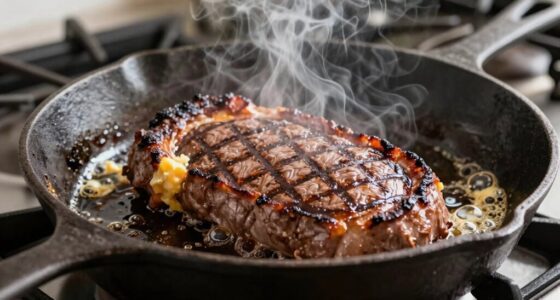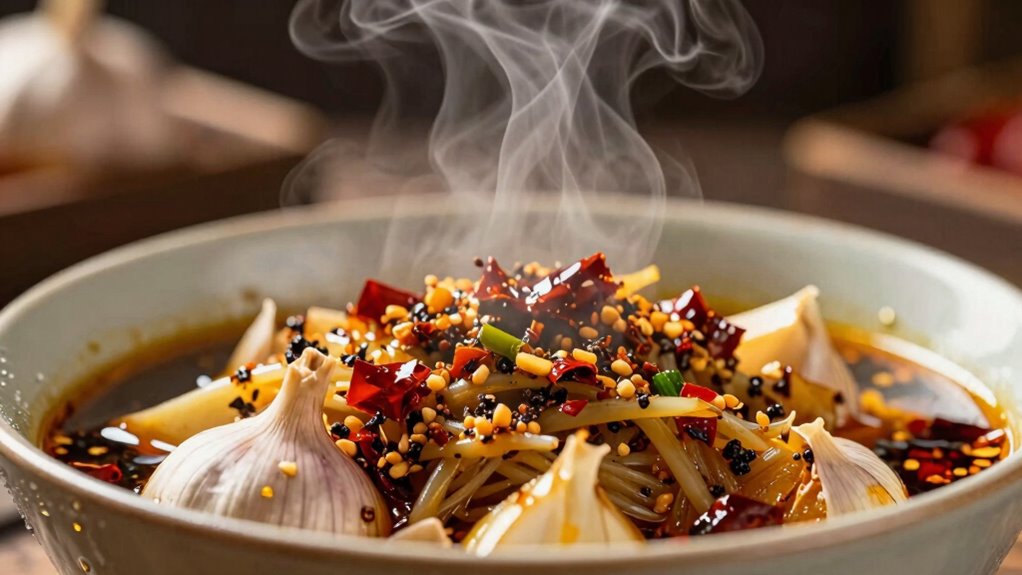

When you warm up food, its aroma compounds become more volatile, meaning they evaporate more easily and reach your nose better. Heating also triggers chemical reactions like Maillard and caramelization, creating new, stronger scents. Plus, warmth makes your taste receptors more receptive, and saliva production increases, helping carry aromas. All these effects combine to make your food smell more intense and appealing. Keep exploring to uncover more about how heat enhances flavors and aromas.
Key Takeaways
- Heating increases the volatility of aroma compounds, making them more likely to evaporate and reach your nose.
- Warmth enhances the release of aromatic oils and chemicals, intensifying the food’s scent.
- Higher temperatures improve the responsiveness of olfactory receptors, boosting smell perception.
- Cooking triggers chemical reactions like Maillard and caramelization, creating new and stronger aromatic compounds.
- Warm food stimulates saliva production, helping carry aroma molecules to taste buds for a richer sensory experience.

Have you ever noticed how your favorite dishes seem to have a more intense aroma when they’re warm? It’s not just your imagination. When food heats up, several factors come into play that boost both flavor enhancement and aroma release. As you serve a steaming bowl of soup or freshly baked bread, the scent hits your nose more vividly, making the experience more inviting and flavorful. This isn’t accidental—it’s rooted in the science of how heat affects food molecules and your sensory perception.
When food warms, the chemical compounds responsible for its aroma become more volatile. These molecules, which are often trapped within the food’s structure at lower temperatures, start to evaporate more readily as heat increases. This release of aroma compounds means that the smells you associate with deliciousness become more pronounced. For example, the fragrant oils in garlic or spices like cinnamon intensify when heated, filling your kitchen with a richer scent. As a result, you perceive the food as more flavorful because aroma plays a significant role in how you experience taste.
Heating food releases aromatic compounds, making flavors more intense and enhancing your sensory experience.
Moreover, heat causes physical changes in food that amplify flavor. Proteins, fats, and sugars undergo transformations—Maillard reactions and caramelization—that deepen both taste and aroma. These reactions produce new aromatic compounds, which contribute to a more complex and appealing smell. Think about how a roast or grilled meat develops that savory, smoky aroma—the heat triggers chemical processes that enhance flavor and aroma simultaneously. When you eat warm food, these elements combine to create a multi-layered sensory experience that cold food simply can’t match.
Your body’s sensory receptors are also more receptive to warm aromas. Heat increases the volatility of aroma molecules, making them easier for your nose to detect. This means that the scent molecules are more likely to reach your olfactory receptors at higher temperatures, intensifying your perception of smell. As a result, warm foods seem more aromatic, which naturally heightens your overall enjoyment. The warmth also stimulates saliva production, which helps to carry aroma molecules to your taste buds, further boosting flavor perception. Additionally, the increased molecular volatility in warm foods enhances your sensory experience, making the aroma even more compelling.

ASAKUKI Essential Oil Diffuser for Home, 500ML Aromatherapy Humidifier
- Multi-Functional Aromatherapy Device: Includes large 500ml tank and LED lights
- Ultra-Quiet Operation: Noise level below 23 dB for peaceful use
- Remote Control Convenience: Control from 16.5 feet with multiple settings
As an affiliate, we earn on qualifying purchases.
As an affiliate, we earn on qualifying purchases.
Frequently Asked Questions
Does the Type of Food Affect Its Smell When Warmed?
Yes, the type of food affects its smell when warmed. When you heat food, flavor enhancement occurs, releasing more aroma compounds into the air. Foods rich in fats or certain spices tend to emit stronger smells because heat amplifies these aroma compounds, making the scent more noticeable. So, warming different foods can vary in intensity, depending on their ingredients, leading to a more pronounced aroma and a richer sensory experience.
How Does Individual Olfactory Sensitivity Influence Perceived Smell Strength?
Did you know that about 5% of people have heightened olfactory sensitivity? Your individual olfactory sensitivity influences how strongly you perceive smells, especially when foods are warm. With olfactory adaptation and sensory fatigue, your perception can become less intense over time, but some people experience these changes more sharply. So, your unique sensitivity makes certain aromas seem stronger or weaker, affecting your overall enjoyment of warm foods.
Can Storage Temperature Impact How Strongly Food Smells When Heated?
Yes, storage temperature impacts how strongly food smells when heated. When you store food at higher temperatures, flavors and aromas can develop more intensely, leading to greater aroma release upon warming. Conversely, cooler storage can suppress aroma release, making smells less prominent. Proper storage guarantees ideal flavor enhancement and aroma release, so your food smells just right when you heat it. Keep foods at appropriate temperatures to enjoy their full sensory potential.
Are There Health Risks Associated With Strong Food Odors When Warmed?
Strong food odors when warmed generally aren’t a health risk, but they can impact your comfort and perception of flavor. The enhanced aroma might mask underlying spoilage or bacteria, so it’s vital to confirm your food’s fresh before reheating. While flavor enhancement can make foods taste better, strong odors could also signal spoilage, which might pose health concerns. Always trust your senses—if a smell seems off, avoid eating.
Do Different Cooking Methods Change the Intensity of Food Odors?
Your nose might think some foods are more intense because different cooking methods dramatically influence aroma diffusion and flavor enhancement. For example, frying or roasting intensifies odors by releasing more volatile compounds, while boiling tends to mellow them. So, yes, the way you cook can change the scent’s strength, making it seem as if the aroma is amplified—sometimes to the point of being overwhelming—highlighting the powerful connection between cooking techniques and sensory perception.

Humboldts Secret Sweet & Sticky Carbohydrate and Saccharide Plant Energy Additive | Indoor and Outdoor Plant Nutrients Enhancer for Growth and Aroma | Boosts Flavor and Development | 32 Ounce
- Packaging Notice: Same formula, different packaging
- Stronger Roots: Supports healthy root development
- Fast-Acting Energy: Energizes plants during growth phases
As an affiliate, we earn on qualifying purchases.
As an affiliate, we earn on qualifying purchases.
Conclusion
Next time you notice a dish’s aroma intensify as it warms, think of it as the revealing of a hidden treasure. Just as a sunrise reveals colors hidden in darkness, heat releases the scents trapped within food, revealing their true essence. So, embrace the warmth—it’s not just about taste, but about uncovering the story behind each aroma, inviting you to savor not just the flavor, but the journey of what’s been carefully crafted beneath the surface.
ASAKUKI Essential Oil Diffuser for Home, 500ML Aromatherapy Humidifier
- Multi-Functional Aromatherapy Device: Includes large 500ml tank and LED lights
- Ultra-Quiet Operation: Noise level below 23 dB for peaceful use
- Remote Control Convenience: Control from 16.5 feet with multiple settings
As an affiliate, we earn on qualifying purchases.
As an affiliate, we earn on qualifying purchases.
food warming plate with aroma release
As an affiliate, we earn on qualifying purchases.
As an affiliate, we earn on qualifying purchases.