If you’re searching for a 3D printer, you’re likely balancing features, ease of use, and price. The Bambu Lab P2S Combo stands out as the best overall choice, thanks to its multi-color capabilities and versatile features. The FlashForge Adventurer 5M offers fast, auto-leveled printing perfect for hobbyists, while the Entina Tina2C targets newcomers and kids with simple setup and safety features. Each option highlights different priorities, from high-speed production to beginner safety. Continue reading to explore the full lineup and find the best fit for your 3D printing goals.

Prime made for students and young adults
- Fast, free delivery for dorm and study essentials
- Prime Video and Amazon Music included
- Member-only deals
Complete the kit


Key Takeaways
- Multiple 3D printers in this list excel at multi-color printing, but often come with higher costs or complexity.
- Ease of use and safety features are common among beginner-friendly models, though they may sacrifice some advanced capabilities.
- High-speed printers are available but typically require more maintenance and calibration to perform reliably.
- Larger build volumes are prioritized in some models, making them suitable for complex or bigger projects, but often at a premium price.
- Price and feature set do not always align; the most expensive options include advanced multi-toolheads and automation, but simpler models can still deliver quality results.
| Bambu Lab P2S Combo, P2S 3D Printer & AMS 2 Pro, Multi-Color 3D Printing |  | Best Overall for Versatile High-Speed Multi-Material Printing | Print Speed: 600 mm/s | Setup Time: 15 minutes | Filament Drying Temperature: 65 °C | VIEW ON AMAZON | See Our Full Breakdown |
| FlashForge Adventurer 5M 3D Printer with Auto Leveling and High-Speed Printing |  | Best for Ease of Use and Speed in Creative and Prototyping Work | Print Size: 220x220x220mm | Max Speed: 600mm/s | Extruder Temperature: 280°C | VIEW ON AMAZON | See Our Full Breakdown |
| 3D Printer with Enclosed Chamber and Touch Screen |  | Best for Complex, Large-Scale Projects with Stable Conditions | Enclosed Chamber: Yes | Touchscreen: Color touchscreen display | Build Volume: Large | VIEW ON AMAZON | See Our Full Breakdown |
| Bambu Lab P1S Combo 3D Printer with AMS – Multi-Color Printing |  | Best for Fast, Multi-Color Multi-Material Production at Home or Small Workshop | Colors: Up to 16 | Speed: 500mm/s | Acceleration: 20000 mm/s² | VIEW ON AMAZON | See Our Full Breakdown |
| Bambu Lab A1 3D Printer, Ready-to-Use FDM 3D Printer for Beginners and Kids |  | Best for Beginners and Kids Seeking High-Speed, Vibrant Printing | Acceleration: 10,000 mm/s² | Color Printing: Yes, with AMS lite | Auto Calibration: Yes | VIEW ON AMAZON | See Our Full Breakdown |
| Creality K2 SE 3D Printer, 500mm/s High-Speed, Multi-Color Support, Auto Leveling, Solid Metal Frame, 220×215×245mm Print Size | 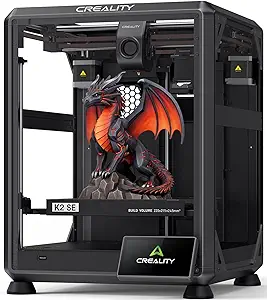 | Best Overall High-Speed 3D Printer | Print Speed: 500mm/s | Build Volume: 220×215×245mm | Build Material Support: Multi-color (with CFS support) | VIEW ON AMAZON | See Our Full Breakdown |
| Entina Tina2C 3D Printer for Kids & Beginners |  | Best for Kids & Beginners | Build Volume: 3.9 × 3.9 × 3.9 inches | Connectivity: WiFi, TF card | Compatible Software: Cura, Simplify3D | VIEW ON AMAZON | See Our Full Breakdown |
| Creality Ender 3 V3 SE 3D Printer Bundle with 4 Packs of PLA Filament (Black, White, Red, Blue) |  | Best for Value and Upgradability | Maximum Printing Speed: 250mm/s | Extruder: Full metal dual-gear “Sprite” | Auto Leveling: CR Touch sensor | VIEW ON AMAZON | See Our Full Breakdown |
| FlashForge AD5X Multi-Color 3D Printer, CoreXY, 600mm/s High-Speed, Auto Leveling, 300°C Direct Drive Extruder, 220x220x220mm Build Volume | 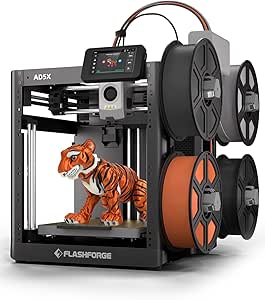 | Best for Rapid Prototyping and Creative Flexibility | Build Volume: 220x220x220mm | Max Temperature: 300°C | Printing Speed: 600mm/s | VIEW ON AMAZON | See Our Full Breakdown |
| Snapmaker U1 3D Printer, 4-Toolhead with 5s Toolchanger, Multi-Color Printing |  | Best for Multi-Tool Versatility and Speed | Product Dimensions: 22.6 x 13 x 14.2 inches | Item Weight: 59 pounds | Build Volume: 270 x 270 x 270 mm | VIEW ON AMAZON | See Our Full Breakdown |
| FlashForge Creator 5 3D Printer, 4-Toolhead, Near Zero Waste |  | Best for Multi-Color and Multi-Material Projects | Product Dimensions: 16.06 x 17.17 x 27.95 inches | Item Weight: 30.8 pounds | Maximum Temperature: 320°C | VIEW ON AMAZON | See Our Full Breakdown |
| Anycubic Kobra S1 Max Combo 3D Printer, Large Build Size 350x350x350 mm³ |  | Best for Large-Scale Printing and Industrial Prototypes | Build Volume: 350x350x350 mm³ | Dimensions: 21 x 23 x 19 inches | Max Print Speed: 600mm/s | VIEW ON AMAZON | See Our Full Breakdown |
| Fully Assembled Mini 3D Printer for Kids & Beginners – Complete Starter Kit with Auto Leveling and High-Speed Printing |  | Best for Beginners and Kids | Print Speed: 250mm/s | Print Precision: 0.01mm | Build Volume: 10.63 x 10.12 x 15.94 inches | VIEW ON AMAZON | See Our Full Breakdown |
| Bambu Lab P1S 3D Printer, Ready-to-Use FDM 3D Printer |  | Best for High-Speed, Multi-Color Printing for All Skill Levels | Colors: Up to 16 | Max Speed: 500mm/s | Auto Bed Leveling: Yes | VIEW ON AMAZON | See Our Full Breakdown |
| AOSEED AI 3D Printer for Kids, Fast 400mm/s, 8000+ Models, Enclosed Safe |  | Best for Kids and Family Use | Print Speed: 400mm/s | Model Library: Over 8,000 models | Precision: 0.05mm | VIEW ON AMAZON | See Our Full Breakdown |
More Details on Our Top Picks
Bambu Lab P2S Combo, P2S 3D Printer & AMS 2 Pro, Multi-Color 3D Printing
The Bambu Lab P2S Combo stands out for combining extremely high-speed printing—up to 600 mm/s—with multi-material and multi-color capabilities via the AMS 2 Pro. Its quick setup and automatic calibration make it accessible to both enthusiasts and professionals, surpassing many single-function printers in workflow efficiency. However, the need for additional setup for filament drying and chamber control can introduce complexity, especially for those new to multi-material printing. Compared to the FlashForge Adventurer 5M, which offers similar speeds but simpler features, the P2S Combo delivers more creative flexibility at the expense of a steeper learning curve. This pick makes the most sense for users demanding speed, precision, and multi-color options in demanding projects, willing to handle a slightly more involved setup process.
Pros:- Exceptional print speeds up to 600 mm/s for rapid production
- Automatic calibration and quick setup streamline workflow
- Supports multi-color and multi-material printing with AMS 2 Pro
- Smart airflow system enhances print quality and heat management
Cons:- Filament drying and chamber features add extra setup steps
- Multi-color printing is limited to the Combo version, not standalone
Best for: Advanced hobbyists and professionals seeking high-speed, multi-material, multi-color printing with automation features
Not ideal for: Beginners or those preferring straightforward, plug-and-play solutions due to its complex setup and advanced features
- Print Speed:600 mm/s
- Setup Time:15 minutes
- Filament Drying Temperature:65 °C
- Chamber Temperature:50 °C
- Airflow System:Adaptive Airflow System
- Filament Compatibility:Multi-color/multi-material (AMS 2 Pro)
Our verdict“This printer is ideal for experienced users who need fast, versatile, multi-material printing with automation, accepting some setup complexity.”
FlashForge Adventurer 5M 3D Printer with Auto Leveling and High-Speed Printing
The FlashForge Adventurer 5M offers a compelling balance of high-speed printing—up to 600mm/s—and convenient features like automatic bed leveling, making it well-suited for users who want professional-quality results without specialized knowledge. Its direct drive extruder reaching 280°C enables versatile filament use, supporting a variety of materials for prototyping and creative projects. Compared to the Bambu Lab P1S Combo, which emphasizes multi-color capabilities, the 5M focuses on speed and ease, though at the risk of print quality issues if speeds aren’t carefully managed. Its real-time app monitoring adds convenience, but more complex users might find the feature set overwhelming. Overall, this printer makes a strong case for users who prioritize rapid, reliable prints with straightforward operation.
Pros:- Automatic bed leveling simplifies setup
- High-speed printing up to 600mm/s reduces production time
- Real-time app monitoring enhances workflow control
- Quick nozzle change allows for versatile printing
Cons:- High speeds may compromise print quality without careful management
- Advanced features could be overwhelming for novices
Best for: Prototypers and creative users who need fast, precise printing with minimal setup effort
Not ideal for: Beginners or hobbyists who want multi-color or multi-material printing without extra complexity
- Print Size:220x220x220mm
- Max Speed:600mm/s
- Extruder Temperature:280°C
- Nozzle Diameter:0.4mm (standard), accepts 0.25mm to 0.8mm
- Warm-up Time:35 seconds
Our verdict“This model is best for users seeking fast, reliable printing with minimal fuss, especially in professional environments.”
3D Printer with Enclosed Chamber and Touch Screen
This enclosed chamber 3D printer emphasizes stability and user-friendly operation, making it ideal for detailed, large, or multi-material projects. Its large build volume and sturdy metal frame support complex designs that require consistent temperatures, unlike open-frame models. The color touchscreen simplifies operation, making it accessible for those who prefer intuitive controls over complex interfaces. However, the lack of specific pricing or customer ratings means potential buyers should verify suitability for their project scope. Compared with the Bambu Lab P1S Combo, which excels in speed and multi-color capabilities, this model prioritizes consistent environment control over multi-material versatility. It’s best for users focused on detailed, stable prints rather than rapid prototyping or multi-color workflows.
Pros:- Enclosed chamber maintains stable temperatures for high-quality prints
- Intuitive color touchscreen simplifies operation
- Large build volume accommodates complex and big projects
- Supports multiple filament types for versatile applications
Cons:- Price and customer ratings are not specified, requiring further research
- Potentially higher cost due to enclosure and size
Best for: Users needing a stable, large-volume printer for detailed, multi-material or multi-color projects
Not ideal for: Hobbyists seeking a budget-friendly or highly flexible, open-frame machine
- Enclosed Chamber:Yes
- Touchscreen:Color touchscreen display
- Build Volume:Large
- Material Support:Multi-material capability
- Construction:Sturdy metal frame
Our verdict“This printer is best suited for users who prioritize stable, large-scale, multi-material production over speed or multi-color flexibility.”
Bambu Lab P1S Combo 3D Printer with AMS – Multi-Color Printing
The Bambu Lab P1S Combo offers a high-speed, fully enclosed solution capable of handling up to 16 colors with multi-material support, making it ideal for vibrant, multi-color projects. Its automatic bed leveling and quick setup lower the barrier for users of all skill levels, while its speed—up to 500mm/s—ensures efficient output. Compared with the FlashForge Adventurer 5M, which offers speed and app control, the P1S stands out for its multi-color, multi-material versatility and larger color palette. However, it requires connection to the Bambu Lab AMS to unlock full multi-color capabilities and isn’t suitable for reinforced or specialty filaments like carbon fiber. This makes it a strong choice for creative professionals and hobbyists looking for a versatile, colorful workflow without sacrificing speed.
Pros:- Supports up to 16 colors and multi-material printing
- Fast printing speeds up to 500mm/s for productivity
- Automatic bed leveling for high-quality results
- Easy setup suitable for all skill levels
Cons:- Requires connection to Bambu Lab AMS for multi-color printing
- Not recommended for carbon or fiber-reinforced filaments
Best for: Creative users and small workshops needing multi-color, multi-material output with high speed
Not ideal for: Users requiring reinforced or specialty filaments like carbon fiber or glass fiber
- Colors:Up to 16
- Speed:500mm/s
- Acceleration:20000 mm/s²
- Enclosure:Fully enclosed
- Auto Bed Leveling:Yes
- Supported Filaments:PLA, PETG, TPU, PVA, PET, ABS, ASA
Our verdict“This printer is ideal for creative professionals and hobbyists who want fast, vibrant multi-color prints with minimal fuss, accepting the dependency on the AMS system.”
Bambu Lab A1 3D Printer, Ready-to-Use FDM 3D Printer for Beginners and Kids
The Bambu Lab A1 is designed with newcomers in mind, offering automatic calibration and active flow rate compensation to produce reliable, vibrant multi-color prints. Its quick-nozzle swapping and quiet operation make it accessible and practical for educational settings or home use, especially for younger users. While it doesn’t specify a large build volume, its focus on speed and ease makes it a strong starter machine. Compared to the Entina Tina2C, which targets absolute beginners, the A1 adds active flow management for more precise results. The main tradeoff is that it requires the AMS lite accessory for multi-color printing, which adds cost and complexity for users wanting full multi-color capabilities. This model makes the most sense for beginners and kids eager to create colorful, engaging models with minimal technical fuss.
Pros:- High-speed printing with reliable precision
- Automatic calibration simplifies setup
- Supports multi-color printing with AMS lite
- Quiet operation for home or classroom use
Cons:- Requires additional purchase of AMS lite for multi-color printing
- Limited information on build volume and advanced features
Best for: Beginners, kids, and educational settings seeking a simple, fast, vibrant 3D printer
Not ideal for: Advanced users requiring large build volumes or complex multi-material workflows without additional accessories
- Acceleration:10,000 mm/s²
- Color Printing:Yes, with AMS lite
- Auto Calibration:Yes
- Flow Rate Compensation:Yes
- Nozzle:1-Clip quick swap
- Operation Noise:Active motor noise canceling
Our verdict“This printer is best for beginners and young makers wanting a straightforward, colorful 3D printing experience with minimal setup.”
Creality K2 SE 3D Printer, 500mm/s High-Speed, Multi-Color Support, Auto Leveling, Solid Metal Frame, 220×215×245mm Print Size
The Creality K2 SE stands out for its incredible printing speed of up to 500mm/s, making it ideal for rapid prototyping and large batch production. Its solid metal frame provides stability that ensures consistent accuracy, even at such high speeds. Compared with the Ender 3 V3 SE, it offers much faster throughput, although this may come with a steeper learning curve for beginners due to its advanced features. The automatic bed leveling simplifies setup, but the multi-color system requires an additional CFS module, adding cost and complexity. For those prioritizing speed and multi-color capability, this printer delivers impressive results, but if you seek a more straightforward experience, it might be overkill.
Pros:- Exceptional print speed of up to 500mm/s for rapid production
- Solid metal frame for high stability and accuracy
- Automatic bed leveling simplifies setup and improves first-layer success
- Supports multi-color printing with optional CFS system
Cons:- Requires additional purchase of CFS system for multi-color printing
- Limited build volume may restrict larger projects
- Advanced features could be intimidating for beginners
Best for: Manufacturers and hobbyists who need fast, multi-color prints and have some experience with 3D printing technology
Not ideal for: Beginners or those with limited space, as the setup complexity and high speed may be challenging to manage
- Print Speed:500mm/s
- Build Volume:220×215×245mm
- Build Material Support:Multi-color (with CFS support)
- Frame Material:Die-cast aluminum alloy
- Extruder Type:Direct drive
- Auto Leveling:Yes
Our verdict“This printer is best suited for experienced users seeking high-speed, multi-color production capabilities.”
Entina Tina2C 3D Printer for Kids & Beginners
The Entina Tina2C is designed specifically for newcomers and young learners, offering an easy setup process that takes just about 8 minutes. Its WiFi and offline printing options provide flexible workflows, making it accessible for educational settings or creative projects at home. Unlike the FlashForge AD5X, which offers higher speed, the Tina2C prioritizes simplicity and safety over speed or advanced features. Its auto-leveling and self-cleaning nozzle improve print quality and reduce maintenance, but the limited build volume may restrict larger or more complex projects. This makes it ideal for those just starting out or teaching kids, but less suited for larger-scale manufacturing or detailed professional work.
Pros:- Quick and straightforward setup with auto-leveling
- Supports WiFi and offline printing for convenience
- Self-cleaning nozzle reduces maintenance
- Compact design ideal for educational environments
Cons:- Limited build volume for bigger projects
- Requires compatible software for customization
- Primarily suited for small creative or educational builds
Best for: Parents, educators, and beginners wanting a safe, easy-to-use 3D printer for small projects and learning
Not ideal for: Advanced users or those needing to print larger models, as its small build volume limits scope
- Build Volume:3.9 × 3.9 × 3.9 inches
- Connectivity:WiFi, TF card
- Compatible Software:Cura, Simplify3D
- Supported OS:Windows, macOS, Linux, Chromebook
- Features:Auto leveling, self-cleaning nozzle, power-loss recovery
Our verdict“This model makes the most sense for beginners, kids, and educators focused on small, simple projects.”
Creality Ender 3 V3 SE 3D Printer Bundle with 4 Packs of PLA Filament (Black, White, Red, Blue)
The Ender 3 V3 SE offers a reliable platform for enthusiasts looking for a balance of performance and affordability. Its 250mm/s speed is decent for most hobbyist applications, and the upgraded “Sprite” direct extruder improves filament handling compared to older Ender models. The auto-leveling with CR Touch sensor makes setup easier, especially for those upgrading from basic printers. Compared with the FlashForge AD5X, it lacks the ultra-high-speed capabilities but compensates with a larger community and more upgrade options. Including four packs of PLA adds value, making this bundle especially appealing for newcomers or those expanding their existing setups. However, it might require tweaking and calibration for optimal results, especially for more demanding projects.
Pros:- Reliable printing speed of 250mm/s suitable for most hobby projects
- Upgraded “Sprite” extruder for smoother filament flow
- Auto leveling with CR Touch for easier setup
- Bundle includes four high-quality PLA filaments
Cons:- No enclosure or heated bed details, limiting some material options
- Advanced setup may be required for optimal performance
- Limited build volume for larger models
Best for: Hobbyists and newcomers seeking a versatile, upgradeable printer with good speed and included filament
Not ideal for: Professionals or users needing larger build volumes and specialized features like multi-material support
- Maximum Printing Speed:250mm/s
- Extruder:Full metal dual-gear “Sprite”
- Auto Leveling:CR Touch sensor
- Z-axis:Dual Z-axis lead screws
- Included Filament:4 packs of PLA
Our verdict“This bundle is ideal for hobbyists wanting a dependable, upgradeable printer with good speed and value.”
FlashForge AD5X Multi-Color 3D Printer, CoreXY, 600mm/s High-Speed, Auto Leveling, 300°C Direct Drive Extruder, 220x220x220mm Build Volume
The FlashForge AD5X stands out for its impressive high-speed of 600mm/s and multi-color support, making it a top choice for fast prototyping and detailed multi-material projects. Its auto bed leveling and 300°C direct drive extruder allow for precise handling of a wide range of materials, including tougher filaments. Compared to the Snapmaker U1, which emphasizes multi-tool versatility, the AD5X excels in raw speed and multi-color capabilities, though it demands a higher level of technical skill during setup. The compact build volume is suitable for detailed or small batch projects but may limit larger scale works. It’s suited for users who value speed and multi-color options over size or multi-tool versatility.
Pros:- Blazing fast printing speeds of up to 600mm/s
- Supports multi-color printing with multiple nozzle options
- Auto bed leveling ensures consistent quality
- Handles high-temperature materials up to 300°C
Cons:- Setup can be complex for less experienced users
- Small build volume limits larger models
- High-speed printing may reduce detail if not carefully managed
Best for: Prototypers and creative professionals needing rapid, multi-color production with versatile material support
Not ideal for: Beginners or those requiring larger build volumes for bigger projects, due to setup complexity and size restrictions
- Build Volume:220x220x220mm
- Max Temperature:300°C
- Printing Speed:600mm/s
- Nozzle Sizes:0.25mm to 0.8mm
- Auto Leveling:Yes
Our verdict“This printer is best for experienced users focused on rapid, multi-color prototypes and small detailed models.”
Snapmaker U1 3D Printer, 4-Toolhead with 5s Toolchanger, Multi-Color Printing
The Snapmaker U1 distinguishes itself with its 4-toolhead system and automatic 5-second tool changer, enabling multi-material and multi-color printing with remarkable speed. Its ability to switch tools rapidly makes it suitable for complex projects requiring different materials or colors without lengthy downtime. While its high-speed of 500mm/s rivals dedicated high-speed printers like the FlashForge AD5X, its weight and size demand ample space. Compared with simpler printers like the Tina2C, the U1 offers more versatility but involves a steeper learning curve and a higher price point. This makes it an attractive choice for advanced hobbyists or small professional workshops.
Pros:- Fast 5-second automatic tool changer for multi-material and multi-color prints
- High-speed printing up to 500mm/s with accuracy
- Smart calibration features ensure reliable results
- Compatible with various materials including PLA, ABS, TPU
Cons:- Heavy and large, requiring significant space
- Complex setup can be challenging for newcomers
- Higher price compared to basic 3D printers
Best for: Experienced makers and professionals needing multi-tool, multi-color, high-speed printing with flexibility
Not ideal for: Beginners or those with limited space, due to its size and setup complexity
- Product Dimensions:22.6 x 13 x 14.2 inches
- Item Weight:59 pounds
- Build Volume:270 x 270 x 270 mm
- Max Printing Speed:500 mm/s
- Number of Toolheads:4
- Warranty:1 year
Our verdict“This model fits well for experienced users seeking multi-color, multi-material, high-speed production with maximum flexibility.”
FlashForge Creator 5 3D Printer, 4-Toolhead, Near Zero Waste
The FlashForge Creator 5 stands out for its ability to handle complex, multi-color, and multi-material prints thanks to four independent toolheads. Compared with the Bambu Lab P1S, it offers greater versatility in filament choices and color combinations, but its larger size and complex setup may intimidate beginners. Its auto-calibration and high-temperature capability up to 320°C enable more detailed and durable models. The remote control via Flashstudio app adds convenience, though the need for an enclosure with certain filaments might limit placement options. This option is ideal for advanced hobbyists or small studios seeking vibrant, multi-material prints without sacrificing precision, but it’s less suited for tight spaces or newcomers who prefer a simpler, more compact machine.
Pros:- Supports multi-color and multi-material printing with four independent toolheads
- Auto-calibration ensures smooth, shift-free prints
- High-temperature capability up to 320°C for versatile filament use
- Remote control via app enhances user experience
Cons:- Large size may require significant workspace
- Complex setup for users new to multi-head systems
- Some filaments like ABS need an enclosure, adding to the setup complexity
Best for: Advanced hobbyists and small studios focused on multi-material, multi-color printing
Not ideal for: Beginners or those with limited workspace due to its size and setup complexity
- Product Dimensions:16.06 x 17.17 x 27.95 inches
- Item Weight:30.8 pounds
- Maximum Temperature:320°C
- Number of Extruders:4
- Auto-Calibration:Yes
- Connectivity:Wi-Fi, USB, App control
Our verdict“This printer is best for experienced users who need multi-material capabilities and have ample space.”
Anycubic Kobra S1 Max Combo 3D Printer, Large Build Size 350x350x350 mm³
The Anycubic Kobra S1 Max Combo makes a compelling case for users who need a large build volume and fast turnaround times. Its 350x350x350mm capacity surpasses most competitors like the Fully Assembled Mini, which is limited in size. The fully enclosed CoreXY structure offers high precision, while the high speed of up to 600mm/s accelerates production, making it suitable for industrial or large hobby projects. However, the size and weight—over 77 pounds—mean it’s less suitable for small home workshops or beginners. Its complex setup and higher price point reflect its advanced features, which could be overkill for casual users. This pick is ideal for experienced makers or small-scale production environments, but less so for those with limited space or simpler needs.
Pros:- Large build volume suitable for prototypes and large models
- High-speed printing up to 600mm/s reduces production time
- Multi-color support with auto filament switching
- Enclosed structure for stable, high-quality prints
Cons:- Heavy and bulky, requiring dedicated space
- Complex setup may challenge newcomers
- Higher cost compared to smaller or simpler printers
Best for: Experienced makers needing large builds and fast speeds
Not ideal for: Beginners or those with limited space due to its size and complexity
- Build Volume:350x350x350 mm³
- Dimensions:21 x 23 x 19 inches
- Max Print Speed:600mm/s
- Auto-Leveling:LeviQ 3.0 49-point
- Hotend Temperature:350°C
- Heated Chamber:65°C
Our verdict“This printer is best for experienced users who need large-scale, high-speed production capabilities.”
Fully Assembled Mini 3D Printer for Kids & Beginners – Complete Starter Kit with Auto Leveling and High-Speed Printing
The Fully Assembled Mini 3D Printer excels as an entry-level device that combines ease of use with reliable precision. Its 0.01mm resolution and 250mm/s speed are impressive for a beginner-friendly model, especially given it comes fully assembled with a starter kit. Compared with the Bambu Lab P1S, it’s much more approachable, though it’s limited to small projects and PLA filament only. Its automatic nozzle cleaning and auto-leveling simplify setup, making it perfect for young users or those new to 3D printing. However, its small build volume and occasional calibration issues reported by some users suggest it’s better suited for learning rather than complex or large models. This printer works best for kids and beginners exploring 3D printing, but not ideal for larger or multi-material projects.
Pros:- Fully assembled and easy to operate
- High precision and fast print speeds
- Automatic nozzle cleaning and auto-leveling
- Complete starter kit included
Cons:- Limited to small-scale projects
- Some calibration issues reported
- Supports only PLA filament, limiting material variety
Best for: Beginners and kids interested in simple, safe 3D printing
Not ideal for: Experienced users or those wanting large or multi-material prints
- Print Speed:250mm/s
- Print Precision:0.01mm
- Build Volume:10.63 x 10.12 x 15.94 inches
- Auto Leveling:Yes
- Heated Bed:PEI heated bed
- Included Filament:1 roll of PLA
Our verdict“This printer is ideal for beginners and kids starting their 3D printing journey with simple, safe equipment.”
Bambu Lab P1S 3D Printer, Ready-to-Use FDM 3D Printer
The Bambu Lab P1S offers a balanced combination of speed, multi-material support, and ease of setup. Its maximum speed of 500mm/s rivals the Kobra S1 Max, yet it simplifies multi-color printing by integrating with Bambu Lab AMS, unlike the FlashForge Creator 5 which requires more manual filament management. Its fully enclosed design improves print stability and quality, making it suitable for a broad range of users—from hobbyists to semi-professionals. However, the dependence on Bambu Lab AMS for multi-color capabilities can add to costs and complexity, and it’s not compatible with carbon-filled or glass fiber filaments, limiting some advanced material options. This model is perfect for users seeking high-speed, multi-material prints with minimal fuss, but less so for those requiring advanced filament types or standalone multi-color setups.
Pros:- Vibrant multi-color and multi-material printing
- High-speed performance up to 500mm/s
- Automatic bed leveling ensures consistent quality
- Easy setup suitable for all skill levels
Cons:- Requires Bambu Lab AMS for multi-color printing
- Not compatible with carbon or glass fiber filaments
- Subscription costs for filament management system
Best for: Users who want fast, multi-material, multi-color prints with simple setup
Not ideal for: Those needing compatibility with fiber-reinforced or specialty filaments
- Colors:Up to 16
- Max Speed:500mm/s
- Auto Bed Leveling:Yes
- Enclosure:Fully enclosed
- Supported Filaments:PLA, PETG, TPU, PVA, PET, ABS, ASA
- Setup Time:15 minutes
Our verdict“This printer is best for users seeking rapid, multi-color, multi-material printing with minimal setup effort.”
AOSEED AI 3D Printer for Kids, Fast 400mm/s, 8000+ Models, Enclosed Safe
The AOSEED AI 3D Printer is designed specifically for young creators, combining speed, safety, and a vast model library. Its 400mm/s speed allows rapid printing of toys and decorations, while the enclosed, pinch-resistant design prioritizes safety. The AI-powered design tools and over 8,000 models make it accessible for children and families. However, the printer’s support is limited to PLA, and it only prints in a single color, which constrains creative possibilities. Some users report initial setup challenges, and the device’s relatively small build volume limits larger projects. This model is perfect for parents or educators wanting a safe, fast, and easy-to-use machine for kids, but not suitable for advanced or multi-color projects.
Pros:- Fast printing speeds up to 400mm/s
- Enclosed, safe design for children
- AI-powered design tools and extensive model library
- Real-time monitoring and Wi-Fi connectivity
Cons:- Supports only single-color PLA filament
- Limited build volume restricts larger models
- Some calibration issues reported by users
Best for: Families and educators seeking a safe, quick, and straightforward 3D printer for kids
Not ideal for: Experienced hobbyists or users needing multi-color, large-scale models
- Print Speed:400mm/s
- Model Library:Over 8,000 models
- Precision:0.05mm
- Enclosure:Yes, safe and pinch-resistant
- Connectivity:Wi-Fi, voice control
- Supported Filaments:PLA, single-color
Our verdict“This printer is ideal for families and educators wanting a safe, fast, and easy introduction to 3D printing for kids.”

How We Picked
To determine the best 3D printers, I focused on key factors that matter most to buyers: performance consistency, ease of setup and operation, build quality, maintenance needs, and overall value. I compared features like print speed, build volume, and multi-color support to identify models that excel in practical use cases. Reliability and user-friendliness were prioritized, especially for beginners, while advanced users benefited from versatility and automation. The ranking reflects a balance between price and feature set, emphasizing real-world usability over technical specs alone.Factors to Consider When Choosing 3d Printer
Choosing the right 3D printer involves understanding your specific needs and balancing features with budget. Consider factors like print quality, ease of use, and maintenance requirements. A good 3D printer should align with your technical skill level and project scope, whether you aim for hobbyist models or professional prototypes. Being aware of common pitfalls, like overspending on features you won’t use or ignoring build volume limitations, helps prevent buyer’s remorse. Below are key factors to consider before making your purchase.Print Quality and Resolution
High print resolution results in smoother surfaces and finer details, crucial for detailed models or prototypes. While most entry-level printers provide decent quality, professional projects demand higher resolution and consistent results. Beware of overly optimistic specs—reviews and sample prints reveal real-world performance. Investing in a model with a proven track record of quality can save time and frustration, especially when your projects require precision.
Ease of Use and Setup
Beginners should prioritize models with automatic bed leveling, touchscreen interfaces, and straightforward assembly. Manual calibration can be time-consuming and prone to errors, so features that simplify setup are valuable. For experienced users, more manual control offers customization but can add complexity. Consider your comfort level and willingness to troubleshoot when evaluating ease of use versus advanced features.
Build Volume and Size
Determine the maximum size of your projects by reviewing each printer’s build volume. Larger volumes enable bigger or multiple parts in one print, but they often come with increased cost and space requirements. Conversely, smaller printers are more affordable and easier to fit into limited spaces but restrict project size. Think about your typical project dimensions to select a model that balances capacity with practicality.
Material Compatibility and Support
Different printers support various filament types, from PLA and ABS to specialized materials like flexible or composite filaments. Check if the printer’s extruder and heated bed are compatible with your preferred materials, especially if you plan to experiment or scale production. Some models excel with multi-material support, which broadens creative possibilities but can increase complexity and maintenance needs.
Price and Long-Term Value
Cost varies widely, from budget-friendly models to premium machines with automation and multi-toolheads. Cheaper printers might lack durability or consistency but are suitable for casual use. Higher-priced options often include features that reduce manual effort and improve reliability, making them better investments for frequent or professional use. Weigh initial costs against potential savings in time and materials over the printer’s lifespan.
Frequently Asked Questions
Can I use any filament with these 3D printers?
Most of these models support common filaments like PLA and ABS, but compatibility with specialty materials depends on the extruder and heated bed specifications. For example, some printers are designed for high-temperature filaments and can handle flexible or composite options, while others are limited to PLA. Always check the manufacturer’s guidelines to ensure your preferred filament types are supported, especially if you’re planning for specific projects.
Are multi-color 3D printers worth the extra cost?
Multi-color printers can produce more complex and vibrant models, which is valuable for prototypes or artistic projects. However, they often come with increased setup complexity and higher maintenance. If color variety isn’t essential for your work, a single-extruder model may provide better value and simpler operation. Consider how often you’ll need multi-color printing before investing in a more expensive machine.
How much space do I need for a 3D printer?
The required space depends on the printer’s size and your workspace. Compact models can fit on a desk or small table, making them ideal for limited spaces. Larger printers with bigger build volumes need dedicated areas, often with proper ventilation and stability. Measure your available space carefully and choose a model that fits comfortably while allowing room for accessories and maintenance.
What maintenance should I expect with a 3D printer?
Regular maintenance involves cleaning the print bed, checking and replacing extruder nozzles, and lubricating moving parts. Some models include automatic bed leveling, reducing calibration time, but all printers benefit from periodic checks. Proper maintenance extends the lifespan of your machine and ensures consistent print quality. Budget for spare parts and tools to keep your printer in optimal condition.
Is a higher-priced 3D printer always better?
Not necessarily. Higher-priced models often include advanced features like multi-material support, larger build volumes, or automation that benefit frequent or professional users. For casual hobbyists, a more affordable model may suffice, especially if it offers easy setup and reliable performance. Focus on matching the printer’s capabilities with your specific needs rather than price alone to get the best value.
Conclusion
The best overall 3D printer for most users is the Bambu Lab P2S Combo, thanks to its balance of multi-color support, speed, and ease of use. Those seeking the best value might prefer the FlashForge Adventurer 5M, which offers solid features at a more accessible price. Beginners and kids will find the Entina Tina2C or the Fully Assembled Mini ideal, prioritizing safety and simplicity. For large-scale projects, the Anycubic Kobra S1 Max provides ample build volume, though at a higher cost. Choose based on your project scope, experience level, and budget to make the most of your 3D printing journey.