

Your light exposure duration and timing directly influence your body clock, affecting your sleep, mood, and alertness. Exposing yourself to bright light in the morning helps reset and advance your circadian rhythm, while avoiding blue light at night supports melatonin production. Short, well-timed light sessions can improve your sleep-wake cycle, but too much or poorly timed exposure can disrupt it. If you want to learn how to optimize your light schedule, keep exploring the details.
Key Takeaways
- Morning blue light exposure resets the circadian clock, promoting wakefulness and advancing sleep timing.
- Extended light exposure during the day strengthens circadian stability, enhancing sleep quality at night.
- Evening light, especially blue wavelengths, suppresses melatonin, delaying sleep onset and shifting the body clock later.
- Consistent light duration and timing reinforce circadian cues, helping maintain a stable sleep-wake cycle.
- Short, controlled light exposure at specific times can effectively shift the circadian rhythm in desired directions.
Why Light Timing Matters for Your Sleep and Body Clock

Since your body relies on natural light cues to regulate your internal clock, the timing of light exposure is essential for maintaining good sleep and overall health. Light pollution from artificial sources disrupts this natural rhythm, making it harder for your body to distinguish between day and night. Proper light exposure during the day helps keep your circadian rhythm aligned, promoting alertness and better sleep at night. Additionally, understanding how light timing influences your melatonin levels can help optimize your sleep quality. Consistent exposure to natural light during the day can also support biological rhythms, reinforcing healthy sleep patterns. Recognizing the importance of light-dark cycles can further help in maintaining your body’s natural timing. Furthermore, limiting exposure to bright screens in the evening can prevent interference with your melatonin production, supporting restful sleep. Conversely, excessive artificial light in the evening can delay melatonin production, leading to difficulty falling asleep.
How Light Exposure Duration Affects Your Circadian Rhythm

The amount of time you spend in bright light directly influences your circadian rhythm. Longer exposure during the right part of the day can help reinforce your body’s internal clock. Adequate light exposure duration is essential for syncing your sleep-wake cycle with natural day-night patterns. While too much or too little light at the wrong times can disrupt it, understanding the biological mechanisms behind light’s effect on our internal clock can help optimize your daily routine. The timing of light exposure also affects hormone production, such as melatonin, which is crucial for sleep regulation. Consistency and light intensity also play key roles in maintaining a healthy sleep-wake cycle. Recognizing the impact of family photoshoot fails can remind us of the importance of timing and environment in various aspects of life, including exposure to natural light. Understanding the biography of Ziva David and her complex character can also highlight how exposure to light influences mood and alertness during the day.
Duration of Light Exposure
The amount of time you spend exposed to light each day directly influences your circadian rhythm. The duration of light exposure, or light duration, plays a vital role in the circadian impact on your body clock. Longer exposure can enhance alertness and help reset your internal timing, while shorter periods may have minimal effects.
It’s important to find a balance to support your natural sleep-wake cycle.
- Extended light exposure during the day strengthens your circadian rhythm
- Too much light at night can delay your sleep cycle
- Consistent light duration helps maintain a stable body clock
Understanding how light duration affects your circadian impact allows you to optimize your daily exposure, improving overall sleep and alertness.
Timing of Light Sessions
Timing your light sessions is crucial because when you expose yourself to light matters just as much as how long you do it. The timing influences whether your body perceives morning or evening cues, shifting your circadian rhythm. The light spectrum plays a role; blue light, common in daylight, strongly affects your clock. Seasonal variation also impacts ideal timing—longer nights may require earlier light exposure, while longer days shift your schedule later. Consider this visualization:
| Morning Light | Midday Light | Evening Light |
|---|---|---|
| Blue spectrum dominates | Balanced spectrum | Warm, dim light |
| Triggers wakefulness | Sustains alertness | Prepares for sleep |
| Reinforces morning cues | Maintains rhythm | Delays sleep onset |
Aligning timing with these factors helps reset your body clock effectively.
Intensity and Consistency
When it comes to light exposure, maintaining consistent intensity and duration is essential for effectively resetting your circadian rhythm. Variations in light intensity can disrupt your body clock, making it harder to fall asleep or wake up refreshed.
Consistent light exposure helps your brain associate specific times with wakefulness and sleep. To optimize your routine:
- Keep light intensity steady during exposure sessions
- Stick to regular timing to reinforce your circadian cues
- Avoid fluctuating light levels, which can confuse your internal clock
How Short vs. Long Light Exposure Changes Your Sleep-Wake Cycle
Light exposure duration plays a vital role in shaping your sleep-wake cycle, with both short and long exposures producing different effects. Short bursts of light, especially in the morning, can reset your internal clock, signaling wakefulness. Longer exposure, however, might lead to overstimulation, delaying your sleep onset. Light intensity and color also matter—bright, blue-rich light has a stronger influence on your circadian rhythm than dim, warm tones. Additionally, the buy once, rely daily, replace thoughtfully approach encourages selecting high-quality lighting solutions that support your circadian health over time. Recognizing the timing of light exposure is just as important as duration, as it can either reinforce or disrupt your natural sleep patterns. Being mindful of light timing can help optimize your sleep-wake cycle and overall well-being. Understanding how light spectrum effects influence your circadian rhythm can further enhance your sleep hygiene practices. Moreover, understanding the duration of light exposure helps in tailoring habits that promote better sleep and alertness during the day.
When Is the Best Time in the Morning to Reset Your Body Clock?
To reset your body clock effectively, aim to get bright, blue-enriched light within the first hour after waking up. This timing leverages your natural circadian rhythm, making your morning light exposure most effective. Incorporating evidence‑informed guidance can optimize how your body responds to morning light therapy. The ideal light has high light intensity and a blue hue, which signals your brain to suppress melatonin and boost alertness. – Expose yourself to natural sunlight or use a light therapy box with high light intensity. – Focus on light with a blue-enriched color spectrum for maximum effect. – Keep exposure relatively brief, around 20-30 minutes, to avoid overstimulation. Getting this early morning light helps advance your circadian phase, making it easier to wake up and fall asleep at consistent times. Consistent timing of light exposure each morning can further enhance your body’s ability to synchronize with your desired schedule. Additionally, timing of light exposure plays a crucial role in effectively shifting your circadian rhythm in line with your lifestyle needs. Incorporating a regular schedule and paying attention to light exposure timing can significantly improve your overall sleep-wake cycle. Engaging in this practice regularly can also support circadian synchronization, leading to better overall health and daytime alertness.
How Evening Light Disrupts Melatonin and Sleep Quality
Evening light exposure can suppress your body’s production of melatonin, making it harder to fall asleep. This disruption affects your sleep patterns and overall sleep quality. Smart appliances and connected lighting systems can help you manage your light environment more effectively. Additionally, understanding the circadian rhythm can help you optimize your light exposure to support better sleep. Recognizing how light timing influences your internal clock can further enhance your sleep hygiene and overall well-being, especially when combined with light management strategies.
Melatonin Suppression Mechanisms
When you’re exposed to light in the evening, it can interfere with your body’s natural production of melatonin, the hormone responsible for signaling that it’s time to sleep. Light triggers photoreceptor activation in your eyes, which sends signals to your brain’s suprachiasmatic nucleus (SCN). This process disrupts circadian entrainment, the internal clock that regulates sleep-wake cycles. As a result, melatonin suppression occurs, making it harder for you to feel sleepy. Free Floating is a key factor influencing how light exposure impacts your sleep patterns. – Light wavelength influences melatonin suppression, with blue light being most potent – The intensity and duration of evening light exposure intensify the suppression effect – Melatonin levels drop when photoreceptors detect evening light, impairing sleep initiation and quality. Understanding the role of circadian rhythms can help optimize your sleep hygiene and light exposure habits.]
Impact on Sleep Patterns
Light exposure during the evening actively disrupts your sleep patterns by suppressing melatonin production, making it harder to fall asleep and stay asleep throughout the night. Higher light intensity, especially from screens or bright indoor lighting, can considerably delay your circadian adjustment, pushing your body clock later.
Prolonged evening light exposure can also interfere with the natural sleep-wake cycle, leading to long-term sleep difficulties. When melatonin levels remain low, your sleep becomes fragmented and less restorative. This disruption not only delays sleep onset but also reduces overall sleep quality.
Over time, consistent evening light exposure can shift your circadian rhythm, leading to difficulties waking up in the morning and feeling alert during the day. Managing light intensity in the evening helps support natural melatonin production, enabling better sleep patterns and a more aligned circadian cycle.
Strategies for Light Management
Managing your exposure to artificial light in the evening is key to preserving natural melatonin production and ensuring restful sleep. Light pollution from streetlights, screens, and indoor lighting can delay melatonin release, disrupting your body clock.
Seasonal variations also influence how much evening light affects you; longer summer nights may require extra vigilance.
To manage light effectively:
- Use dim, warm-colored lights after sunset
- Limit screen time at least an hour before bed
- Consider blackout curtains or eye masks to block external light sources
- Incorporate smart lighting systems that adjust brightness and color temperature based on the time of day to support your circadian rhythm smart lighting systems.
The Effect of Light Duration on Mood and Alertness During the Day

The duration of light exposure considerably influences your mood and alertness throughout the day. Longer periods of natural light can boost mood regulation, helping you feel more positive and stable.
When exposed to sufficient light, your brain produces less melatonin, which enhances alertness and keeps you more awake. Shorter or inconsistent light exposure may lead to mood swings or feelings of sluggishness.
Consistent, adequate light duration helps maintain steady energy levels, making it easier to focus and stay motivated. By managing how long you expose yourself to light during the day, you support your mental well-being and sharpen alertness.
Paying attention to light duration isn’t just about shifting your body clock; it’s also key to optimizing your mood and daytime performance.
Practical Tips for Managing Your Light Exposure Throughout the Day
To make the most of your light exposure, start your day with plenty of morning sunlight to boost your mood and alertness.
In the evening, reduce bright light to help your body prepare for sleep, and consider using light devices carefully to support your schedule.
Maximize Morning Light
Starting your day with plenty of natural morning light can set a positive tone for the hours ahead. Bright morning exposure helps regulate your circadian rhythm, but be mindful of light pollution, especially in urban areas.
Seasonal variations also affect how much natural light you get; winter days are shorter and darker. To maximize morning light:
- Step outside soon after waking, ideally within the first hour
- Choose a spot with minimal light pollution, like parks or open spaces
- Get outside regularly during daylight hours, even on cloudy days
These strategies boost your morning alertness and help keep your internal clock synchronized.
During darker months, consider supplementing with a light therapy box if natural light is limited. Consistent morning light exposure is key to maintaining a healthy sleep-wake cycle.
Limit Evening Exposure
As evening approaches, it’s important to manage your light exposure to support your sleep quality. Bright outdoor lighting and light pollution can interfere with your circadian rhythm, making it harder to fall asleep.
To limit evening exposure, turn off or dim outdoor lights when possible, especially near bedrooms. Use blackout curtains or sleep masks to block residual light from streetlights or outdoor fixtures.
Avoid screens and bright devices late at night, as they emit blue light that suppresses melatonin. Reducing light pollution around your home creates a darker environment, signaling to your body that it’s time to wind down.
Use Light Devices Wisely
Using light devices wisely throughout the day can considerably improve your circadian rhythm and overall sleep quality. To maximize benefits, avoid unnecessary light pollution, especially at night, which can disrupt your internal clock.
Use dawn simulation lamps in the morning to mimic natural sunrise, helping your body wake up naturally. During the day, opt for bright, blue-enriched light to boost alertness and mood.
Be mindful of screen time and dim or turn off light devices in the evening to prepare for sleep.
- Limit exposure to bright screens late in the day
- Use dawn simulation to start your mornings naturally
- Minimize light pollution in your environment to support circadian health
How to Use Light Therapy Devices Effectively and When
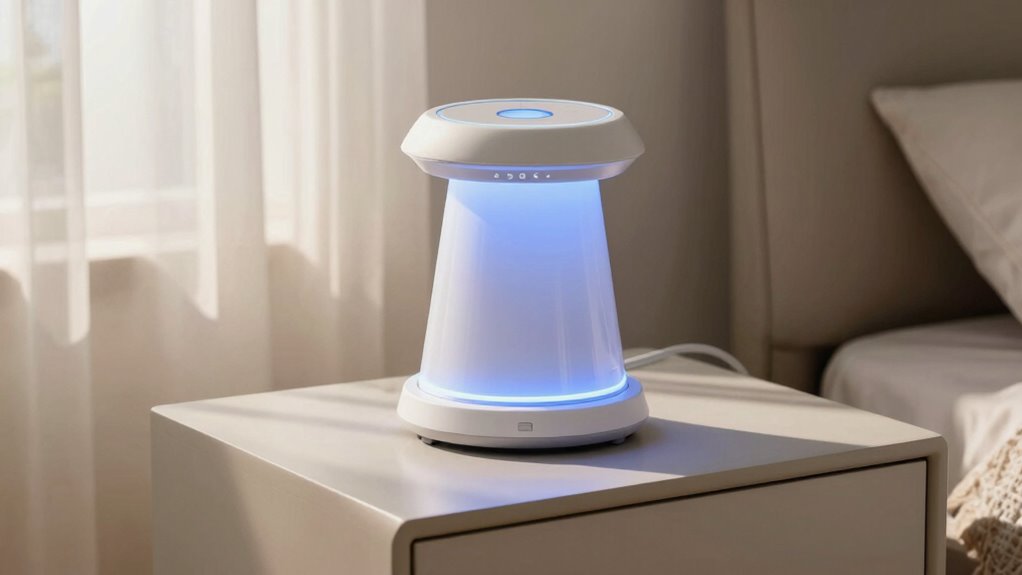
To get the most benefit from light therapy devices, it’s essential to follow a consistent schedule and use them at the right times. Morning sessions typically maximize phototherapy benefits, helping reset your circadian rhythm effectively.
Avoid using these devices during periods of light pollution, such as late at night or in dimly lit environments, to prevent disrupting your body clock.
Keep sessions brief—about 20-30 minutes—facing the light without staring directly into it. If you notice side effects like headaches or eye strain, adjust the duration or distance from the device.
Consistency is key; use your device daily at the same time to ensure maximum results. Proper timing enhances phototherapy benefits and helps you maintain a healthy sleep-wake cycle.
Common Mistakes That Disrupt Your Body Clock With Light
One common mistake that disrupts your body clock with light is exposure to bright screens late at night. This interferes with photoperiod regulation, confusing your internal clock about day and night cycles.
Additionally, light pollution from outdoor sources can interfere with your body’s natural light cues, making it harder to maintain a consistent schedule.
To avoid these mistakes, be mindful of the following:
- Using screens before bedtime, which emit blue light that suppresses melatonin
- Ignoring the impact of light pollution in your environment
- Overexposing yourself to artificial light during evening hours, disrupting circadian rhythms
How to Adjust Your Light Schedule for Better Sleep and Overall Health

Adjusting your light schedule can substantially improve your sleep quality and overall health. To do this, expose yourself to bright light in the morning to help advance your circadian rhythm and promote melatonin production at night. Conversely, minimize exposure to blue light in the evening to prevent circadian misalignment. Use the table below to guide your adjustments:
| Morning Light Exposure | Evening Light Avoidance |
|---|---|
| Boosts alertness | Promotes melatonin production |
| Realigns circadian rhythm | Prevents circadian misalignment |
| Enhances sleep quality | Supports better rest |
| Improves overall health | Reduces sleep disruptions |
Consistency is key—stick to your new schedule to reset your body clock effectively.
Frequently Asked Questions
Can Light Exposure Duration Influence My Risk for Seasonal Affective Disorder?
Yes, light exposure duration can influence your risk for seasonal affective disorder. Longer sessions of light therapy, especially in the morning, help regulate your mood by mimicking natural sunlight.
Consistent, adequate light exposure can improve mood regulation and reduce symptoms. If you’re at risk, maintaining proper light therapy duration may prevent seasonal mood dips, supporting your mental health during darker months.
How Does Natural Versus Artificial Light Duration Affect Circadian Alignment?
Some might think natural light’s longer duration automatically guarantees better circadian alignment, but it’s more about light intensity and timing.
Natural light, especially in the morning, boosts circadian entrainment, helping you feel alert and rested.
Artificial light, if too intense or poorly timed, can disrupt your clock.
As a result, balancing both, with attention to intensity and exposure duration, optimizes circadian alignment and overall well-being.
Are There Individual Differences in Optimal Light Exposure Times and Durations?
Yes, you have individual differences in ideal light exposure times and durations. Genetic factors influence how your circadian system responds, making some people more sensitive to light shifts.
Age-related differences also matter; younger individuals often need more light to stay alert, while older adults may require less.
Pay attention to your body’s signals and experiment to find the best timing and duration that keeps your circadian rhythm in sync.
What Is the Impact of Light Exposure Duration on Jet Lag Recovery?
Studies show that ideal light therapy duration can reduce jet lag recovery time by up to 50%. Longer light exposure helps reset your circadian rhythm faster, minimizing sleep disruption.
When you increase light exposure during the right window, it enhances alertness and promotes quicker adaptation to new time zones.
Keep in mind, too much light can backfire, so tailoring duration is key to effectively combating jet lag and sleep disruption.
How Does Light Exposure Duration Affect Hormone Regulation Beyond Melatonin?
You influence hormone regulation beyond melatonin by adjusting light exposure duration, which affects your photoreceptor sensitivity and hormone synthesis. Longer exposure can boost alertness hormones like cortisol, while shorter periods may reduce stress hormones.
This balance helps regulate your circadian rhythms, ensuring better sleep and overall health. By managing how long you’re exposed to light, you can optimize hormone production aligned with your body’s natural cycles.
Conclusion
By mastering the timing of your light exposure, you hold the key to syncing your body’s internal clock like a finely tuned instrument. Think of light as the conductor guiding your sleep and wakefulness, shaping your day with each sunrise and sunset. When you align your light rituals wisely, you create a harmonious rhythm that fuels your energy and well-being. Take control, and let your body dance effortlessly to the rhythm of the sun.